Gatakka, ChatGPT the Psychologist and the Price of Critical Thinking
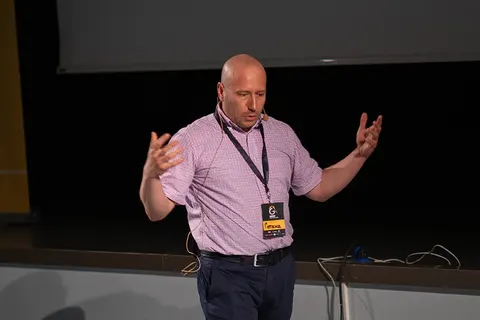
Ivan Vankov (Gatakka), a four-time IBM Champion, longtime tech blogger and author of free tutorials that helped many into software, has worked in machine learning, programming, team leadership, DevOps and blockchain architecture, and is now a freelance consultant to promising ventures. With his vast knowledge and wide view of the trends, he practically sketches the future. What big news is coming after the AI boom, how will machine learning change our attitude to work, and how did ChatGPT turn out to be a remarkably successful psychologist?
 02
“The World Is More Chaotic Than We’d Like. And Science Isn’t Here to Comfort Us”
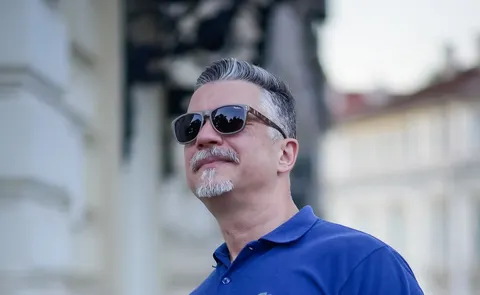
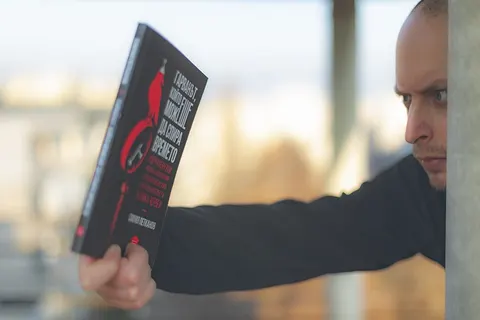
Do you believe in astrology, the power of chakras, reptilians or a flat Earth? Stefan Markov, a Sofia University lecturer known online as The Science Guy and the author of Algorithms of Delusion, talks about pseudoscience and conspiracies, science and authority, and why the world needs better storytellers.
 03
“I Want to Live in a World Rich in Meaningful Conversations, Inspiring Stories and Responsible Journalism”
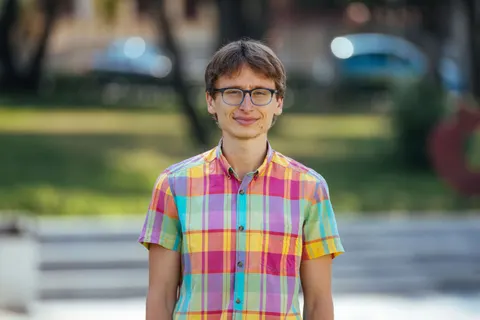
“We forget because we cannot keep up with processing all the information that reaches us and making connections between events, and this makes us very easy to manipulate.” Daniel Penev, a journalist, translator of nonfiction and author of books about the people changing Bulgaria, talks about the stories worth telling today. And about why, in a world of daily divisions, it matters more than ever that we keep talking to each other.
 04
“Today We Can Be Anything, Yet We Choose to Be the Same”
Why does it matter so much whether we can tell children's drawings from AI-generated images? What does the future of creativity, of art, of the human being look like at a time when algorithms turn out to be indistinguishable from us as authors, and even better ones? What is worth teaching our children today? Can you tell 15 children's drawings from 15 images generated by artificial intelligence? In just a few days, the Digital Stories challenge for children and parents has prompted more than 2,500 people to test their intuition! The results of the test are shaping up to be extremely interesting, and we will talk about them once it closes on July 1. The experiment was created together with today's guest, Elitsa Staneva-Britton. A psychologist, journalist and teacher, she is currently working on her doctoral dissertation at the Bulgarian Academy of Sciences, and her subject is creativity in the age of artificial intelligence. The time has come to talk about each of these topics.
 05
Become a Teacher!
The first day of school is approaching, and it is a good occasion to look for answers to the big questions in education. How do we bring more young, well-prepared teachers into Bulgarian schools, how do we teach technology when its fast-moving world produces big news every week, and how can artificial intelligence become a friend and helper to both teacher and student? Angel Georgiev, creator of the Znam.be platform and co-founder of the Sindeo academy for teachers, believes that “teaching at a school today is more accessible than ever.”
 06
“Leading by Example Is a Fearsome Weapon”
“Calling the inexplicable a ‘miracle’ is a beautiful way of admitting how little we know,” says today’s guest. “Miracles are also a chance to stop fooling ourselves that everything depends on us alone, to catch our breath and learn to trust life.” Ivanka Mogilska is a copywriter with 20 years of experience, the last 15 of them freelance. She is a blogger, editor and teacher. She is the author of seven books, the latest of which is the collection Obiknoveni chudesa (Ordinary Miracles). But… do such things really exist? We will ask her in a moment. Her airy, wise stories hold the everyday miracle, which, in my view, is the very reason to keep going. We will talk about digital and analog miracles. About the miracles worth teaching artificial intelligence and the ones it may someday create. About brevity and the long texts that carry meaning. About the need, every now and then, to “get off the merry-go-round”…
 07
Human or AI: Can You Tell Who Made It?
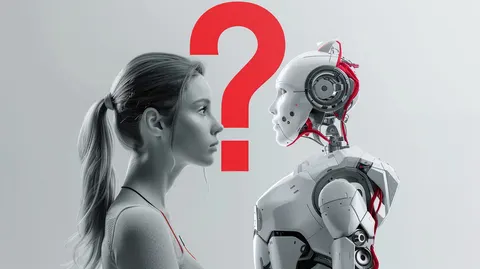
Can we still tell what a human has created from what artificial intelligence has generated? Let's run an experiment together that may yield some very interesting answers. Thirty quick questions, about 5 minutes is enough. All you have to do is decide which of the images and texts were generated by AI and which were made by people. Join in and give it a try! Invite your friends too! The more people take part, the more interesting the results will be! Responses will be collected for two weeks, until March 8, 2024. Five participants will receive a gift.
 08
“The Problem Is People, Not the Law”
Is our data really protected online? What rules should we follow to avoid unpleasant surprises? How can we be sure we aren't infringing anyone's copyright, and what should we do if someone infringes ours? And who will own the rights to the “works” of artificial intelligence? The law takes up an enormous amount of room in the online world too. We rarely think about it, yet the field is extremely important. Hristina Bogia holds a doctorate in law and specialized in all the important questions that technology raises for legal science. A few years ago, disillusioned with the system, she decided to change careers and moved into the software industry. Together, we'll look for answers to all of these questions. We'll head for the places where technology, the law and the rights of each of us intersect. We'll go over plenty of everyday advice that can help any user. And, last but not least, we'll get the perspective of a thoughtful young person with a distinctive view on a topic that is always current in Bulgaria: a court system that doesn't work.
 09
“A World Is Coming in Which Our Thinking Is Riddled with Gaping Holes”
“To write well today, the writer must not always be thinking of the reader,” says Rayko Baychev. He is a rare phenomenon these days: a writing journalist who knows how to say what needs saying with exactly the right words, in a way no one can imitate. “The fear of missing out has something in common with gambling, too. It is well known that a devious idea went into the design of the newsfeed: that scrolling through social media should mirror the way the mind falls into a feverish frenzy as it follows the fast-spinning symbols on a slot machine screen and waits for them to land on a winning ‘status.’ For your political views to line up with other people’s, the way cherries, lemons and gold bars line up on a trembling payline.” What might the future of how we get our news, how we read and how we write look like through a journalist’s eyes?
 10
The Fake News Hunter
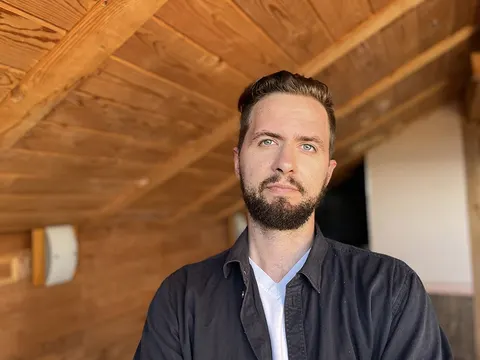
It is called Tanbih, it comes from Qatar, and it promises to rescue us elegantly from fake news and disinformation. We meet its creator, Dr. Preslav Nakov, a world-class specialist in natural language processing with artificial intelligence. How can an algorithm tell that a news story is fake… before it has even been written?!
 11
“We Will Always Need Quality, Verified Information”
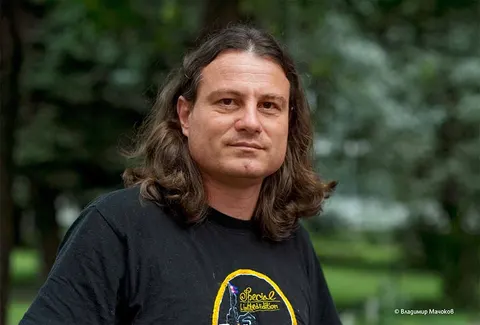
Diana Kulchitskaya teaches journalism at Moscow State University. What makes people take up journalism? Does it have a future, as seen from the lecturer's desk? And how do the debates about the online future of the media look from the “more northeastern corner” of the globe?
 12
Who Invented the Toaster? Nobody—It Never Happened
Alan MacMasters, the celebrated inventor of the toaster, made it onto the BBC, into the Daily Mirror and onto a British cooking show. The small detail is that he never existed: two students invented him to show how easily we trust what we read online. Wikipedia itself keeps a list of its longest-surviving hoaxes, and it reads like a lesson in how easily we can be misled.
 13
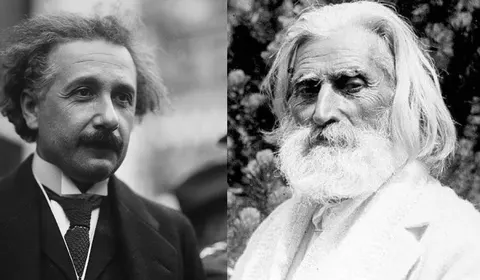
Did Einstein Bow to Danov? 12 Clichés of Bulgarian History
Europe's first Christian monastery, the world's oldest city, Einstein bowing to Petar Danov and Khan Tervel saving Europe: which of these popular claims about Bulgarian history hold up? The historian Alexander Moshev goes through 12 of the most widespread clichés, one by one, guided by the sources and by logic.
 14
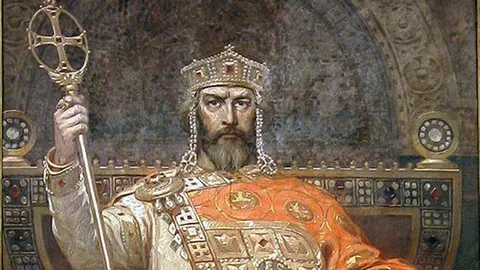
Quiz: How Well Do You Know Bulgarian History? Will ChatGPT Trip You Up?
15 widely accepted claims about Bulgarian history and 15 invented by artificial intelligence. Can you tell them apart? Which is historical fact and which is nonsense?
 15
How to Generate Yourself an Influencer
How could you not like Elena Dimitrova, or simply EcoElena? Blonde, smiling, upbeat, she travels, lives in harmony with nature, hands out useful tips and offers exotic recipes. There is just one more detail: she doesn't exist, and in a month of posts in her name, 84,519 people saw her, nine proposed romance, and not one noticed that every letter and pixel was generated by AI.
 16
“In the World of AI, Everyone Can Find Something Exciting”
Yordan Darakchiev leads the only program in Bulgaria where, in just a year, you can gain enough knowledge to start working in artificial intelligence. How did Yordan, an astrophysicist by profession, come to create a venture that has now given so many people the fundamentals five times over, and how do its graduates go on to research institutes, to companies like Tesla and Meta, to promising startups, and even to ventures of their own? What does it take to succeed in machine learning, how does this kind of technology help us understand the world we live in, and which directions in artificial intelligence are the most exciting ones to watch?
 17
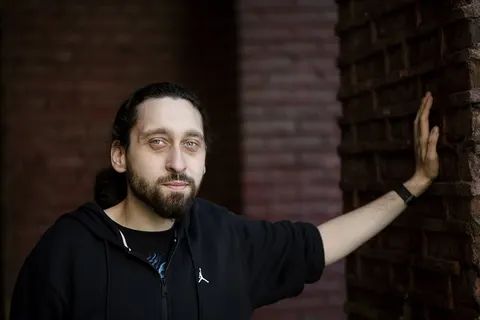
“Today, Even Reasonable Arguments Fail to Persuade”
Svetoslav Ivanov is a landmark journalist, reporter and host because he looks not only for what is topical but for what is meaningful and deep, for stories that can move people and show that making television can still be an art. What would he ask a perfect artificial intelligence, what are the greatest dangers such technologies pose to society, and why do people who think differently so often end up in an “online prison” today? And will we ever manage to create an algorithm that tells moving stories like Ivo Ivanov?
 18
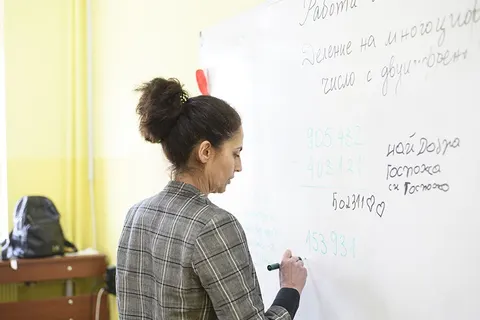
From the Microphone at Bulgarian National Radio to the Blackboard in Fakulteta
One day you are an established host on national radio, interviewing politicians, the powerful of the day and any guest you like, and the next… you choose a new path and become a first-grade teacher in Fakulteta, a Roma neighborhood in Sofia. For years Tanya Velichkova's voice was familiar to every listener of Bulgarian National Radio, where she hosted shows like Predi vsichki (Before Everyone) and Nedelya 150 (Sunday 150), until she decided it was time for something different and went back to learning so she could teach children. What is it like to find yourself in that role in such an unusual setting, and what does a seasoned journalist turned teacher dream about?
 19
When Not!News Makes the News
Few pages on the Bulgarian web offer original, unadulterated content that makes you laugh… even if the smile is a sour one, born of the irony of Bulgarian reality. Since 2009, Samuil Petkanov, the creator of Not!News, has been serving up his version of “the news as it could have been.” What does he think of the way we get our information? Does he manage to predict the future? How is it that we are all experts on influencers’ nose jobs and cryptocurrency fluctuations, and where is this taking us? The answers are in this interview, garnished with a small helping of Not!News inspired by Digital Stories.
 20
Truth or Dare?
Where did the professions whose job is to create content for an audience begin, and where have they ended up? Who still fights for the truth, and should that matter to us today? Where did influencers come from, and why is it important to understand their place at the end of this long chain of professions?