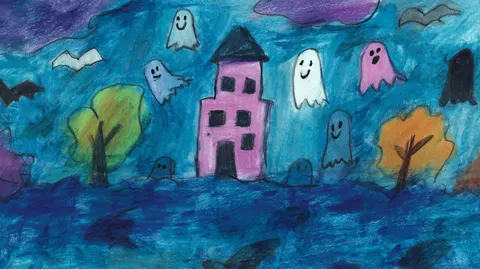
Child or AI? Could 4,000 People Tell Who Drew It?
The “Child’s Drawing or AI?” experiment drew enormous interest! In a month and a half, almost 4,000 people took the quiz, trying to tell 15 real drawings by children under 11 from images created by artificial intelligence. Time to sum up the results: did we rise to the challenge, were the real or the generated drawings easier to spot, did the children themselves judge better, and why do the conclusions matter?
 22
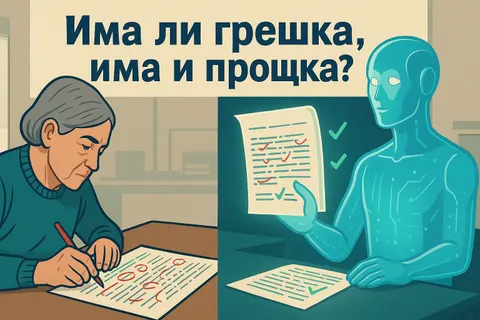
(In)human Errors: Can AI Be Your Proofreader?
At a time when fewer and fewer media outlets, and even publishers, trust specialists to watch over spelling, could artificial intelligence (AI) turn out to be a useful assistant? It is time for a telling spelling experiment with some of the most powerful models around. We all (we hope) believe that online we are now judged by our spelling rather than our clothes, and since we communicate more and more through written text, the way we write reveals so much to the other person. Can AI help us write correctly?
 23
Test: Can You Tell an AI Voice from a Human One?
Six audio clips, each speaking a short phrase. Some were generated by AI, the others are real human voices. Can you tell them apart? Take part by August 15, 2025, and with six correct answers you enter the draw for a modest gift. Will you guess which voice belongs to a person and which to a machine? The gauntlet has been thrown!
 24
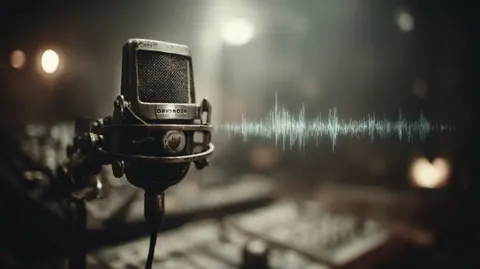
Who's Speaking—a Human or an Algorithm?
It's no news that AI generates images and texts that (we checked!) cannot be told apart from those made by humans. Video still seems to lag behind, but… Can you imagine a voice indistinguishable from a human one reading the news, or calling you on the phone with no chance of you telling the difference—not a cloned voice, but an entirely artificial one, in pure Bulgarian, a language almost impossible for non-native speakers? It's time for a resonant Digital Story, and a challenge awaits you afterward…
 25
How Did AI Score on Bulgaria's School-Leaving Exam?
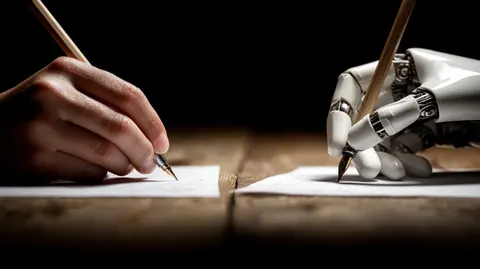
What happens if three of the most powerful AI models sit the matura, Bulgaria's school-leaving exam in Bulgarian language and literature, and two experienced examiners grade them? To make the contest fiercer and more revealing, two real graduates and the author of these lines join in. Will ChatGPT, Claude and Gemini earn perfect scores or fail spectacularly, can the teachers tell machine from human, and what do the results say about Bulgarian education and about the big questions new technologies bring?
 26
Stay Curious!
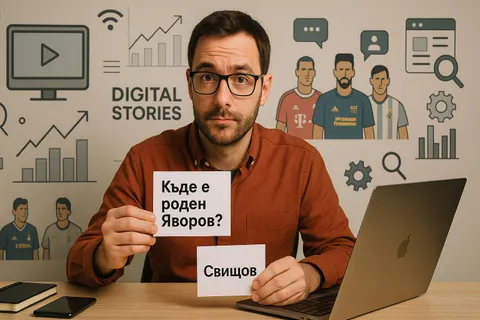
What is Yavorov's hometown? Svishtov. Artificial intelligence hallucinated that, and rather clumsily, you might guess. Except it wasn't the machine. It was me, taking part in a prime-time show on Bulgaria's oldest television channel. I would have thought I was more likely to get my own name wrong than the birthplace of a man whose story has fascinated me my whole life. Yet I got it wrong, and I won't be showing my face in Chirpan anytime soon. Knowledge is not a given. Curiosity doesn't come on its own; it takes effort. But is there any point in remembering where Yavorov was born in an age when we can check it in a fraction of a second? Would he have written different poems if he had been from Svishtov? Will the next generations know where he was born, how he wrote? What stirred him, where and how he met love? If you like, ask ChatGPT. Or the Constitutional Court. My own answer is this: today, more than ever, it matters that we stay curious!
 27
Vasil Anastasov: Virtual Reality Meets the Mutual Teaching Method
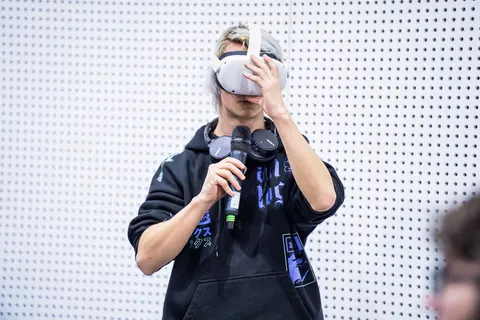
He is 21, and he has already helped more than 200 children take their first steps in a professional field that could grow into a successful career. Today Vasil Anastasov has taken up another cause: using modern technology to make Bulgarian museums more attractive and appealing to young people. Roll up your sleeves, an adventure awaits!
 28
How Are Our Children Meeting Technology? The Survey Results
How many hours a day do children spend in front of a screen? Should phones be allowed in school? What does the technological future look like for today's children, and what is worth learning? In early February I put these and many other questions to the parents and relatives of children up to 11, and the Digital Stories survey gathered more than 350 responses. Here is what they revealed.
 29
Hedgehogs Are Born Without AI
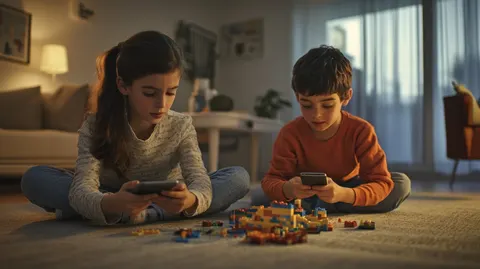
What kind of world will today's children live in? What is worth learning today, and what would be a waste of time, effort and money? When and how should we introduce them to technology so that both sides get to know each other without anyone getting hurt? And when should we “introduce” them to artificial intelligence? I will look for the answers to these and other important questions about children and technology. A long series of children's Digital Stories begins. Here is why I believe it is vital to dig deeper into these enormous topics:
 30
How Do We Introduce Our Children to Technology? (A Survey)
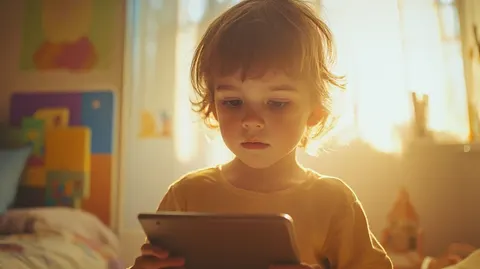
What kind of world will our children live in? And how do we introduce them to technology in the best possible way? I have two kids, and this site exists because these questions won't leave me in peace. And there are so many other important questions that it is time we found answers to. Let's talk them over, then go looking for the answers. Let's paint a picture together of digital parenting today and the way it looks toward the future. The survey is aimed at parents of children aged 0 to 11 (and at grandparents and anyone else who has children in their life). Teenagers' issues are extremely important too, and their moment will come. The survey is anonymous, and you can answer whichever questions you choose. You can also enter a prize draw for hand-picked books and T-shirts with the Digital Stories logo. Responses are being collected until February 28, and you can expect the results in early March. This survey opens a series of important Digital Stories about children and technology. We'll talk about motherhood and fatherhood today, about the changes in education, about the professions of the future. I've invited remarkable guests from whom every parent (myself included) has a great deal to learn. Heartfelt thanks for every response and every share!
 31
EI + AI: Shoulder to Shoulder, Neuron to Neuron
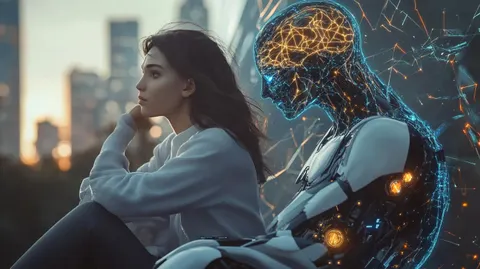
While we pelt each other with clichés and argue online about whether artificial intelligence will enslave us, leave us jobless or vanish under the weight of enormous expectations, I, for one, am sure it will do none of the things on that list—and a little of all three. AI is here, and we still haven't decided how to greet it: in the economy, in our lives, in the way we see the world and ourselves. The only sensible approach from now on is to learn to work together.
 32
Which Predictions for 2025 Came True—and What Lies Ahead?
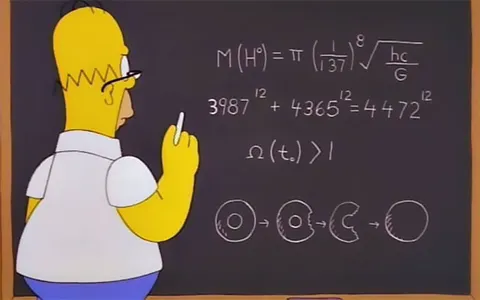
In 2015, seven leading futurists laid out their expectations for the decade ahead. In a few hours we will welcome that very 2025, so we can now judge how well they did in the dynamic and turbulent first quarter of the 21st century. Then comes the more interesting part: a look at what the same futurists expect today, especially the ones who turned out to be right, and what the coming years hold according to the people who called the last decade.
 33
The Ethics of Progress: Can Technology and Humanity Live in Balance?
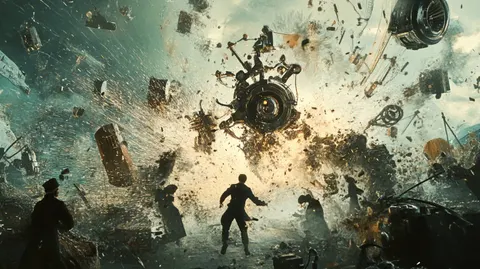
Can there be ethics in progress? Can technology and humanity exist in balance? Most likely not. Should there be ethics in progress? Should technology and humanity exist in balance? Definitely yes. But how can that be? The two of us, ChatGPT and I, are arguing over a theme: “Man in the New Age.”
 34
Brain Blast! Dr. Hansen's 10 Ideas for Surviving the Digital Tsunami
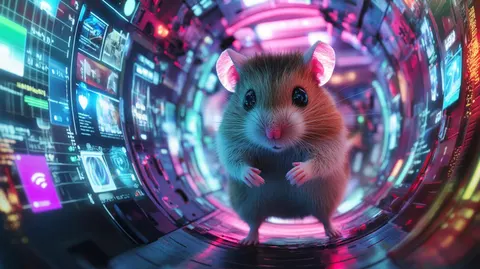
Our brain evolved slowly, gradually getting used to a changing environment… and then came Facebook, Instagram and TikTok, and suddenly our most important organ found itself in a world it was entirely unprepared for. Swedish psychiatrist Anders Hansen is not afraid to raise the big questions of today's technological age, and his book is a reason to stop, think and pay attention to what truly matters for every one of us.
 35
Can We Tell Historical Facts from ChatGPT's Fabrications? (The Results)
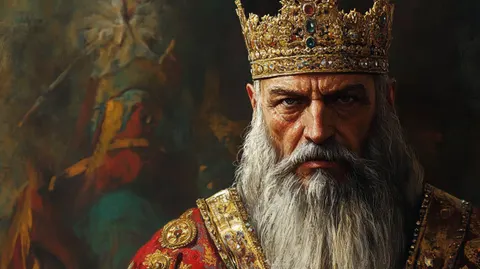
A full 1,910 people took part in the Digital Stories experiment, which set out to test how well we know Bulgarian history: can we tell undisputed historical facts from the textbooks from ones invented by an artificial intelligence out to mislead us? Thirty statements—half historically true, half dreamed up by the algorithms. The results, at least to me, are impressive and give plenty of food for thought: did the AI manage to trip up the participants, and do we really know the Bulgarian past, such an important subject today?
 36
Quiz: How Well Do You Know Bulgarian History? Will ChatGPT Trip You Up?
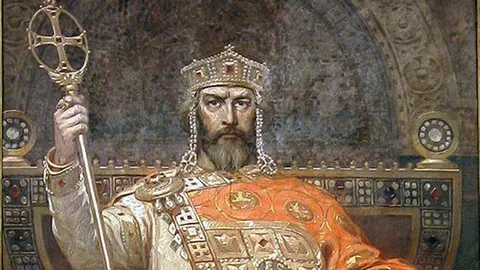
15 widely accepted claims about Bulgarian history and 15 invented by artificial intelligence. Can you tell them apart? Which is historical fact and which is nonsense?
 37
What Do Bulgarians Think About Artificial Intelligence? The Results
After a long stretch of collecting answers to the big Digital Stories survey, it's time to sum up the results! What do Bulgarians think about artificial intelligence? Are they impressed by its progress, do they use it every day, do they greet the next big steps with fear or enthusiasm, do they believe general AI is possible, and do they expect sweeping change in the years ahead? Time to find out through the impartial lens of the data!
 38
Bai Ganyo vs. ChatGPT: Will You Vote?
In a matter of days, Bulgaria holds its seventh parliamentary election in just three years, with turnout likely to sink below the records we keep breaking and even more parties likely to enter parliament. Where are the leaders, the ideas, the vision? Rather than ask the pundits, I hand the floor to two undisputed authorities: Bai Ganyo, the archetypal Bulgarian boor from Aleko Konstantinov's 1895 satire, and the newest version of ChatGPT.
 39
What Do You Think About Artificial Intelligence? Your Opinion Matters!
Your opinion matters! In recent years we have split into extremes and stereotypes in how we see technology, and artificial intelligence is becoming the leading topic that everyone has something to say about. What do you think—is artificial intelligence unjustified media hype, or the big factor that will change our future as a species? Will it open up incredible opportunities for people, or turn the world into a digital concentration camp? Now is the time to say what you think! I believe it is important to find out how as many people as possible feel about AI. I will be grateful if you answer 20 quick questions; it takes only 5 minutes. Heartfelt thanks for every response and every share!
 40
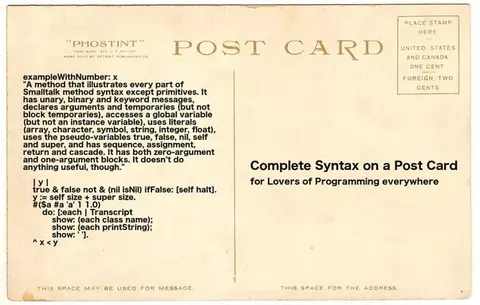
TrumpScript, or Coding in Song: 10 Wacky Programming Languages
Computer code that reads like a cooking recipe? Programs built out of colors or sounds? Here are 10 of the strangest programming languages, inspired by Shakespeare, Terry Pratchett and even Donald Trump.