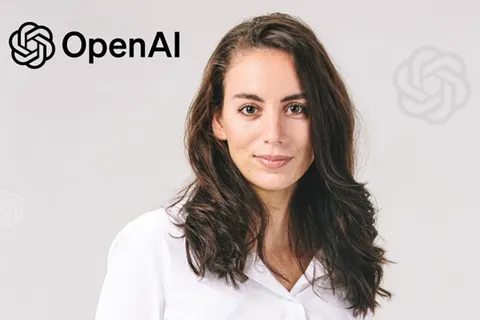
Where To Now, ChatGPT?
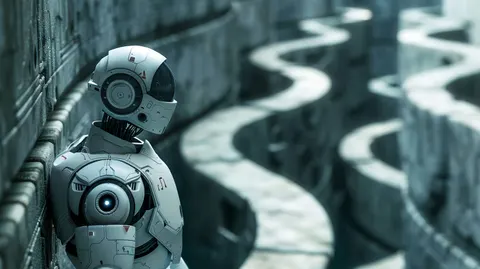
To be or not to be? Left or right? Life is a string of decisions, and on them hangs everything, from whether we reach the peaks we dream of to the eternal riddle of what to have for lunch. So we bring Hamlet and ChatGPT together to find the labyrinths, literal and figurative, that the electronic Virgil is ready to lead us through: five cases where artificial intelligence is already here to guide us, and five where we will have to wait (or never live to see it).
 42
Poetry Comes Alive: What Videos Did AI Make from Classic Bulgarian Verse?
How close are we to models that generate video indistinguishable from human work? Let's find out together with one important experiment. Generative models are evolving at astonishing speed. Two years ago I ran the same test with images: I fed Midjourney classic Bulgarian poems to see how well it would cope. Would it catch the message? Would it create worthy images? Gradually the algorithms grew better and better at the task, so much so that today we can no longer tell the created images from the generated ones. But what about video? What kind of clips might artificial intelligence create from a selection of classic poems? I chose two platforms that take quite different approaches to generation. And the results, to me at least, are definitely impressive…
 43
Agent GPT: When Artificial Intelligences Start Playing as a Team
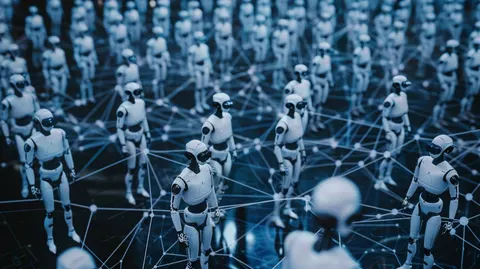
What if we turned the stereotype of artificial intelligence on its head? Instead of a single model we chat with, we face countless separate “individuals.” We hand them tasks, and each works autonomously, specializes in a particular job, accumulates knowledge about it, keeps an eye on the others… The goal might be, say, to build software. One model learns to formulate the requirements, another writes the code, a third prepares the visual side, a fourth tests what came out and how… and so an entire software company comes together, working millions of times faster than ordinary ones, because it is built not of people but of algorithms. How far off is that future today? Not long ago Sam Altman said that this is exactly the direction in which very serious breakthroughs are coming. AI agents are one of the fields of computer science where we expect big news. The next generations of artificial intelligence, able to solve far more complicated and complex tasks while making far fewer mistakes. Many of the leading experts say this is the approach by which we will take the next big step in the development of artificial intelligence. Here is why.
 44
What's in Apple's Name? The Stories Behind the Web's Biggest Brands
Are Java and JavaScript cousins, and if they have nothing in common… why do they have such similar names? Why did Apple pick something as overused as the apple for its name and symbol? What on earth is… Adobe? Or Google? Does Lenovo have anything to do with Lenin? “That which we call a rose by any other name would smell as sweet,” says Juliet, as quoted by Shakespeare. And would what we call Apple or Amazon smell as sweet under another name? We can only guess. But behind the names of the online world's biggest players there are sometimes funny stories. In the lines that follow, we'll run quickly through some of the most instructive and unexpected ones.
 45
“The World in 2050”: Can We Peek into the Future?
Will technology make our lives easier, or will it trigger a huge crisis by shaking up the job market? Will we enjoy the fruits of advanced artificial intelligence that has helped us dramatically extend human life, explore space and develop the next technologies? Or will we wake up in a world of total control, as predicted by the dystopias? What will life look like in 2050? It is time to peek into the future and discuss the fascinating forecasts of an author who has the courage to make predictions in such a dynamic period of history. And he has already done it once, with enviable success. Can we predict the future? Not a chance, since every small step can change the direction. But is it worth trying? I think it is essential: however far off our ideas may turn out to be, the very act of looking, the attempt to make sense of it, is the first step toward preparing for it. Toward avoiding some of the dangers.
 46
Trust, but Verify Online!
If you have never heard of “social engineering,” or “social engineerism,” as today’s guest says we ought to call it, you are probably picturing a plot straight out of Frankenstein: the engineer builds himself a person… Or something from the conspiracy theories about mass mind control. Whether you have heard of it or not, though, we need to talk about it more and more. Because this is the most dangerous and most effective attack in the digital world. One that targets not computers, networks, servers or programs, but the weakest link in the chain: the human being. “Today cybersecurity breaches happen more and more often through social engineering, a method that uses manipulation and manipulative techniques so that people are deceived and access to sensitive information is gained,” says cybersecurity specialist Plamen Tsvetanov. But what are the most important steps to protect ourselves? What are the biggest risks of underestimating the person on the other side? Why should trust online be a scarce commodity? The subject matters to everyone, even those who don’t realize it…
 47
Radio-TV-Gramophone: 5 Unexpected Bulgarian Technologies
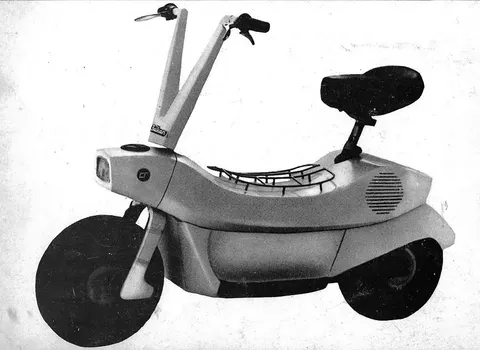
Did you know that the mains voltage in Bulgaria wasn’t always 220 volts? Or that a fascinating Bulgarian computer game from the early ’80s turned into… a prophecy with its very title? What did the first Bulgarian electric scooters look like? And could the “hipsters of the ’60s” who rode them also get themselves a radio-TV-gramophone… provided they could carry 120 kilograms on their shoulder? Once again we set off through the colorful history of Bulgarian technology with the most precise and captivating guide. For 15 years now, Anton Orush has been gathering a sea of information (and exhibits) about its past and present. His incredible life, worthy of a novel, was one of the first digital stories. So here we go, boarding the time machine for 5 stops back in history: 5 fascinating stories from the past of technology in our lands.
 48
Elections + Artificial Intelligence: The Perfect Storm
This year nearly two-thirds of the planet will vote, one way or another, for those who will govern them, and for the first time it is happening in the age after ChatGPT. Can artificial intelligence become the deciding factor, can we avoid being manipulated, and could technology one day change how our societies are run? Here are eight reasons to stop and think.
 49
Stack Overflow: The Programmers' Savior Is Fading
It is easy to tell someone who has ever programmed from everyone else: if you have “touched” code, you have seen Stack Overflow. In just 15 years, the question-and-answer site fundamentally changed the way programmers work, but today the legend is heading toward its sunset, ironically because of the technological progress it helped make possible.
 50
How DALL·E “Read” Beloved Bulgarian Books
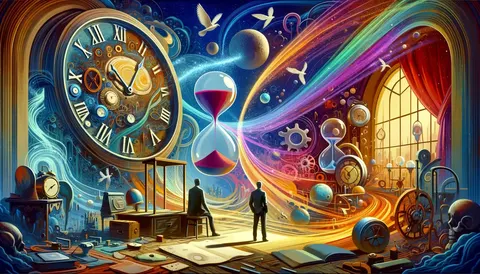
The Chukchi is no reader, he’s a writer, as the old Soviet joke goes. But what about ChatGPT? Time for another fascinating experiment to show what today’s algorithms can do, both at creating images and at understanding context. I will ask DALL·E 3, part of the paid version of ChatGPT, to illustrate classic works of Bulgarian literature from different periods. Why is this interesting? It will show how well the large language model works in Bulgarian and how far it recognizes some of our undisputed classics. And, not least, because… might it show us some unexpected, different, striking points of view? Could we speak of some form of collective unconscious? Will the pictures overlap, at least in part, with the images each of us carries in our head for these books?
 51
The AI Detective: Can Technology Give Us Back the Truth?
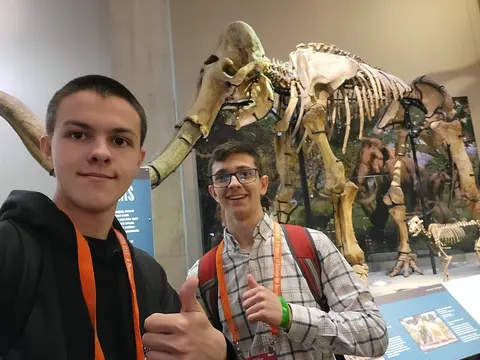
After a Digital Stories experiment with almost 2,000 participants showed that we can no longer tell AI-generated images and texts from real ones, it is time for the next step: could artificial intelligence itself become our salvation in this unequal battle for the truth? Radostin Cholakov, from the Rhodope village of Barutin, and his friend Delyan Boychev, both finishing high school this year and both already accomplished in the world of neural networks and computer vision, decided to find out. AI creates remarkable images today, but can it tell truth from lies and judge which picture was made by a human and which by an algorithm?
 52
Human or AI: Can We Still Tell Who Made It? (The Results)
Can we tell what was made by artificial intelligence from what was made by a human? Let me start with the short answer: we can’t. That is the main conclusion of the experiment held on the Digital Stories site, but there are so many other curious details that should make us stop and think… Did Hieronymus Bosch or Petko Slaveykov prove harder to recognize? Maria Zhekova’s dishes or Violeta Kuneva’s stanzas?
 53
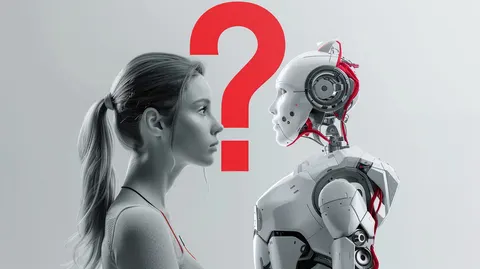
Human or AI: Can You Tell Who Made It?
Can we still tell what a human has created from what artificial intelligence has generated? Let's run an experiment together that may yield some very interesting answers. Thirty quick questions, about 5 minutes is enough. All you have to do is decide which of the images and texts were generated by AI and which were made by people. Join in and give it a try! Invite your friends too! The more people take part, the more interesting the results will be! Responses will be collected for two weeks, until March 8, 2024. Five participants will receive a gift.
 54
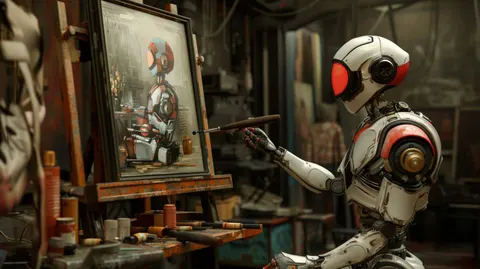
Can Algorithms Make Art? 15 Viewpoints That Matter
Can algorithms create? Is artificial intelligence a tool or an author? Could AI give birth to the arts of the future, or has creating already become a pointless pursuit? What will we do when its works in every field become indistinguishable from ours? For three years now, I have been collecting viewpoints on this site about the big questions of today's technological day. I believe it is vital to bring more and different voices into the discussions on important topics, and art and creativity is unquestionably one of them. Here are 15 of the most interesting and substantial opinions I have gathered in that time. Do the words of tech people, writers, artists, clergymen and… tomcats contradict each other, or do they complement one another?
 55
How to Generate Yourself an Influencer
How could you not like Elena Dimitrova, or simply EcoElena? Blonde, smiling, upbeat, she travels, lives in harmony with nature, hands out useful tips and offers exotic recipes. There is just one more detail: she doesn't exist, and in a month of posts in her name, 84,519 people saw her, nine proposed romance, and not one noticed that every letter and pixel was generated by AI.
 56
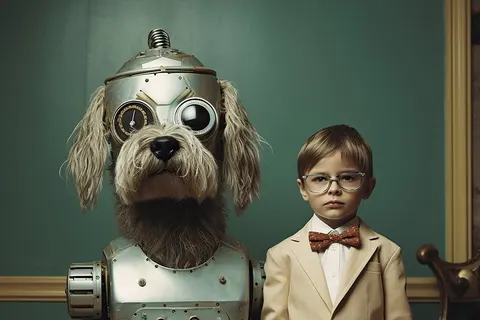
A Dome You'd Want to Move Into…
Look at them: so real… and at the same time so fantastical. You feel like diving into the world of the Dome, which both resembles ours and is completely different. Better or worse?
 57
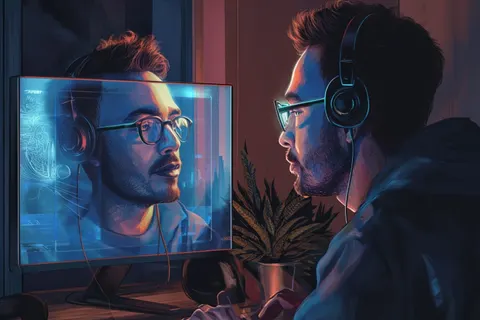
Meet… Yourself?!
“Talking to yourself isn’t so bad. It gets bad when you start answering.” I am going to create a virtual double of… myself. What could we possibly have to talk about?
 58
AI Built a Cell: How an Algorithm Painted Beloved Bulgarian Songs
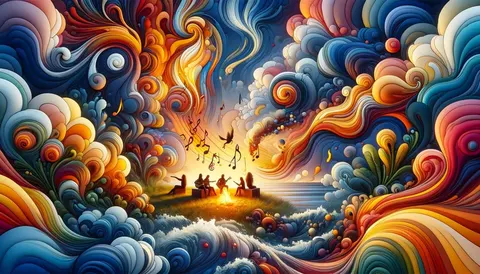
Artificial intelligence now creates images hard to tell apart from photographs, and that can even change history—but has it learned to “paint” originally, impressively and without obvious blunders, even when the description is abstract, poetic and laden with meaning? Let’s reflect on that with a short but instructive experiment: how will ChatGPT cope with illustrating the lyrics of beloved Bulgarian songs? I pick 16 Bulgarian poetic works from different eras and genres completely at random, some of the most recognizable verses ever to become melodies, and see how the algorithm draws them.
 59
The Living Computers
Information technology has always tried to imitate nature's most perfect model: the human brain. Now it is on its way to doing so more successfully than ever—by building a computer that runs on living human brain cells! What happens if we bring together the best of both worlds: the biological, with its evolutionary efficiency and its instinctive, creative imperfection, and the technological, with its ability to derive patterns and build on them? Biocomputers look like the logical future, and it is no accident that many of the people sketching tomorrow have turned their eyes in this direction. Serious scientific breakthroughs and successful startups in recent years suggest that the next big technological leap may well be coming from here. These are the arguments.
 60
The “New” Mother of ChatGPT
The upheaval at OpenAI outdid Game of Thrones for plot twists: Sam Altman was fired, chief technology officer Mira Murati took his place, and within days everything was back where it started. Amid the telenovela-style debates about who pulls the strings, one figure stayed in the shadows—the woman who briefly ended up at the helm. It is time to learn more about Mira Murati, because the future of the world may well depend on her decisions.