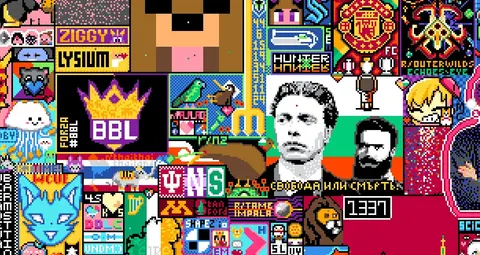
Battle for Pixels: How 6,000,000 People Create Together
r/place. The Place project on the social network Reddit showed, all at once, that people can work together online for a beautiful idea; that social networks sometimes make sense; and that we can build wonderful messages when we come together.
 102
How the Algorithm Learned to Recognize Our Faces
Facial recognition systems have become so refined that they are practically infallible. How did we arrive at this technological breakthrough, and why does hardly anyone talk about it? What ethical questions does it raise, and why should each of us learn more about it?
 103
Five Jobs on Their Way Out and Five the Future Is Bringing In
Technology is drastically changing the needs of society, needs that must be met by the daily work of its individuals. Today whole professions vanish and new ones appear faster and more quietly than ever, and although forecasting in so dynamic a field is nearly impossible, we will try to sum things up: which five professions will soon disappear, which five will be most in demand in the near future, and what five professions we can only imagine might one day exist?
 104
Hush! The Algorithm Is Dreaming…
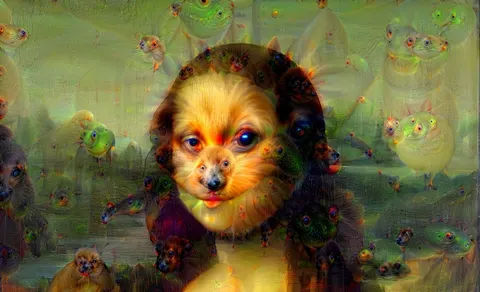
How does artificial intelligence dream? Deep dreaming reveals what algorithms see before they “get the job done.” The result is magical and surreal, and could easily pass for the work of a human artist, because it peers beyond the visible and finds its own patterns, accents, nuances and stirring images in photos and paintings. Could this technology also help us understand more about how our own brains work…
 105
What Do Google and Facebook Know About You? And Why Does It Matter?
“If something is free, you are the product.” “You are not the internet giants’ customer, you are their product,” says Jaron Lanier, a researcher who knows very well what hides today behind the facade of the information society. How did the data of billions of users become one of the most valuable commodities of our time? What do the biggest players “know” about each of us? And why is it so important to stay on guard?
 106
Man and Robot, Intimately
Algorithms are replacing us in more and more tasks. Meanwhile, the internet has changed human relationships forever, love and sex included. Isn't the point where the two meet drawing near? What does the future look like when artificial intelligence and robotics step in between two lovers? 42 percent of people say they would have sex with a robot today. 39 percent would have a romantic relationship with a humanoid. Would you?
 107
Six Forgotten Treasures of Bulgarian Technology
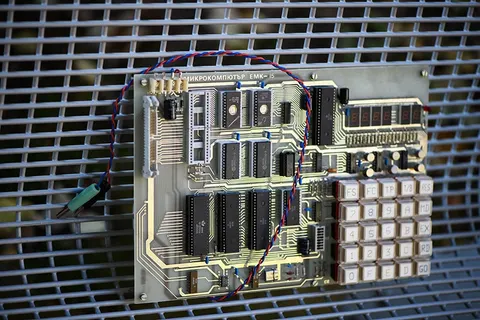
What set the old Bulgarian ancestors of the computer mouse apart? What exactly is punched tape? What did the first electronic chess set made in Bulgaria look like? And how did the world's largest floppy disks come to be… Bulgarian? Anton Orush is the living archive of Bulgarian technology, and the creator of “Sandacite” shows us six of his remarkable finds.
 108
Alone Among Facebook Friends
We surround ourselves with “friends” on more and more social networks. And, all too often, we stay alone. When does the supposedly so social online world make us feel lonely? Are we really raising generations that will lose normal human contact? When does loneliness become a problem?
 109
Five Technologies We Expect Big Things From in 2022
Here it comes, just days away! We expect so much from 2022! Not only for it to finally rid us of the pandemic, but also to bring back normal. And we also expect some purely technological solutions from it, each of which certainly has the power to change the life of every single one of us. Still: which are the technological fields where we hope the coming 2022 will be especially hot?
 110
The Algorithms That Sealed Us Inside the Bubble
Recommendation algorithms are the reason we end up in the “filter bubble.” They already know everything about us, so it matters that we learn more about them, too. Machine learning algorithms are neither good nor bad. How much power we give them is up to us alone…
 111
Singularity: When Computers Become “Smarter” Than Us
Computers keep getting faster and more sophisticated, and at some point they will move beyond our ability to judge them. That point is called the “technological singularity,” and according to Ray Kurzweil, the researcher who popularized it, it will arrive in 2045. Some consider him a brilliant forecaster, others a charlatan. Either way, it is worth asking whether, at such a moment, artificial intelligence will help us solve humanity’s eternal problems—or enslave us…
 112
Car, Take the Wheel!
Autonomous cars have been a recurring topic for years. We were supposed to be done with driving by now, and that step still seems close… But is it really? Why is this innovation so important and so eagerly awaited? Here is a brief snapshot of the subject and the challenges ahead.
 113
The Internet Connects Us, the Internet Divides Us
Conceived and built as the apotheosis of the free human spirit, the internet is turning into a veritable factory of inequality—by many different measures and in completely unexpected directions. Some rifts are quietly becoming chasms capable of causing enormous problems for all of humanity. Is it too late to “turn” the machine around?
 114
Facebook Is Now Meta. What Does the Metaverse It Wants to Send Us To Look Like?
Suddenly… a brand we all mention every day is no longer the same. Facebook is becoming Meta to draw attention to its hyper-ambitious metaverse project. But what does this future, which will merge the real and virtual worlds into one indistinguishable environment, look like? When should we expect to find ourselves in the metaverse? And what risks does such a vast project carry?
 115
Robot Pavlovich Chekhov: Artificial Intelligence as a Writer
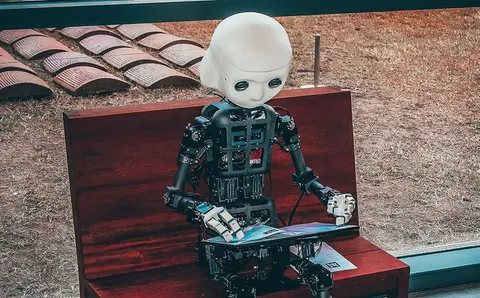
“There is nothing to writing. All you do is sit down at a typewriter and bleed,” said Hemingway. Can we teach artificial intelligence to create gripping literature, and how will the cultural world change if we do? Here are the most exciting projects and the arguments of the two extremes: that the robot writer will become reality, or that algorithms will never reach the human emotion of a text.
 116
Wait… How Did We Run Out of Chips?
The chip shortage has shaken the whole planet and, to some degree, hit everyone who has anything to do with technology. Cars and many tech products have become dramatically more expensive, new models of all kinds of devices are delayed, and others arrive weaker than expected. We have known microchips for so long, and humanity has been perfecting them for more than half a century, so how did we end up in this crazy situation? And could it turn into an unexpected opportunity for Bulgarian industry?
 117
The Regenerative City: When Buildings Come Alive
Let's close our eyes and drift into an unreal future. Sofia has dealt with its basic problems and become a regenerative city. Its urban planning respects the history and needs of every resident, and of nature, too… Sadly, the dream looks distant, but let's talk about regenerative cities anyway, as a sensible and logical concept.
 118
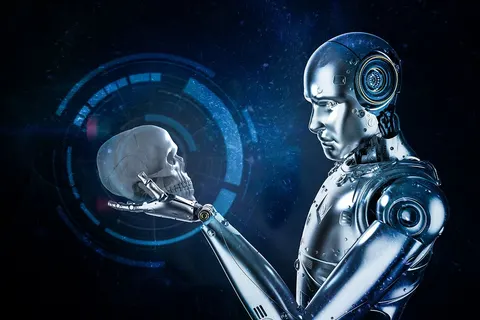
What If One Day We Defeat Death?
Do you think machines and artificial intelligence could make us… immortal? What price might we end up paying? What awaits us afterward? Where is the line between the possible, even the near future, and fantasy? Each of you has your own answers. And yet there are plenty of projects and ideas on the subject that give us reason to think about it more seriously.
 119
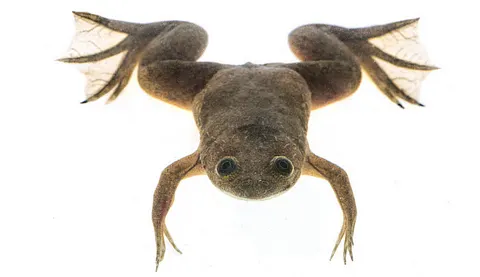
A Swarm of Robot Frogs That Could… Stop Aging?
They are futuristic, self-healing, miniature biological units made from frog stem cells. They are called xenobots. They can move in different directions carrying a payload, they learn collective behavior and easily turn into a swarm. Robots…, but not quite. Living creatures…, but not exactly. They are built from living cells, yet designed on the same principles normally used to make robots.
 120
Did the Mouse Eat the Book? Or Just the Newspaper…
“Will the mouse eat the book?” we asked at the beginning of the 21st century. Two decades later, we check whether that really happened. Did books lose the battle with the internet? Was there ever such a battle at all? And what happened to the print media in the meantime? We look for answers in the numbers from the database of Bulgaria’s National Statistical Institute.