“Hard to Be a God”: What Do Bulgaria's Tech Leaders Read?
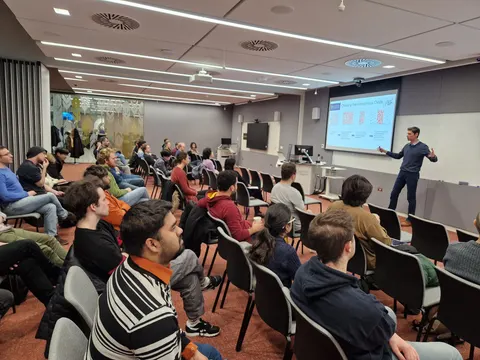
Do the people who drive the world of information technology forward actually read? They read like there's no tomorrow, and you're in for a surprise. Time for a very important and very bookish experiment: I asked 15 leading figures from different corners of the Bulgarian computer world to name their three favorite books and tell me why they would recommend them. Is it hard to be a god? A question for connoisseurs. And why is it hard?
 122
Why Do You Read?
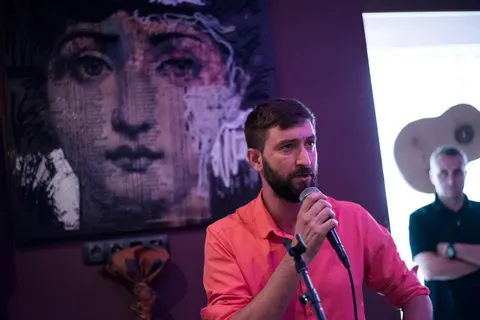
How can letters and bytes, books and technology, meet? That is the big theme of a series of digital stories. After Tuesday's look at some of the favorite books of the world's IT leaders, we once again step outside the cliché, this time with the author of Bulgaria's biggest book blog. Next Tuesday brings the unexpected literary recommendations of some of the most important figures in Bulgarian IT. You are what you read. “Kakvo chetesh…” (What Are You Reading…) is a question we should ask more often, especially in public. It is also the name of the largest and most active Bulgarian book group on Facebook, created by today's guest. For 15 years he has been sharing his recommendations on Knigolandia, the biggest book blog in Bulgaria. Deputy editor-in-chief of the Ciela publishing house, he recently made another dream come true: seeing his name on the cover of 100 knigi, koito tryabva da prochetete (100 Books You Must Read). With Hristo Blazhev we talk about reading and the future of literature. About the technologies that change it, and the books that build technology. Together we hunt for important and unexpected recommendations, to convince ourselves that letters and bytes must walk hand in hand, or nothing good awaits us, not even as a species. Happy reading!
 123
What Do the World's Tech Titans Read?
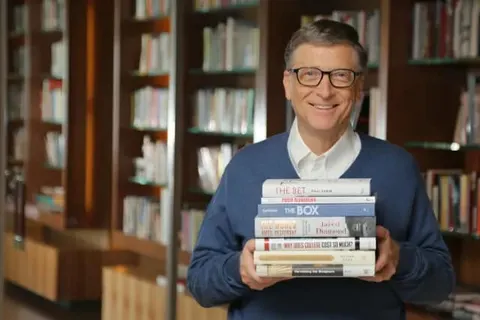
Do the world's tech leaders read books? What are the favorite reads recommended by Elon Musk, Sam Altman and Mark Zuckerberg? Will you find some overlap with your own literary taste, or is there no such topic at all? In Bulgaria it isn't fashionable to talk in the media about what we read. Journalist and translator Daniel Penev got me thinking about this during his visit. Yes, you'll probably remember the notorious Winnetou as someone's favorite book and… that's it. It isn't like that everywhere. In both West and East, the people who end up in the spotlight love to talk about books, about their favorite authors, about the literature that helps us keep going. Well, it's time we started doing it here too!
 124
Love in the Time of AI
This is a story about a love that came not very early, but just in time. About the luck and happiness of finding your person. About the dreams we put off, though we shouldn't. About the strength not to give up, even in the hardest moments and in the face of the toughest challenges. At least as long as you have the strongest support of all, that of the person beside you. “In December I turn 63. I have seen a lot and lived through a lot. Instead of growing fewer, the problems keep multiplying. I've had two strokes, a malignant tumor and more. In those hard moments there was always one person beside me who, again and again, got me back on my feet and even gave me wings. That person is my wife, Toni. A few days ago I spontaneously wrote down my feelings for her in a few lines. Since I'm neither a musician nor a singer, I turned them into a song with the help of artificial intelligence.” Powerful stories keep happening in the digital world—because of it, thanks to it or in spite of it. And just as our relationships as people quietly change with the development of technology, there are also those universal plots that survive through time and are reborn with new shades, new details and new inspiration. More and more often, stories vanish into the feed, unnoticed in the rush of scrolling, of the news of the day. Do we have the time and the frame of mind to look for them? To settle in and read, to get carried away by them, while we hurry on, absorbed in the latest topic of the day?
 125
“It’s Crystal Clear That AI Is the Future”
The day before I met Ilia Valchanov, the news broke officially that his startup Team-GPT had secured $4.5 million in funding, a record for Bulgaria! Today’s guest leads a platform that helps businesses around the world use the power of large language models while keeping their data safe and confidential. It is far from his first impressive achievement: for years Ilia has been building hugely successful online courses in data science and artificial intelligence, and he personally has more than 1,400,000 students on Udemy! He owes his remarkable success to a thorough approach, a great deal of reading and learning, courage and unconventional decisions. That is why we are meeting: to talk about the next big news coming out of the world of artificial intelligence. About how the technology will transform every area of business, but also about the risks it creates. About the important causes tied to the progress of AI, and the skills it will never manage to develop.
 126
Can We Tell Historical Facts from ChatGPT's Fabrications? (The Results)
A full 1,910 people took part in the Digital Stories experiment, which set out to test how well we know Bulgarian history: can we tell undisputed historical facts from the textbooks from ones invented by an artificial intelligence out to mislead us? Thirty statements—half historically true, half dreamed up by the algorithms. The results, at least to me, are impressive and give plenty of food for thought: did the AI manage to trip up the participants, and do we really know the Bulgarian past, such an important subject today?
 127
Bulgaria's Literary Banksy
“The most dangerous literary terrorist in the country.” No, those words about today's guest aren't mine. They belong to a specialist who follows Bulgarian literature closely and knows it from the inside. And so, after 153 interviews published on this site, the time has come for… the first anonymous guest! I won't even tell you whether it's a man or a woman; what matters here is the story and the point of view. A few days ago, AI-generated poems made it among the best in two poetry competitions, and in the second case it was an experiment by Digital Stories. I believe it is vital that we begin the discussion about our future relationship with technology, and with as many important points of view as possible. Expect more remarkable guests (and experiments) on the subject. Today, though, we go back to before the AI-generation craze, to tell the story of a person who spent a long time experimenting with submitting compiled or simply absurd poems under different names. Long before that, this person had entered and won competitions under their real name, until… becoming convinced that something in the system was wrong. That the criteria were not what they ought to be. The idea changed over the years, especially after a series of convincing results and countless publications in many of what are considered the country's leading poetry outlets. What could the goal be? What does the future of poetry look like from where our guest stands? How are algorithms changing our attitude toward the written word and toward creativity? A remarkable encounter awaits us with the first anonymous guest of Digital Stories: Bulgaria's literary Banksy.
 128
Who Invented the Toaster? Nobody—It Never Happened
Alan MacMasters, the celebrated inventor of the toaster, made it onto the BBC, into the Daily Mirror and onto a British cooking show. The small detail is that he never existed: two students invented him to show how easily we trust what we read online. Wikipedia itself keeps a list of its longest-surviving hoaxes, and it reads like a lesson in how easily we can be misled.
 129
Rory and Grandma's Recipes
What is a tattooed American doing aboard a 40-year-old Lada, bound for yet another Bulgarian village? And what exactly goes into a cocktail called “Computer”? Why would a citizen of Washington State choose to hunt for old Bulgarian recipes in remote villages, where “Baba” lives—Grandma, the collective, the eternal in an endless, universal figure who touches all of us? Rory Miller is rediscovering, here and now, the magic of the Bulgarian village. The thing we abandon, though it holds so much of the meaning. A construction worker, an olive picker and an English teacher, Rory stopped in Bulgaria about 15 years ago, and his two children were born here. He caught people's eye on “Masterchef,” then went on his way through the remote Bulgarian villages. That is how the remarkable book Na oko (By Eye) was born, a surreal travelogue where you won't find precise recipes—for dishes or for the future, everything is “by eye,” both a unit of measurement and a way of life. But you will find the village itself, and its dishes, and the grandmothers, and the spirit, and well-measured spices. The American's next step is to bring the book out in English through a crowdfunding campaign. I will personally support him, because I think he has captured the priceless spirit of the Bulgarian village today. Which is different from that of Elin Pelin and Ivan Vazov. Which, I believe, will overturn the misguided fashion that life is in the big city. The world of technology lets us break stereotypes like never before. Colorful Rory's book reminds us of that too, and he has plenty to tell us in the lines that follow.
 130
Did Einstein Bow to Danov? 12 Clichés of Bulgarian History
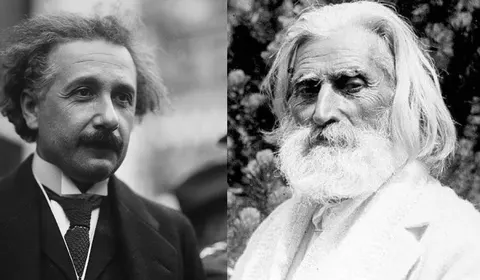
Europe's first Christian monastery, the world's oldest city, Einstein bowing to Petar Danov and Khan Tervel saving Europe: which of these popular claims about Bulgarian history hold up? The historian Alexander Moshev goes through 12 of the most widespread clichés, one by one, guided by the sources and by logic.
 131
What Heals the Wounds of History?
Today history unites and divides us, inflames and stirs us as never before—not least because “who controls the past controls the future.” In his latest novel, Rana (Wound), Zachary Karabashliev turns to Bulgarian history and to some of its most dramatic and important moments: the wounds the past inflicts on us, and the ancestors whose path we continue. We met again to talk about the past, its powerful stories, its lessons, and what brings us together and what drives us apart.
 132
AI Makes the Finals of a Second Poetry Competition (An Experiment)
Literary circles were rocked by the news that an unexpected contender had made the jury's shortlist in the prestigious Veselin Hanchev youth poetry competition: 21-year-old Hristian Papazov, from the village of Nozharevo near Silistra, had submitted poems generated by artificial intelligence. Hristian (or whoever stands behind that name) withdrew, writing that his only goal had been to draw attention to the issue. I don't know whether you believe in coincidences; I don't. On October 25, a day before the news broke, the jury of another popular poetry competition announced its ten finalists. And once again the selection included… generated poems. This time as part of a Digital Stories experiment. So how, in just two days, did two “authors” with AI-written poems end up among the best, the ones from whom the winners will be chosen? And, more importantly: what are the big questions and conclusions here? Whether or not we believe in coincidences, it is clearly time to talk more sensibly and more deeply about the big questions of our day. The Day of the Buditels, Bulgaria's November 1 holiday honoring the enlighteners of the National Revival, is, I think, exactly the right day to wake up…
 133
“And There Might Have Been No Mr. Rusev… That Is What History Is!”
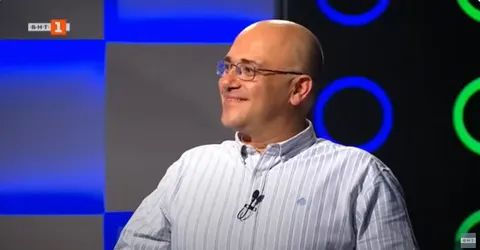
Why is it worth knowing the past better? Boris Rusev, who won an incredible 34 games on the quiz show Posledniyat pecheli (The Last One Wins) before walking away and returning to his true calling as a high school history teacher, may be the best person to answer. We talk about why history divides us more than it unites us, how to wake young people's interest in the past, what future historians will say about today's strange times, and whether Khan Krum really ordered thieves' hands to be cut off.
 134
Quiz: How Well Do You Know Bulgarian History? Will ChatGPT Trip You Up?
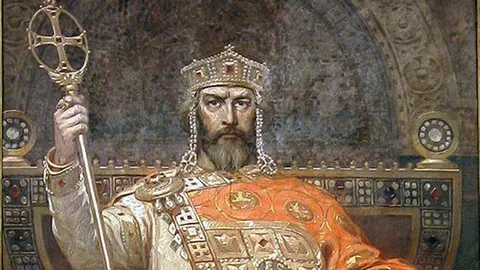
15 widely accepted claims about Bulgarian history and 15 invented by artificial intelligence. Can you tell them apart? Which is historical fact and which is nonsense?
 135
What Will We Do When a Third of All Jobs Disappear?
Artificial intelligence is confronting us with an unprecedented, all-encompassing social transformation: while we shrug at the progress, big companies are pouring billions into projects that could let machines replace a third of the planet's jobs in the near future, and this time without new professions being born to take their place. Petar Petrov, who heads the AI team at Eleven VC and has just published his first book, talks about why this future is already here. How do we break the clichés, start the conversation that matters, and prepare for the challenges that were unthinkable until recently?
 136
Ward Cunningham, Warden of the Free Internet
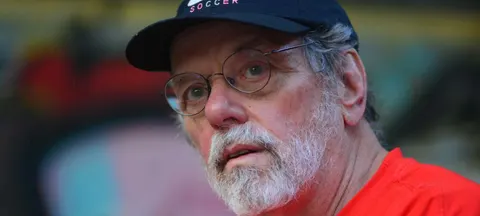
“The best way to get the right answer is not to ask a question. It is far more effective to post the wrong answer.” And everyone will rush to correct you, to jump into the argument, right? That is Cunningham’s Law, a fascinating rule about how online communication has changed us. But who is this Cunningham? One of the pioneers of the democratic internet, he paved the way for Wikipedia and for online opinion-sharing systems, co-wrote the Agile Manifesto, and gave us concepts such as technical debt and extreme programming.
 137
“When I Insult It, It Doesn't Take Offense.” What Gen Z Thinks About AI
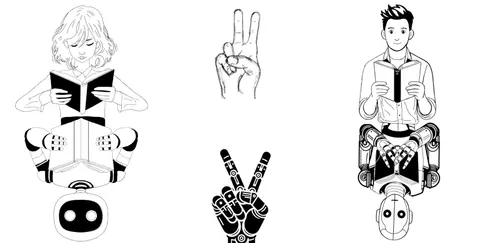
What do young people think about artificial intelligence? This time I hand the floor to seven people in their twenties who chose book publishing as a career, and who spent months digging into what today's algorithms can do. Together they made a book about AI, and in this blitz conversation they explain why they believe more people will soon be reading.
 138
Graduating at 88: The Lessons of Dr. Shoilev
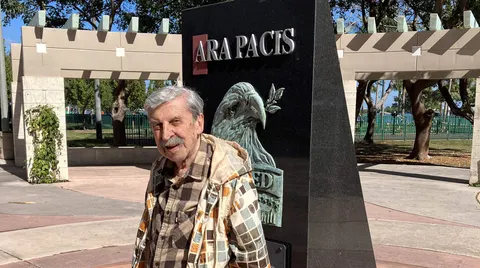
At 80, today's hero went along to keep an acquaintance company while she enrolled to study journalism—and on the spur of the moment decided to go back to the lecture hall himself. It turned into an eight-year adventure full of knowledge and stubborn study, and a few months ago, at 88, Petar Shoilev received his doctorate in journalism! How can anyone be so motivated, and find the strength to take on an entirely new field at that age and finish a PhD with highest honors? Here's how!
 139
A Stuntman Takes On the Hackers
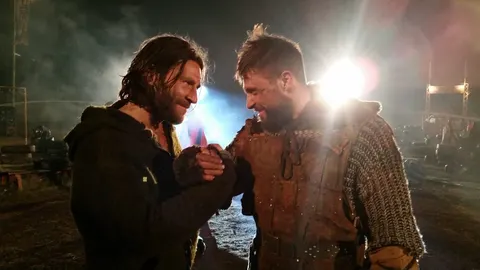
Which is harder—knocking out Antonio Banderas or fending off the cyberattacks aimed at a large company? There can hardly be more than one person in the world who can answer that from personal experience. Only our guest today. Veselin Troyanov has worked as a stuntman on countless Hollywood blockbusters, alongside Jason Momoa, Scarlett Johansson, Gary Oldman, Ryan Reynolds and Antonio Banderas. Today he heads the Bulgarian team of Check Point, a global cybersecurity company with vast experience, while also building his own platform for influencers. Yes, we will talk about security and incidents. About risk and caution. About stuntmen and the spectacular crashes anyone can arrange for themselves by not being careful enough online… And can there be such a thing as safety on the internet at all?
 140
Caught in the Whirlwind of Quantum Nanotechnology
We live in the Silicon Age, says today's guest, and the next steps in how we make chips depend not only on technological progress but on how we develop as a civilization. Prof. Vihar Georgiev, who earned his doctorate at Oxford and now teaches and does research at the University of Glasgow, works in exactly the field that will decide whether we can keep the famous exponential growth of computing power going. He is also helping build the technology that could let a tiny sensor tell us more about our vital signs and illnesses than today's most advanced laboratories can.