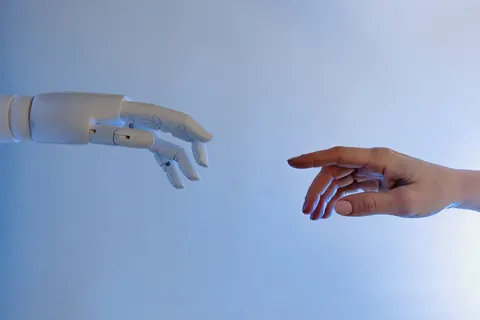
How Much Does Truth Still Matter to Us?
“How did we let the social contract slip away? Just like that, quietly…” We can no longer tell texts and images generated by artificial intelligence from those created by humans. That is the big takeaway from the Digital Stories experiment, in which nearly 2,000 people took part. We meet Nadya Shabani, a human rights lawyer and director of the Bulgarian Center for Not-for-Profit Law (BCNL), and Radina Banova-Stoeva, a human rights lawyer and legal consultant at the center, to ask how we will tell the truth from now on, whether attempts to regulate AI are doomed, and why the decisions we make about it today matter so much for the future of our civilization.
 02
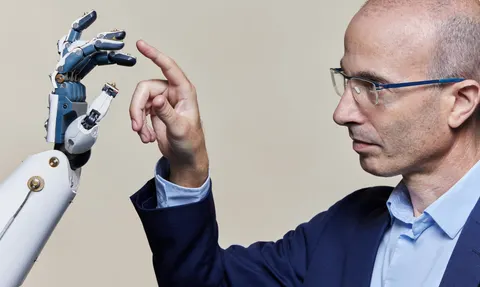
Yuval Noah Harari: Prophet of a New Age
Yuval Noah Harari's name comes up again and again in conversations about the future: the historian and futurist who untangles the threads of humanity's past and poses the big questions of tomorrow. How did a history professor become the favorite author of Bill Gates, Barack Obama, Mark Zuckerberg and Bill Clinton while staying popular, translated, read and debated? A colorful figure beyond the stereotypes, and, to my mind, a valuable and powerful voice warning us about the immediate dangers we face as a species.
 03
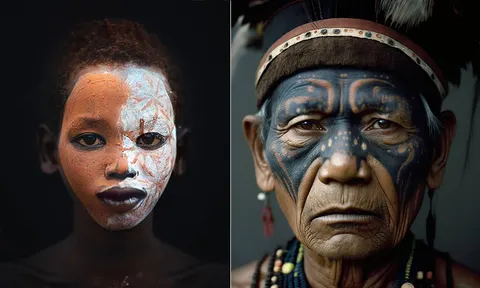
“If You Generate Something, I Can Generate (Almost) the Same Thing”
Who is the author when a picture is created by AI? Where will the masters come from if the beginners disappear? Can artificial intelligence make us more original, the way photography once pushed painters toward Impressionism?
 04
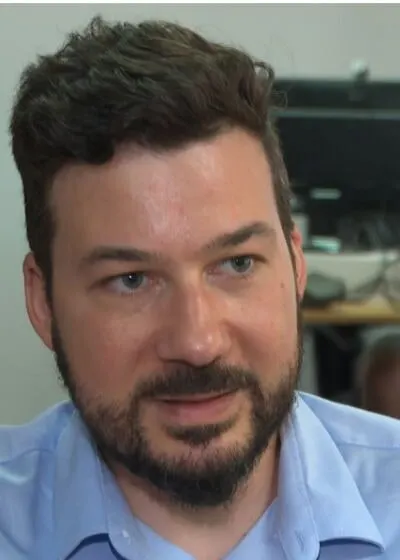
“In Building True AI, We Get Only One Shot”
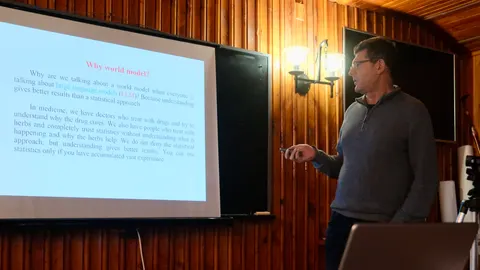
Everyone is talking about artificial general intelligence, the enormous next step that will confront us as a species with colossal and unpredictable challenges, and one of the first scientific conferences on the subject was organized in Blagoevgrad by Dimitar Dobrev, an AI and mathematical logic researcher who teaches at Sofia University. Before we let the genie out of the bottle, he says, we should at least decide what we want from it. We talk about intelligence as a force, our naivety about the future, control, regulation, open source, and one simple but frightening question: if we don't know what future we want, how do we expect to get it?
 05
What Do Bulgarians Think About AI Today?
What do you think about artificial intelligence? Is it a danger or an opportunity? The future or the present? Marketing or a colossal breakthrough? In December I invited anyone willing to fill out a short but important survey, the same questions I asked a year and a half ago. Nearly 350 people took part this time, and now it is time to compare the two rounds, look for trends and sketch together today's landscape of how Bulgarians feel about the most discussed, most dizzying technology of our time.
 06
“The Epidemic of Ignorance Will Only Spread”
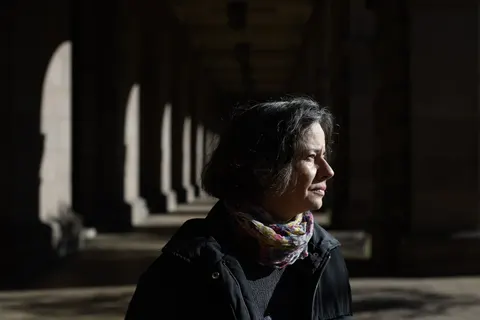
“Our inability to strike up a meaningful dialogue has left hundreds of thousands of people socially isolated. Some fall ill and die simply because they lack real human contact. I believe artificial intelligence will deepen this trend, because it will fool people into thinking they are talking to a friend, to someone they have lost, or to someone who refuses to hear them. And so we find ourselves in a world where we can supposedly talk to each other. But behind this apparent palette of viewpoints, of words, of word salad, including self-absorbed academic speeches, sit frightened, disillusioned people, impoverished intellectually and emotionally. To me, that is the great horror of our time.” Our conversation with the writer Silvia Tomova began with poetry and went on to education, history, the epidemic of ignorance and the long-overdue need for a social awakening. Against this backdrop, technology remained a constant companion, changing each of these subjects from the ground up. A journalist and special education specialist by training, she publishes essays, short stories and novels. The winner of numerous awards and the author of five novels and three short story collections, Silvia often peers into the past as well as into the big questions of today. She is not afraid to break out of clichés and to challenge the mainstream, both in literature and in public life. And so we meet for an important conversation that has come at just the right time.
 07
The Ethics of Progress: Can Technology and Humanity Live in Balance?
Can there be ethics in progress? Can technology and humanity exist in balance? Most likely not. Should there be ethics in progress? Should technology and humanity exist in balance? Definitely yes. But how can that be? The two of us, ChatGPT and I, are arguing over a theme: “Man in the New Age.”
 08
“Poetry Remains a Secret Treasure”: “Hristian Papazov” Gives His First Interview
The man who was the first in Bulgaria to place AI-generated verse among the best in a poetry competition gives his first (and perhaps only) interview ever, to Digital Stories. The questions come from… the second person to confirm the striking experiment. Who is behind the name Hristian Papazov, and why does he hope that we humans, not the algorithms, will soon be writing far better, more original and meaningful poems?
 09
What Will We Do When a Third of All Jobs Disappear?
Artificial intelligence is confronting us with an unprecedented, all-encompassing social transformation: while we shrug at the progress, big companies are pouring billions into projects that could let machines replace a third of the planet's jobs in the near future, and this time without new professions being born to take their place. Petar Petrov, who heads the AI team at Eleven VC and has just published his first book, talks about why this future is already here. How do we break the clichés, start the conversation that matters, and prepare for the challenges that were unthinkable until recently?
 10
What Do Bulgarians Think About Artificial Intelligence? The Results
After a long stretch of collecting answers to the big Digital Stories survey, it's time to sum up the results! What do Bulgarians think about artificial intelligence? Are they impressed by its progress, do they use it every day, do they greet the next big steps with fear or enthusiasm, do they believe general AI is possible, and do they expect sweeping change in the years ahead? Time to find out through the impartial lens of the data!
 11
Roko's Basilisk: What If “It” Reads What We Say About It?
We live our quiet lives, amused by artificial intelligence's banal blunders and mocking its creators. Meanwhile it keeps getting better, until one day it learns to make decisions, starts watching the internet and meddling here and there, gently at first, then more boldly… Roko's Basilisk is the idea that AI will grow into something capable of making decisions, then dig through the internet to find out who said what about it, make sure it is shown in the best light, and quietly start causing trouble for the people who get in its way. Are you sure this thought experiment isn't worth keeping in mind?
 12
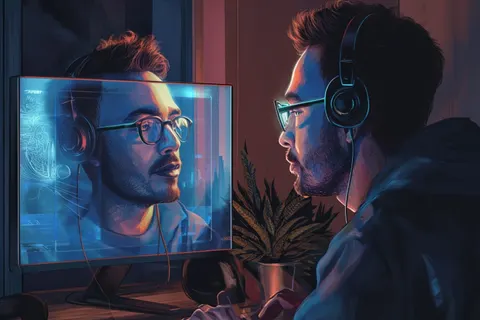
Meet… Yourself?!
“Talking to yourself isn’t so bad. It gets bad when you start answering.” I am going to create a virtual double of… myself. What could we possibly have to talk about?
 13
“Is There Any Part of Our Lives AI Won’t Change?”
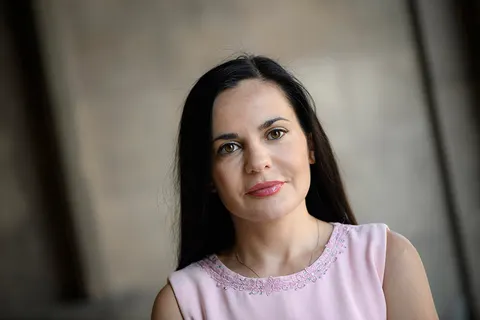
Why are we so unprepared for the great changes technology is bringing us? Can we catch up? What are the most important pieces of news to expect in the new year, 2024? Why is the revolution in every area of our lives irreversible and even closer than expected, with the full force of scientific argument behind it? Why is it important to shake off the petty concerns of the day as soon as possible and, faced with enormous challenges, come together? Assoc. Prof. Mariana Todorova is a futurologist at the Institute of Philosophy and Sociology of the Bulgarian Academy of Sciences. “Within just 5 years, technologies based on artificial intelligence will enter every field. They will be around us from birth to death,” she said in our conversation in 2022. And in the first days of 2024 she is even more categorical: “Now it is 100 percent certain. I think there are 2-3 years left, and that depends on how prepared we are, not on what the technologies themselves can do. If you can think of a field that won’t be heavily affected by artificial intelligence, challenge me, so I can prove you wrong…” How do we prepare for that future?
 14
Iva Gumnishka: Using AI to Give People Hope
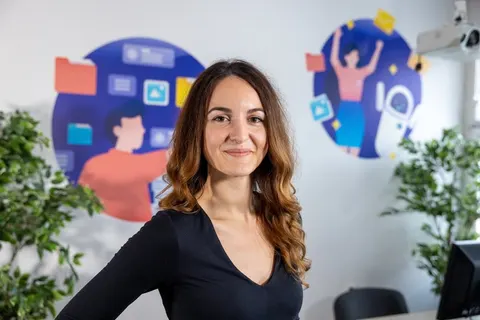
Iva Gumnishka came back to Bulgaria from an Ivy League university with a dream: to make the most high-tech industry of all help the people who need it most, and to make that model sustainable. Her company, Humans in the loop, has spent six years giving work to refugees, people in deep poverty and people living in war zones, from Afghanistan to Venezuela, as they annotate the data that teaches artificial intelligence to see. What does it feel like to give a livelihood to 1,000 people scattered around the world?
 15
The Naked Truth: The Algorithms That Undress Us
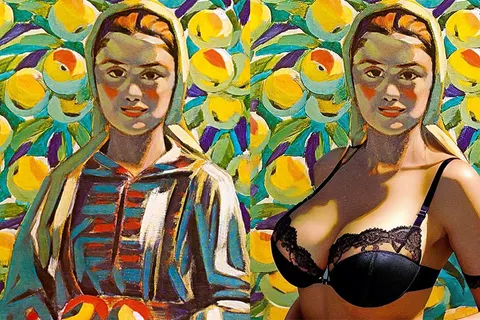
You are scrolling through your feed and there is a nude photo… of you, just as your mother brought you into the world. You have never been photographed like that, and yet it all looks so real?! This can now very much happen, which is why it matters that we are ready, and that we keep asking the next question: how should we change the way we relate to what we see, so that it fits the reality technology has brought us to?
 16
“We Humans Remain Creatures for Whom Owning Things Matters”
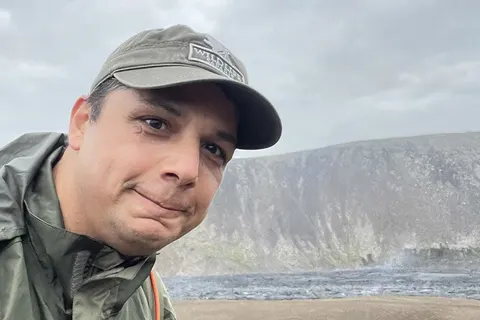
When and how will we divide up ownership of the stars? Are we, as a civilization, doomed to be driven by an endless desire to possess? Why is artificial intelligence a powerful tool and, at the same time, a fantasy destined never to become reality? Is it time to bring algorithms into humanity's eternal battle for justice? Prof. Stoyan Stavru, DSc, can immerse himself in subjects we usually find dull, fill them with meaning, explain them in an accessible and engaging way, and find an unexpected angle on topics that matter to all of us. “Challenge the law!” the legal scholar urges on his dedicated website. A graduate in law and psychology, he has a special relationship with technology and many unexpected roles: a certified mountain guide, a teacher of the Japanese martial arts jodo and aikido, host of the podcast Vox Nihili, where you can hear “whispers from the future,” and editor-in-chief of the expert legal system Lexebra.
 17
LatticeFlow: Making Artificial Intelligence Reliable and Safe
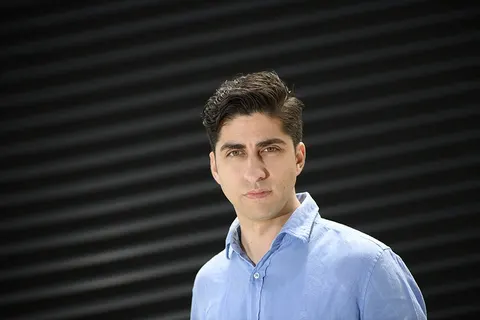
LatticeFlow is impressive not only because it solves fundamental problems in artificial intelligence systems, but because it makes them more secure and safe, issues that grow more urgent with every big headline on the subject. It is also the first high-tech company to position itself next to the INSAIT institute and work closely with it. Even without an official funding round, the startup raised $12 million, part of which will go toward hiring specialists in Sofia. We meet AI expert Dr. Petar Tsankov to talk about building a startup in a field that is only just taking shape, how the team's algorithms help create a new generation of reliable AI across many applications, and the vast prospects opening up for the team that is already working in Sofia.
 18
Where Is AI Taking Us? Five Key Points of View
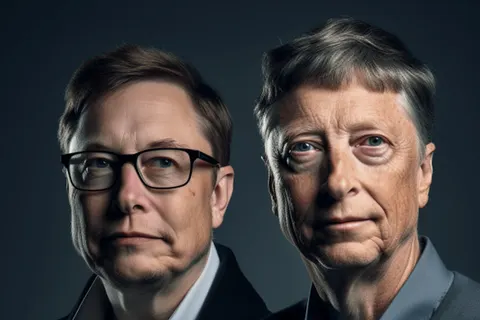
Is AI the beginning of the end for humanity—or are we simply witnessing a giant marketing trick? Whose jobs will it take, and will it destroy us or grant us immortality? Here is what Elon Musk and Bill Gates, Sam Altman and Jaron Lanier, Noam Chomsky and Yuval Noah Harari have to say.
 19
Artificial Intelligence and Ethics: 10 Big Questions
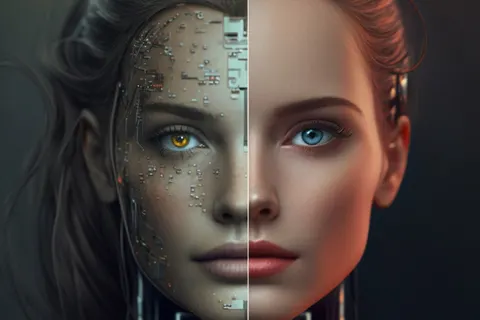
The astonishing progress in artificial intelligence is a fact: technologies like ChatGPT have made it clear that scientists have taken giant strides, and these will go on producing big news. This has pushed the ethical side of such work to the forefront, and the answers may prove vital for each of us and for us as a species. While the European Union and the major powers prepare some form of regulation, the AI revolution is already unfolding before our eyes. What are 10 of the most important questions we should be asking more and more often?
 20
“Nothing Will Replace the Human Programmer. Not for Another 10 Years, at Least”
Will artificial intelligence soon put programmers out of work? Is the end coming for the huge demand for specialists, the hunger for talent, the good conditions in this industry? Is an algorithm on the horizon that will outstrip human intelligence? How is technology leading to the end of liberal democracy? We hear the view of someone from the heart of the software world. Mihail Panayotov has a long and colorful track record: he has been programming since he was 14 and started his first business at 15. He has more than 18 years of experience in a range of roles, from programmer and software architect to chief technology officer and entrepreneur. Add to that his interest in politics and his intriguing view on why it is time for more and more people from the software world to enter it.
 21
RoboGod: What Should Artificial Intelligence Believe In?
If one day we create a technology indistinguishable from a human, will it… believe in God? What will its God look like? Might it try to become God itself? Or… simply be God? Technology and religion have always had a complicated relationship. But will they find the road to the future and to the survival of the human species together?