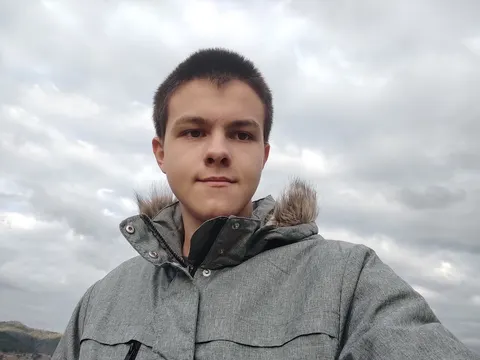
“In the World of AI, Everyone Can Find Something Exciting”
Yordan Darakchiev leads the only program in Bulgaria where, in just a year, you can gain enough knowledge to start working in artificial intelligence. How did Yordan, an astrophysicist by profession, come to create a venture that has now given so many people the fundamentals five times over, and how do its graduates go on to research institutes, to companies like Tesla and Meta, to promising startups, and even to ventures of their own? What does it take to succeed in machine learning, how does this kind of technology help us understand the world we live in, and which directions in artificial intelligence are the most exciting ones to watch?
 02
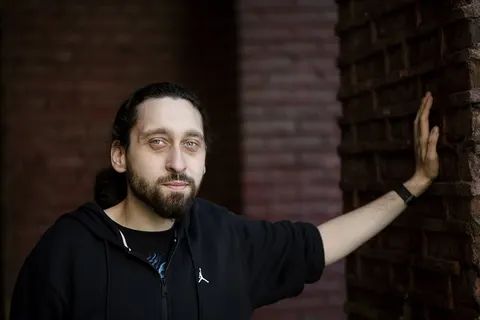
Outrunning the Virus
The pandemic is just beginning. Machine learning specialist Youyang Gu comes across wildly contradictory mathematical forecasts of how the situation will unfold. He decides to build his own algorithm and model using neural networks, and quickly becomes a star, because his model produces far more accurate forecasts than those of scientific units with multibillion-dollar budgets.
 03
The Algorithms That Sealed Us Inside the Bubble
Recommendation algorithms are the reason we end up in the “filter bubble.” They already know everything about us, so it matters that we learn more about them, too. Machine learning algorithms are neither good nor bad. How much power we give them is up to us alone…
 04
“The Point Is Not to Kill Our Own Creativity”
Is it still worth learning programming or data science, or is the future of software engineers doomed? Yordan Darakchiev, who is teaching Bulgaria's first one-year data science and AI module for the eighth time, talks about the challenges generative algorithms pose. His greatest hope is that we won't lose our curiosity and creativity, and he thinks mindless entertainment threatens them more than any AI ever could.
 05
Dr. Raychev, the Man Who Gave Google Koprivshtitsa
Dr. Veselin Raychev is the only Bulgarian whose doctoral thesis ranked among the world's top three of the year across all of computer science, and with it he launched a field now booming: AI that writes code. A former Google engineer whose algorithms still route us through Google Maps and the founder of DeepCode, he talks about the AI hype, the decisions that matter and why he still cares so much about Bulgaria.
 06
(Rock) Stars, Programming and Aliens
He is a programmer, an astrophysicist with scientific publications and… the drummer of a rock band. A Renaissance man, only from the digital age. We have so many topics to discuss with Chief Assistant Professor Orlin Stanchev, a programmer at Kin + Carta, a lecturer at Sofia University St. Kliment Ohridski, an explorer of distant galaxies and the drummer of the band ALI. Let's not waste any time! How are new stars born in the sky, in science, in music? We will head out into deep space to learn how artificial intelligence can help us get to know the universe. We will talk about how new technologies are fundamentally changing the paradigm of science. We will look for what music, science and programming have in common. Last but not least, we will reflect on aliens and on artificial general intelligence. Which one is coming first? Which one should we worry about more? Lift-off! 10, 9, 8, 7….
 07
Car, Take the Wheel!
Autonomous cars have been a recurring topic for years. We were supposed to be done with driving by now, and that step still seems close… But is it really? Why is this innovation so important and so eagerly awaited? Here is a brief snapshot of the subject and the challenges ahead.
 08
Bozhidar Stefanov: Chemistry Against the Layers of Dust
Bozhidar Stefanov was invited to work at Oxford, but he chose to build a chemistry lab at the Technical University of Sofia, in a room that still has no air conditioning. Before he moved in, he tells me, his colleagues called it “the isotope room,” because in the 1970s it was used for experiments with radioactive isotopes. “I’m not going in without a Geiger counter,” I say with a smile, and he pulls out the very instrument and shows me that the readings are normal. Never joke with a chemist. Then he tells me about clearing out the lab, about the layers of dust (and East German porn magazines) he shoveled out before he finally had a place of his own to do research. During the pandemic he learned to embroider. And before that, for many years, he caught the cameras’ attention as someone who could present science in an accessible, accurate and attractive way at FameLab events. Lately, though, his focus has been elsewhere: on producing scientific results. I believe him that the environment is healthy; I have no choice, he knows the subject. But I also believe that we can have both clean air and great prospects for science in this country, if there are more people like him. I may even forgive him his skepticism that artificial intelligence will solve the big questions of chemistry… because he is a chemist, a recognized scientist with rich experience. And because it is time we listened more and more to the people who burn for science and have chosen it as their calling. People who understand what they are talking about and may not offer the most colorful, animated view. But they offer the one that really paints the future…
 09
Where To Now, ChatGPT?
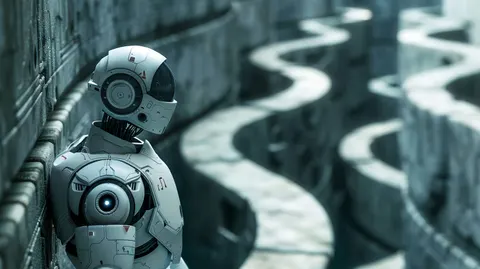
To be or not to be? Left or right? Life is a string of decisions, and on them hangs everything, from whether we reach the peaks we dream of to the eternal riddle of what to have for lunch. So we bring Hamlet and ChatGPT together to find the labyrinths, literal and figurative, that the electronic Virgil is ready to lead us through: five cases where artificial intelligence is already here to guide us, and five where we will have to wait (or never live to see it).
 10
The AI Detective: Can Technology Give Us Back the Truth?
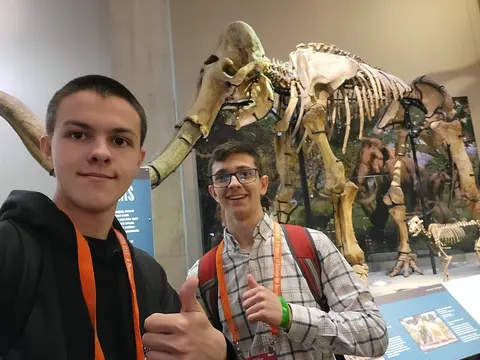
After a Digital Stories experiment with almost 2,000 participants showed that we can no longer tell AI-generated images and texts from real ones, it is time for the next step: could artificial intelligence itself become our salvation in this unequal battle for the truth? Radostin Cholakov, from the Rhodope village of Barutin, and his friend Delyan Boychev, both finishing high school this year and both already accomplished in the world of neural networks and computer vision, decided to find out. AI creates remarkable images today, but can it tell truth from lies and judge which picture was made by a human and which by an algorithm?
 11
How the Algorithm Learned to Recognize Our Faces
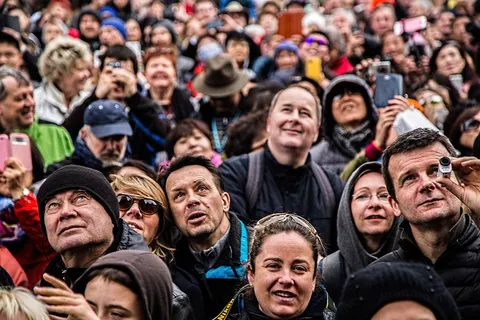
Facial recognition systems have become so refined that they are practically infallible. How did we arrive at this technological breakthrough, and why does hardly anyone talk about it? What ethical questions does it raise, and why should each of us learn more about it?
 12
Five Jobs on Their Way Out and Five the Future Is Bringing In
Technology is drastically changing the needs of society, needs that must be met by the daily work of its individuals. Today whole professions vanish and new ones appear faster and more quietly than ever, and although forecasting in so dynamic a field is nearly impossible, we will try to sum things up: which five professions will soon disappear, which five will be most in demand in the near future, and what five professions we can only imagine might one day exist?
 13
News or Blame? The Robot in the Newsroom
Every day we already read articles written by a robot. Today the most valuable resource isn’t oil, or money. It isn’t gold, it isn’t even power. At the epicenter of the computer revolution, everything is information. Zdravko wants to be a journalist; Zhelyazko is an artificial intelligence. Who does the future belong to?
 14
The Claude Before Claude
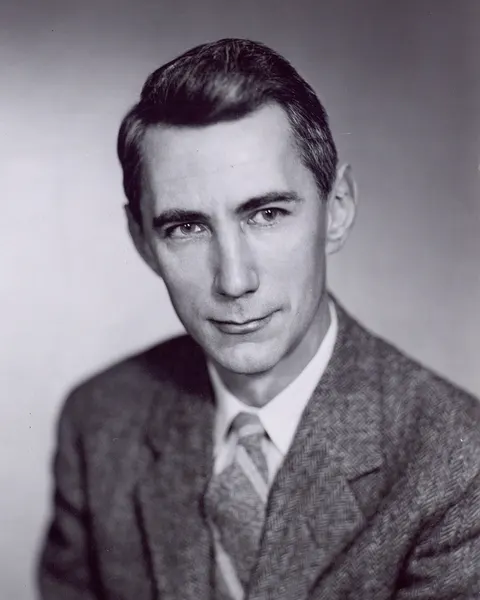
Who is the man whose name we utter every day the moment we open one of the most popular artificial intelligences? Why will no one confirm that the bot is named after him? And how did a seemingly unremarkable mathematician, who rode his one-wheeled bike through the corridors of MIT, arrive at the idea that gave birth to both the mobile phone and large language models?
 15
Ivan Popov, the Man Who Caught the Future
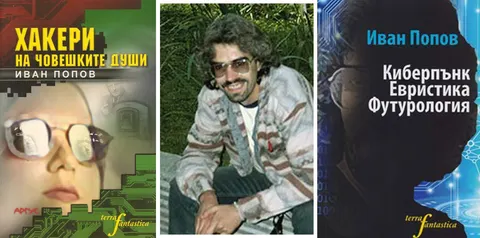
“A person’s worldview depends substantially on their information metabolism.” “Man is a bot to man. And bot is man to bot. But what kind of man is the bot? And what kind of bot is man?” Ivan Popov was a master of syllogisms, and much more. He was a writer who left us a small number of works from the beginning of the new millennium. Although he published only one novel in his lifetime, and in a small print run at that, his name remains mythical. Because he presented the future in an inimitable way. He caught the trends, gathered the sparks of knowledge that paint the colorful picture of technology’s tomorrow. He managed to bring science and literature together, so that they could search, shoulder to shoulder, for the human and the superhuman, and catch the trends. Ivan Popov’s messages are powerful, stirring and thought-provoking today, more than ever. My heartfelt thanks to Nikolay Genov, who drew my attention to this remarkable writer, forecaster, journalist and scientist. I believe it is important for his words and his name to reach more people. I will be glad of any support—stories from people who knew him, help in making his work better known, or simply good ideas. Write to me!
 16
Caught in the Whirlwind of Quantum Nanotechnology
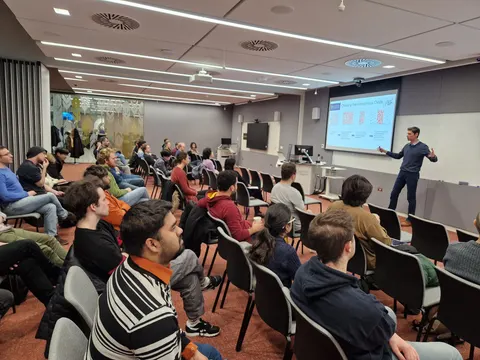
We live in the Silicon Age, says today's guest, and the next steps in how we make chips depend not only on technological progress but on how we develop as a civilization. Prof. Vihar Georgiev, who earned his doctorate at Oxford and now teaches and does research at the University of Glasgow, works in exactly the field that will decide whether we can keep the famous exponential growth of computing power going. He is also helping build the technology that could let a tiny sensor tell us more about our vital signs and illnesses than today's most advanced laboratories can.
 17
Dartmouth: Pouring the Foundations of AI
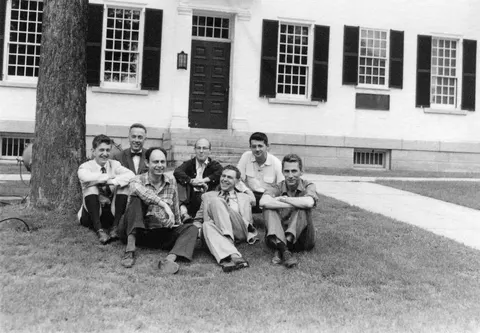
“By 1978 at the latest, we will have a machine with general artificial intelligence comparable to average human intelligence,” says Marvin Minsky, one of the scientists who organized the Dartmouth meeting. It gave birth to fundamental ideas and raised questions that seem more important today than ever… ChatGPT was unveiled in November 2022. But when was artificial intelligence… “born”? The idea that computers can resemble humans and solve a wide range of problems. How many candles will it have to blow out on its next birthday—5, 10, 20? A full 68! Although by 1956 the forerunners of the field, Alan Turing and John von Neumann, had long since made their fundamental discoveries, it is ’56 that is now considered the starting year in the history of the field. For 8 weeks, the greatest scientists in this future field came and went at an American college. The people who would later lay the foundations of the field gathered to talk about the main challenges they faced…
 18
The Selfies That Will Save Lives
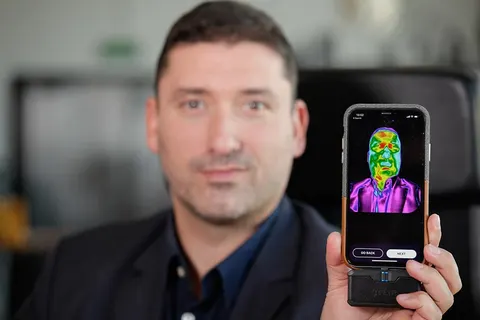
A long-underestimated technology, finally come of age, could save many lives. The Bulgarian startup Kelvin Health uses thermal cameras and artificial intelligence to catch tiny changes in body temperature that point to illness long before we feel it.
 19
An Experiment: Has AI Learned to Translate Yet?
Is the technology finally here for high-quality translation, including to and from less widely spoken languages like Bulgarian? DeepL boasts of being “the world’s most accurate translator,” and plenty of people already use it every day, but how will it handle classic passages by Tolstoy, Murakami, Remarque or Gospodinov? Will we end up lost in translation, or is translation one more field where we can now rely on artificial intelligence, so that the money spent on the kids’ private language lessons turns out to be thrown to the wind?
 20
“Now It Is Crucial for the State and Society to Back INSAIT”
INSAIT is the best news in decades for the Bulgarian IT world, and for the entire education sector. As if out of nowhere, a modern institute unique in the region appeared in Sofia at the start of 2022. It was born thanks to the stubborn efforts of Prof. Martin Vechev, whose idea dates back to 2003: applying for a PhD at Cambridge, he had to write on yet another form what he dreamed of achieving over the next 20 years. How did this quiet scientific revolution happen, what are its biggest risks, what will Bulgaria look like if it succeeds, and how did Prof. Vechev bring some of the world's scientists who are building tomorrow to Sofia this week?
 21
“Today, Everyone Online Lies However They Please”
We meet Vu Nguyen—Vunyo, to his friends—again to chat about the present and future of journalism, about technology, and about the challenges and the bright sides of life in Bulgaria. A former journalist at The New York Times and a top-level IT specialist in the US, he and his wife decided to move back to Bulgaria after their son started calling the laptop “grandma”; he then won hearts on the Bulgarian edition of MasterChef and ran his own restaurant for a while. Today he is back in the world of information technology, but now here at home.
 22
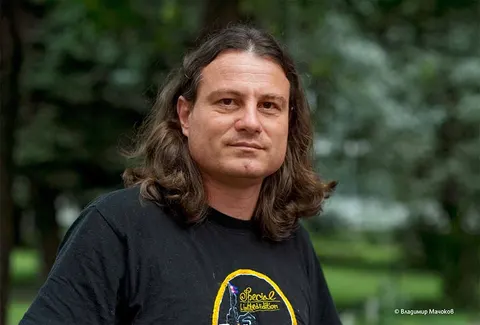
The Fake News Hunter
It is called Tanbih, it comes from Qatar, and it promises to rescue us elegantly from fake news and disinformation. We meet its creator, Dr. Preslav Nakov, a world-class specialist in natural language processing with artificial intelligence. How can an algorithm tell that a news story is fake… before it has even been written?!
 23
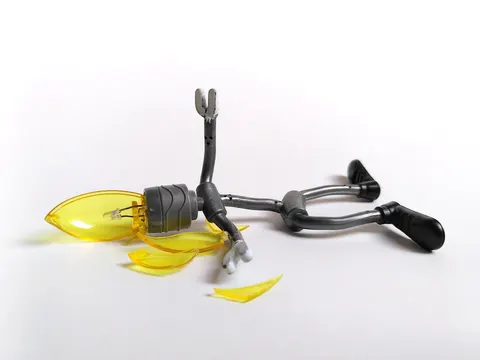
“AI Revolution!” When the Hype Goes Too Far
“Artificial intelligence” has become such a fashionable phrase, a marketing cliché that is often completely devoid of meaning. We are all excited about the possibilities this kind of technology brings, but sometimes… the results can be comical and even dangerous.
 24
Robots in Power
“There’s no one to vote for”—we say it and hear it so often. Clearly the Western model of democracy, and our own feeble variety of it, is in crisis… Could the moment have come for artificial intelligence to change things? Is it time to start a revolution with the new Bulgarian Robot Workers’ Party?
 25
Radostin and the Neural Network
Radostin Cholakov is only 15, but he already has solid experience as a programmer. His latest project is the AzBuki.ML platform. Thanks to it, we will soon be able to use the most advanced AI text-processing capabilities in Bulgarian.