A Future Without Crime, or a Digital Concentration Camp?
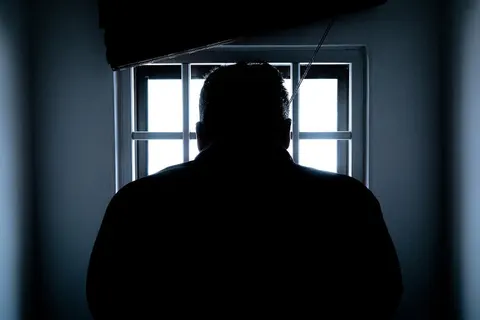
Algorithms, it turns out, can already predict when and where a crime will happen. Countless lives could be saved this way. Humanity could be forced to bid farewell to that age-old dark side of its own—crime. And what about the justice system? In China, some verdicts are already officially decided by artificial intelligence, and its rulings are challenged only when there is serious evidence. Does this mean the end of judicial errors, legal tricks, the imperfections of the field? Will we put John Grisham out of work? Or will we end up in the terrible final scene of a famous novel—a man and a woman are talking when a steely voice behind them says, “You are the dead”? If every crime can be predicted or justly punished, will our lives become incredibly peaceful? Or will we find ourselves in an over-controlled global concentration camp?
 62
Divide and Rule, Online
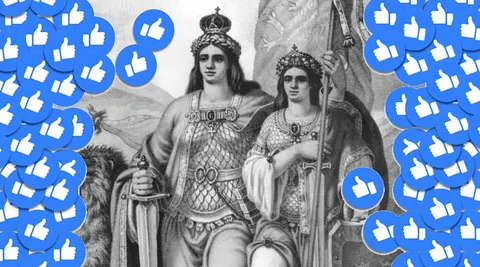
Could any of the most meaningful events in our history, whose undisputed benchmark is the Unification, have happened in the age of social media? In a time when the online world shapes our consciousness even more than our offline being does, is it really worth repeating the famous line “Unity makes strength”?
 63
The Internet of Forgetting
Do you know the capital of Madagascar? Who cares—if for some reason you ever need it, the omnipresent Google will tell you everything about it in three seconds. Not so long ago we all “carried” the phone numbers of family and friends in our heads. The web has forever changed our relationship with knowledge. Storing facts is no longer a priority for our brains; today the ability to find what you need quickly and accurately has replaced actually knowing. What challenges does this shift create? Why does it bring both serious opportunities and countless risks? Is it changing us even… as a species?
 64
“The Problem Is That We Became Godlike in Our Heads”
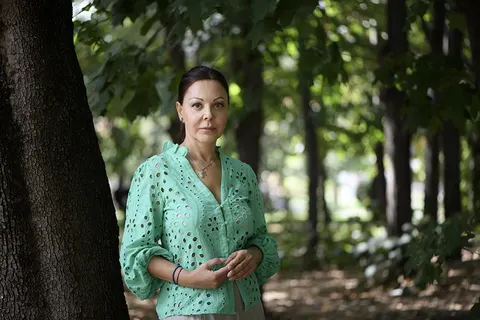
“Suddenly it became clear just how far apart people had actually drifted.” Why did empathy fall victim to our capture by social media, and how do we get it back? Why have selfishness and the drive for self-sufficiency become the main obstacle to our happiness? Ani Vladimirova is a psychologist with a long and colorful career and an always interesting point of view. Known from numerous television projects, she also created Bulgaria’s first website for online therapy, back in 2003. We meet to talk about the big challenges facing the “little” person. About the imperceptible changes technology has brought us. About how it made us feel godlike, even though we are still the same fragile, vulnerable creatures. About the instincts that will one day make us value information again.
 65
Luddites, Long May They Live
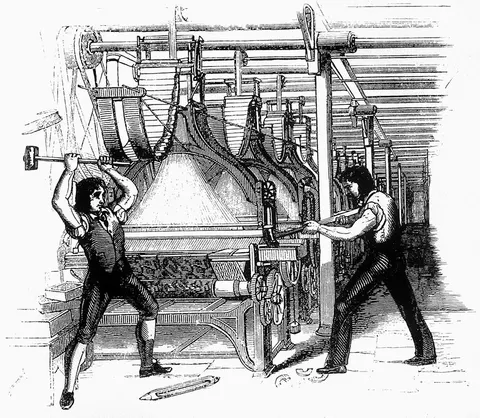
The Luddites were a British movement that rose up against the machines two centuries ago. Workers fighting for rights that had fallen victim to automation caused such chaos that Britain had to send more soldiers against them than against Napoleon's army. Technological progress is often frightening. Today, the Western world calls people who worry about the future brought by the supposedly limitless possibilities of computers “Luddites.” In that sense, we all are, or at least it is good to be, Luddites to some degree. What does the history of the skeptics' battle against technology look like, and was it always doomed? What changes if we look at it from the vantage point of today and the questions our time raises?
 66
“The Problem Is People, Not the Law”
Is our data really protected online? What rules should we follow to avoid unpleasant surprises? How can we be sure we aren't infringing anyone's copyright, and what should we do if someone infringes ours? And who will own the rights to the “works” of artificial intelligence? The law takes up an enormous amount of room in the online world too. We rarely think about it, yet the field is extremely important. Hristina Bogia holds a doctorate in law and specialized in all the important questions that technology raises for legal science. A few years ago, disillusioned with the system, she decided to change careers and moved into the software industry. Together, we'll look for answers to all of these questions. We'll head for the places where technology, the law and the rights of each of us intersect. We'll go over plenty of everyday advice that can help any user. And, last but not least, we'll get the perspective of a thoughtful young person with a distinctive view on a topic that is always current in Bulgaria: a court system that doesn't work.
 67
This Site Uses Cookies… So How Should We Answer?
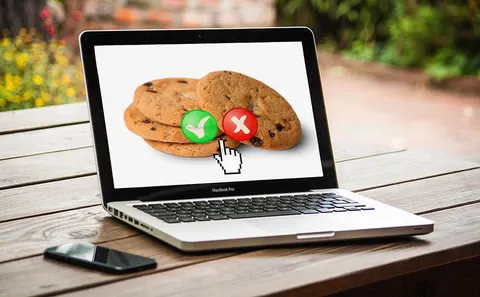
We see the question in the headline every single day. But how should we answer it? Which cookies should we accept and which not? Does our decision matter, and can we change it? And what are these notorious cookies anyway? GDPR. We've all heard of it, and I'm convinced it must be an abbreviation of some Latin curse; if it isn't, it deserves to be adopted into Latin in the language's next release. While every tiny website is forced by law to obey the infamous regulation to the letter, the pages of the giant companies where we spend hours every day show it to us once and that's that. How did we get here? Is it worth reading the questions every site asks us about cookies? Are there more sensible solutions?
 68
Start…Up! What on Earth Is That?
How does an investment with a return of… 200,000 percent sound to you?! One that is perfectly legal and has nothing to do with mythical figures like pyramids and pharaohs. Only with fairy-tale heroes. Modern technology is like a fairy tale. It has created a huge new economic sector where miracles happen. Yes, quite literally: unicorns fly, angel investors stroll about, and millions of dollars are the smallest unit of measurement. We are talking, of course, about the world of startups. Let's sum up the most important things worth knowing about it.
 69
“The False Sense That Our Opinion Matters…”
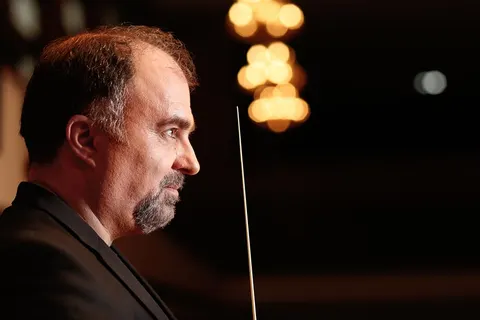
Maestro Nayden Todorov is a world-class musician, but also an erudite man with a broad outlook and a distinctive view of technology and the way it changes us. Why does he believe our constant rush is a disease we must fight? How is the digital world pulling us away from our humanity, and why is art the only salvation? How did the maestro go 12 years without setting foot in an opera house, horrified by his first encounter with one? And why does he often run an experiment, going to an online forum to defend two opposite points of view in an attempt to escape the filter bubble?
 70
Where Did All the Hate Come From? Is There a Way Out?
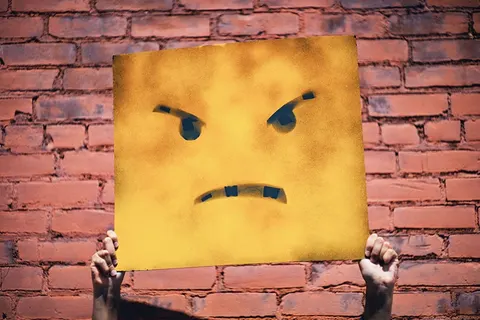
I've read the headline, and I already hold an extreme opinion. Time for a nasty comment—let the hating begin! But where did all this aggression come from, why must we answer rudely even when we merely disagree with the person behind the other profile, and is there any way to save ourselves from the exhausting hate of online conversation?
 71
How the Algorithm Learned to Recognize Our Faces
Facial recognition systems have become so refined that they are practically infallible. How did we arrive at this technological breakthrough, and why does hardly anyone talk about it? What ethical questions does it raise, and why should each of us learn more about it?
 72
Five Jobs on Their Way Out and Five the Future Is Bringing In
Technology is drastically changing the needs of society, needs that must be met by the daily work of its individuals. Today whole professions vanish and new ones appear faster and more quietly than ever, and although forecasting in so dynamic a field is nearly impossible, we will try to sum things up: which five professions will soon disappear, which five will be most in demand in the near future, and what five professions we can only imagine might one day exist?
 73
What Do Google and Facebook Know About You? And Why Does It Matter?
“If something is free, you are the product.” “You are not the internet giants’ customer, you are their product,” says Jaron Lanier, a researcher who knows very well what hides today behind the facade of the information society. How did the data of billions of users become one of the most valuable commodities of our time? What do the biggest players “know” about each of us? And why is it so important to stay on guard?
 74
Man and Robot, Intimately
Algorithms are replacing us in more and more tasks. Meanwhile, the internet has changed human relationships forever, love and sex included. Isn't the point where the two meet drawing near? What does the future look like when artificial intelligence and robotics step in between two lovers? 42 percent of people say they would have sex with a robot today. 39 percent would have a romantic relationship with a humanoid. Would you?
 75
Alone Among Facebook Friends
We surround ourselves with “friends” on more and more social networks. And, all too often, we stay alone. When does the supposedly so social online world make us feel lonely? Are we really raising generations that will lose normal human contact? When does loneliness become a problem?
 76
The Digital Prophet Who Came to Hate the Internet
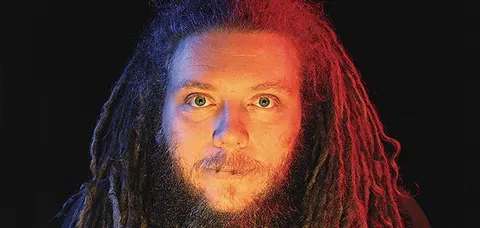
“You are not the customer of the internet giants, you are their product.” “Social media is worse than cigarettes. Cigarettes don’t make you degrade. They kill you, but you still remain yourself.” You will hardly believe that these words belong to one of the pioneers of today’s digital world. Jaron Lanier popularized the term “virtual reality” and created the concept of avatars. His path crossed those of Richard Feynman, Marshall McLuhan and Andy Warhol. For a long time he was at the height of fame, on first-name terms with Steve Jobs, Sergey Brin and Bill Gates. In a single afternoon he personally showed his pioneering virtual reality goggles to the Dalai Lama, Leonard Bernstein and Terry Gilliam. And today he is a preacher of sorts, speaking out against the flaws of the digital world.
 77
The Algorithms That Sealed Us Inside the Bubble
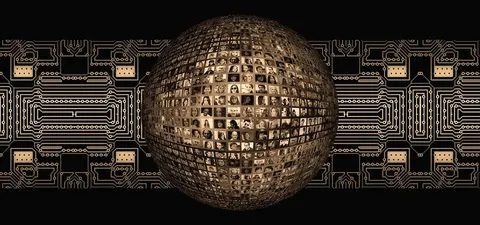
Recommendation algorithms are the reason we end up in the “filter bubble.” They already know everything about us, so it matters that we learn more about them, too. Machine learning algorithms are neither good nor bad. How much power we give them is up to us alone…
 78
“Computers Will Be Superb at Manipulating Our Feelings”
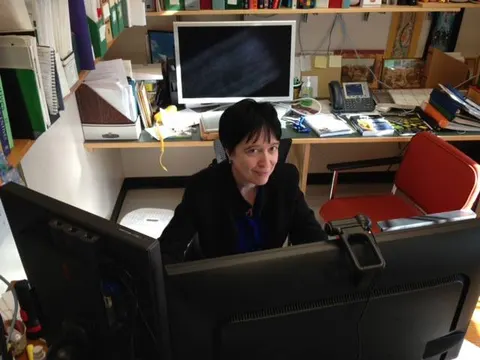
“Do you think there will one day be an AI capable of laughing and crying?” “No, but it will be capable of making us laugh and cry.” “And that computers might one day have feelings?” “No, but they will be superb at manipulating ours.” For 30 years Prof. Julita Vasileva has studied computers and the world they created. As a scientist, she was lucky enough to land in a field that went through an incredible rise; as a teacher, she has witnessed how several generations relate to technology. Prof. Vasileva knows and studies the technological side of the computer world, but she pays even more attention to its social side.
 79
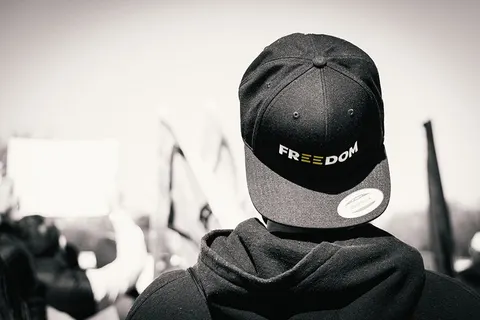
The Internet Connects Us, the Internet Divides Us
Conceived and built as the apotheosis of the free human spirit, the internet is turning into a veritable factory of inequality—by many different measures and in completely unexpected directions. Some rifts are quietly becoming chasms capable of causing enormous problems for all of humanity. Is it too late to “turn” the machine around?
 80
Ivo Ivanov: “We Should Have Foreseen the Destructive Side of Technology…”
Until there is an artificial intelligence that can write moving prose, we will have to rely on Ivo Ivanov for the job. Like every sensitive and observant person today, he has his own many-colored view of the digital transformation. Are there things we cannot teach algorithms? What did the online age give us, what did it take away, and how do we stay human in it?