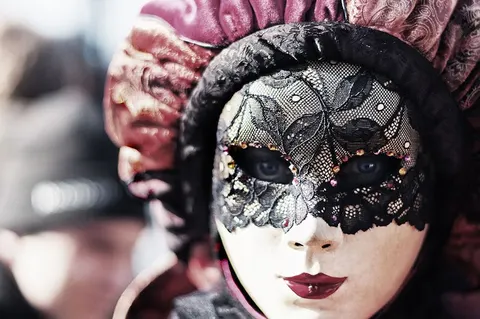
What's the Rush?
“Our hectic daily lives” is a cliché we repeat every day. Perhaps because it is unconditionally true. There is never enough time; they've started making the days far too short. The minutes slip away, leaving no time for quiet moments with family and friends, for a book, simply for reflection or complete relaxation… How could it be otherwise? Today, in a single day, we can take in more information than people only a few generations ago absorbed in months, even in a lifetime. Where does this constant feeling come from? Are the generations different, is there more work? Or is there simply something that keeps us under pressure? Something that keeps scaring us that we're missing the moment, even when there is no reason at all…
 42
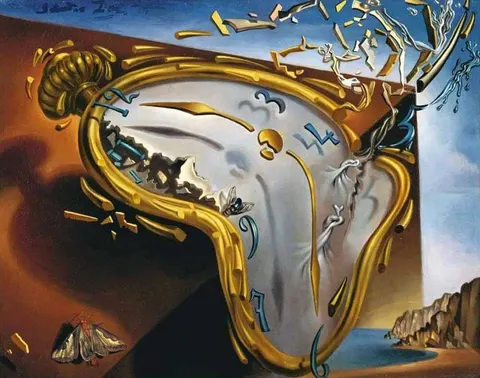
Covid, Four Years On: Why Didn't We Learn Our Lesson?
Remember? Not so long ago we were locked in our homes, the parks were cordoned off with tape, the roads out of town blocked by checkpoints… Then the vaccines arrived, and they were going to save us or kill us. Bulgarians were dying in record numbers, we split into vaxxers and anti-vaxxers, and from there came so many other divisions… The human brain is an incredible thing: it forgets quickly and adapts to the new, to the easy. But that way many important questions vanish, pushed aside by the next “hot” topic to squabble over. Meanwhile, signals are coming from many countries that covid is back… We saw how quickly our everyday lives can be turned upside down. How fragile we are, as individuals and as a species. And it is time to look for the lessons. Could a new wave of the coronavirus come soon, or could the next microorganism appear that is able to change life on the entire planet? Have we learned our lessons? How well did we handle the pandemic? Could more human lives have been saved? How deadly did the coronavirus turn out to be? Did we overdo the measures or, on the contrary, should they have been stricter? Did the vaccines turn out to be the solution? Are we better prepared for future epidemics? Questions whose answers matter to every one of us.
 43
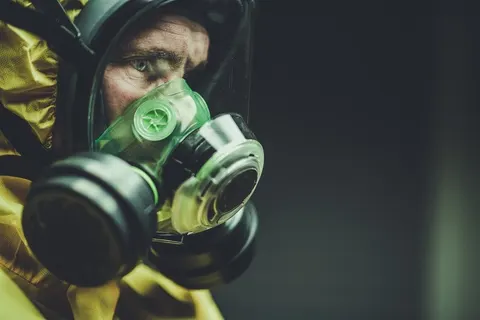
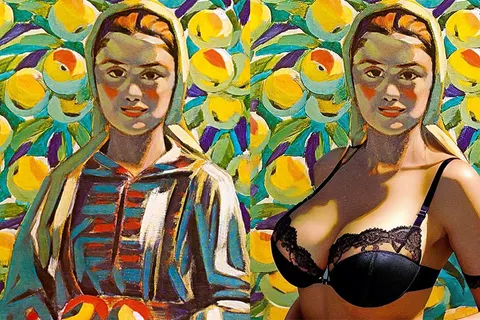
The Naked Truth: The Algorithms That Undress Us
You are scrolling through your feed and there is a nude photo… of you, just as your mother brought you into the world. You have never been photographed like that, and yet it all looks so real?! This can now very much happen, which is why it matters that we are ready, and that we keep asking the next question: how should we change the way we relate to what we see, so that it fits the reality technology has brought us to?
 44
“We Humans Remain Creatures for Whom Owning Things Matters”
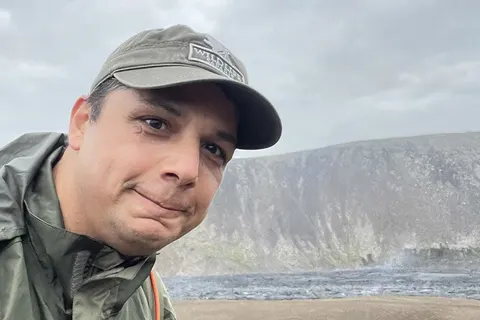
When and how will we divide up ownership of the stars? Are we, as a civilization, doomed to be driven by an endless desire to possess? Why is artificial intelligence a powerful tool and, at the same time, a fantasy destined never to become reality? Is it time to bring algorithms into humanity's eternal battle for justice? Prof. Stoyan Stavru, DSc, can immerse himself in subjects we usually find dull, fill them with meaning, explain them in an accessible and engaging way, and find an unexpected angle on topics that matter to all of us. “Challenge the law!” the legal scholar urges on his dedicated website. A graduate in law and psychology, he has a special relationship with technology and many unexpected roles: a certified mountain guide, a teacher of the Japanese martial arts jodo and aikido, host of the podcast Vox Nihili, where you can hear “whispers from the future,” and editor-in-chief of the expert legal system Lexebra.
 45
FM-2030: The Man Who Refuses to Die
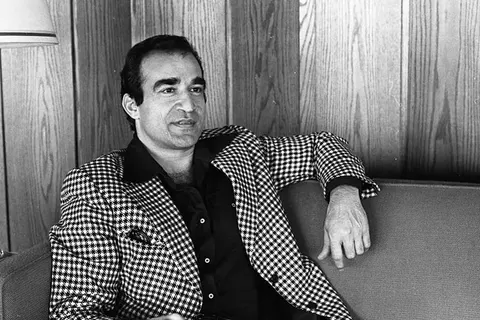
Left or right? Up! He believed that when 2030 came, he would wake from the ice to celebrate his 100th birthday. He was convinced that by then we would have reached the heavens, settled other planets, put our petty squabbles behind us and, lifted on the wings of technology, marched onward in human evolution. Was FM-2030 right? Could the sharp-shooting basketball player still surprise us with a three-pointer of a prediction? If so, in just seven years we will be able to discuss the details with the man himself. If he really is revived, the forgotten creator of transhumanism, who picked a name like a radio station's, will surely have a lot to tell us… If not, he will become just another dreamer who overestimated humanity and ran ahead of his time.
 46
Is the Digital Age Waiting for Its Freud?
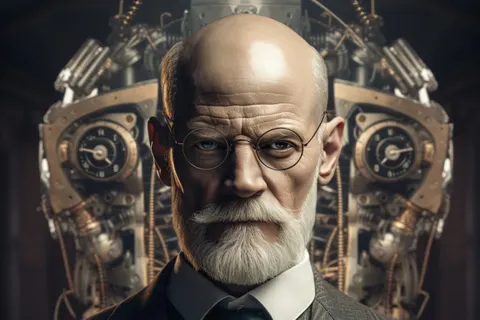
No matter how thirsty you are, you can't drink from a fire hose. If you don't believe it, try. The same goes for technology. We push it thoughtlessly into more and more corners of our daily lives, handing it one new role after another, until we suddenly find ourselves chained to our screens like Prometheus to his rock. Information technology is a huge opportunity. The dose makes the medicine, but… what is the dose? We will look for the answer to that question, along with another one: when will the Freud of our time appear, and who will he be? The person who will grasp the psychological challenges facing Homo sapiens at the height of the technological revolution. A Freud who will lift the taboos and make sense of the bond between people and information technology.
 47
Another History
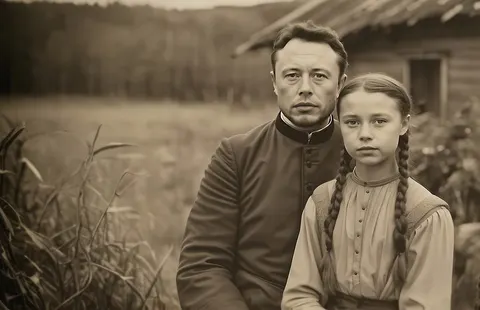
“Who controls the past controls the future,” says a book we all race to quote. And also: “Who controls the present controls the past.” As we delegate more and more of our memory to technology, life will keep getting easier. As we seek our refuge from time in our own bubbles, this will bring us together and pull us apart. But can today's technology change history? Can it cross out and rethink events from the past? Can we harness artificial intelligence for a more objective view of history in all its periods? Why does the past turn out to be an eternal subject of online quarrels? How does the technology of the future change the past… and the other way around?
 48
What Do You Want to Read Tomorrow?
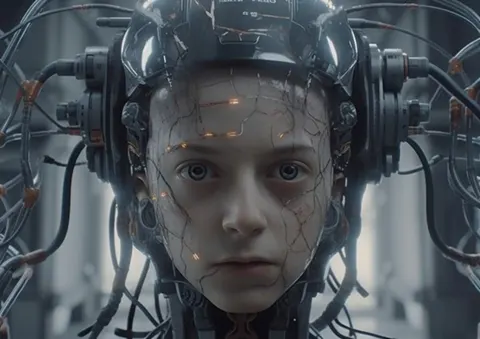
How do we want tomorrow to look, and will we still tell truth from lies as we sink ever deeper into our bubbles? Over the past 20 years we have forgotten how to read long texts and changed our very relationship with the truth. My answer to how we save the future may sound idealistic, because I am betting on the contender losing the battle for attention most badly today: traditional media.
 49
We Won't Eat Animals. We'll Talk to Them?!
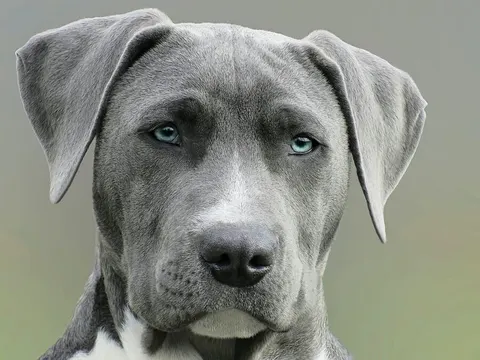
Will the future really force us to give up meat? Or will we simply eat meat that… was made without killing an animal? Will technology soon let us understand more about how our best animal friends see the world? Will it let us talk to them… Our relationships with the other species on the planet have always been more layered than we realize. The most fascinating remain our ties with our closest “relatives”—the mammals and the other links that have climbed high up the food chain. We give them souls and make them part of our daily lives… while the vast majority of the planet's inhabitants rarely pass up a chance to snack on them. Our relationships with the other species on Earth are yet another field where technology promises striking news, and in the foreseeable future at that.
 50
The Genius Terrorist and the “Evil of Technology”
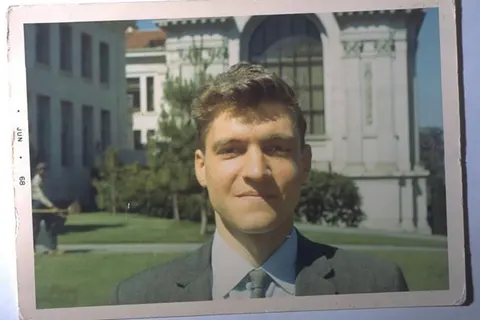
Last Sunday, in the hospital of a federal prison, while serving the first of his eight life sentences, a man who began life as an exceptionally promising scientist passed away: Ted Kaczynski, known as the Unabomber. A child prodigy, at just 25 he became the youngest faculty member in Berkeley's history, and a dazzling career was predicted for him. Then he suddenly decided to withdraw to an ascetic shack in the middle of the woods. For 17 years he carried out terrorist attacks on scientists and people connected with the computer world. He became the FBI's most expensive target. Meticulous, elusive! He was recognized and turned in by his own brother, from words in his manifesto, which is sure to be much discussed. “As society and the problems that face it become more and more complex and machines become more and more intelligent, people will let machines make more of their decisions for them, simply because machine-made decisions will bring better results than man-made ones.” “He might not be wrong,” Elon Musk wrote, sharing the news of Kaczynski's death. The Unabomber was a terrorist who took the lives of innocent people. And at the same time a scientist who predicted the dangers that come with technology. Obsessed with the risks it carries, yet incredibly perceptive in the way he looked at them.
 51
Universal Basic Income: Is It Time We Got Paid Not to Work?
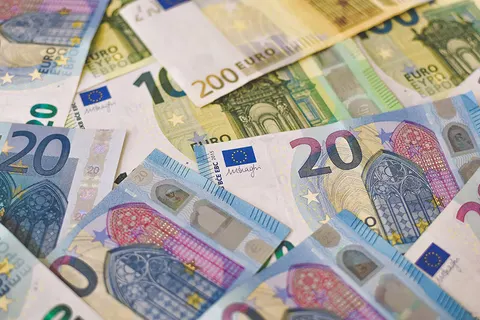
By all appearances, technology is going to free up a lot of our time, but how will society change? What exactly is the much-discussed universal basic income? What are the big arguments for and against the idea that everyone should receive guaranteed money? Or might the answer to the new challenges turn out to be the four-day work week? Artificial intelligence has the power to change the daily lives of all of us. Today we are split into extreme camps over how advanced the technology really is. And yet there is hardly any dispute that it already has the potential to turn almost every industry and field upside down. Will it take the bread out of many of our mouths? It certainly has the power to relieve us of yet another batch of tasks, taking a great many new activities over to its side. New roles are appearing too, as they always have, but what will we do if the pace at which that happens falls behind? Will the societies of the developed world manage to respond to the new challenge, and how? May 1 is coming, Labor Day. Labor is certainly something worth thinking about more often, especially in our part of the world, where we have always taken a somewhat more philosophical view of the subject. So much so that we celebrate labor with a day off…
 52
Technology Can Already Read Minds. Is This the End of Freedom?
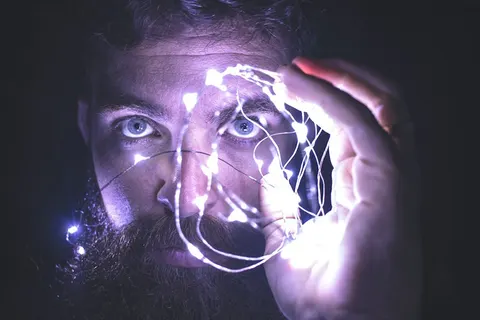
Technology can already “translate” brain signals into readable data, and the first breakthroughs are here. Swept up in the progress of artificial intelligence and the notorious GPT, we may miss a huge leap when it comes to the natural kind. Prof. Nita Farahany, a scientist and legal scholar with vast experience, is drawing attention to it. “Today there are already companies capable of decoding brainwaves,” she told the world forum in Davos at the start of the year. Are we ready for the moment when someone reads our thoughts? Will it lead to total control, or make our lives more comfortable and meaningful?
 53
“Technology Is a Labyrinth We Locked Ourselves Into”
Could spirituality, rather than technology, be the path to the next step in our evolution? On Sunday, March 19, director Nikolay Vasilev premieres Vaklush, a feature film more than 20 years in the making, about the spiritual teacher Vaklush Tolev, who largely changed his life and worldview. A conversation about mystical knowledge, the coming transition many religions speak of, and the wings that might carry us out of the labyrinth of technology in which we feel hopelessly lost.
 54
Artificial Intelligence and Ethics: 10 Big Questions
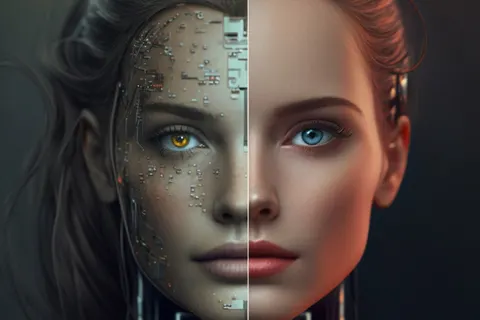
The astonishing progress in artificial intelligence is a fact: technologies like ChatGPT have made it clear that scientists have taken giant strides, and these will go on producing big news. This has pushed the ethical side of such work to the forefront, and the answers may prove vital for each of us and for us as a species. While the European Union and the major powers prepare some form of regulation, the AI revolution is already unfolding before our eyes. What are 10 of the most important questions we should be asking more and more often?
 55
Tristan Harris: The Knight of Honest Technology
“The closest thing Silicon Valley has to a conscience”—that is how Tristan Harris is known. His name made headlines with the notorious film The Social Dilemma, which drew plenty of attention but never led to much real change. His work embodies everything that is “broken” in today’s online life: the manipulative practices that have become a threat to our future as a species. Tristan Harris is not only the most recognizable champion of a free and democratic internet. Not only a thorough researcher who draws attention to the ways we are manipulated. He is also the man who warned a decade ago that the path technology was taking would lead us into a world of mammoth companies more powerful than the largest states. Into a time when we can no longer hold our attention while reading. Into filter bubbles that grotesquely distort the way we get our information. Does he think we can reverse these trends? Can the internet become a free place without monopolies, where information is delivered democratically, with respect for the personal data and views of every user… What are his ideas for the future of the web?
 56
Dunning and Kruger: The Power of Not Knowing
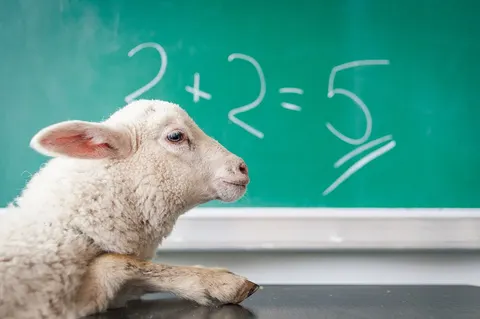
Psychologists Justin Kruger and David Dunning are the creators of the famous theory that describes so much of today's online communication so well. It can also help us understand the problems piling up in the way we get our information online. The theory is simple but revealing, just like the experiment it was born from. You've surely heard of it, but it's worth digging a little deeper into its meaning and learning its instructive story.
 57
Steve Jobs Is Risen!
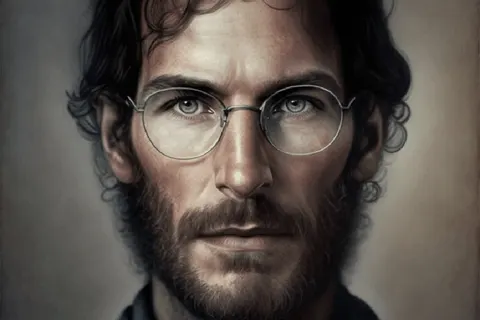
Did you catch Steve Jobs as a guest on Joe Rogan’s podcast a month ago? Oh, it was fascinating. “Computers have the power to be 1,000 times more important than they are today. I throw my computer out the window every few years just to make sure it works.” Steve was in his signature form, visionary and funny, as he told some truly curious stories from the history of Apple. But wait… didn’t Steve Jobs pass away? So what? The interview is perfectly real. It was generated by artificial intelligence. What’s the big deal, it’s interesting, isn’t it? Want to chat with Einstein? No problem, technology makes even that possible. Are we ready for the moment when computers can imitate us so well that we won’t be able to tell ourselves apart? How is it possible, and is it right, to try to “resurrect” people by creating, one way or another, copies of them that are indistinguishable from the original?
 58
Warning: Child in Front of a Screen
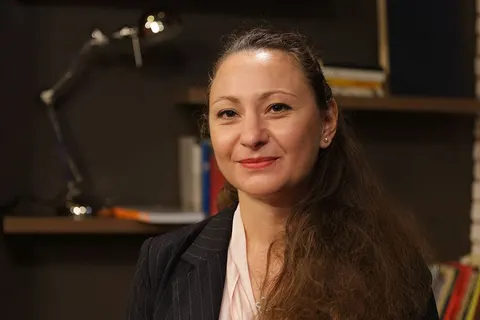
Should we “rescue” children from the hours they spend at the computer and on the phone, and when does the same apply to adults? How much screen time is reasonable at what age, and how do we set limits once we have lost the balance? We look for answers with Donika Borimechkova, a psychologist and psychotherapist with more than 12 years of experience working with children of all ages, who pays particular attention to the influence of modern technology on kids.
 59
“Dr. Google Can Be Deadlier Than Dr. Mengele”
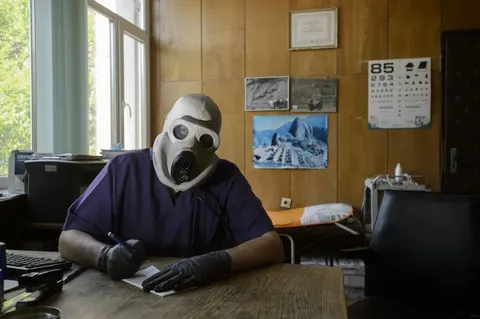
Is technology creating a new human species? Why do we Bulgarians keep dying at record rates, and can that change? How do we learn to look after our own health before it is too late? Why can Dr. Google sometimes turn out to be even deadlier than Dr. Mengele? Dr. Slavyan Stoilov is a remarkable doctor and a highly unconventional man. As the physician on countless Alpine and other far-flung expeditions, he is responsible for the lives and health of his companions, sometimes in extreme conditions. As he puts it himself, he has occasionally had to treat a tooth with pliers and a hammer. The rest of the time he is a general practitioner, and lines snake outside his office in a shabby outpatient clinic in the capital, Sofia. Dr. Stoilov studies ancient medical systems and is a fourth-generation doctor. Even so, he has a distinctive view of technology, about which he is far from always enthusiastic.
 60
Anonymous or Troll: Who Is Hiding Behind the Profile?
Who are you? The person behind that supposedly authentic profile across from me? First we were anonymous by default, then it became the norm to put our real names behind the hate we spew on social media. Is anonymity freedom, or does freedom come when you always know who is on the other side, and where is the line heading next?