The Teacher Who Was Never a Pupil
Can a child get a more meaningful education without ever crossing a school's threshold? Bozhidar Marinov is a remarkable young man: only 22, he already has 15 years of programming experience, leads the curious Comrade Cooperative and works on promising blockchain projects. He has never been to school because he was homeschooled, he won a string of programming contests before being barred for being outside the traditional system, and now he teaches the next generation of kids and has written a historical novel about the past of the Rhodope Mountains.
 42
“Online, a Little Paranoia Is Healthy”
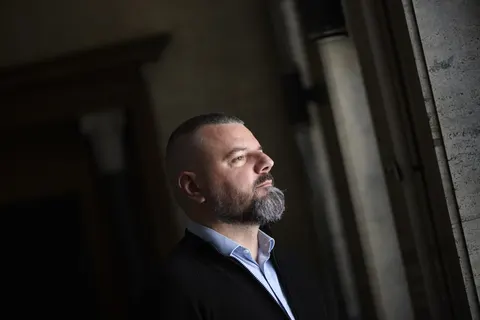
Can artificial intelligence put an end to the eternal game of cops and robbers? Is complete security online even possible, and is it true that our part of the world breeds remarkably good hackers? Petar Kirkov, the Bulgarian sheriff in today’s online Western, has spent more than 20 years in cybersecurity and is now the national coordinator in the field.
 43
Dr. Raychev, the Man Who Gave Google Koprivshtitsa
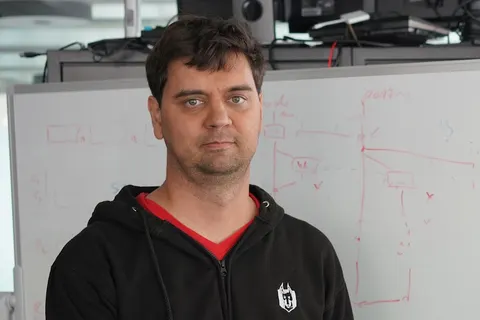
Dr. Veselin Raychev is the only Bulgarian whose doctoral thesis ranked among the world's top three of the year across all of computer science, and with it he launched a field now booming: AI that writes code. A former Google engineer whose algorithms still route us through Google Maps and the founder of DeepCode, he talks about the AI hype, the decisions that matter and why he still cares so much about Bulgaria.
 44
LatticeFlow: Making Artificial Intelligence Reliable and Safe
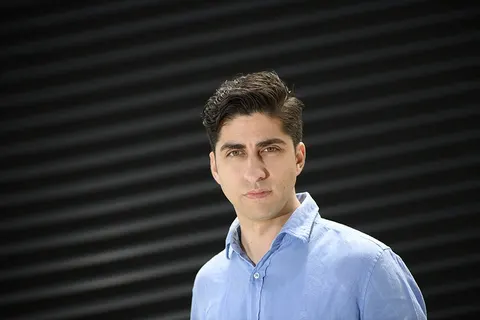
LatticeFlow is impressive not only because it solves fundamental problems in artificial intelligence systems, but because it makes them more secure and safe, issues that grow more urgent with every big headline on the subject. It is also the first high-tech company to position itself next to the INSAIT institute and work closely with it. Even without an official funding round, the startup raised $12 million, part of which will go toward hiring specialists in Sofia. We meet AI expert Dr. Petar Tsankov to talk about building a startup in a field that is only just taking shape, how the team's algorithms help create a new generation of reliable AI across many applications, and the vast prospects opening up for the team that is already working in Sofia.
 45
On the Tenth Day, Brendan Created JavaScript…
You know, one mythical figure created the world in a week. Brendan Eich took a little longer—10 days—to create another new world we all live in… JavaScript. Here is the cautionary tale of how a man who landed almost by accident at the epicenter of events built something enormous, and how, in fast-moving technological times, fate can turn a hero into an outsider in the blink of an eye. console.log(“Here we go!”);
 46
“Artificial Intelligence Will Simply Make Our Work More Pleasant”
Will ChatGPT's successors write the news for each of us, exactly the way we'd like it? Hristo Tomov, head of AI at the software company Dreamix and one of its founders, talks about personalized news, filter bubbles, fake news and the limits of large language models. How far has artificial intelligence come, and what does the future look like if it keeps developing at the same pace?
 47
“ChatGPT Is Just a Very Expensive Parrot”
“We don't know what nonsense ChatGPT will come out with next, because it is just a vast extrapolation of billions of sources, of terabytes of text. However much this machine seems to talk, it is really just a very expensive parrot. It burns through $3 million a day in electricity and has no idea what it is saying.” Mariyan Gotsev has more than 30 years of experience in information technology—as a programmer, but above all as a system-level architect and analyst. His other great passion is philosophy—he immerses himself in the search for meaning. Add to all this the fact that he is a poet. I was struck by his manifesto for a venture he calls “meaning robotics,” or “semantic robotics,” in which he argues that the much-hyped language models ChatGPT and GPT-4 cannot cope with many of their tasks because they do not look for meaning. Instead, they try to offer the most accurate answers possible through the well-known method of brute force. They look for patterns, yet remain far removed from human understanding, and so, in his view, they have reached their limit. Mariyan Gotsev, on the other hand, is convinced that a new approach could give us a technology that comes close to the human way of thinking. That is our occasion to talk about the much-hyped technologies as overpriced parrots. Can we really give computers common sense, and why does our guest believe the only way is to give them meaning? Can a machine think from a human point of view? Why must our relationship with future semantic robots necessarily be that of slave owners? And why did this computer specialist acquire domain names that he is selling for millions?
 48
“Nothing Will Replace the Human Programmer. Not for Another 10 Years, at Least”
Will artificial intelligence soon put programmers out of work? Is the end coming for the huge demand for specialists, the hunger for talent, the good conditions in this industry? Is an algorithm on the horizon that will outstrip human intelligence? How is technology leading to the end of liberal democracy? We hear the view of someone from the heart of the software world. Mihail Panayotov has a long and colorful track record: he has been programming since he was 14 and started his first business at 15. He has more than 18 years of experience in a range of roles, from programmer and software architect to chief technology officer and entrepreneur. Add to that his interest in politics and his intriguing view on why it is time for more and more people from the software world to enter it.
 49
Kademlia: The Bulgarian Algorithm Behind the Decentralized World
Kademlia is the name of one of the most significant technological solutions in information technology ever created by a Bulgarian. Never heard of it? Then it's high time! Petar Maymunkov created, almost as a joke, the system that is now widely used across the world of decentralized solutions, from BitTorrent to Ethereum. Kademlia turned out to be exactly the right answer at the turn of the millennium, when the internet took its decisive step away from centralized systems and toward the path that led us to blockchain. The scientist and his creation deserve their fame, and here is why.
 50
“Machines Remain Naturally Unintelligent”
How did underestimating the ethical side of artificial intelligence lead to enormous problems that have shaken the foundations of our civilization? What AI regulations is the EU preparing, and could they slow the boom in the field? How did the web move through its successive stages, and what should we expect from Web 3.0? Vladimir Petkov (Kaladan) has worked in IT for a quarter of a century, watching the past and present of information technology up close while waiting for the future. His experience lies in data and innovation, and for six years he and his friend Elenko Elenkov have been making the cult podcast Govori Internet (The Internet Speaks), now a whole platform of podcasts as varied in subject as they are consistent in quality.
 51
“Our Only Chance Is to Remember That We Are Creators”
Todor Kolev is a seasoned programmer, entrepreneur and mentor to remarkable young talents in information technology, but also a man with his own, deeply curious view not only of technology but of how we are evolving as a civilization. Are we ready for the next step in evolution that technology is bringing, and what comes after the end of capitalism?
 52
“The Saddest Thing Is When a Talented Child Gives Up”
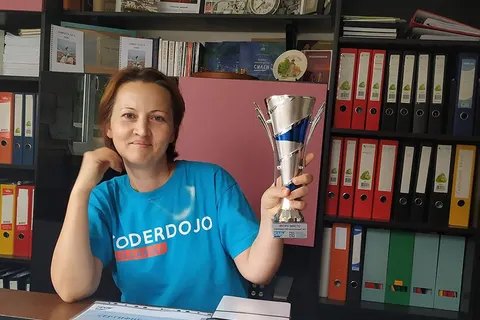
Children and computers: how do we make that meeting go as well as it possibly can? Elitsa Tsoneva worked as a journalist before moving into information technology, spent 15 years in the field, and then, quite unexpectedly and without any plan, became a teacher. Why does education never become a priority in Bulgaria, how does a teacher win students’ attention, and how do we spark the curiosity that makes a child truly learn and grow?
 53
So You Want to Be a Programmer?
Is programming for you, and is it worth trying, how late is too late, which language should you pick, and how do you land that first job? I decided to become a programmer at 33, after years in another profession, and here I have gathered everything I wish someone had told me back then.
 54
“In the World of AI, Everyone Can Find Something Exciting”
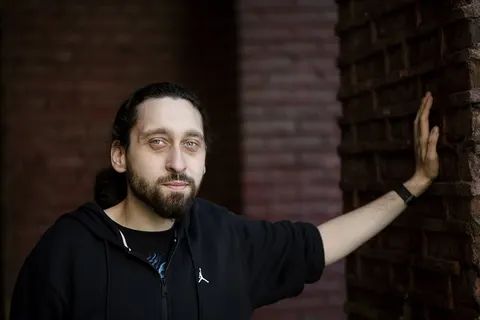
Yordan Darakchiev leads the only program in Bulgaria where, in just a year, you can gain enough knowledge to start working in artificial intelligence. How did Yordan, an astrophysicist by profession, come to create a venture that has now given so many people the fundamentals five times over, and how do its graduates go on to research institutes, to companies like Tesla and Meta, to promising startups, and even to ventures of their own? What does it take to succeed in machine learning, how does this kind of technology help us understand the world we live in, and which directions in artificial intelligence are the most exciting ones to watch?
 55
“Building Software Is a Team Sport. The Team Is Stronger Than the Individual”
How long will programmers stay this much in demand in Bulgaria, and what does the future hold for this attractive sector? Veli Pehlivanov, a cofounder of Resolute Software, talks about what sets Bulgarian IT specialists apart and whether a career in programming is still worth pursuing. With colleagues and kindred spirits he built a software consultancy that wants to offer a model of its own and already works with clients on four continents.
 56
“Selfishness Is the Entrepreneur’s Enemy”
1,000,000,000: that is how many visits a month the websites looked after by today’s guest and his team receive. Mario Peshev is an impressive figure for his story, for his successes and, above all, for his outlook on the world. WordPress made it possible for anyone today to have a dignified place of their own on the web, and Mario wrote “pieces” of the code used by every one of the hundreds of millions of sites built on the platform; his company DevriX is among the 20 most sought-after WordPress agencies in the world. What is it like to own your own “little piece of code” in WordPress, what changes when an enthusiast suddenly finds himself at the head of 50 people, what does the future of the digital world look like to Mario, and… will his beard still be his trademark a decade from now?
 57
WordPress: The Matt Who Set the Internet to Jazz
In 2003, 19-year-old Matt Mullenweg found out firsthand that necessity is the mother of invention. He was using a free blogging platform and needed a little help, but there was no one to give it. The result, born on April 1 and no joke at all, was WordPress, the open-source platform that lets anyone build a good-looking site with minimal effort. Today WordPress carries on its shoulders… a third of the world's web pages! But what does jazz have to do with any of it? This story from two decades ago is as meaningful as it is full of colorful details.
 58
Atanas from Viber: The Bulgarian Connection
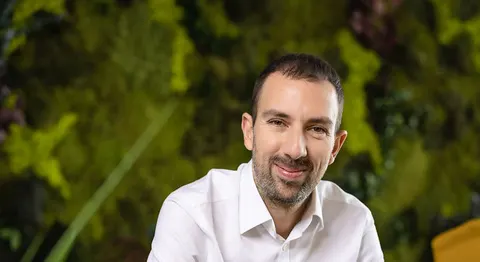
How does a communication system work when it is determined to grow without exploiting people's data? Atanas Raykov is a senior manager at Viber, and he is also the reason one of the platform's key offices in the region is located in Bulgaria. What does responsibility look like when you have more than a billion users, for some of whom the next conversation may be a matter of life and death? How can the business model of a modern communications giant leave users' personal data untouched? And what should we expect from online communication in the years ahead?
 59
“The Hunger for IT Specialists Will Keep Growing for a Long Time”
Ivaylo Hristov is the creator of dev.bg, the venture that lets software specialists keep their watches in sync and easily find work where they feel at home. He knows very well how much that matters: he walked away from a dream job at Microsoft to start his own venture, which became a serious success. Which Bulgarian software companies are poised for a breakthrough, where are we strong and where do we lag behind, and how did programming go from an exotic pastime to the most sought-after career in just 20 years?
 60
The Programmer Who Sent Humans to the Moon
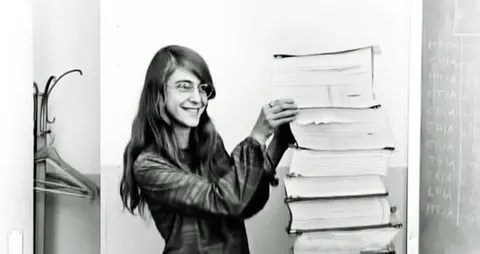
The woman in the photo is Dr. Margaret Hamilton, head of the team that built the software that carried Apollo 11 to our night luminary, the mission that took the first humans to the Moon in 1969. And that stack of binders? It's the software Margaret and her team wrote. What were the biggest challenges back when the profession of software engineer didn't even exist yet?