“No, Now Is Not the Time for Poetry!”
What is poetry written with the help of artificial intelligence? Does AI write it alone, does it depend on the task the human sets, or can the two find a way to create something different together?
 22
Living Your Imagination
You can hardly have missed this modern debate, and you probably have your own opinion on it: now that artificial intelligence produces results indistinguishable from human creativity, will we go on creating? Is the great hero of our day taking over the human role of author, or is it just another link in history's long chain, the new tool that will give birth to the next arts, genres and forms? Welcome to the world of David Szauder. For the Hungarian multimedia artist, reality is only a starting point—life unfolds in the boundless space of the imagination, where technology is the artist's new brush and the absurd and the beautiful meet and complete each other.
 23
Can We Tell a Generated Voice from a Human One? The Answer Is Clear
Can you tell a human voice from one generated by algorithms? 2,036 people took part in the Digital Stories experiment looking for the answer to this question, along with many other important nuances. The result, in my view, is unambiguous…
 24
ChatGPT, 1981
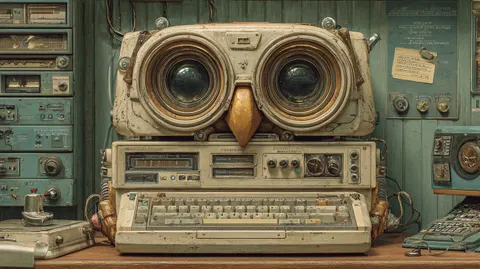
Is AI the great chance of our day? Will we seize it, or let it slip? Propusnatiyat shans (The Missed Chance) is one of Lyuben Dilov's lesser-known books. Here one of Bulgaria's most popular science fiction writers, also known as the author of the Fourth Law of Robotics, isn't even a writer—at least according to the plot. Instead of writing, he orders a series of stories in various genres from his new computer, which creates them in his name and in his style… Sound familiar?
 25
Peter Thiel: The Conservative Visionary
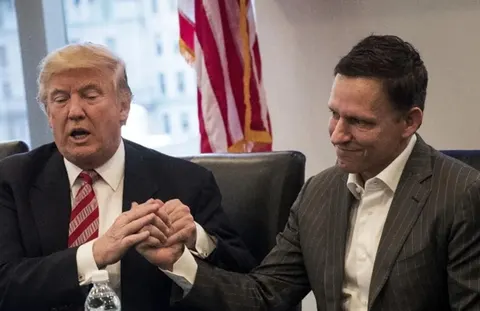
Facebook, SpaceX, Airbnb, LinkedIn, PayPal, Ethereum. The revolution of OpenAI and ChatGPT, the rise of Donald Trump and his ubiquitous (until recently) ally Elon Musk. Is there really one person who ties all these phenomena together? More than that: it is no exaggeration to say that if it weren't for today's hero, hardly any of them would have come true… Peter Thiel has earned the name of a prophet, a guru. The great visionary of the tech age. And yet he holds deeply controversial views that somehow stay out of the big media noise. But that is typical of the German-born entrepreneur. Some see him as the éminence grise of Silicon Valley, others as a sage who can show anyone the road to great success in the technological era. A multibillionaire, he says competition is a deceptive good and monopolies are the solution of the future. He created a large-scale program to help people who choose to abandon their education in order to start their own business, which in turn paves the way for the next generation of tech leaders. All this and much more is Mr. Thiel. It is time he stepped into the spotlight, because he is certainly one of the people who have already changed the lives of each of us. More than that: ever more is expected to depend on him in the turbulent technological times we live in.
 26
What Will You Be When You Grow Up?
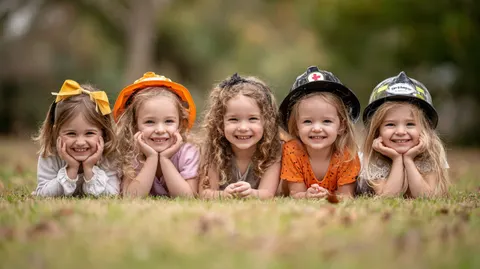
What do today's kids want to be when they grow up? On their very own holiday, it's time for the results of a curious survey. The Digital Stories series on children's encounter with technology gathered important perspectives on many subjects. Of the 350 people who took part in the site's survey, 289 chose to answer: What do the children want to be when they grow up? “Influencer” or “doctor”—which do you think turned out to be the most common answer? How are kids' dreams changing? And what does that say about us adults, about technology, about the spirit of the times?
 27
Quiz: Who Drew It—a Child or AI?
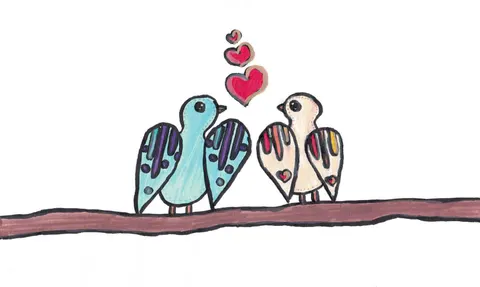
It’s time for an unexpected but important test: an experiment that raises big questions about the future of creativity, of what makes us human, and of education. Challenge yourself and your intuition with 15 pictures drawn by children aged 3 to 10 and 15 generated by artificial intelligence—tell them apart and you could win a prize! Responses are open until July 1, the survey takes no more than 10 minutes, you can answer just some of the questions, and children are welcome to take part too.
 28
Yuval Noah Harari: Prophet of a New Age
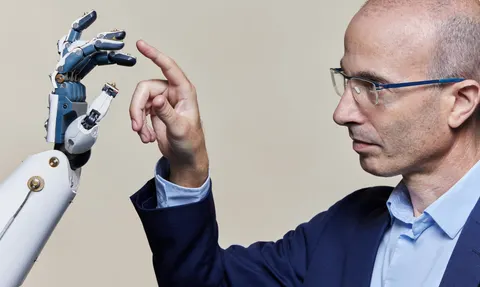
Yuval Noah Harari's name comes up again and again in conversations about the future: the historian and futurist who untangles the threads of humanity's past and poses the big questions of tomorrow. How did a history professor become the favorite author of Bill Gates, Barack Obama, Mark Zuckerberg and Bill Clinton while staying popular, translated, read and debated? A colorful figure beyond the stereotypes, and, to my mind, a valuable and powerful voice warning us about the immediate dangers we face as a species.
 29
Jensen Huang: The Wizard of NVIDIA
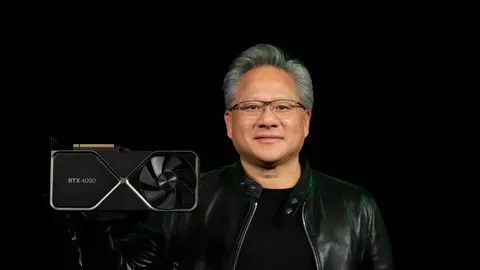
He is one of the great stars of our day. With 30 years of stubborn persistence he built the company that became the most highly valued of all time, and when the moment comes to unveil yet another innovative chip, he turns into a marketing icon: Jensen Huang grabs the leather jacket, steps into the spotlight where he feels at home, and the show begins. Eastern wisdom meets Western polish in one of the richest Americans, the only one on the list born in China (…in a manner of speaking), and his curious journey shows that strong personalities still matter, so it is worth walking it together and hearing his views on the future we are all going to live in.
 30
Ivan Popov, the Man Who Caught the Future
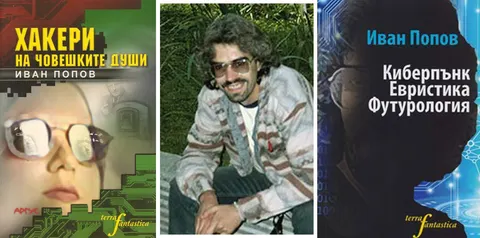
“A person’s worldview depends substantially on their information metabolism.” “Man is a bot to man. And bot is man to bot. But what kind of man is the bot? And what kind of bot is man?” Ivan Popov was a master of syllogisms, and much more. He was a writer who left us a small number of works from the beginning of the new millennium. Although he published only one novel in his lifetime, and in a small print run at that, his name remains mythical. Because he presented the future in an inimitable way. He caught the trends, gathered the sparks of knowledge that paint the colorful picture of technology’s tomorrow. He managed to bring science and literature together, so that they could search, shoulder to shoulder, for the human and the superhuman, and catch the trends. Ivan Popov’s messages are powerful, stirring and thought-provoking today, more than ever. My heartfelt thanks to Nikolay Genov, who drew my attention to this remarkable writer, forecaster, journalist and scientist. I believe it is important for his words and his name to reach more people. I will be glad of any support—stories from people who knew him, help in making his work better known, or simply good ideas. Write to me!
 31
Bill Gates and the Philosopher's Stone
Can you picture the founder of Microsoft as a thief of time? How did climbing high mountain peaks shape his biggest successes in the software world? Why was the dream of beating his grandmother at cards among the ideas that made him the richest man on the planet? Hardly anyone would accuse Bill Gates of being a brilliant storyteller, yet the stories told by one of the most important people of our time (like him or not) are certainly impressive. I chose eight of them to tell you…
 32
Borrowed Origami: What Is Copyright Worth Online?
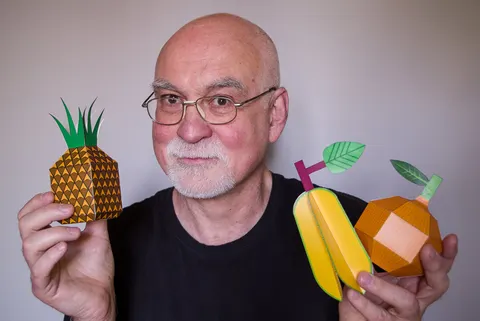
Sometimes life online throws up cases we could never dream up, however loose we let our imagination run. Picture it, almost as in a Kafka novel: suddenly ads from Chinese stores start popping up for you… offering you something you know perfectly well you created yourself. Our hero today is not Gregor Samsa but Atanas Mihalchev, a Bulgarian photographer, artist and teacher in Canada, whose origami kits for children suddenly turn out not to be his.
 33
What Is ChatGPT's IQ?
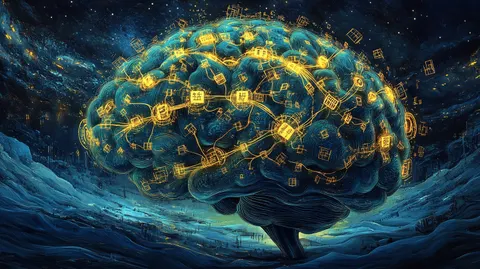
What is the intelligence quotient of advanced artificial intelligence? Does it reach, or even surpass, the average 100 points of today's humanity? And why does it matter? Let's find out together!
 34
“The Last One Wins”: ChatGPT Strikes Back!
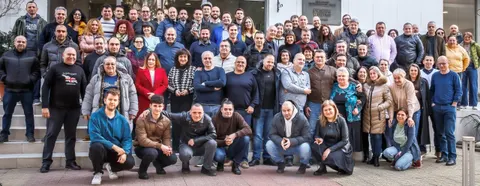
Intelligence hangs in the air: just over 100 people are in the hall, most of them among the smartest in the country. That's not a guess, I can prove it. They are winners of “The Last One Wins,” the TV quiz that in recent years has reminded us why knowledge matters to all of us, even as a species, in the age of advanced artificial intelligence. My fellow players and I have an important task: to face AI together in a contest that can tell us, and show us, a great deal. Will artificial intelligence, with its incredible skills today, beat some of the most knowledgeable representatives of the natural kind? Time to find out. And to learn something new… ChatGPT against some of Bulgaria's brightest minds in a knowledge contest. Who will win? Have we finally lost this battle against the machines too? The gauntlet has been thrown!
 35
“Ask, People! Just Ask!” Five Important (and Awkward) Questions About Blind People
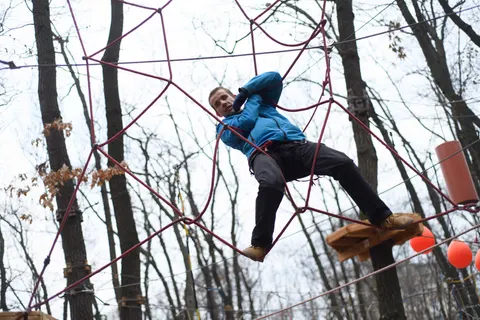
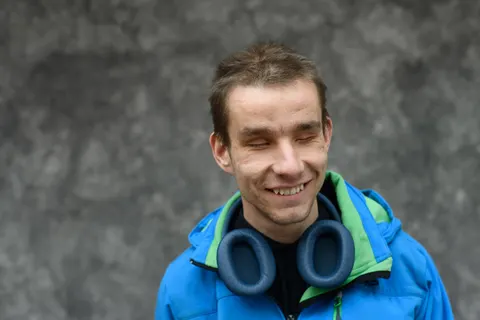
Viktor Asenov never stops running, always toward the next record to conquer. This time we pick up our conversation with the blind long-distance runner about the daily hardships of Bulgarians with visual (and other) impairments: how we should treat them, whether we are attentive enough, and whether Bulgaria looks after their rights. Together we came up with five concrete ideas, and each one, for me at least, is a reason to stop and think.
 36
The Not-So-Lonely Long-Distance Runner
To run until you beat yourself. Sixty kilometers on the steep slopes of Pirin, marathons, ultramarathons on several continents. To ride a bike 600 kilometers along the entire Bulgarian bank of the Danube. And to find the bike-and-run loop around Vitosha known as “Vitosha 100,” a favorite challenge of hardcore programmers, “a race for parquet-floor runners.” That is our hero today, Viktor Asenov, who loves to challenge himself, to run, to overtake and to show what is possible. He graduated in social pedagogy but never managed to build a career, disappointed by the way Bulgaria treats people with disabilities. We can learn a lot from today’s digital hero, so we meet him and ride around Sofia, to talk about the challenges life throws at us and the ones we have to set ourselves. Did I forget to mention that he is blind? But that doesn’t stop him from chasing records. Or from chasing his dreams…
 37
How Do We Introduce Our Children to Technology? (A Survey)
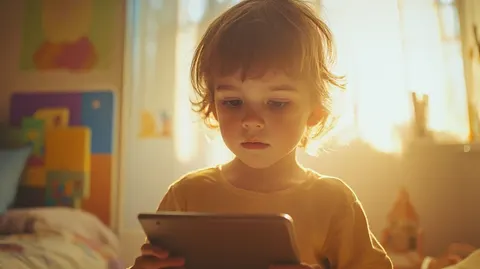
What kind of world will our children live in? And how do we introduce them to technology in the best possible way? I have two kids, and this site exists because these questions won't leave me in peace. And there are so many other important questions that it is time we found answers to. Let's talk them over, then go looking for the answers. Let's paint a picture together of digital parenting today and the way it looks toward the future. The survey is aimed at parents of children aged 0 to 11 (and at grandparents and anyone else who has children in their life). Teenagers' issues are extremely important too, and their moment will come. The survey is anonymous, and you can answer whichever questions you choose. You can also enter a prize draw for hand-picked books and T-shirts with the Digital Stories logo. Responses are being collected until February 28, and you can expect the results in early March. This survey opens a series of important Digital Stories about children and technology. We'll talk about motherhood and fatherhood today, about the changes in education, about the professions of the future. I've invited remarkable guests from whom every parent (myself included) has a great deal to learn. Heartfelt thanks for every response and every share!
 38
:-) Smile! The Story of the First Emoticon
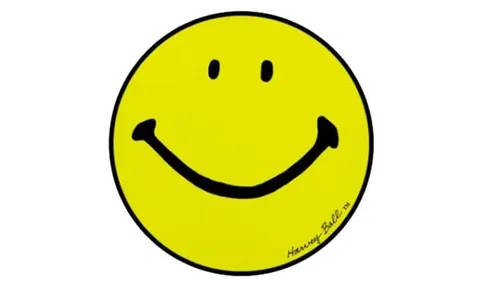
With the arrival of the internet, text spilled over into images and back again. And although everything in the online world changes at breakneck speed, one “pioneer” symbol has survived to this day. The smile we all use every day, “drawn” with just two or three characters, is perhaps the most recognizable sign of the online era. Fashions, technological generations and social networks come and go, while the “smiley” stays, eternal and recognizable. Do you know who its “father” is? Strange as it may seem, this combination of characters has a specific “inventor,” plus a “godfather” who helped it leap onto the internet. For his venture, a stylized laughing face, graphic designer Harvey Ball earned a “whopping” 45 dollars. He never claimed copyright. Instead, decades later, he set up a foundation that raises money for children in need, whose symbol is, of course, the smile. Smile at life! It’s time for a radiant digital story.
 39
A Generational Question: Digital Leaders and the Cult of Personality
Who have been the most striking figures in public life over the past few decades? The ones we would least expect, if we believe the stereotypes—the people of technology. From Bill Gates, whom the whole of conspiracy-minded humanity turned into the chief culprit behind the pandemic, to Elon Musk, who, while “saving” our freedom of speech, is our last real hope of rising to the stars as a civilization… Yes, the cult of personality is going through a rather strange apogee in the digital age. Politicians long ago lost their magic as interesting personalities, artists tend to stay focused on their particular audiences… while the celebrities of technological progress have become the powerful figures of the new era. Is it because technology is today’s magic? Incomprehensible to many, transformative, alluring… Are the powerful figures of the digital age supermen? Do the innovators get the fame they deserve, or do the idea thieves thrive? What do the representatives of different generations share, and what sets them apart? We meet some very different digital stories…
 40
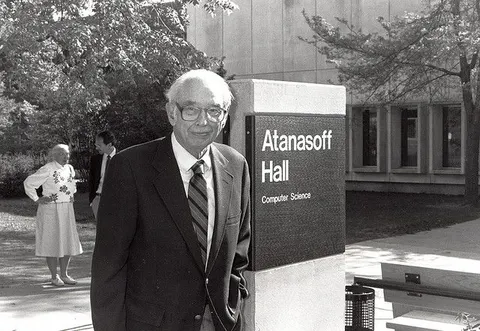
Eight Surprising Facts About John Atanasoff
“The father of the computer was Bulgarian.” We repeat it like an axiom, rarely asking what lies behind it—so what exactly did John Atanasoff create, and was his contribution truly decisive? Here are eight curious details from Pulitzer Prize winner Jane Smiley’s biography that answer the most important questions.