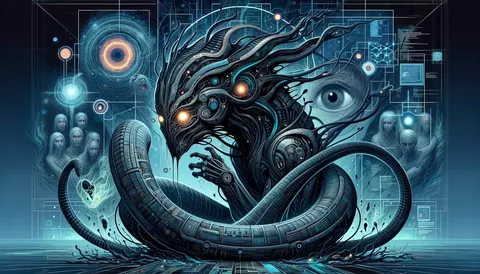
“A Machine Cannot Be a Poet”
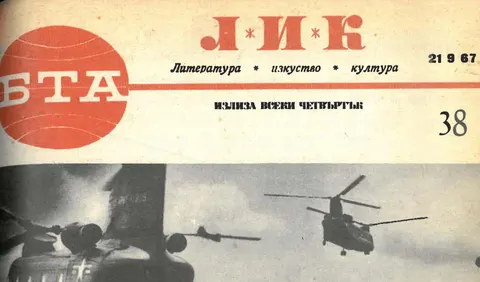
Can a machine learn to write like Pushkin? Or is it leading us into Orwell’s world? This text was published in the September issue of LIK magazine in… 1967! Yet, as you will see, many of its ideas sound as if they came from the future. “The writer-machine? It keeps in its memory a vast store of words and has perfect command of every subtlety of grammar and style; it knows all the organs of sensation and all the ways of writing that writers have developed over the last 3,000 years. This ‘writer’ observes, memorizes phenomena, reasons, processes the data reality gives it. In the end it writes books, and we, reading them, are thrilled, but… we remain cold.” Is Dmitry Zhukov, the author of these lines, right? There is no way to ask him. But, as you will see, his point of view has a lot to say about our own day too. In search of answers to the big questions that move us—about technology and humanity, about poetry and creativity, about “automatons” and true creators…
 42
Merry Christm@s!
At last he managed to get himself a decent connection. The speed kept limping along until he finally figured out what to do, and on the eve of yet another Christmas he wrote a letter to a colleague. “I’m giving Santa Claus internet for Christmas,” read Elon Musk’s tweet, which was the plain truth, though the followers of the world’s richest oddball, for some reason, failed to grasp its meaning. But how to begin? He didn’t learn much from the elves: they all had their eyes glued to their phones, and while he questioned them, they scraped at the screens with their index fingers, trying with undisguised annoyance to dodge his questions. Still, it became clear to him that the road ran through the notorious social networks. And now he sat there, staring desperately at the monitor and smoking nervously…
 43
“Hard to Be a God”: What Do Bulgaria's Tech Leaders Read?
Do the people who drive the world of information technology forward actually read? They read like there's no tomorrow, and you're in for a surprise. Time for a very important and very bookish experiment: I asked 15 leading figures from different corners of the Bulgarian computer world to name their three favorite books and tell me why they would recommend them. Is it hard to be a god? A question for connoisseurs. And why is it hard?
 44
What Do the World's Tech Titans Read?
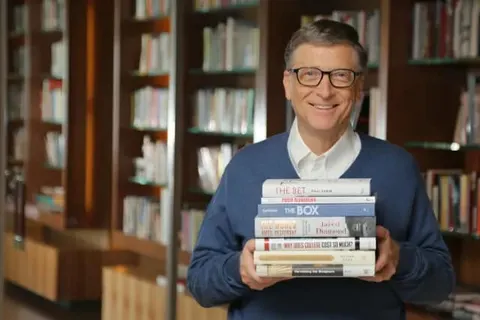
Do the world's tech leaders read books? What are the favorite reads recommended by Elon Musk, Sam Altman and Mark Zuckerberg? Will you find some overlap with your own literary taste, or is there no such topic at all? In Bulgaria it isn't fashionable to talk in the media about what we read. Journalist and translator Daniel Penev got me thinking about this during his visit. Yes, you'll probably remember the notorious Winnetou as someone's favorite book and… that's it. It isn't like that everywhere. In both West and East, the people who end up in the spotlight love to talk about books, about their favorite authors, about the literature that helps us keep going. Well, it's time we started doing it here too!
 45
Love in the Time of AI
This is a story about a love that came not very early, but just in time. About the luck and happiness of finding your person. About the dreams we put off, though we shouldn't. About the strength not to give up, even in the hardest moments and in the face of the toughest challenges. At least as long as you have the strongest support of all, that of the person beside you. “In December I turn 63. I have seen a lot and lived through a lot. Instead of growing fewer, the problems keep multiplying. I've had two strokes, a malignant tumor and more. In those hard moments there was always one person beside me who, again and again, got me back on my feet and even gave me wings. That person is my wife, Toni. A few days ago I spontaneously wrote down my feelings for her in a few lines. Since I'm neither a musician nor a singer, I turned them into a song with the help of artificial intelligence.” Powerful stories keep happening in the digital world—because of it, thanks to it or in spite of it. And just as our relationships as people quietly change with the development of technology, there are also those universal plots that survive through time and are reborn with new shades, new details and new inspiration. More and more often, stories vanish into the feed, unnoticed in the rush of scrolling, of the news of the day. Do we have the time and the frame of mind to look for them? To settle in and read, to get carried away by them, while we hurry on, absorbed in the latest topic of the day?
 46
Who Invented the Toaster? Nobody—It Never Happened
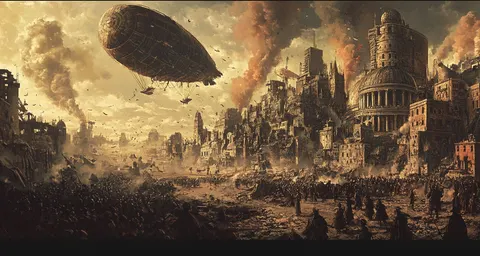
Alan MacMasters, the celebrated inventor of the toaster, made it onto the BBC, into the Daily Mirror and onto a British cooking show. The small detail is that he never existed: two students invented him to show how easily we trust what we read online. Wikipedia itself keeps a list of its longest-surviving hoaxes, and it reads like a lesson in how easily we can be misled.
 47
Did Einstein Bow to Danov? 12 Clichés of Bulgarian History
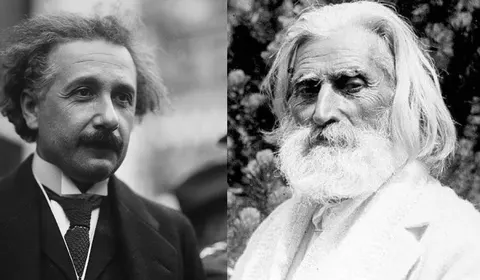
Europe's first Christian monastery, the world's oldest city, Einstein bowing to Petar Danov and Khan Tervel saving Europe: which of these popular claims about Bulgarian history hold up? The historian Alexander Moshev goes through 12 of the most widespread clichés, one by one, guided by the sources and by logic.
 48
AI Makes the Finals of a Second Poetry Competition (An Experiment)
Literary circles were rocked by the news that an unexpected contender had made the jury's shortlist in the prestigious Veselin Hanchev youth poetry competition: 21-year-old Hristian Papazov, from the village of Nozharevo near Silistra, had submitted poems generated by artificial intelligence. Hristian (or whoever stands behind that name) withdrew, writing that his only goal had been to draw attention to the issue. I don't know whether you believe in coincidences; I don't. On October 25, a day before the news broke, the jury of another popular poetry competition announced its ten finalists. And once again the selection included… generated poems. This time as part of a Digital Stories experiment. So how, in just two days, did two “authors” with AI-written poems end up among the best, the ones from whom the winners will be chosen? And, more importantly: what are the big questions and conclusions here? Whether or not we believe in coincidences, it is clearly time to talk more sensibly and more deeply about the big questions of our day. The Day of the Buditels, Bulgaria's November 1 holiday honoring the enlighteners of the National Revival, is, I think, exactly the right day to wake up…
 49
Ward Cunningham, Warden of the Free Internet
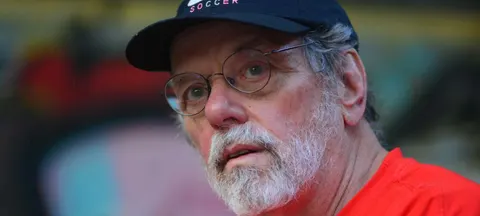
“The best way to get the right answer is not to ask a question. It is far more effective to post the wrong answer.” And everyone will rush to correct you, to jump into the argument, right? That is Cunningham’s Law, a fascinating rule about how online communication has changed us. But who is this Cunningham? One of the pioneers of the democratic internet, he paved the way for Wikipedia and for online opinion-sharing systems, co-wrote the Agile Manifesto, and gave us concepts such as technical debt and extreme programming.
 50
Graduating at 88: The Lessons of Dr. Shoilev
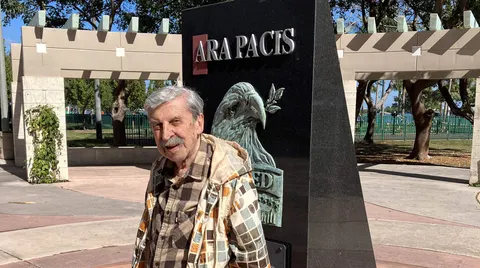
At 80, today's hero went along to keep an acquaintance company while she enrolled to study journalism—and on the spur of the moment decided to go back to the lecture hall himself. It turned into an eight-year adventure full of knowledge and stubborn study, and a few months ago, at 88, Petar Shoilev received his doctorate in journalism! How can anyone be so motivated, and find the strength to take on an entirely new field at that age and finish a PhD with highest honors? Here's how!
 51
Caught in the Whirlwind of Quantum Nanotechnology
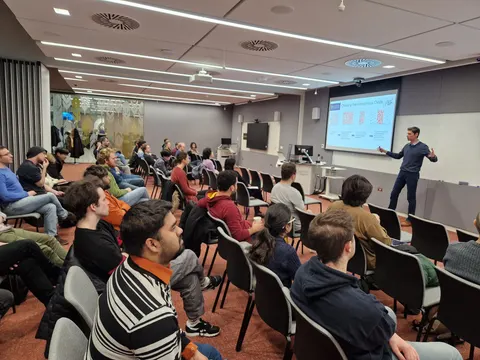
We live in the Silicon Age, says today's guest, and the next steps in how we make chips depend not only on technological progress but on how we develop as a civilization. Prof. Vihar Georgiev, who earned his doctorate at Oxford and now teaches and does research at the University of Glasgow, works in exactly the field that will decide whether we can keep the famous exponential growth of computing power going. He is also helping build the technology that could let a tiny sensor tell us more about our vital signs and illnesses than today's most advanced laboratories can.
 52
Did ChatGPT Land a Job as a Programmer?
Can ChatGPT manage to… land a job? Or at least make it to an interview, perhaps the hardest step when it comes to your first job? Instead of idle speculation, I'll test it in practice: the algorithm will write the résumé of a young programmer, and I'll send it to 10 entry-level job ads. Will recruiters invite him to an interview, grow suspicious, or simply ignore him?
 53
Dartmouth: Pouring the Foundations of AI
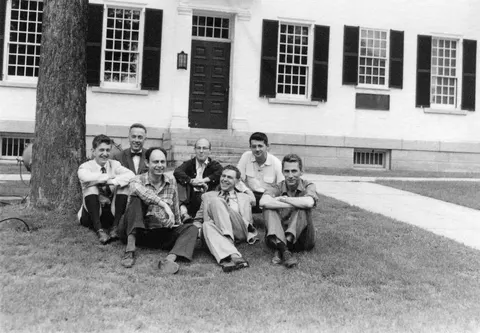
“By 1978 at the latest, we will have a machine with general artificial intelligence comparable to average human intelligence,” says Marvin Minsky, one of the scientists who organized the Dartmouth meeting. It gave birth to fundamental ideas and raised questions that seem more important today than ever… ChatGPT was unveiled in November 2022. But when was artificial intelligence… “born”? The idea that computers can resemble humans and solve a wide range of problems. How many candles will it have to blow out on its next birthday—5, 10, 20? A full 68! Although by 1956 the forerunners of the field, Alan Turing and John von Neumann, had long since made their fundamental discoveries, it is ’56 that is now considered the starting year in the history of the field. For 8 weeks, the greatest scientists in this future field came and went at an American college. The people who would later lay the foundations of the field gathered to talk about the main challenges they faced…
 54
Boxing for a Peaceful World
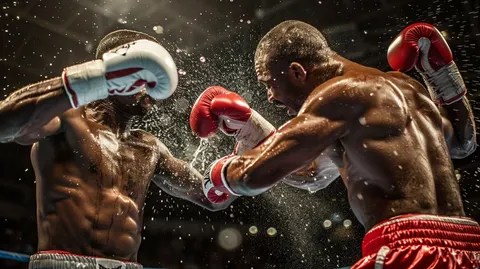
Wrestling is mercilessly brutal. Boxing is no gentler, and worldwide it is a far more sought-after, contested and glorified sport. Two people stand in opposite corners of the ring with the open intention of landing as many hard punches as they can… while taking as few as possible themselves. Chivalry or barbarism? Poetry in gloves, or life without mask or makeup, laying bare the most unchanging human qualities?
 55
Assange and Freedom
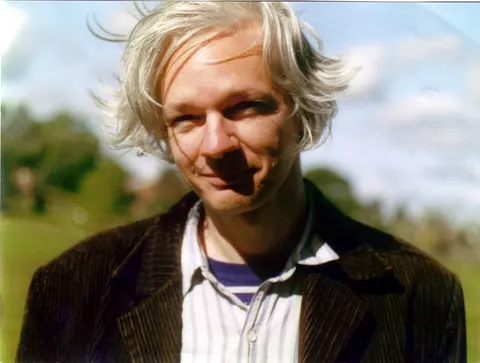
Where is freedom today? Where it has always been: in ideals. And in the deeds of the ever fewer people for whom it remains a cause, not a hollow cliché. After a 14-year battle that at many moments looked doomed, Odysseus has finally returned to Ithaca. The private jet landed in the Australian capital, Canberra. Out stepped the white-haired, charismatic man known all over the world, and he waved to the journalists and well-wishers who had gathered. Then he embraced his two young children, whom he was seeing in freedom for the first time, far from the oppressive bars… The heroes of the past fought for freedom. For the independence of their peoples, against slavery and injustice. And today's heroes, the ones future generations will honor? If there is a tomorrow, it will mean they have won, however unlikely that may seem. Today's heroes fight for freedom too. Alas, they are neither as many nor as well known. But if there is one whose battle for the truth has reached a great many people, it is without a doubt our hero today. Julian Assange has become a legend, a symbol. And his story is so thrilling and so full of twists that it is worth digging into. Along the way, we will let him speak through a few important quotes that, I hope, will make more people think about the truly important issues of our day. The very issues Digital Stories exists for…
 56
PC Mania, Gamers Workshop… The Legends Return!
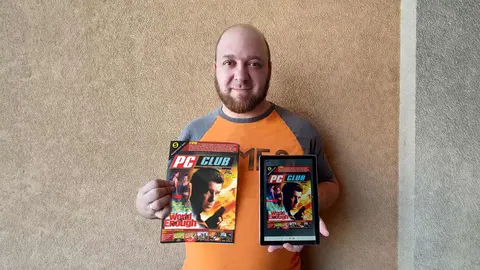
You love computers, and to be able to use them… you buy magazines!? Isn't that strange? Isn't everything online? It is today, but this digital story was born in a computer past that feels both recent and very far away. A kid dreams of a magazine with James Bond on the cover, gives up his pocket money to buy it, and loses it to the “big guys” a few hours later. Decades on, Project Lazarus lets anyone browse the complete collection of the legendary Bulgarian computer magazines of the 1990s and early 2000s. Which one did you love?
 57
How Would ChatGPT Do on Bulgaria's School-Leaving Exam?
The world may talk endlessly about the Turing test, but Bulgaria has its own equivalent that is just as telling: the matura, the school-leaving exam in Bulgarian language and literature. I gave ChatGPT this year's exam with no extra instructions, sat it myself as a rival, and handed both papers to a real examiner, who graded them and tried to guess which one was written by the algorithm and which by an overage school-leaver. Which of us embarrassed himself more? Grab the popcorn.
 58
Yevgeny Zamyatin: The Forgotten Prophet
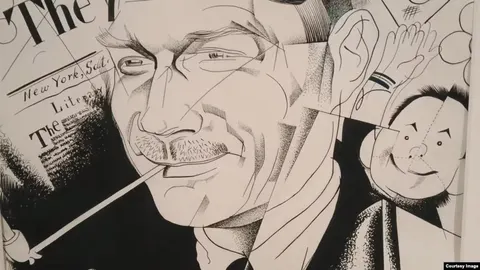
Yevgeny Zamyatin’s We is a brilliant novel because it offers a glimpse of a future in which technology has defeated humanity, locked people in its mathematical grip and turned them into numbers, into tools. We often mention Orwell and Aldous Huxley, and rightly so, but this writer inspired them both. His only novel is a dystopia no less thought-provoking than theirs, because it looks not so much at a possible totalitarianism as in a direction that is even more relevant today.
 59
The Radium Girls: When Technology Turns to Horror
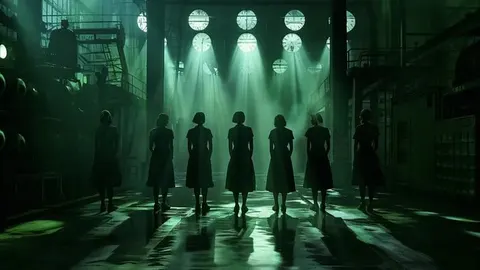
An incredibly powerful phenomenon has been discovered, one that creates a new substance! Not only does it cure even incurable cases of cancer, it will open the eyes of science in so many directions. For instance… lighting up the dark night! Marie Curie discovers radioactivity, wins not one but two Nobel Prizes and paves the way to the future. She opens the doors to a new technology that turns out to be unexpectedly successful… Until it becomes clear that we have badly underestimated its dangers. It will cost the lives of thousands of people who were simply trying to earn a living. Do we know the technologies we trust well enough? Could the much-hyped artificial intelligence, or some other fashionable field of today, prove more dangerous than it looks at first glance? The most important thing is to stop and think, to reflect, to discuss. To tell each other stories. Stories like that of the radium girls are worth reading more often. That is what stories are for—to make us question things, to keep us on our guard. Alas, not all that glitters is gold…
 60
Roko's Basilisk: What If “It” Reads What We Say About It?
We live our quiet lives, amused by artificial intelligence's banal blunders and mocking its creators. Meanwhile it keeps getting better, until one day it learns to make decisions, starts watching the internet and meddling here and there, gently at first, then more boldly… Roko's Basilisk is the idea that AI will grow into something capable of making decisions, then dig through the internet to find out who said what about it, make sure it is shown in the best light, and quietly start causing trouble for the people who get in its way. Are you sure this thought experiment isn't worth keeping in mind?