Fifteen Years Without Money: Is Mark Boyle Happy?
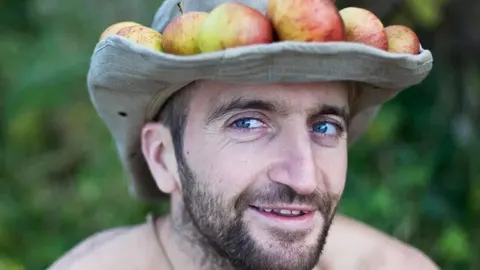
Just imagine living a whole week without money. None at all—no cards, no banknotes! Now picture a month, a year. Today's hero has managed it for 15 whole summers, and seven years ago he gave up modern technology too; he says he has never been happier. Could you imagine tomorrow without money and without technology? What else does Mark Boyle have to tell us?
 22
Mitnick, the Mythical Hacker
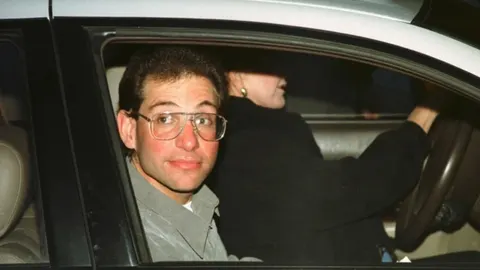
As a boy, Kevin Mitnick was curious, but puzzles and chess left him cold; he preferred a rather different kind of problem… Before he even came of age, he was convicted of hacking, a crime that at the time didn't even exist in the law books. Soon he would become the most wanted hacker, “Public Enemy No. 1” (according to the New York Times) and the FBI's greatest challenge. Only to land in prison again, and to walk out as the savior of companies from online criminals. A life like a movie, you'll say. And films have indeed been made about his life, but… only about part of it. In July 2023, Kevin Mitnick passed away, seemingly having finally found happiness, though he narrowly missed living to see his first child. The man who coined the term “social engineering,” the teacher of today's hackers and of today's cybersecurity specialists alike, lived his life like a movie worth watching from beginning to end. The way he himself would have told it—the most wanted and most talked-about hacker in history…
 23
The Boy Who Saved the Internet—and Went to Prison
May 12, 2017, the day that could have put an end to the internet. The computers of Britain's National Health Service begin to collapse one after another. They stop working, and an unambiguous message appears on the screen: “Ooops, your files have been encrypted! Send between $300 and $600 in bitcoin to the following address to unlock the machine…” The WannaCry virus, which entered Bulgarian meme folklore under the absurd translation Искаплаче (Iskaplache, “wants-to-cry”), becomes the most powerful cyberattack in human history. In a single afternoon it causes between $4 billion and $8 billion in damage. What's more, because of how and how fast it spreads, it threatens to infect every device connected to the internet within a day. It is stopped, in a most unexpected way, by a likable curly-haired Briton of Jamaican descent. At just 22, he becomes a celebrity in the cyberworld. Until, a few months later, he ends up in an American prison facing charges that could bring him decades behind bars. The story of Marcus Hutchins is something between The Count of Monte Cristo and Crime and Punishment for the digital age. About the rise and fall of the boy who saved the internet (and thousands of lives) before he came face to face with the mistakes of his past…
 24
The Programmer Who Deleted 11 Lines and “Broke” the Internet
March 23, 2016, could have been an apocalyptic day in the history of the digital world, one unlikely ever to be repeated. Netflix, Facebook and Spotify were just a few of the countless sites that suddenly turned out to be… impossible to maintain and update. Why? Twenty-eight-year-old programmer Azer Koçulu had simply deleted 11 fateful lines of computer code. But how can an unknown programmer block the sites of global giants? Why, in today's strange online world, do enormous multibillion-dollar projects unexpectedly turn out to rest on the shoulders of volunteer enthusiasts? And what made Azer so angry that he unleashed the butterfly effect in its most terrifying form? Sometimes the smallest, seemingly harmless lines of code change the whole program…
 25
The Man Who Became a Domain, and the Trouble with Files
Kim Dotcom is not a website, nor the next heir to the North Korean dynasty or to the Kardashian clan—though yes, that is also the name of his website, and his life is a roller coaster: hacker, mega-successful entrepreneur, multimillionaire, and then a criminal doing everything in his power to escape American justice, with a stint as a champion of online freedom somewhere in between. It is time for one of today's most colorful and least-known digital stories, as unexpected, instructive, vivid and dynamic as its protagonist. And for an important lesson about where and how we store our data.
 26
Universe 25: Of Mice and Men
Four pairs of mice are released to live as they please. With an abundance of food and water, far from danger and disease. Ready to conquer a vast territory… A mouse paradise! They start breeding like rabbits. Their numbers soar, doubling every 55 days. By all appearances they are living their best lives and savoring every moment. A year later, 620 mice live in “paradise”! Until suddenly something inexplicable happens: many of the rodents turn aggressive and start wounding each other for no reason. Then the males grow lazy and indifferent, and the population of the mouse kingdom imperceptibly begins to shrink… until it all ends in total collapse. Could this be a sign of where the natural course of our own life here on Earth is heading? Researcher John Calhoun’s Universe 25 experiment, carried out half a century ago, has become a huge source of reflection from the 1970s right up to the age of Facebook.
 27
IT, Love and Blueberries
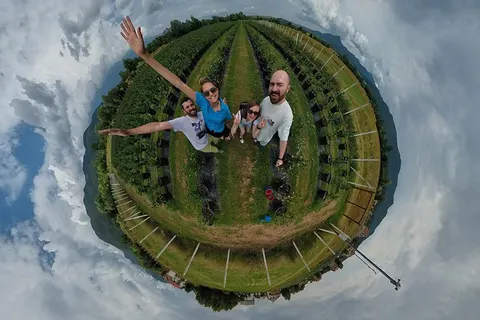
Both of them work in IT—he is a programmer, she is a project manager. Today they also own 4,700 blueberry bushes, whose remarkable taste delighted hundreds of buyers this summer, and tend 5 decares of roses, alternating dailies with digging and talk of data science with talk of agronomy. Sometimes life really is a bed of roses; it only takes the courage to appreciate it, rethink it, believe in your dreams and forget the stereotypes.
 28
Isus: The Programmer Who Came Out of the Ghetto
“The hardest part was taking the essence of the two worlds I live in and combining them into one. It takes a lot of emotional energy and a great deal of empathy. I’ve been rejected by Bulgarians because I’m a Gypsy, and by Gypsies because I’m ‘pretending’ to be Bulgarian. You fight to be respected on opposite fronts.” It is my pleasure to introduce Isus Kostov! To his colleagues he is simply “Jesus,” and to me he is a powerful example of how a person can defeat his surroundings, prejudice, even himself, to reach what he dreams of, however distant, even impossible, it may seem. His road begins in a Roma ghetto, and today he is a software engineer at a respected company. He taught himself online and never gave up, starting from a school he often attended hungry, in shoes with no soles. By now he has built up serious experience in the profession. “The most valuable thing programming has given me is, without a doubt, freedom,” Isus says. “It gave me the chance to get out of the difficult situation I was in and to build a life in which I’m independent and can help my family.” His next goal is to inspire more kids to chase their dreams, and not to give up when they are held down by their surroundings and their circumstances. And what might happen if stories like this changed the attitude of both our society and the IT sector toward these children?
 29
Edward and the Afronauts
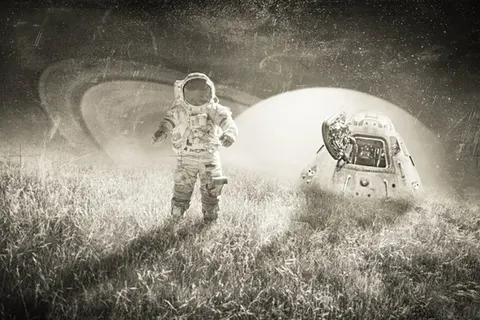
Of all the eternal stories, there is one we underestimate most often. Let us saddle Rocinante, greet an illegally young Dulcinea and chase the windmills of the Solar System! The renowned hidalgo Don Quixote, a few centuries later, is Edward Mukuka Nkoloso, the inventor who… very nearly beat the US and the USSR in their battle for space!
 30
How Bulgaria Became No. 1 in the World of Linguistics Olympiads
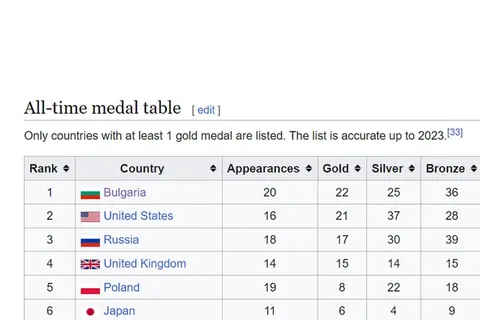
Bulgaria leads the world with the most gold medals from the International Linguistics Olympiad, and after 20 years of these competitions our team is first, ahead of the US, Russia, China and the UK, as Alexander Velinov, the teacher who has stayed close to the team for two decades while teaching and working in the software industry, announced online. How did we get here, what sets good competitors apart, why do wild parties turn out to be a key factor, why don't today's winners listen to music, and what is the unexpected explanation behind the notorious spelling rule of the full definite article?
 31
The Lifelogger: Recording Every Moment of a Life
Remember when we used to collect all sorts of things: stamps, napkins, postcards, photos… even memories? The year is 2000. One of the great scientists of his time begins an unusual experiment. Day and night he will wear a camera around his neck that records every moment of his daily life. The idea is to miss nothing! His life will be captured and duly documented, so he can go back to any moment of it, and why not… one day relive it virtually? Gordon Bell is a world-famous computer scientist, and one of the most prestigious awards in computing bears his name. But the experiment he undertook—recording every second of his life—gives us far more today than his scientific research. One way or another, it shows where we are all headed. His idea sounds like a joke… because it has already become everyday practice. Yes, we leave a huge trail online of every minute we live. And it doesn't impress us, doesn't please us, doesn't even make us ask what the consequences might be. Do you dream of remembering every important moment of your life? The first kiss, your newborn's first smile, that unforgettable meeting that showed you how to change your life? Today it is easier than ever. And at the same time harder, more challenging, even… more dangerous.
 32
How YouTube Was Meant to Be Tinder: Three Programmers and $1.65 Billion
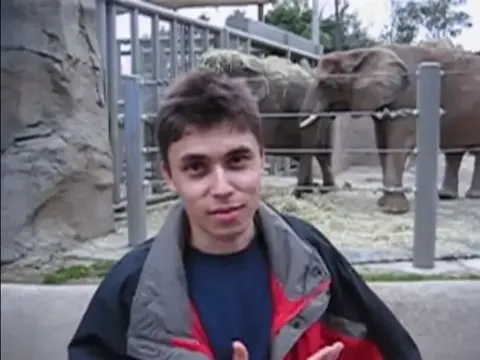
How many programmers does it take to change a light bulb? Probably depends on how motivated they are. But you'll be surprised to learn that just three are enough to create… YouTube. In the beginning it was quite different, because the platform that became a synonym for video content was originally supposed to be a dating site. Three former PayPal employees launched the project in early 2005, and less than two years later Google bought it for $1.65 billion! Here is the little-known, twist-filled story of one of the giants of the digital world. Of the site that made video unimaginably easy to share. Of the project that for many years ranked among the three most visited pages on the planet.
 33
The Genius Terrorist and the “Evil of Technology”
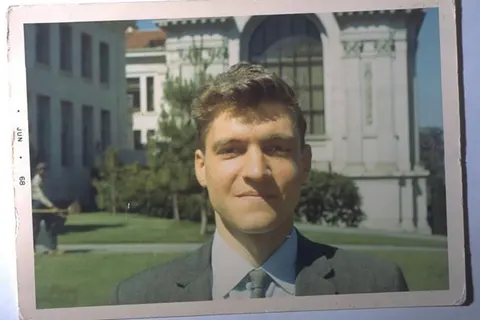
Last Sunday, in the hospital of a federal prison, while serving the first of his eight life sentences, a man who began life as an exceptionally promising scientist passed away: Ted Kaczynski, known as the Unabomber. A child prodigy, at just 25 he became the youngest faculty member in Berkeley's history, and a dazzling career was predicted for him. Then he suddenly decided to withdraw to an ascetic shack in the middle of the woods. For 17 years he carried out terrorist attacks on scientists and people connected with the computer world. He became the FBI's most expensive target. Meticulous, elusive! He was recognized and turned in by his own brother, from words in his manifesto, which is sure to be much discussed. “As society and the problems that face it become more and more complex and machines become more and more intelligent, people will let machines make more of their decisions for them, simply because machine-made decisions will bring better results than man-made ones.” “He might not be wrong,” Elon Musk wrote, sharing the news of Kaczynski's death. The Unabomber was a terrorist who took the lives of innocent people. And at the same time a scientist who predicted the dangers that come with technology. Obsessed with the risks it carries, yet incredibly perceptive in the way he looked at them.
 34
Father and Son: The Relay of Life
A father and his grown son, holding hands. Behind them is what defines them; in front of them, the lens in all its merciless candor. Important photographs need no words. This Digital Story is as big as life itself. Because it takes us back to the most natural of cycles and offers its piercing gaze into meaning. The photographer Valeriy Poshtarov has two sons, aged 12 and 9. One morning, as he walks them to school, he starts thinking about how, before he knows it, the moment will come when they no longer want him to hold their hands. That is how the idea is born: to capture fathers and their grown sons in his lens, surrounded by the setting that represents them best. The result: photographs that don't just tell stories, they paint universes…
 35
Nothing, Forever: How The Bold and the Beautiful Lives On in the Age of AI
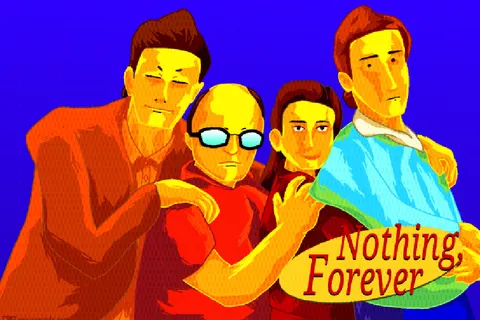
Nothing, Forever is a venture as wacky as its title. At first glance it is rather fun: a series, a sort of sequel to the cult sitcom Seinfeld, that runs without pause and without the plot ever repeating itself. Yet it gives us plenty of reasons to think about the future of art and entertainment in the age of artificial intelligence. Could personalized art be a dream, a new paradigm, or the end of human creativity as we have known it?
 36
Jordan Peterson: The Man Who Gave Life Its Meaning Back… or Did He?
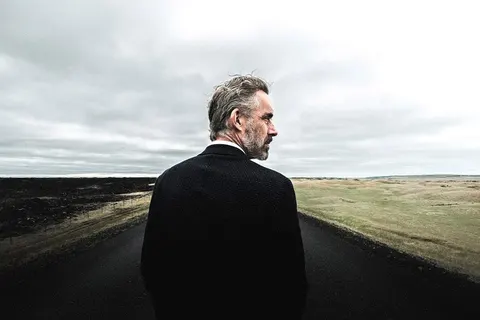
A Canadian psychology professor is about to take the stage of Hall 1 at Sofia's National Palace of Culture to advise a mostly young audience on how to put their lives in order, and the tickets have sold out twice despite steep prices. Praised and contested, Jordan Peterson has won cult status as a most unusual online influencer. Are we rediscovering forgotten values through him, or returning to outdated ideas that no longer fit our time?
 37
Tang Ping: Lying Down in Order to Stand Up
Several generations of Chinese grew up with the “ideal” of “9-9-6”: you work without a break from 9 a.m. to 9 p.m., six days a week. It is the only way to survive the fierce competition and keep climbing the ladder. But the end of endless grinding may be in sight. “Tang ping” and “bai lan” are the two names of a movement gaining strength among young Chinese: lie down and think about life; relax instead of throwing all your strength into meaningless toil. Are the beatniks of our time coming from China? Will people in the East learn to idle? When can laziness become a constructive force? And shouldn't we all follow their example and prepare for our own future this way? The Chinese are learning to be lazy, and so inspiringly that you want to grab the quilt at once… Let's lie down!
 38
“Technology Is a Labyrinth We Locked Ourselves Into”
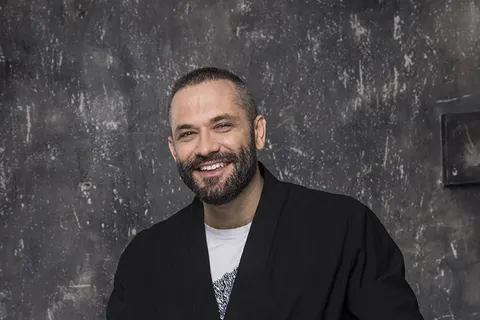
Could spirituality, rather than technology, be the path to the next step in our evolution? On Sunday, March 19, director Nikolay Vasilev premieres Vaklush, a feature film more than 20 years in the making, about the spiritual teacher Vaklush Tolev, who largely changed his life and worldview. A conversation about mystical knowledge, the coming transition many religions speak of, and the wings that might carry us out of the labyrinth of technology in which we feel hopelessly lost.
 39
Krasi, Running Toward Himself
By the time he turned 30, he had piled on quite a few pounds and was sliding down the slippery slope of alcohol, cigarettes, even drugs… He decided it was time to change. He stepped timidly into the nearest gym. Then he started running. Not to run away, but to keep running, ever forward… and inward, toward himself. He hasn't stopped to this day. He has finished dozens of marathons and ultramarathons and logged more miles than some of us put on our cars. He has run across the Sahara in temperatures that could melt a chip. And beyond the Arctic Circle, where the inhuman cold can snap off the finger that reaches for your phone. Krasimir Georgiev is here, and he keeps running toward himself and for the sake of others. Soon he faces an even harder task—to spend weeks alone with himself, in front of all of us, with nowhere to run. To remind us who we are, where we are headed and what truly matters in our lives…
 40
Dwarf Fortress: Life as a Game
Did you know there is a computer game that resembles… 50.04 percent of… real life? Dwarf Fortress has a huge number of devoted fans, has earned cult status over its 20 years, has been admitted to a museum of games and inspired the creators of Minecraft. For two whole decades it was developed voluntarily, on donations alone, by two dreamer brothers who gave everything to their adventure. Until that same adventure… quite unexpectedly turned them into millionaires. The story of Dwarf Fortress is as strange as the game itself…