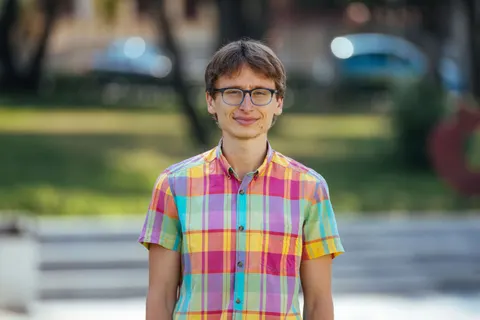
“I Can’t Wait for AI to Keep Getting Better!”
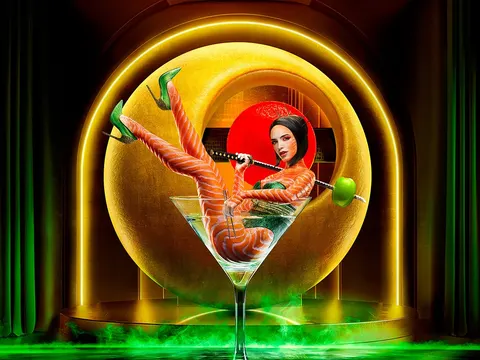
Artificial intelligence is throwing down the gauntlet to artists in more and more fields. While many believe the technology is far from creating better than humans, more and more often, and more abruptly, the opposite turns out to be true. So where do creativity, art and imagination go from here? How do we value the journey when the result comes easy? We live in a surprising world where you have to adapt to survive. Lubomir Sergeev is a photographer, digital artist, director and producer with 30 years of experience in advertising. He has worked on five continents and has lived in London and New York. He holds a long list of awards, among them the Victoria, considered the most prestigious in the world of photography. For 12 years in a row he has been included in the global selection of the “200 Best Digital Artists.”
 42
“AI Will Never Write Better Than Boris Hristov”
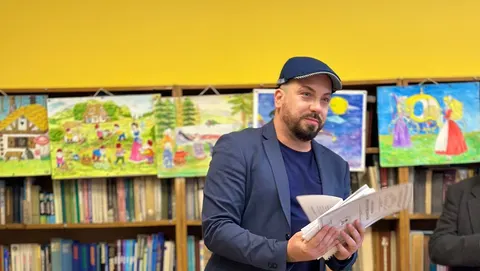
What does it mean to be a successful poet today, what keeps you going, and how long will poetry be with us? Veselin Veselinov, winner of this year's seventh Stanka Pencheva National Literary Competition, has a whole wall of poetry awards at home. A doctor of clinical psychology, he has worked as a teacher and school psychologist for 13 years and now also teaches bachelor's and master's students at New Bulgarian University.
 43
“The Epidemic of Ignorance Will Only Spread”
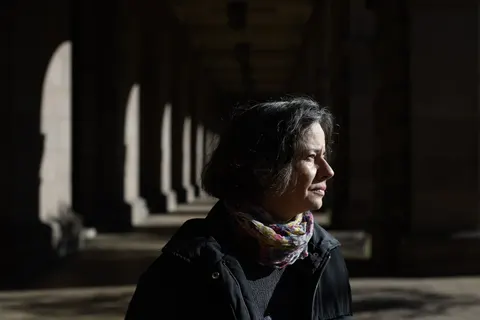
“Our inability to strike up a meaningful dialogue has left hundreds of thousands of people socially isolated. Some fall ill and die simply because they lack real human contact. I believe artificial intelligence will deepen this trend, because it will fool people into thinking they are talking to a friend, to someone they have lost, or to someone who refuses to hear them. And so we find ourselves in a world where we can supposedly talk to each other. But behind this apparent palette of viewpoints, of words, of word salad, including self-absorbed academic speeches, sit frightened, disillusioned people, impoverished intellectually and emotionally. To me, that is the great horror of our time.” Our conversation with the writer Silvia Tomova began with poetry and went on to education, history, the epidemic of ignorance and the long-overdue need for a social awakening. Against this backdrop, technology remained a constant companion, changing each of these subjects from the ground up. A journalist and special education specialist by training, she publishes essays, short stories and novels. The winner of numerous awards and the author of five novels and three short story collections, Silvia often peers into the past as well as into the big questions of today. She is not afraid to break out of clichés and to challenge the mainstream, both in literature and in public life. And so we meet for an important conversation that has come at just the right time.
 44
“Poetry Remains a Secret Treasure”: “Hristian Papazov” Gives His First Interview
The man who was the first in Bulgaria to place AI-generated verse among the best in a poetry competition gives his first (and perhaps only) interview ever, to Digital Stories. The questions come from… the second person to confirm the striking experiment. Who is behind the name Hristian Papazov, and why does he hope that we humans, not the algorithms, will soon be writing far better, more original and meaningful poems?
 45
Why Do You Read?
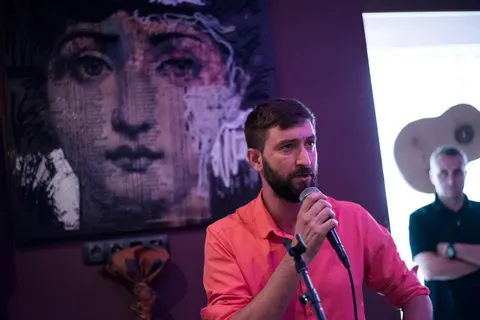
How can letters and bytes, books and technology, meet? That is the big theme of a series of digital stories. After Tuesday's look at some of the favorite books of the world's IT leaders, we once again step outside the cliché, this time with the author of Bulgaria's biggest book blog. Next Tuesday brings the unexpected literary recommendations of some of the most important figures in Bulgarian IT. You are what you read. “Kakvo chetesh…” (What Are You Reading…) is a question we should ask more often, especially in public. It is also the name of the largest and most active Bulgarian book group on Facebook, created by today's guest. For 15 years he has been sharing his recommendations on Knigolandia, the biggest book blog in Bulgaria. Deputy editor-in-chief of the Ciela publishing house, he recently made another dream come true: seeing his name on the cover of 100 knigi, koito tryabva da prochetete (100 Books You Must Read). With Hristo Blazhev we talk about reading and the future of literature. About the technologies that change it, and the books that build technology. Together we hunt for important and unexpected recommendations, to convince ourselves that letters and bytes must walk hand in hand, or nothing good awaits us, not even as a species. Happy reading!
 46
“It’s Crystal Clear That AI Is the Future”
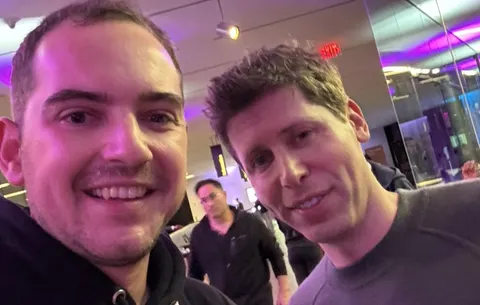
The day before I met Ilia Valchanov, the news broke officially that his startup Team-GPT had secured $4.5 million in funding, a record for Bulgaria! Today’s guest leads a platform that helps businesses around the world use the power of large language models while keeping their data safe and confidential. It is far from his first impressive achievement: for years Ilia has been building hugely successful online courses in data science and artificial intelligence, and he personally has more than 1,400,000 students on Udemy! He owes his remarkable success to a thorough approach, a great deal of reading and learning, courage and unconventional decisions. That is why we are meeting: to talk about the next big news coming out of the world of artificial intelligence. About how the technology will transform every area of business, but also about the risks it creates. About the important causes tied to the progress of AI, and the skills it will never manage to develop.
 47
Bulgaria's Literary Banksy
“The most dangerous literary terrorist in the country.” No, those words about today's guest aren't mine. They belong to a specialist who follows Bulgarian literature closely and knows it from the inside. And so, after 153 interviews published on this site, the time has come for… the first anonymous guest! I won't even tell you whether it's a man or a woman; what matters here is the story and the point of view. A few days ago, AI-generated poems made it among the best in two poetry competitions, and in the second case it was an experiment by Digital Stories. I believe it is vital that we begin the discussion about our future relationship with technology, and with as many important points of view as possible. Expect more remarkable guests (and experiments) on the subject. Today, though, we go back to before the AI-generation craze, to tell the story of a person who spent a long time experimenting with submitting compiled or simply absurd poems under different names. Long before that, this person had entered and won competitions under their real name, until… becoming convinced that something in the system was wrong. That the criteria were not what they ought to be. The idea changed over the years, especially after a series of convincing results and countless publications in many of what are considered the country's leading poetry outlets. What could the goal be? What does the future of poetry look like from where our guest stands? How are algorithms changing our attitude toward the written word and toward creativity? A remarkable encounter awaits us with the first anonymous guest of Digital Stories: Bulgaria's literary Banksy.
 48
Rory and Grandma's Recipes
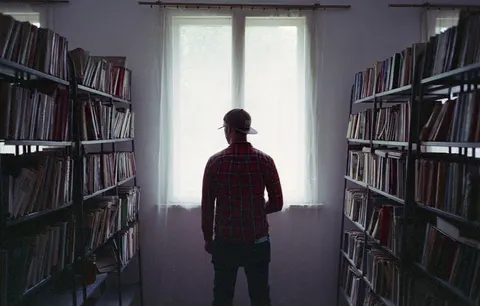
What is a tattooed American doing aboard a 40-year-old Lada, bound for yet another Bulgarian village? And what exactly goes into a cocktail called “Computer”? Why would a citizen of Washington State choose to hunt for old Bulgarian recipes in remote villages, where “Baba” lives—Grandma, the collective, the eternal in an endless, universal figure who touches all of us? Rory Miller is rediscovering, here and now, the magic of the Bulgarian village. The thing we abandon, though it holds so much of the meaning. A construction worker, an olive picker and an English teacher, Rory stopped in Bulgaria about 15 years ago, and his two children were born here. He caught people's eye on “Masterchef,” then went on his way through the remote Bulgarian villages. That is how the remarkable book Na oko (By Eye) was born, a surreal travelogue where you won't find precise recipes—for dishes or for the future, everything is “by eye,” both a unit of measurement and a way of life. But you will find the village itself, and its dishes, and the grandmothers, and the spirit, and well-measured spices. The American's next step is to bring the book out in English through a crowdfunding campaign. I will personally support him, because I think he has captured the priceless spirit of the Bulgarian village today. Which is different from that of Elin Pelin and Ivan Vazov. Which, I believe, will overturn the misguided fashion that life is in the big city. The world of technology lets us break stereotypes like never before. Colorful Rory's book reminds us of that too, and he has plenty to tell us in the lines that follow.
 49
What Heals the Wounds of History?
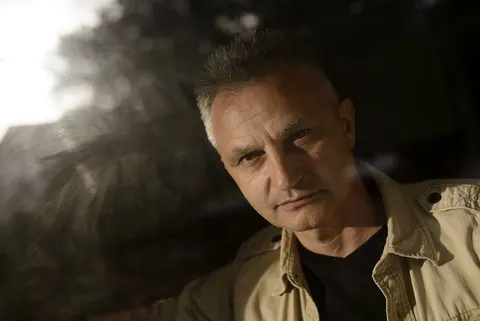
Today history unites and divides us, inflames and stirs us as never before—not least because “who controls the past controls the future.” In his latest novel, Rana (Wound), Zachary Karabashliev turns to Bulgarian history and to some of its most dramatic and important moments: the wounds the past inflicts on us, and the ancestors whose path we continue. We met again to talk about the past, its powerful stories, its lessons, and what brings us together and what drives us apart.
 50
“And There Might Have Been No Mr. Rusev… That Is What History Is!”
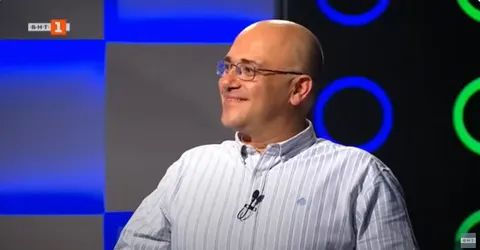
Why is it worth knowing the past better? Boris Rusev, who won an incredible 34 games on the quiz show Posledniyat pecheli (The Last One Wins) before walking away and returning to his true calling as a high school history teacher, may be the best person to answer. We talk about why history divides us more than it unites us, how to wake young people's interest in the past, what future historians will say about today's strange times, and whether Khan Krum really ordered thieves' hands to be cut off.
 51
What Will We Do When a Third of All Jobs Disappear?
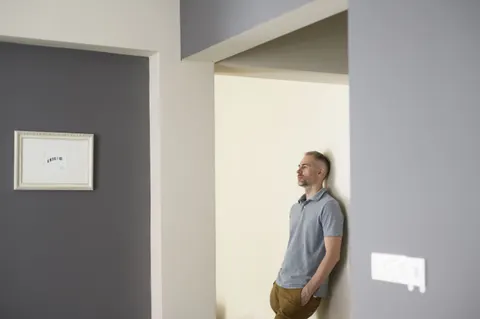
Artificial intelligence is confronting us with an unprecedented, all-encompassing social transformation: while we shrug at the progress, big companies are pouring billions into projects that could let machines replace a third of the planet's jobs in the near future, and this time without new professions being born to take their place. Petar Petrov, who heads the AI team at Eleven VC and has just published his first book, talks about why this future is already here. How do we break the clichés, start the conversation that matters, and prepare for the challenges that were unthinkable until recently?
 52
“When I Insult It, It Doesn't Take Offense.” What Gen Z Thinks About AI
What do young people think about artificial intelligence? This time I hand the floor to seven people in their twenties who chose book publishing as a career, and who spent months digging into what today's algorithms can do. Together they made a book about AI, and in this blitz conversation they explain why they believe more people will soon be reading.
 53
A Stuntman Takes On the Hackers
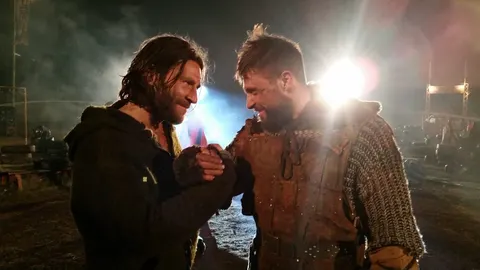
Which is harder—knocking out Antonio Banderas or fending off the cyberattacks aimed at a large company? There can hardly be more than one person in the world who can answer that from personal experience. Only our guest today. Veselin Troyanov has worked as a stuntman on countless Hollywood blockbusters, alongside Jason Momoa, Scarlett Johansson, Gary Oldman, Ryan Reynolds and Antonio Banderas. Today he heads the Bulgarian team of Check Point, a global cybersecurity company with vast experience, while also building his own platform for influencers. Yes, we will talk about security and incidents. About risk and caution. About stuntmen and the spectacular crashes anyone can arrange for themselves by not being careful enough online… And can there be such a thing as safety on the internet at all?
 54
“You Think You Know. Until Something Else Decides What to Show You”
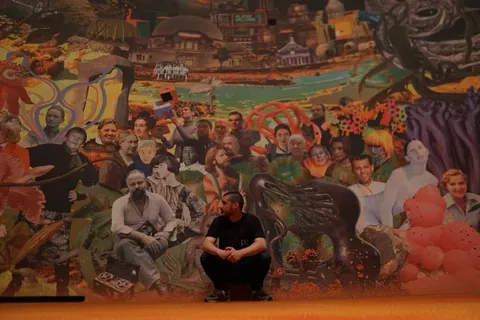
“A minimalist style, repetitions, deceptive simplicity, the sound of a world that is changing, industrializing; the quiet tones can be read both as the last moans of a humanity surrendering to the machines and as the first timid songs of newborn machines.” Vladimir Poleganov published his novel Drugiyat san (The Other Dream) almost a decade ago, and some of its strokes now ring prophetic: how we delegate more and more to machines—our memories, our knowledge, ourselves. Today's guest is a writer, translator, screenwriter and teacher, and a conversation partner worth talking to about books and the future, about words and machines, and about whether literature will arrive too late to remind us what it means to be human and what we must never delegate to machines…
 55
(In)Human Resources: A Referee Calls the Match Between AI and People
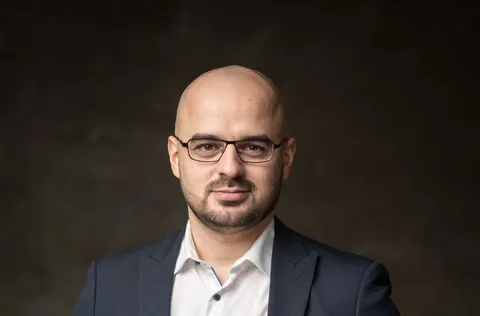
Can an algorithm land a job? A fake candidate dreamed up by ChatGPT made it to two job interviews, so I asked Petar Dzhuganski, a former assistant referee with more than 250 professional football matches behind him and now head of recruitment at a large software company, to analyze the match between AI and humans. Is the software industry still letting newcomers in, are professions disappearing because of AI, and should workers from distant countries frighten us?
 56
Agile: Simple, Clear—and So Beautiful
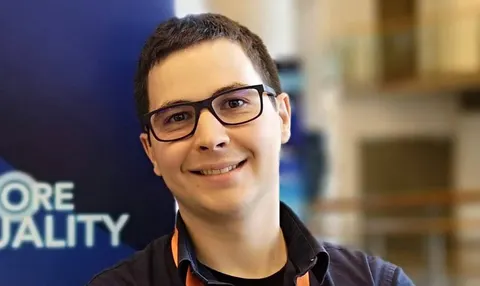
Agile. Let's run a quick check. If you don't work in information technology, you have most likely never heard the term. And the reverse: if you do, you say it so often that it has lost all meaning. Did I guess right? Time to step into an unusual, underrated and exciting world where human creativity, talking problems through and searching for solutions turn from magic into everyday routine and a recipe for success. In 2001, a group of IT specialists wrote the Agile Manifesto, which gradually became a guiding direction for the way we build software. Today it promises to help any venture move forward, solve complex problems and thrive. Nikola Bogdanov went through a colorful range of roles in the IT world (he will tell us all about them in a moment) before finding his true calling: explaining Agile, making the concept practical, showing companies why and how to adopt this way of thinking. And above all, building high-performing teams. Today's guest is the organizer of the first large-scale event of its kind in Bulgaria, where international and Bulgarian speakers from a range of industries will talk about adaptive management and about Agile beyond the clichés. On September 26, at the University of National and World Economy (UNWE), there will also be a Digital Stories booth, where I'll be happy to chat in person.
 57
Become a Teacher!
The first day of school is approaching, and it is a good occasion to look for answers to the big questions in education. How do we bring more young, well-prepared teachers into Bulgarian schools, how do we teach technology when its fast-moving world produces big news every week, and how can artificial intelligence become a friend and helper to both teacher and student? Angel Georgiev, creator of the Znam.be platform and co-founder of the Sindeo academy for teachers, believes that “teaching at a school today is more accessible than ever.”
 58
“We Don’t Appreciate That We Live in the Best Moment in History”
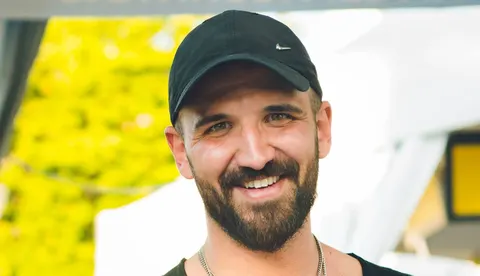
“People don’t appreciate that we live in the best moment in human history. We have advanced medicine, transport, communications… everything, everything you can think of. To have the chance to travel the whole world without restrictions and not take it is a crime against evolution. Because it won’t last forever. Covid, wars, regimes, diseases… Right now we are in a perfect situation, where the biggest problem is that Windows computers freeze for 8 hours and your flight gets pushed to the next day.” We’ll talk about the joy of writing and the need for hardship in life. We’ll travel around the world, through literature, through the big issues of the day. With a man who truly loves to travel like nothing else—he has lived on 4 continents and visited more than 40 countries. Abo. He chose a name that sounds like an AI’s. He trained in criminology, teaching and psychology, and today he is a writer—the author of two books, an editor, a translator and a journalist. But how come, and why, is he called Abo? And why does a subject of King Charles III, after so much travel, choose to come back to Bulgaria, which he considers a balanced, happy, cozy place?
 59
Bozhidar Stefanov: Chemistry Against the Layers of Dust
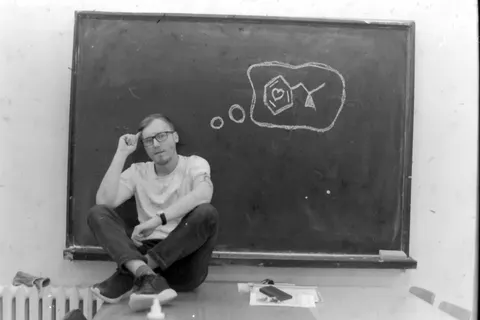
Bozhidar Stefanov was invited to work at Oxford, but he chose to build a chemistry lab at the Technical University of Sofia, in a room that still has no air conditioning. Before he moved in, he tells me, his colleagues called it “the isotope room,” because in the 1970s it was used for experiments with radioactive isotopes. “I’m not going in without a Geiger counter,” I say with a smile, and he pulls out the very instrument and shows me that the readings are normal. Never joke with a chemist. Then he tells me about clearing out the lab, about the layers of dust (and East German porn magazines) he shoveled out before he finally had a place of his own to do research. During the pandemic he learned to embroider. And before that, for many years, he caught the cameras’ attention as someone who could present science in an accessible, accurate and attractive way at FameLab events. Lately, though, his focus has been elsewhere: on producing scientific results. I believe him that the environment is healthy; I have no choice, he knows the subject. But I also believe that we can have both clean air and great prospects for science in this country, if there are more people like him. I may even forgive him his skepticism that artificial intelligence will solve the big questions of chemistry… because he is a chemist, a recognized scientist with rich experience. And because it is time we listened more and more to the people who burn for science and have chosen it as their calling. People who understand what they are talking about and may not offer the most colorful, animated view. But they offer the one that really paints the future…
 60
“I Want to Live in a World Rich in Meaningful Conversations, Inspiring Stories and Responsible Journalism”
“We forget because we cannot keep up with processing all the information that reaches us and making connections between events, and this makes us very easy to manipulate.” Daniel Penev, a journalist, translator of nonfiction and author of books about the people changing Bulgaria, talks about the stories worth telling today. And about why, in a world of daily divisions, it matters more than ever that we keep talking to each other.