Should Robots Be Our Slaves?
Robonomics is coming at full force, and those who adapt in time will gain the most from it. Prof. Stanislav Ivanov, a tourism scholar turned researcher of the economics of automation, talks about the exciting future, the big questions it raises, how Bulgarians already hand robots the same rights and duties we associate with slavery, and why an unconditional basic income is inevitable. Let us take a peek into the future together!
 62
Going “Out of Range”
When did you last spend an entire day away from social media? Switch off your phones—we’re going “Out of Range.” Out of range not only of mobile internet but of technology as a whole, which has taken over so much of our lives. To look for where the human being has been hiding behind it all. That is the title of Evgeni Cherepov’s new novel, which makes us think precisely about the need for digital hygiene. About slow conversation, about deep stories and themes that cannot be told in TikTok format. Today’s guest has worked as a security guard and studied civil engineering before finding his calling as a teacher of Bulgarian language and literature. After long wanderings, he has returned to teach in his hometown of Stara Zagora. When does technology become too much for us, and why is it important to think about it? How do we learn to tear ourselves away from the feed and find a balance? “People have always needed pauses… Just like that, to stop for a moment, to take a step off the highway of their supposedly purposeful lives.”
 63
Does Life Have an Algorithm?
Can algorithms be useful in everyday life, and is there a way to bring the world of technology together with the human, emotional one? Petar Sabev, a software testing specialist with vast experience and a broad, unconventional outlook, will open this year's DEV.BG All in One with a talk on the algorithm of life in 10 and 1/2 personal stories. Two IT people sit down to talk about programs and people, and the conversation ends in… poetry.
 64
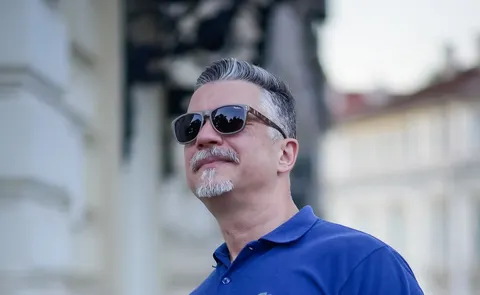
“The World Is More Chaotic Than We’d Like. And Science Isn’t Here to Comfort Us”
Do you believe in astrology, the power of chakras, reptilians or a flat Earth? Stefan Markov, a Sofia University lecturer known online as The Science Guy and the author of Algorithms of Delusion, talks about pseudoscience and conspiracies, science and authority, and why the world needs better storytellers.
 65
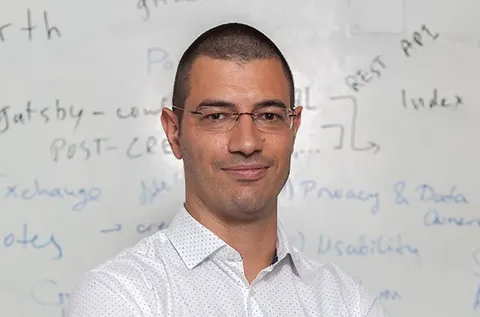
“AI Can Already Help with Absolutely Any Human Task”
Nikolay Markov is among the specialists paving the way for artificial intelligence to enter every area of our lives. He has spent more than two decades in information technology, yet he trained in engineering physics and macroeconomics. His experience runs from building cloud solutions through cybersecurity to researching and deploying AI. Today he leads the AI, DevOps and cloud practice at SoftServe, and at TeamLandi he is building a system that will give small and medium-sized businesses access to the full range of what AI can do. Why are these technologies here to stay and change our lives? How is AI the first technology that can reach into absolutely every field? What will the future look like?
 66
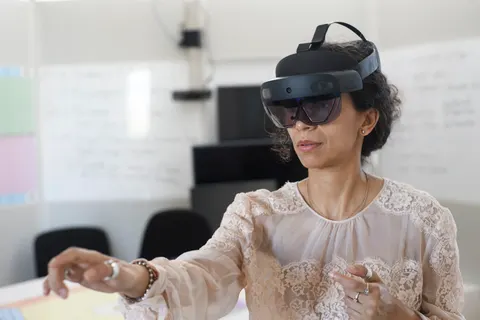
“Within Five Years, We Will Merge the Real and the Virtual”
We are talking at the Technical University of Sofia, in a lab where the next generations of augmented and virtual reality are being built. Assoc. Prof. Agata Manolova, dean of the Faculty of Telecommunications, explains why we are not yet living in the metaverse and how close we are to a virtual reality indistinguishable from the real thing. It is a thoroughly engineering-minded conversation about the virtual and the big questions it raises.
 67
Where Do Happiness and Success Meet?
Is there a recipe for success, and what is success anyway? Polina Marinova Pompliano, the journalist behind The Profile and the author of Hidden Genius, has made it her mission to find out, while offering a powerful glimpse of what the journalism of the future might look like. We talk about money and luck, the imperfections that make art, and the enduring power of stories.
 68
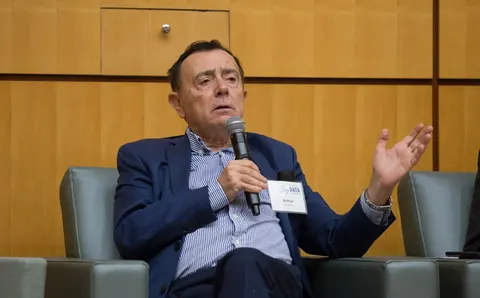
Apply AI or Die?
Apply AI or Die? Dr. Artur Kordon, a native of Varna who has spent 32 years in the United States bringing artificial intelligence into industry, 18 of them as a research leader at Dow Chemical, believes this is the great question of our time. He explains why ChatGPT is only one step in a revolution that will “sweep everything away,” and why today's systems are not a black box but a black hole that could destroy us all if we follow the path charted by Sam Altman and OpenAI.
 69
Would a World Without Work Really Be So Bad?
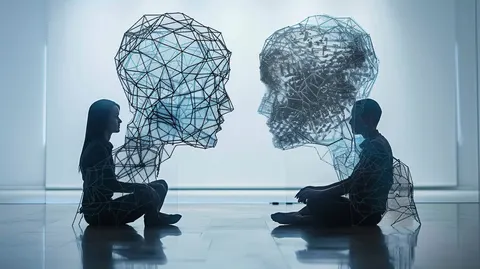
Have you heard of… cyberpsychology? At last there is a field of science that studies how we interact with technology. Is it changing us as a species? What are the biggest challenges it puts before us? Is its rapid development an inhuman challenge or, on the contrary, a natural turn in evolution? These are all questions whose answers I have been looking for in more than 300 digital stories, and now the time has come for the cyberpsychological point of view. Elena Tsankova holds a PhD in psychology, earned in Germany, and continued her research in Bremen as a postdoctoral fellow. In 2020 she returned to Bulgaria and began work as a researcher at the Bulgarian Academy of Sciences, with the ambitious idea of paving the way for this new and so important field. In recent years she has studied how people get to know each other online, as well as communication between humans and artificial intelligence (AI). She researches human behavior in the context of evolving technologies and describes herself as an experimental cyberpsychologist. We will talk about rushing and awareness. About the “uncanny valley,” where our perception of a technology grows more and more positive as it comes to resemble a human, until at some point it gets so close to human that it is perceived as eerie… And about the calm, philosophical point of view that helps us make sense of and accept the big changes.
 70
Rakia-Flavored Chips: An Optimistic Theory of AI and Art
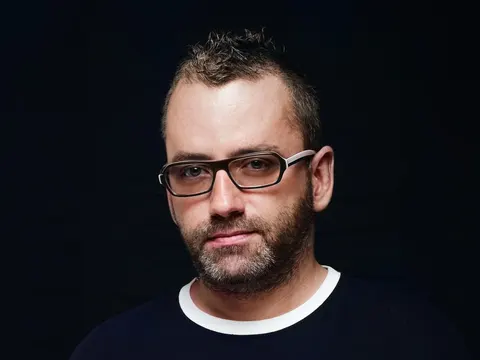
Have you ever seen chips that taste like tripe soup or rakia? Or a Lego set that builds the Alexander Nevsky Cathedral or an old Zhiguli? Can you picture Bulgarian celebrities in Mortal Kombat—Sancho the Sandman versus Danov, and Khan Kubrat versus Gala? Well, no need to stretch your imagination: all of these ideas come to life thanks to the impressive collaboration between today's guest and the algorithms. Rosen Dukov is a graphic designer with a remarkable track record. He has created the posters for some of the most popular Bulgarian films of recent years and designed covers for books that sit in every self-respecting library. He has won international Photoshop competitions several times, and it is no exaggeration to call him a world champion. In recent years he has been teaching these skills at SoftUni—design, photo editing and artificial intelligence. Why isn't a visual artist afraid of competing with artificial intelligence? Why does he think it is important to get to know the new possibilities algorithms give us as soon as possible? What are the next original ideas he will use to show us how far generative models have come?
 71
“With Today’s Newspeak, We Are Walking Evolution Backwards”
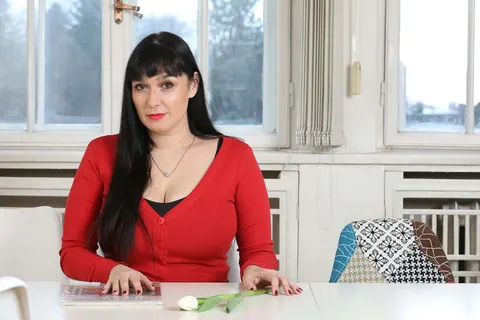
“We are making our language poorer and poorer. Online we communicate in short, simplified sentences and use an awful lot of abbreviations. This newspeak is a way of simplifying how we think and squeezing ourselves into a mold. Voluntarily, imperceptibly, step by step, without realizing what we are doing, we are drastically narrowing our view of the world…” Today we use ever simpler speech in our daily lives, foreign borrowings easily push out beautiful Bulgarian words, and artificial intelligence handles the spelling of our native language better than most people on social media. Instead of rich Bulgarian, we massively speak and write a crippled newspeak, and the reversed evolution of our language is increasingly visible in our children. Many of them cannot tell a story or describe something, and they do not know Bulgarian, even in the upper grades. How can language divide us today instead of bringing us together? Holidays also come so that we can touch on important topics and talk about the big problems we otherwise have no time for in the bustle of everyday news. That is exactly what we will do with today’s guest. Doroteya Nikolova teaches Bulgarian language and literature. She has worked in journalism as a political reporter and in PR. She takes part in many joint initiatives with the literacy platform Kak se pishe? (How Do You Spell It?), among them the Words of the Year campaign and the new venture, Life Has No “aUtocorrect.”
 72
“Leading by Example Is a Fearsome Weapon”
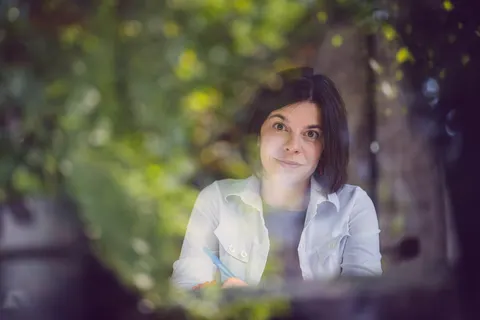
“Calling the inexplicable a ‘miracle’ is a beautiful way of admitting how little we know,” says today’s guest. “Miracles are also a chance to stop fooling ourselves that everything depends on us alone, to catch our breath and learn to trust life.” Ivanka Mogilska is a copywriter with 20 years of experience, the last 15 of them freelance. She is a blogger, editor and teacher. She is the author of seven books, the latest of which is the collection Obiknoveni chudesa (Ordinary Miracles). But… do such things really exist? We will ask her in a moment. Her airy, wise stories hold the everyday miracle, which, in my view, is the very reason to keep going. We will talk about digital and analog miracles. About the miracles worth teaching artificial intelligence and the ones it may someday create. About brevity and the long texts that carry meaning. About the need, every now and then, to “get off the merry-go-round”…
 73
“AI Is Arriving on a Massive Scale, Turbulently and a Little Chaotically”
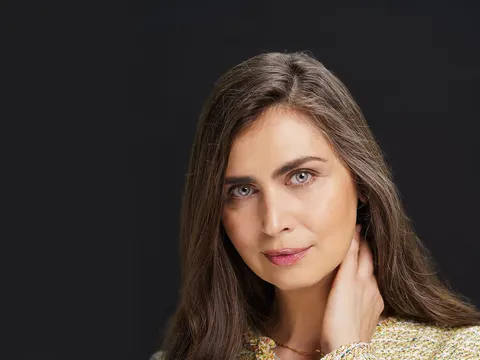
Bulgaria will soon host the first International Olympiad in Artificial Intelligence, bringing talented young people from at least 30 countries to Burgas. Elena Marinova, co-founder and longtime president of Musala Soft and co-founder of the olympiad, explains how the idea was born here. She also discusses what AI promises to change and why we urgently need a public conversation about it.
 74
“Truly Intelligent AI? Only If We Take the Next Big Step”
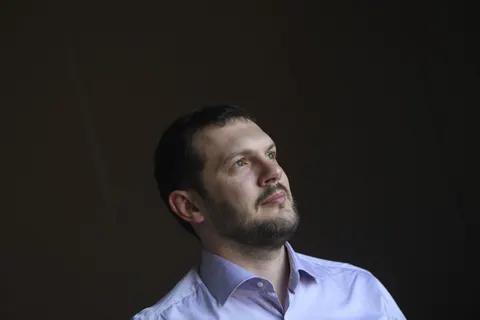
Viktor Botev and his team are building a successful product in one of the most high-tech fields of artificial intelligence, yet his enthusiasm for the near future in which AI will change us all is far from the sweeping expectations of the day. For eight years he has been chief technology officer of Iris.ai, a Norwegian-Bulgarian startup that applies AI to vast bodies of scientific data. A long, human conversation about technology for connoisseurs: hallucinations, the limits of large language models, and why the era of Bulgaria's outsourcing companies is over.
 75
“AI Has Already Changed the Translator’s Job”
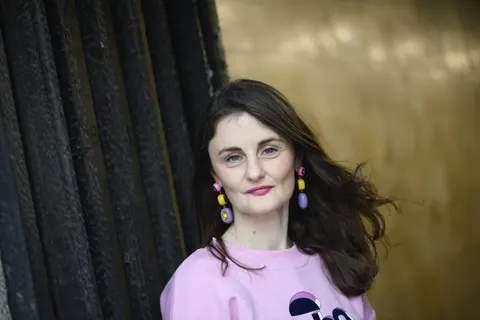
Did you know that automated translation systems are at work all around us? That a huge share of administrative and commercial texts are translated into every language by artificial intelligence, and the job of humans is to check and correct them? They are no longer even called “translators” but “post-editors.” Rada Gankova returns to talk about her main work, translation, and how artificial intelligence is changing it.
 76
“Anyone Can Be a Programmer. It’s Time More of Us Were Engineers!”
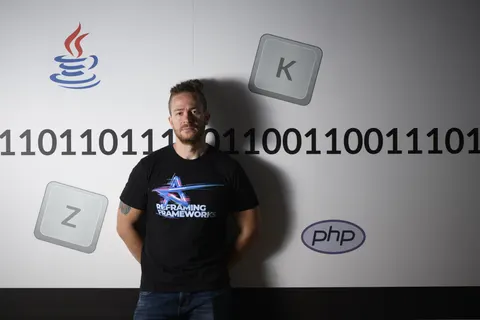
Ivaylo Kenov is an inspiring teacher who has helped countless people become programmers, a shy man who stumbled into the profession after realizing civil engineering wasn’t for him. After years at the head of SoftUni’s development team, he now leads a company with an ambitious goal: to remind the industry that building software should be an engineering process, not just coding. We talk about whether anyone really can become a programmer, why finding a first job feels so hard, and how the engineering approach got him from a doctor’s warning that he might never walk to 150-kilogram deadlifts.
 77
“I Imagine the Future as a Battle for the Invisible”
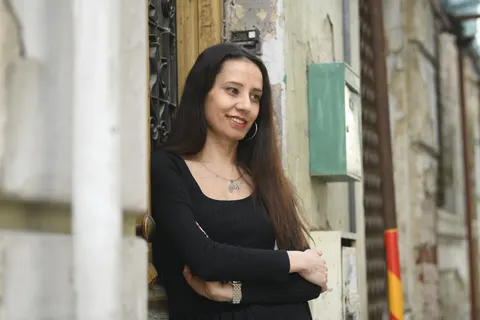
“For now, artificial intelligence strikes us as funny. It looks like a funhouse mirror, or a little dimwit we guide along, one who makes us feel knowledgeable and more human than ever. But this is changing literally by the day, and soon it will become a realistic and credible reflection of us. I think about that moment—perhaps then we will manage to see ourselves through its eyes, to grasp which parts of us are clear even to an artificial creature, what remains out of its reach, and what is most precious. To me, those are the places it cannot peer into. I imagine the future as a battle for the invisible; that will be the most important resource. What artificial intelligence cannot register is the most precious thing in us.” Pochti vsichko e nared (Almost Everything Is Fine) is the title of poet Violeta Kuneva’s debut collection, and it captures with such precision how the world feels to us today. But how did it come to this, that we can no longer tell the poet from the algorithm? What do we lose if that is so? Is the problem that, en masse, we have lost our yardstick for art, for metaphor, for layered, living texts that are human by definition, as poems are? Will poetry come to an end, or… is it precisely poetry that can save us from ourselves?
 78
“We Bulgarians Have the Mindset to Be Successful Entrepreneurs”
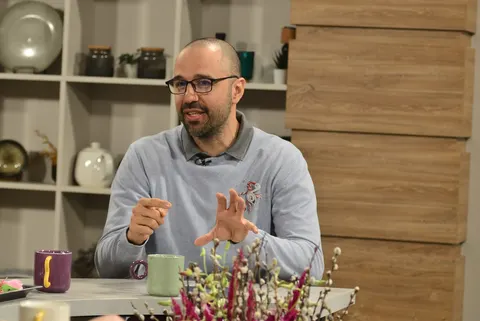
Boris Paskalev is an entrepreneur with impressive experience in the startup world. He recently became a strategic advisor to INSAIT, Sofia's Institute for Computer Science, Artificial Intelligence and Technology, one more guarantee that we can expect ever more remarkable news from there. A former youth national basketball player, he went on to study at MIT, then helped found DeepCode, a pioneering AI coding startup acquired by Snyk in 2020. We talk about his path through Silicon Valley, the AI revolution, the coming revolution in robotics, and how Bulgaria can have more successful startups.
 79
“We Have Yet to Learn How to Be Bored Well”
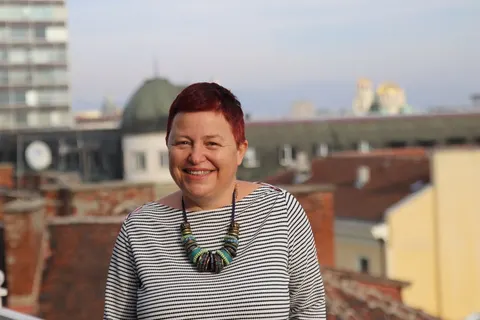
“The big question is how society will transform. Because we can see that right now things are not happening the way they should. Even capitalism is in its twilight, close to its end. We don’t know what comes next or what it will look like, but it certainly won’t be driven so much by the huge businesses that are finding it harder and harder to exist.” Justine Toms has rich and varied experience in the internet era—in communications, digital marketing, design and entrepreneurship. She teaches at New Bulgarian University and SoftUni Digital. She organizes the Site of the Year awards, and her personal blog has been running for almost two decades. With the eye of a scholar, a practitioner and a teacher, she follows how communication online is changing and where technology is taking us. How can we be sure today that we are not missing something important in the flood of information? Or that we are not falling victim to manipulation? What will the new media look like after… “the death of the media”? Will they manage the task of helping us find our bearings? In a world that is doomed to face a sweeping transformation in the years ahead…
 80
“The Point Is Not to Kill Our Own Creativity”
Is it still worth learning programming or data science, or is the future of software engineers doomed? Yordan Darakchiev, who is teaching Bulgaria's first one-year data science and AI module for the eighth time, talks about the challenges generative algorithms pose. His greatest hope is that we won't lose our curiosity and creativity, and he thinks mindless entertainment threatens them more than any AI ever could.