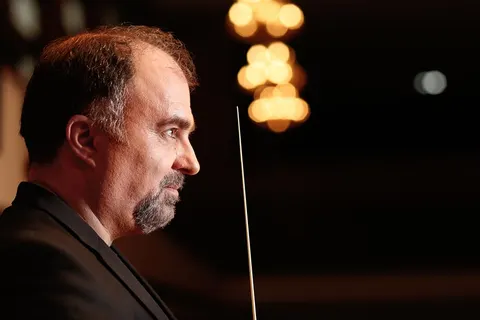
“Dr. Google Can Be Deadlier Than Dr. Mengele”
Is technology creating a new human species? Why do we Bulgarians keep dying at record rates, and can that change? How do we learn to look after our own health before it is too late? Why can Dr. Google sometimes turn out to be even deadlier than Dr. Mengele? Dr. Slavyan Stoilov is a remarkable doctor and a highly unconventional man. As the physician on countless Alpine and other far-flung expeditions, he is responsible for the lives and health of his companions, sometimes in extreme conditions. As he puts it himself, he has occasionally had to treat a tooth with pliers and a hammer. The rest of the time he is a general practitioner, and lines snake outside his office in a shabby outpatient clinic in the capital, Sofia. Dr. Stoilov studies ancient medical systems and is a fourth-generation doctor. Even so, he has a distinctive view of technology, about which he is far from always enthusiastic.
 142
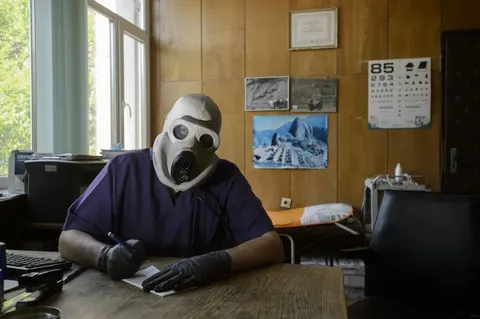
“Literature Can Still Save Us from the Future”
Nikolay Genov is a lecturer, a PhD in literary theory and a chief assistant professor at the Institute for Literature of the Bulgarian Academy of Sciences. A young man who loves books and dreams of lighting the flame of that love in more young people. Is the end of literature approaching, what does science fiction have to tell us today, and what should Mark Zuckerberg learn from the wise Stanisław Lem while building his notorious metaverse?
 143
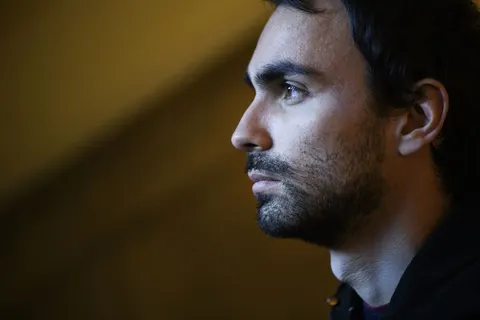
“Let’s Wake Up from the Dream That We Are Someone’s Victims”
“How do we restore the value of words? By no longer hurling them at each other. Just because we click on different links doesn’t mean we can’t talk and listen to each other now and then.” Only we Bulgarians have May 24 and November 1: the day of the letters and the day of the people who turn them into a creative force. Ivan Landzhev is first and foremost a poet, though he heads the creative team at an advertising agency. He is one of the few who truly love words and, rarer still, words love him back. We talk about the awakeners and those who wake us, about words and deeds, about the awakeners, the wide-awake and the fools, about hope, and about the magic of language in the digital world and the meaning we will lose if we forget it.
 144
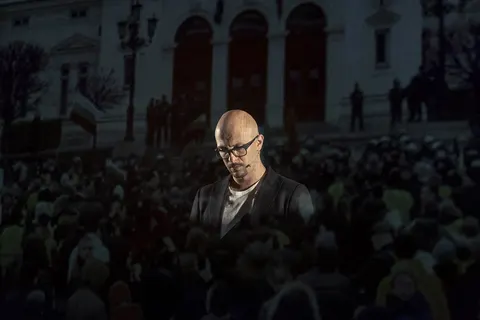
“We Are Simply Not Wise…”
A fateful 13 years have passed since this interview with Anton Donchev, and his words sound even more urgent now. Today the writer passed away at the age of 92. “What will the world look like in a century? We know nothing—whether all this horror now unfolding won’t give rise to a new branch of science. Whether some microbe won’t pop up… The thing is, humanity today lacks the art of synthesis.” “People feel there is no justice. The great loss of these last 20 years is the confusion about the place of the spiritual and the material in the life of the individual and of society.”
 145
“AI Is Handling More and More Tasks. The Question Is What We Want Next”
Prof. Preslav Nakov is a specialist in natural language processing, ranked among the top scientists in the field worldwide. Which are the hottest directions to watch for news in artificial intelligence, and in text processing in particular? Where does enthusiasm outrun reality? Are we close to a general AI that can resemble and even surpass humans, is it possible at all, and should it frighten us or, on the contrary, fill us with enthusiasm for the future?
 146
“In the World of AI, Everyone Can Find Something Exciting”
Yordan Darakchiev leads the only program in Bulgaria where, in just a year, you can gain enough knowledge to start working in artificial intelligence. How did Yordan, an astrophysicist by profession, come to create a venture that has now given so many people the fundamentals five times over, and how do its graduates go on to research institutes, to companies like Tesla and Meta, to promising startups, and even to ventures of their own? What does it take to succeed in machine learning, how does this kind of technology help us understand the world we live in, and which directions in artificial intelligence are the most exciting ones to watch?
 147
“Today, Even Reasonable Arguments Fail to Persuade”
Svetoslav Ivanov is a landmark journalist, reporter and host because he looks not only for what is topical but for what is meaningful and deep, for stories that can move people and show that making television can still be an art. What would he ask a perfect artificial intelligence, what are the greatest dangers such technologies pose to society, and why do people who think differently so often end up in an “online prison” today? And will we ever manage to create an algorithm that tells moving stories like Ivo Ivanov?
 148
“Now It Is Crucial for the State and Society to Back INSAIT”
INSAIT is the best news in decades for the Bulgarian IT world, and for the entire education sector. As if out of nowhere, a modern institute unique in the region appeared in Sofia at the start of 2022. It was born thanks to the stubborn efforts of Prof. Martin Vechev, whose idea dates back to 2003: applying for a PhD at Cambridge, he had to write on yet another form what he dreamed of achieving over the next 20 years. How did this quiet scientific revolution happen, what are its biggest risks, what will Bulgaria look like if it succeeds, and how did Prof. Vechev bring some of the world's scientists who are building tomorrow to Sofia this week?
 149
“Dreams Have to Be Ambitious!”
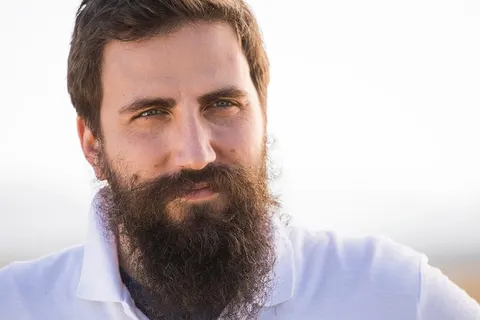
The story of two brothers and a black swan is a fairy tale, only from the digital age. It begins with a conversation about how to send a tin of cheese abroad… and today Dronamics may be the most promising and original Bulgarian startup, with the potential to change the entire transport industry. The two brothers are years ahead of rivals like Amazon and DHL: before the end of 2022 their prototype drone, the Black Swan, will take off on its first commercial flight, carrying 350 kilograms over 2,500 kilometers at almost 200 km/h on less than 7 liters of fuel per 100 kilometers—a “flying banicharka,” as Svilen Rangelov calls it. We meet him to hear the colorful story so far: how a project started in Bulgaria leads Amazon by several years, what the transport industry’s incredible future might look like if the Black Swan completes the last steps of its long road to success, and why the two brothers haven’t shaved for eight years—and why we should all keep our fingers crossed to finally see them without beards.
 150
“The World Is Too Wonderful for Us to Finish Inventing It Virtually”
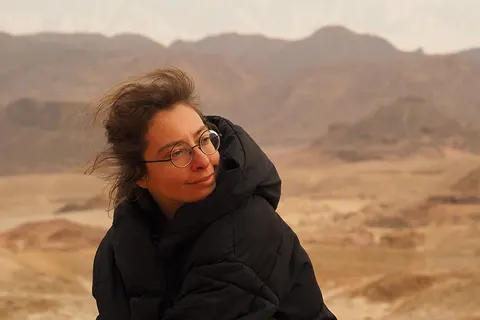
“People put up hearts, declare their love and shower each other with friendship very easily and very willingly. It couldn’t happen in such quantities in reality, because there it takes far more real effort.” “I think that when you cause someone pain, some of it sticks to you too. Online we’re robbed of that—and yes, I say ‘robbed’ on purpose. Feeling someone else’s pain is a sign that you’re alive.” Petya Kokudeva is a silver-tongued master of words who can tell a deep story in a handful of sentences. And, impossible as it sounds, she does it not only for adults but for children too. She is one of those people who never stop traveling—both creatively and physically. A writer with many awards for children’s books and travel writing, Petya is a citizen of the world who knows what to ask of it. We talk about the road—the one across the world, the one down the feed and the one toward ourselves. The road of each of us, and of all of us as a civilization, along the steep slopes of today, in the light and shadows of technology. What awaits us around the bend?
 151
“Building Software Is a Team Sport. The Team Is Stronger Than the Individual”
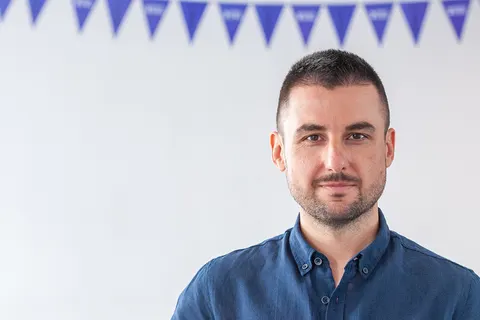
How long will programmers stay this much in demand in Bulgaria, and what does the future hold for this attractive sector? Veli Pehlivanov, a cofounder of Resolute Software, talks about what sets Bulgarian IT specialists apart and whether a career in programming is still worth pursuing. With colleagues and kindred spirits he built a software consultancy that wants to offer a model of its own and already works with clients on four continents.
 152
“Is There Such a Thing as Useless Knowledge? I Don’t Think So”
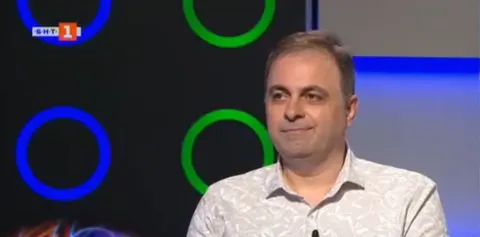
Is there such a thing as useless knowledge, what good can it do us to know the capital of CHAD, and can general culture become a value again? Atanas Atanasov made a long and unforgettable stay in the homes of the people who watch The Last One Wins, the quiz show hosted by Orlin Goranov on BNT 1, where he equaled the record of 18 consecutive wins and left an impressive mark with his knowledge in countless fields, his quick mind and his friendly manner. We talk about the facts worth knowing and the challenges worth throwing at our brains now and then to protect them from the bombardment of information amid a deficit of knowledge and the devaluation of general culture—and at the end, a prize question awaits you that will make you think hard…
 153
“The Problem Is That We Became Godlike in Our Heads”
“Suddenly it became clear just how far apart people had actually drifted.” Why did empathy fall victim to our capture by social media, and how do we get it back? Why have selfishness and the drive for self-sufficiency become the main obstacle to our happiness? Ani Vladimirova is a psychologist with a long and colorful career and an always interesting point of view. Known from numerous television projects, she also created Bulgaria’s first website for online therapy, back in 2003. We meet to talk about the big challenges facing the “little” person. About the imperceptible changes technology has brought us. About how it made us feel godlike, even though we are still the same fragile, vulnerable creatures. About the instincts that will one day make us value information again.
 154
“Selfishness Is the Entrepreneur’s Enemy”
1,000,000,000: that is how many visits a month the websites looked after by today’s guest and his team receive. Mario Peshev is an impressive figure for his story, for his successes and, above all, for his outlook on the world. WordPress made it possible for anyone today to have a dignified place of their own on the web, and Mario wrote “pieces” of the code used by every one of the hundreds of millions of sites built on the platform; his company DevriX is among the 20 most sought-after WordPress agencies in the world. What is it like to own your own “little piece of code” in WordPress, what changes when an enthusiast suddenly finds himself at the head of 50 people, what does the future of the digital world look like to Mario, and… will his beard still be his trademark a decade from now?
 155
“The Problem Is People, Not the Law”
Is our data really protected online? What rules should we follow to avoid unpleasant surprises? How can we be sure we aren't infringing anyone's copyright, and what should we do if someone infringes ours? And who will own the rights to the “works” of artificial intelligence? The law takes up an enormous amount of room in the online world too. We rarely think about it, yet the field is extremely important. Hristina Bogia holds a doctorate in law and specialized in all the important questions that technology raises for legal science. A few years ago, disillusioned with the system, she decided to change careers and moved into the software industry. Together, we'll look for answers to all of these questions. We'll head for the places where technology, the law and the rights of each of us intersect. We'll go over plenty of everyday advice that can help any user. And, last but not least, we'll get the perspective of a thoughtful young person with a distinctive view on a topic that is always current in Bulgaria: a court system that doesn't work.
 156
“Within Five Years, AI Will Change Every Area of Our Lives”
Will AI-driven technologies really reach every area of human life within just five years, and are we already too late with ethical rules for them? Assoc. Prof. Mariana Todorova, a futurologist at the Institute of Philosophy and Sociology of the Bulgarian Academy of Sciences, makes predictions bolder than most science fiction. “Within just five years, technologies based on artificial intelligence will enter every field. They will be around us from our birth to our death.”
 157
“A World Is Coming in Which Our Thinking Is Riddled with Gaping Holes”
“To write well today, the writer must not always be thinking of the reader,” says Rayko Baychev. He is a rare phenomenon these days: a writing journalist who knows how to say what needs saying with exactly the right words, in a way no one can imitate. “The fear of missing out has something in common with gambling, too. It is well known that a devious idea went into the design of the newsfeed: that scrolling through social media should mirror the way the mind falls into a feverish frenzy as it follows the fast-spinning symbols on a slot machine screen and waits for them to land on a winning ‘status.’ For your political views to line up with other people’s, the way cherries, lemons and gold bars line up on a trembling payline.” What might the future of how we get our news, how we read and how we write look like through a journalist’s eyes?
 158
Will the Robot Believe in Fairies?
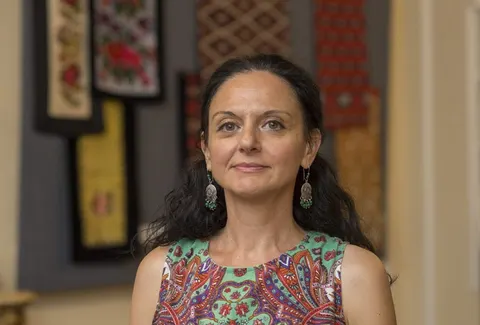
Every person needs miracles. A little superstition, dreams, and living contact with other people. How do we cope today with the shortage of all these things? Can we teach them to artificial intelligence? Does folklore hold the magic key? Assoc. Prof. Dr. Vihra Baeva of the Institute of Ethnology and Folklore Studies with Ethnographic Museum at the Bulgarian Academy of Sciences is a scholar of wide-ranging experience with many fascinating answers on these subjects.
 159
“The Wheel Has Turned. The Future of Mobility Is Electric”
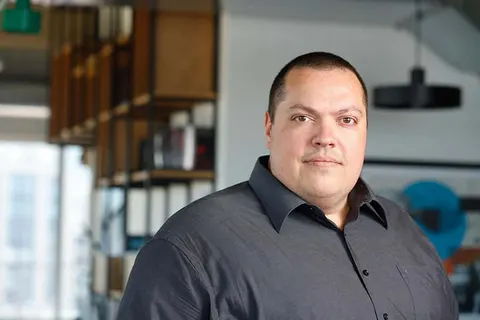
“The startup world is a roller coaster,” says our guest today. He has spent 15 years working with software startups, and his latest venture has achieved impressive success in just three years. Orlin Radev is the CEO of AMPECO, a company that has proven itself on a global scale in building the software that owners and operators of electric vehicle charging stations need. How do you build such a large venture so quickly? Will electric cars soon go mainstream? What unconventional decisions do startups make in order to succeed?
 160
“The False Sense That Our Opinion Matters…”
Maestro Nayden Todorov is a world-class musician, but also an erudite man with a broad outlook and a distinctive view of technology and the way it changes us. Why does he believe our constant rush is a disease we must fight? How is the digital world pulling us away from our humanity, and why is art the only salvation? How did the maestro go 12 years without setting foot in an opera house, horrified by his first encounter with one? And why does he often run an experiment, going to an online forum to defend two opposite points of view in an attempt to escape the filter bubble?