“Our Children Often Turn Out Well Not Because of Us, but in Spite of Us”
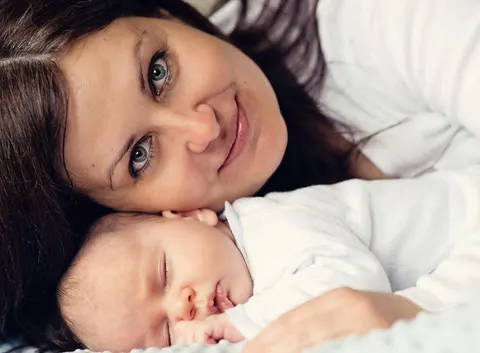
How has the online world changed parenting? Should we protect children from technology? Why is it still important to be careful and picky about the advice we get online? And… what should a person never, ever say to their children? Who hasn't heard of Mama Ninja? Maria Peeva is a blogger and irrefutable proof that meaningful influencers exist. Influencers who know how to entertain their followers and also help them with knowledge and experience. A mother of four sons spread across two decades, she is also a grandmother and the keeper of a colorful list of pets. A translator by training, Mama Ninja slipped almost unnoticed into the role of blogger, and then of writer.
 122
“Artificial Intelligence Will Simply Make Our Work More Pleasant”
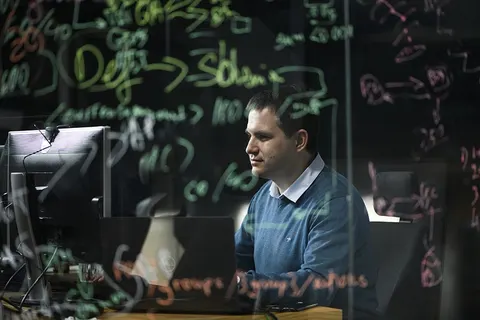
Will ChatGPT's successors write the news for each of us, exactly the way we'd like it? Hristo Tomov, head of AI at the software company Dreamix and one of its founders, talks about personalized news, filter bubbles, fake news and the limits of large language models. How far has artificial intelligence come, and what does the future look like if it keeps developing at the same pace?
 123
“Within 10 Years, We’ll Be Transplanting Printed Hearts and Kidneys”
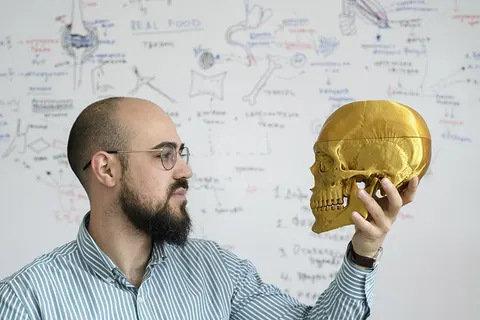
How far off is the 3D printing of more complex human organs? Will we one day manage to replicate the structure and functions of the brain? What comes after that? Is technology changing us as a species, and what do the next steps in evolution look like? Dr. Vanyo Vezirov’s story is as colorful as the man himself. Driven by curiosity since childhood, he graduated from a mathematics high school and, for unusual reasons, turned to medicine. Before he had even finished his second year, he and a friend founded a startup focused on bioprinting—the three-dimensional printing of living structures. A young entrepreneur, a doctor, a science communicator, a man with a broad worldview and an unexpected take on the world: we meet Dr. Vezirov to talk about the big questions of medicine and the big answers each of us is looking for today. About fear, and about the decisions we should make not with our brains, but with our hearts…
 124
Hating, Outsourcing, Branding… Must We Always Parrot English?
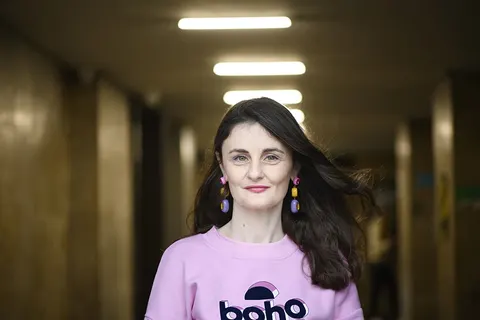
“We need to talk and think about our language, about what it will look like and the state in which we will leave it to our children!” How is our language changing, and are we growing careless with it? Why do we now accept foreign words uncritically instead of trying to explain them? Are all languages doomed to be gradually influenced and “swallowed” by English? Rada Gankova works as a conference interpreter in Brussels. She has a particularly interesting view of the word and of our attitude toward it. In the capital of the EU she teaches Bulgarian to people who translate from our language into other European languages. For her own satisfaction, she also translates literature. One article on her blog brought together the pepper roaster and the air fryer. What could they possibly have in common? The subject is very important: how our own attitude toward language is changing. We used to have imagination and, when needed, we “built” words, while today we take them ready-made, and so we leave them without logic or context. And what hope, then, for the world of AI, IT and high tech…
 125
“Online, You Can See How Weak a Person Really Is…”
“The past is theory, the present is practice, the future is the result. In that sense the future is a moving concept; it can change, and change many times over,” says today’s guest, who admits she keeps away from social media because their atmosphere is fundamentally at odds with her values. Kamelia Kucher is a young writer whose novels Nosht (Night), San (Dream) and Dom (Home) carry an unexpected maturity, capturing the patina of the past along the thread of a powerful story. We sit down over a cup of virtual tea to talk about newsfeeds, the Second World War, motherhood and the future.
 126
“ChatGPT Is Just a Very Expensive Parrot”
“We don't know what nonsense ChatGPT will come out with next, because it is just a vast extrapolation of billions of sources, of terabytes of text. However much this machine seems to talk, it is really just a very expensive parrot. It burns through $3 million a day in electricity and has no idea what it is saying.” Mariyan Gotsev has more than 30 years of experience in information technology—as a programmer, but above all as a system-level architect and analyst. His other great passion is philosophy—he immerses himself in the search for meaning. Add to all this the fact that he is a poet. I was struck by his manifesto for a venture he calls “meaning robotics,” or “semantic robotics,” in which he argues that the much-hyped language models ChatGPT and GPT-4 cannot cope with many of their tasks because they do not look for meaning. Instead, they try to offer the most accurate answers possible through the well-known method of brute force. They look for patterns, yet remain far removed from human understanding, and so, in his view, they have reached their limit. Mariyan Gotsev, on the other hand, is convinced that a new approach could give us a technology that comes close to the human way of thinking. That is our occasion to talk about the much-hyped technologies as overpriced parrots. Can we really give computers common sense, and why does our guest believe the only way is to give them meaning? Can a machine think from a human point of view? Why must our relationship with future semantic robots necessarily be that of slave owners? And why did this computer specialist acquire domain names that he is selling for millions?
 127
“Technology Is a Labyrinth We Locked Ourselves Into”
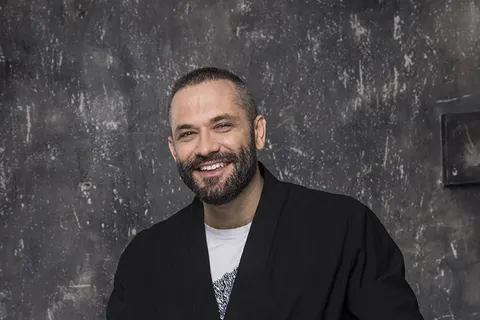
Could spirituality, rather than technology, be the path to the next step in our evolution? On Sunday, March 19, director Nikolay Vasilev premieres Vaklush, a feature film more than 20 years in the making, about the spiritual teacher Vaklush Tolev, who largely changed his life and worldview. A conversation about mystical knowledge, the coming transition many religions speak of, and the wings that might carry us out of the labyrinth of technology in which we feel hopelessly lost.
 128
“Our Chance Is to Give Young People Know-How”
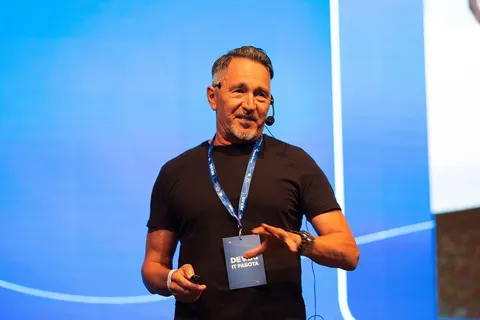
Did you know that a Bulgarian was deeply involved in making Finding Nemo, WALL-E and other cult animated films? Antoni Hristov’s story is even much more than that: he landed in Hollywood at just 20, spent 18 years as an art director at Pixar, crossed paths with Steve Jobs, and then came home to build ARC Academy, a school for visual arts. How does Hollywood look from here, and Sofia from over there, and what is the future of creativity at a time when technology throws down its great challenges?
 129
“History Today Is a Sword Blunted by Abuse”
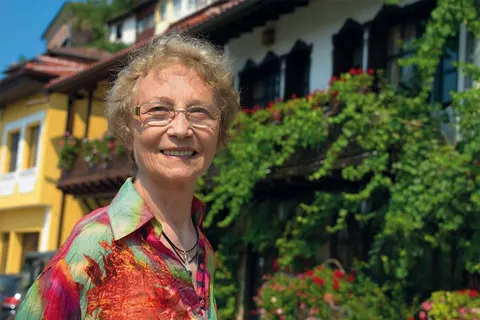
What is worth freeing ourselves from as a nation? Does unity still make strength? Novelist Neda Antonova, one of Bulgaria’s most widely read authors of historical fiction, talks about what we owe our greatest figures, what the Apostle Levski would do if he were born today, and the calmer, wiser view of history we lose while squabbling online.
 130
“Nothing Will Replace the Human Programmer. Not for Another 10 Years, at Least”
Will artificial intelligence soon put programmers out of work? Is the end coming for the huge demand for specialists, the hunger for talent, the good conditions in this industry? Is an algorithm on the horizon that will outstrip human intelligence? How is technology leading to the end of liberal democracy? We hear the view of someone from the heart of the software world. Mihail Panayotov has a long and colorful track record: he has been programming since he was 14 and started his first business at 15. He has more than 18 years of experience in a range of roles, from programmer and software architect to chief technology officer and entrepreneur. Add to that his interest in politics and his intriguing view on why it is time for more and more people from the software world to enter it.
 131
“Nothing Can Replace Reading!”
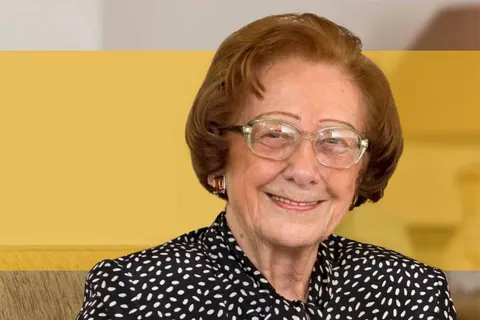
Leda Mileva was a symbolic figure of Bulgaria's 20th century, and this is one of her last interviews, in which I had the good fortune to be the one asking the questions. The daughter of Geo Milev, author of the famous “Little White Bunny,” she was a writer, translator, journalist, even a politician. How did she see the computer future? Would technology prove stronger than literature? And how did “Little White Bunny,” the piece its author liked least, become her trademark? Leda Mileva was born on February 5, 1920, and passed away on the same date exactly 93 years later.
 132
“Machines Remain Naturally Unintelligent”
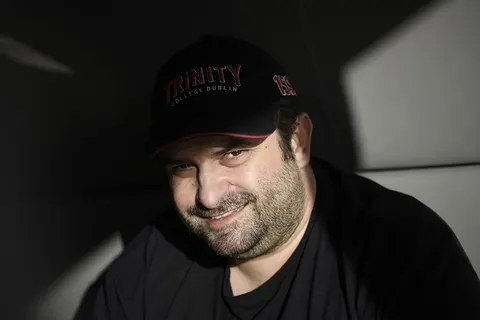
How did underestimating the ethical side of artificial intelligence lead to enormous problems that have shaken the foundations of our civilization? What AI regulations is the EU preparing, and could they slow the boom in the field? How did the web move through its successive stages, and what should we expect from Web 3.0? Vladimir Petkov (Kaladan) has worked in IT for a quarter of a century, watching the past and present of information technology up close while waiting for the future. His experience lies in data and innovation, and for six years he and his friend Elenko Elenkov have been making the cult podcast Govori Internet (The Internet Speaks), now a whole platform of podcasts as varied in subject as they are consistent in quality.
 133
“Our Only Chance Is to Remember That We Are Creators”
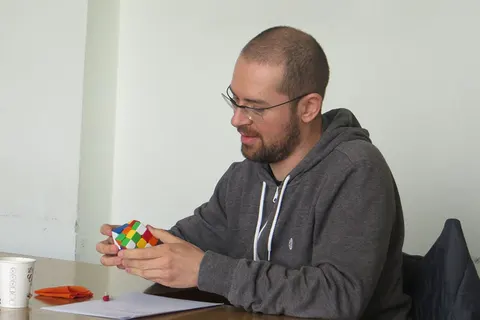
Todor Kolev is a seasoned programmer, entrepreneur and mentor to remarkable young talents in information technology, but also a man with his own, deeply curious view not only of technology but of how we are evolving as a civilization. Are we ready for the next step in evolution that technology is bringing, and what comes after the end of capitalism?
 134
“Come Spring, Crypto Will Be Back with Lasting Growth”
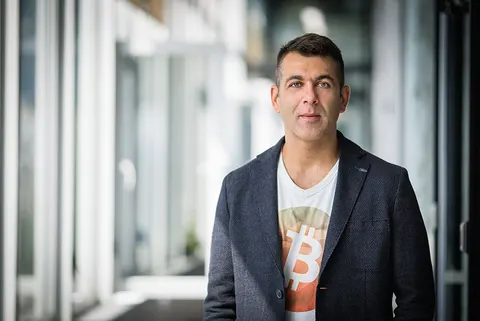
A few months ago everyone was talking about cryptocurrencies, Bitcoin and blockchain, and then, suddenly, the crypto world found itself in yet another winter. Blagovest Belev, one of Bulgaria's crypto pioneers since 2013 and founder of BlockChain.bg, the country's first cryptocurrency investment fund, talks about whether this is the end or the beginning, whether now is the moment to invest, and where the next big blockchain news will come from. We also discuss NFTs, whether you should buy when everyone is talking about Bitcoin, and the exciting future technology promises us.
 135
Warning: Child in Front of a Screen
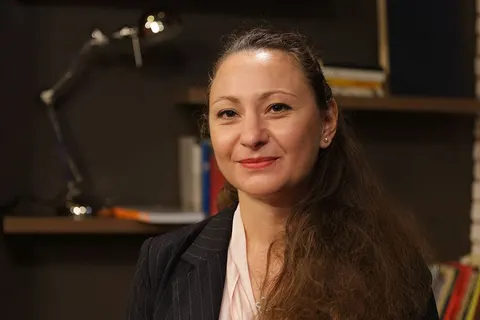
Should we “rescue” children from the hours they spend at the computer and on the phone, and when does the same apply to adults? How much screen time is reasonable at what age, and how do we set limits once we have lost the balance? We look for answers with Donika Borimechkova, a psychologist and psychotherapist with more than 12 years of experience working with children of all ages, who pays particular attention to the influence of modern technology on kids.
 136
“Want a Miracle? Wish for It, and Be Ready to Bear It”
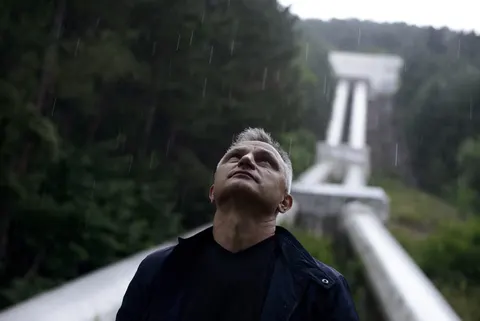
What do your Christmas and our Christmas have in common? This holiday goes far beyond the commercial, the feasting, the exhausting bustle. It is a state of mind, a meeting of past, present and future. It sounds impossible to gather the many vivid faces of the holiday in one place. Yet that is exactly what the recently published anthology Nashata Koleda (Our Christmas) does. In it, Zachary Karabashliev brings together stories by some of the most popular authors of different generations, genres and worldviews. “The anthology is like an apartment building on a cold, snowy December evening, here to remind us that miracles are possible,” the cover reads. This book is the reason we meet on the eve of the warmest of holidays, to reflect on the past and the future in a conversation we will, it turns out, continue in 78 years. About miracles, about the new beginning of the Nativity and the doors it opens. About the meaningful stories that have gathered us around the family table from prehistoric to digital times.
 137
These Days Even Love Happens Fast. But Slow Love Is More Beautiful…
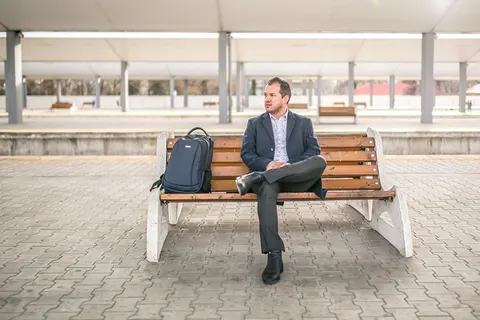
Where does magic hide today, will we ever lose the power of the word, and should artificial intelligence learn about us from books like The Brothers Karamazov? Nikolay Terziyski is a young writer who offers his own deep, contemporary take on eternal themes, a master of words with a magical eye whose style is linked to magical realism, and for good reason. Do we all have stars under our eyelids?…
 138
“The Saddest Thing Is When a Talented Child Gives Up”
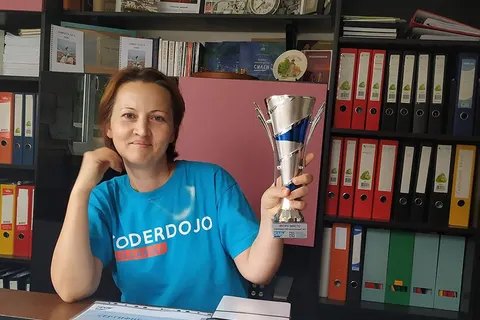
Children and computers: how do we make that meeting go as well as it possibly can? Elitsa Tsoneva worked as a journalist before moving into information technology, spent 15 years in the field, and then, quite unexpectedly and without any plan, became a teacher. Why does education never become a priority in Bulgaria, how does a teacher win students’ attention, and how do we spark the curiosity that makes a child truly learn and grow?
 139
“The More Technologically Advanced We Are, the More Terrible the Mistakes We Forget”
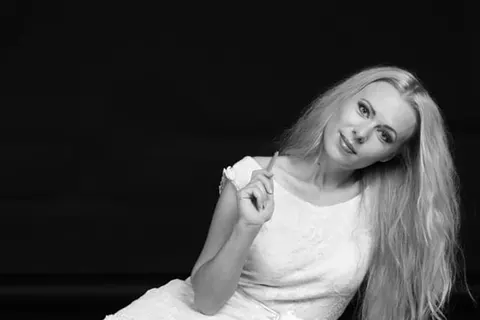
Lyudmila Filipova is among the most widely read Bulgarian authors of recent years. Her novels span an enormous range of subjects, and she never stops seeking new literary challenges: the distant past of the people who lived in these lands, the challenges they face today, the great riddles life sets before us. After such a colorful palette of interests, it is time for her digital stories. We turn first to the past in order to look toward the future. And finally, most importantly, we dream of the moment when people will once again be stirred not by the news of the day, but by the stars…
 140
Fly, Tanya, Fly!
Think the internet can't launch you into space? It can, though it still depends mostly on you. Have you heard of Tatyana Ivanova, who dreams of becoming (and, I'm sure, will become) the first Bulgarian woman cosmonaut? If not, it's time to meet this radiant, charismatic girl reaching for the stars, and even if you know her, stay a while to talk about the next big step on the road to her dream…