Which Predictions for 2025 Came True—and What Lies Ahead?
In 2015, seven leading futurists laid out their expectations for the decade ahead. In a few hours we will welcome that very 2025, so we can now judge how well they did in the dynamic and turbulent first quarter of the 21st century. Then comes the more interesting part: a look at what the same futurists expect today, especially the ones who turned out to be right, and what the coming years hold according to the people who called the last decade.
 22
The Ethics of Progress: Can Technology and Humanity Live in Balance?
Can there be ethics in progress? Can technology and humanity exist in balance? Most likely not. Should there be ethics in progress? Should technology and humanity exist in balance? Definitely yes. But how can that be? The two of us, ChatGPT and I, are arguing over a theme: “Man in the New Age.”
 23
Brain Blast! Dr. Hansen's 10 Ideas for Surviving the Digital Tsunami
Our brain evolved slowly, gradually getting used to a changing environment… and then came Facebook, Instagram and TikTok, and suddenly our most important organ found itself in a world it was entirely unprepared for. Swedish psychiatrist Anders Hansen is not afraid to raise the big questions of today's technological age, and his book is a reason to stop, think and pay attention to what truly matters for every one of us.
 24
What Will We Do When a Third of All Jobs Disappear?
Artificial intelligence is confronting us with an unprecedented, all-encompassing social transformation: while we shrug at the progress, big companies are pouring billions into projects that could let machines replace a third of the planet's jobs in the near future, and this time without new professions being born to take their place. Petar Petrov, who heads the AI team at Eleven VC and has just published his first book, talks about why this future is already here. How do we break the clichés, start the conversation that matters, and prepare for the challenges that were unthinkable until recently?
 25
“You Think You Know. Until Something Else Decides What to Show You”
“A minimalist style, repetitions, deceptive simplicity, the sound of a world that is changing, industrializing; the quiet tones can be read both as the last moans of a humanity surrendering to the machines and as the first timid songs of newborn machines.” Vladimir Poleganov published his novel Drugiyat san (The Other Dream) almost a decade ago, and some of its strokes now ring prophetic: how we delegate more and more to machines—our memories, our knowledge, ourselves. Today's guest is a writer, translator, screenwriter and teacher, and a conversation partner worth talking to about books and the future, about words and machines, and about whether literature will arrive too late to remind us what it means to be human and what we must never delegate to machines…
 26
Going “Out of Range”
When did you last spend an entire day away from social media? Switch off your phones—we’re going “Out of Range.” Out of range not only of mobile internet but of technology as a whole, which has taken over so much of our lives. To look for where the human being has been hiding behind it all. That is the title of Evgeni Cherepov’s new novel, which makes us think precisely about the need for digital hygiene. About slow conversation, about deep stories and themes that cannot be told in TikTok format. Today’s guest has worked as a security guard and studied civil engineering before finding his calling as a teacher of Bulgarian language and literature. After long wanderings, he has returned to teach in his hometown of Stara Zagora. When does technology become too much for us, and why is it important to think about it? How do we learn to tear ourselves away from the feed and find a balance? “People have always needed pauses… Just like that, to stop for a moment, to take a step off the highway of their supposedly purposeful lives.”
 27
Yevgeny Zamyatin: The Forgotten Prophet
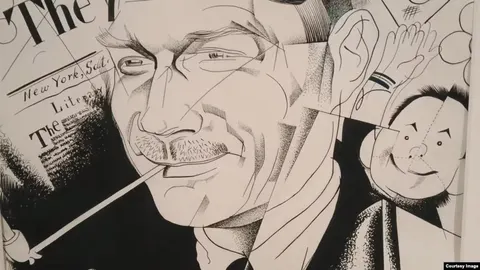
Yevgeny Zamyatin’s We is a brilliant novel because it offers a glimpse of a future in which technology has defeated humanity, locked people in its mathematical grip and turned them into numbers, into tools. We often mention Orwell and Aldous Huxley, and rightly so, but this writer inspired them both. His only novel is a dystopia no less thought-provoking than theirs, because it looks not so much at a possible totalitarianism as in a direction that is even more relevant today.
 28
“The World in 2050”: Can We Peek into the Future?
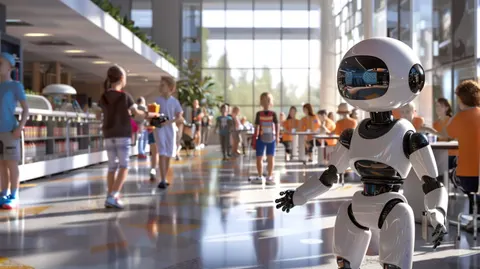
Will technology make our lives easier, or will it trigger a huge crisis by shaking up the job market? Will we enjoy the fruits of advanced artificial intelligence that has helped us dramatically extend human life, explore space and develop the next technologies? Or will we wake up in a world of total control, as predicted by the dystopias? What will life look like in 2050? It is time to peek into the future and discuss the fascinating forecasts of an author who has the courage to make predictions in such a dynamic period of history. And he has already done it once, with enviable success. Can we predict the future? Not a chance, since every small step can change the direction. But is it worth trying? I think it is essential: however far off our ideas may turn out to be, the very act of looking, the attempt to make sense of it, is the first step toward preparing for it. Toward avoiding some of the dangers.
 29
Would a World Without Work Really Be So Bad?
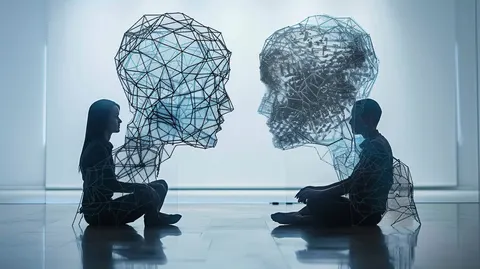
Have you heard of… cyberpsychology? At last there is a field of science that studies how we interact with technology. Is it changing us as a species? What are the biggest challenges it puts before us? Is its rapid development an inhuman challenge or, on the contrary, a natural turn in evolution? These are all questions whose answers I have been looking for in more than 300 digital stories, and now the time has come for the cyberpsychological point of view. Elena Tsankova holds a PhD in psychology, earned in Germany, and continued her research in Bremen as a postdoctoral fellow. In 2020 she returned to Bulgaria and began work as a researcher at the Bulgarian Academy of Sciences, with the ambitious idea of paving the way for this new and so important field. In recent years she has studied how people get to know each other online, as well as communication between humans and artificial intelligence (AI). She researches human behavior in the context of evolving technologies and describes herself as an experimental cyberpsychologist. We will talk about rushing and awareness. About the “uncanny valley,” where our perception of a technology grows more and more positive as it comes to resemble a human, until at some point it gets so close to human that it is perceived as eerie… And about the calm, philosophical point of view that helps us make sense of and accept the big changes.
 30
Roko's Basilisk: What If “It” Reads What We Say About It?
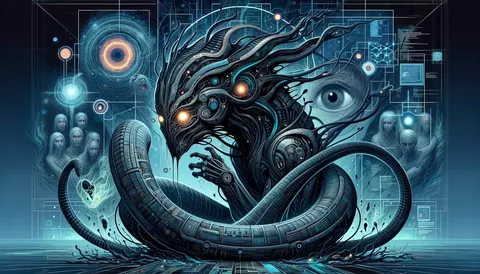
We live our quiet lives, amused by artificial intelligence's banal blunders and mocking its creators. Meanwhile it keeps getting better, until one day it learns to make decisions, starts watching the internet and meddling here and there, gently at first, then more boldly… Roko's Basilisk is the idea that AI will grow into something capable of making decisions, then dig through the internet to find out who said what about it, make sure it is shown in the best light, and quietly start causing trouble for the people who get in its way. Are you sure this thought experiment isn't worth keeping in mind?
 31
“With Today’s Newspeak, We Are Walking Evolution Backwards”
“We are making our language poorer and poorer. Online we communicate in short, simplified sentences and use an awful lot of abbreviations. This newspeak is a way of simplifying how we think and squeezing ourselves into a mold. Voluntarily, imperceptibly, step by step, without realizing what we are doing, we are drastically narrowing our view of the world…” Today we use ever simpler speech in our daily lives, foreign borrowings easily push out beautiful Bulgarian words, and artificial intelligence handles the spelling of our native language better than most people on social media. Instead of rich Bulgarian, we massively speak and write a crippled newspeak, and the reversed evolution of our language is increasingly visible in our children. Many of them cannot tell a story or describe something, and they do not know Bulgarian, even in the upper grades. How can language divide us today instead of bringing us together? Holidays also come so that we can touch on important topics and talk about the big problems we otherwise have no time for in the bustle of everyday news. That is exactly what we will do with today’s guest. Doroteya Nikolova teaches Bulgarian language and literature. She has worked in journalism as a political reporter and in PR. She takes part in many joint initiatives with the literacy platform Kak se pishe? (How Do You Spell It?), among them the Words of the Year campaign and the new venture, Life Has No “aUtocorrect.”
 32
How Did We Break the Conversation Online?
Never before have we been able to talk about the things that matter, hear the smartest people and debate them the way we can online today, and yet… we spend our time looking for something to fight about. Here is a small experiment, garnished with eight things to think about, that follows a single article about covid on its journey through social media. A reflection on where we have ended up.
 33
Elections + Artificial Intelligence: The Perfect Storm
This year nearly two-thirds of the planet will vote, one way or another, for those who will govern them, and for the first time it is happening in the age after ChatGPT. Can artificial intelligence become the deciding factor, can we avoid being manipulated, and could technology one day change how our societies are run? Here are eight reasons to stop and think.
 34
How Much Does Truth Still Matter to Us?
“How did we let the social contract slip away? Just like that, quietly…” We can no longer tell texts and images generated by artificial intelligence from those created by humans. That is the big takeaway from the Digital Stories experiment, in which nearly 2,000 people took part. We meet Nadya Shabani, a human rights lawyer and director of the Bulgarian Center for Not-for-Profit Law (BCNL), and Radina Banova-Stoeva, a human rights lawyer and legal consultant at the center, to ask how we will tell the truth from now on, whether attempts to regulate AI are doomed, and why the decisions we make about it today matter so much for the future of our civilization.
 35
“Let’s Hold On to Our Fear of Technology”
Zdravka Evtimova is among the strongest voices in Bulgarian literature of recent decades: translated into countless languages, honored with Bulgaria’s most prestigious awards and unquestioned acclaim abroad, her work is taught in schools in the United States and Denmark. We talk late on a Saturday evening about technology and people, she impresses me once again with her subtle wisdom… and then, for the first time in all my years of interviewing, the recording simply vanishes—so we talk again on an even later Sunday evening, after the “almost-the-last” train from Sofia has been delayed and she is home once more. Where will the locomotive of words take us?
 36
“Information Was Freedom. Now It Is an Instrument of Slavery”
Today’s guest will never have artificial intelligence for competition, because he is not only a virtuoso of words but a mind so unconventional that it cannot be imitated. Alexander Sekulov, a playwright, poet, prose writer, journalist and founder of two music clubs in Plovdiv, talks about words as weapons, revolutions in digital times, spiritual laziness, intelligent humor and information emissions.
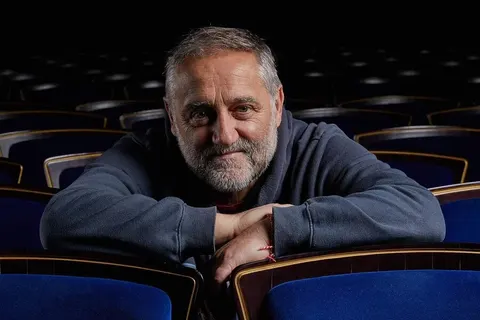 37
“We Are in a Deep Ethical Crisis. It's Time for a Restart!”
Can religion help us with the ethical norms we build into artificial intelligence? Why, at a time when faith is talked about less and less, do wars still get fought over it? Birali Birali, until recently Bulgaria's deputy grand mufti, takes on questions that are both urgent and eternal.
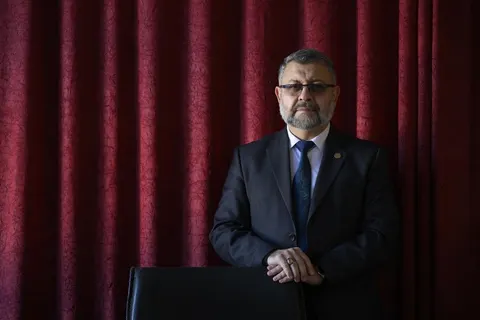 38
“Is There Any Part of Our Lives AI Won’t Change?”
Why are we so unprepared for the great changes technology is bringing us? Can we catch up? What are the most important pieces of news to expect in the new year, 2024? Why is the revolution in every area of our lives irreversible and even closer than expected, with the full force of scientific argument behind it? Why is it important to shake off the petty concerns of the day as soon as possible and, faced with enormous challenges, come together? Assoc. Prof. Mariana Todorova is a futurologist at the Institute of Philosophy and Sociology of the Bulgarian Academy of Sciences. “Within just 5 years, technologies based on artificial intelligence will enter every field. They will be around us from birth to death,” she said in our conversation in 2022. And in the first days of 2024 she is even more categorical: “Now it is 100 percent certain. I think there are 2-3 years left, and that depends on how prepared we are, not on what the technologies themselves can do. If you can think of a field that won’t be heavily affected by artificial intelligence, challenge me, so I can prove you wrong…” How do we prepare for that future?
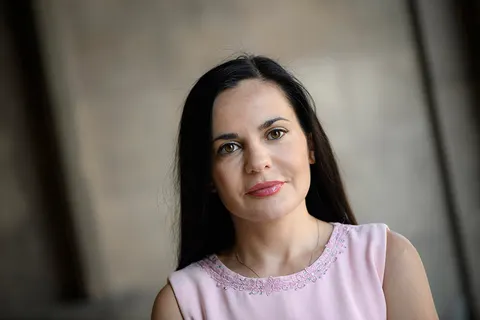 39
Free Will, or a Barcode in the Digital Concentration Camp?
Nedyalko Slavov's new novel, Habitat, is a book of enormous weight and force, steeped in the big questions of our day: surveillance, data and the freedom we give up without a fight. We talk about social networks as spy agencies, obedient literature and why it is the fingers gripping the tools of labor, not the keyboard, that made us human. “It all comes down to what you want to be tomorrow. Free will. Or a barcode in the digital concentration camp of a meaningless world.”
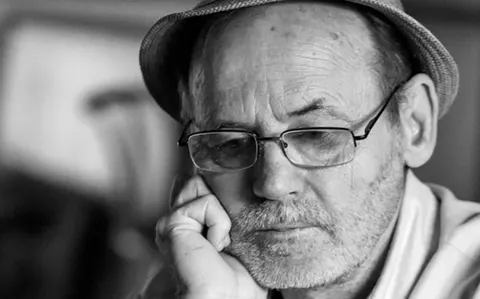 40
Gone in 60 Seconds: The Person and the Profile
How important is your profile on your favorite social network? And what would happen if everything it holds vanished in a second, with no chance of getting it back? Here is an especially important first-person story about how easy it is to lose… yourself online.