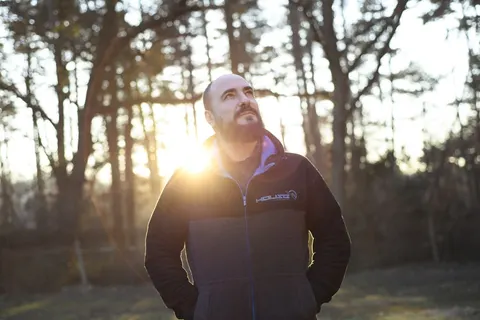
“The World Reeks of Kitsch. That’s Why It’s Heading for Catastrophe”
“People still have 10,000 ways to think and to look at the world. And what do they do, damn it? They stare at their phones. The children growing up now have never seen what’s around them. They are the subject of science fiction, living in a parallel world. They don’t know what the streets look like, what people look like. It makes me think there’s no hope. Who will bring them into this world? If it happens by chance, they’ll be shattered.” Tekla Aleksieva became a legendary illustrator after creating 120 covers for the Galaktika Library, Bulgaria’s cult science fiction series. Generations of readers link the greatest science fiction novels with the images she painted. Besides being an artist with a singular eye and countless accolades, she is also the author of a poetry collection. What does she think of images generated by artificial intelligence? Why does she believe we are surrounded by kitsch on every side—in literature, in art, in life? Can we get our good taste back, and how? Why must we never, under any circumstances, leave the Earth? And how is it that... Tekla Aleksieva never managed to finish the book behind one of her most famous covers?
 82
How Much Does Truth Still Matter to Us?
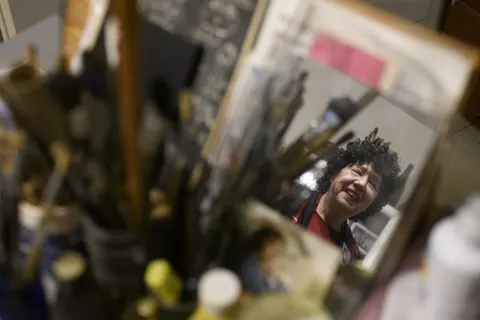
“How did we let the social contract slip away? Just like that, quietly…” We can no longer tell texts and images generated by artificial intelligence from those created by humans. That is the big takeaway from the Digital Stories experiment, in which nearly 2,000 people took part. We meet Nadya Shabani, a human rights lawyer and director of the Bulgarian Center for Not-for-Profit Law (BCNL), and Radina Banova-Stoeva, a human rights lawyer and legal consultant at the center, to ask how we will tell the truth from now on, whether attempts to regulate AI are doomed, and why the decisions we make about it today matter so much for the future of our civilization.
 83
“We Live in a Time of Total Transformation”
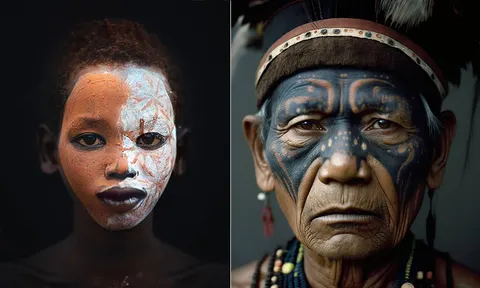
“We are surrounded by a huge number of software systems, we use them in our daily lives, and they were written by mediocre programmers. The way we create software is broken!” “The value of meaningful content will rise, because there is far too much garbage, far too much noise. The only way to preserve ourselves as human beings is to put up barriers. To sift what gets into our heads.” Boris Simandov has vast experience in technology. For nearly 10 years he held a director's position at Chaos Group, one of the most successful Bulgarian IT companies. Today he helps develop the next generation of startups. Together with Rosen Genchev, he created the Facebook group DevBG, the liveliest (and often rather strange) online space where people from the tech world meet. We talk about: – whether we can feel at ease in today's turbulent times – the artificial intelligence revolution we are living through, and the skeptics – the next important step: Sora and video generation – the big challenges and the professions doomed to disappear – the return of truth as a value, and the media of the future – the DevBG group as the best example of why and how democracy doesn't work today.
 84
“Let’s Hold On to Our Fear of Technology”
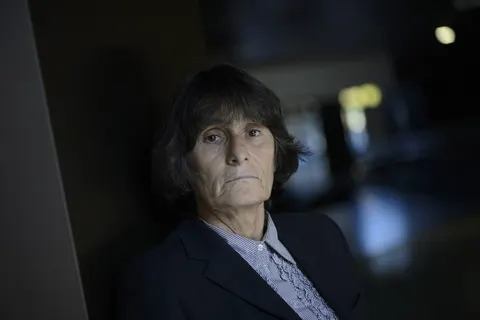
Zdravka Evtimova is among the strongest voices in Bulgarian literature of recent decades: translated into countless languages, honored with Bulgaria’s most prestigious awards and unquestioned acclaim abroad, her work is taught in schools in the United States and Denmark. We talk late on a Saturday evening about technology and people, she impresses me once again with her subtle wisdom… and then, for the first time in all my years of interviewing, the recording simply vanishes—so we talk again on an even later Sunday evening, after the “almost-the-last” train from Sofia has been delayed and she is home once more. Where will the locomotive of words take us?
 85
Dr. Fiziev, the Man Teaching AI to Read Our Genes
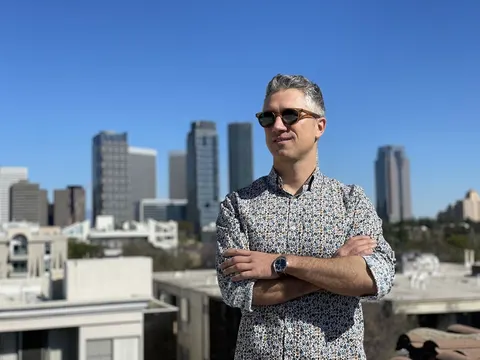
“The combination of genetics and artificial intelligence is extremely powerful, and I expect big news in the coming years,” says Dr. Fiziev. Why is it so hard to tell which of our genes are to blame for a given problem, what do we gain now that anyone can read their own genome, and did we overestimate heredity as the main factor in whether we stay healthy? Dr. Petko Fiziev, a bioinformatics specialist who leads an AI team at Illumina in the heart of Silicon Valley, also talks about the future of gene editing and “designer babies.”
 86
“All the Stories Have Been Told. But How Will the Words Tremble?”
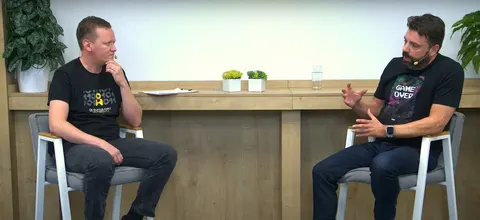
A director, rapper and podcaster meets a journalist, programmer and writer. A conversation with the roles of host and guest swapped… and although there are only two of us (plus, of course, one more wonderful podcaster), it turned out that these combinations of three callings apiece hold some interesting nuances. The podcast 2&200 is a classic of the genre and shows why this form of conversation is turning eyes and ears back toward shared words. We continue the conversation for admirers of Kusturica and/or Dostoevsky and/or Marx with Orlin Milchev, once known as MC ATILA, a man able to pierce with words and questions. He is also a director, and last year saw the release of his debut feature film, The Art of Falling. A guest with an unexpected view of the big issues of today, interwoven with technology. The “Scourge of God” has long ceased to be a single hero; it is what we have created online. But what is looming ahead?
 87
Is There Still Such a Thing as a Foreign Language?
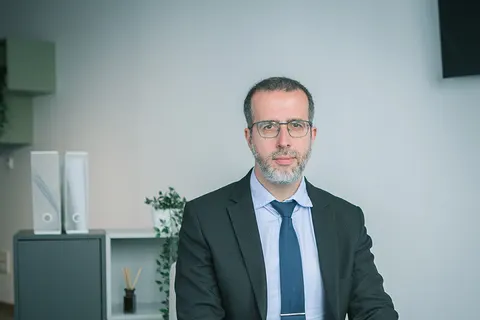
Is there any point in learning foreign languages? Machine translation has developed astonishingly fast, and today it captures much of what needs to appear in another language… Have we reached the limit, and what comes next? Kaloyan Kirilov, a translator and interpreter with nearly two decades of experience, on the art of translation in the age of advanced artificial intelligence—and on whether we can teach an algorithm to curse convincingly enough to sound like a native speaker.
 88
“Information Was Freedom. Now It Is an Instrument of Slavery”
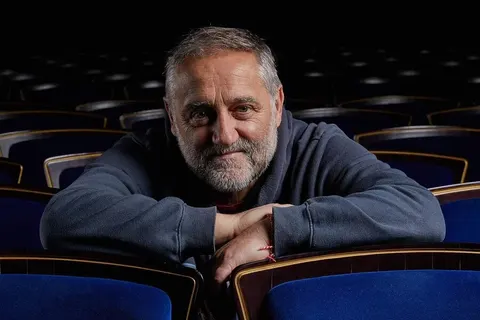
Today’s guest will never have artificial intelligence for competition, because he is not only a virtuoso of words but a mind so unconventional that it cannot be imitated. Alexander Sekulov, a playwright, poet, prose writer, journalist and founder of two music clubs in Plovdiv, talks about words as weapons, revolutions in digital times, spiritual laziness, intelligent humor and information emissions.
 89
“We Are in a Deep Ethical Crisis. It's Time for a Restart!”
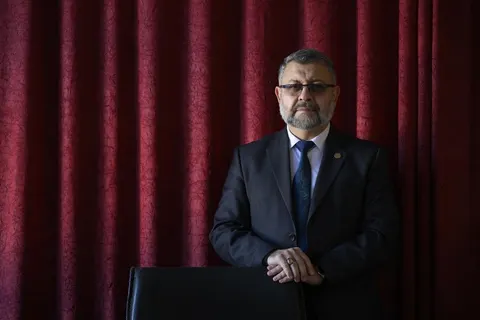
Can religion help us with the ethical norms we build into artificial intelligence? Why, at a time when faith is talked about less and less, do wars still get fought over it? Birali Birali, until recently Bulgaria's deputy grand mufti, takes on questions that are both urgent and eternal.
 90
“AI Is a Crude Jolt That Will Wake Humanity Up”
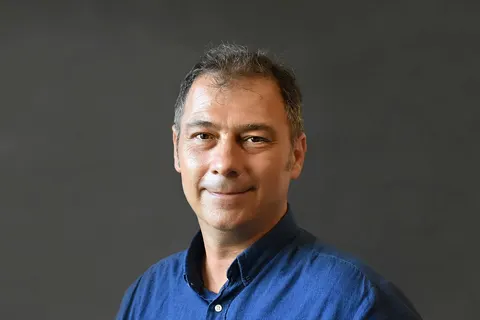
How is technology about to settle the eternal battle between dictatorship and freedom? Why might the great technological threat to humanity actually come from the East? And this backed by the serious arguments of a man who knows China and its peculiarities up close. Technology specialists, artists, scientists, entrepreneurs and even clergymen have shared their views on technological change with Digital Stories. Now the time has come for a fascinating meeting with a special guest from the world of design. Svilen Gamolov is a world-renowned product and interior designer who has worked for more than 23 years in Bulgaria, Cyprus and China. In 2018 he made the top 100 of the Design Intelligence Award world design ranking in Hangzhou, China. That same year, in Como, Italy, he won a platinum design award in a competition with 45,906 projects from around the world. He is working to turn Varna into a meeting place for design in Bulgaria and the world through Design Hub Varna. He runs Gamolov Design Studio. What will the homes of the future look like? Why will the real estate market change from the ground up in just a few years? Should humans give up competing with the machine and learn to offer an alternative instead? Why is technology here to wake us from decades of complacent stagnation?
 91
“Is There Any Part of Our Lives AI Won’t Change?”
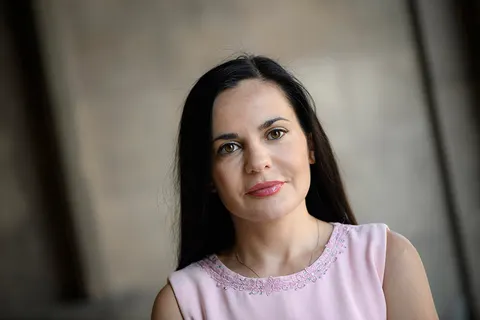
Why are we so unprepared for the great changes technology is bringing us? Can we catch up? What are the most important pieces of news to expect in the new year, 2024? Why is the revolution in every area of our lives irreversible and even closer than expected, with the full force of scientific argument behind it? Why is it important to shake off the petty concerns of the day as soon as possible and, faced with enormous challenges, come together? Assoc. Prof. Mariana Todorova is a futurologist at the Institute of Philosophy and Sociology of the Bulgarian Academy of Sciences. “Within just 5 years, technologies based on artificial intelligence will enter every field. They will be around us from birth to death,” she said in our conversation in 2022. And in the first days of 2024 she is even more categorical: “Now it is 100 percent certain. I think there are 2-3 years left, and that depends on how prepared we are, not on what the technologies themselves can do. If you can think of a field that won’t be heavily affected by artificial intelligence, challenge me, so I can prove you wrong…” How do we prepare for that future?
 92
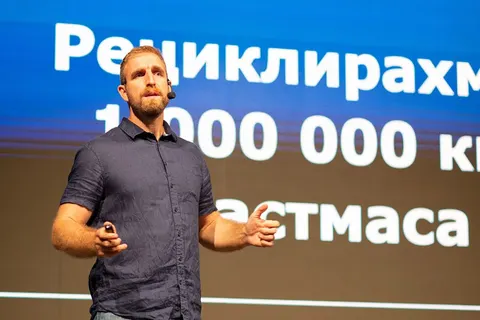
The Little Bottle Cap and the Avalanche of Good Deeds
Twenty-two modern incubators and five ambulances, specially equipped to help premature babies. That is how big today's guest is. Thanks to him, premature babies in many regions of the country have a far better chance of surviving and avoiding complications.
 93
“We Have No Idea What We Are About to Create!”
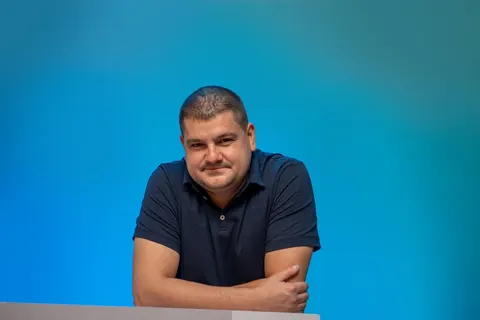
“We need to dial down the arrogance. We technocrats, the tech community, have to step into the role of responsible leaders of what is happening, not people profiting from their amber towers. Otherwise this will not end well.” Dobroslav Dimitrov is a co-founder of Imperia Online and chairman of BASSCOM, the Bulgarian Association of Software Companies. When progress in artificial intelligence caught everyone's eye, he stood out for his positions: that nothing would be the same after the arrival of ChatGPT and its kin; that no area of our lives would be left unshaken to its foundations; that this is also our chance, as a country and as a tech sector, to make enormous progress. A year later his view remains the same, now backed by experience. We talk about the coming social changes and the role of the tech sector, in Bulgaria and abroad, and about the demand for programmers. About the gradual and irreversible advance of artificial intelligence. About the technological divides that confront us with an existential risk, and the other big questions of the day.
 94
Is Dr. Artificial Intelligence About to See You?
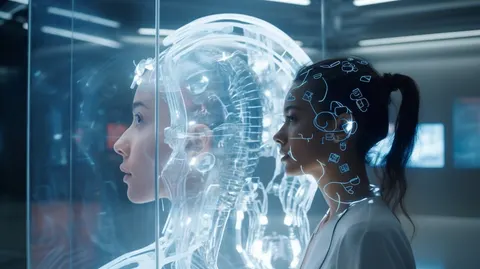
Which fields of medicine will artificial intelligence enter soon, and which AI-based technologies are already part of everyday practice? Programmer, lecturer and PhD student Stefani Paunova has spent months immersed in the latest research on the subject. With her, we take a peek into the fascinating near future where medicine meets the possibilities of AI.
 95
“People Everywhere Are Gripped by a Sense of Disintegration”
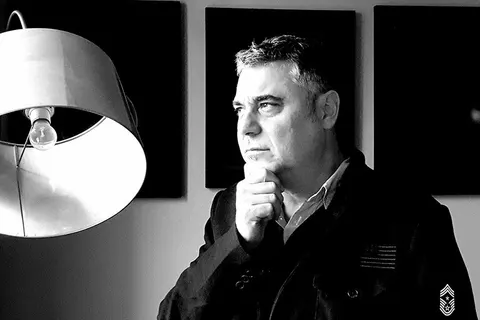
Alek Popov needs no introduction for anyone even remotely interested in literature. Mission London, Sestri Palaveevi… (The Palaveev Sisters…) and, at least for me, his finest novel, The Black Box. I would also recommend the collection Novi i izbrani razkazi (New and Selected Stories). But we have no time for literature right now; we are going to talk about life. And about technology. About the hygiene we need when consuming and sharing content. About the fault lines of today and our chances of talking normally about the important things again. About sex with robots. About deconstructed clichés and the sense of disintegration that is also driving us away from literature. “We live in a civilization that encourages banality in all its forms. Social media, PR and advertising generate clichés nonstop. Political language is woven mostly from clichés, and so is bureaucratic jargon. It isn’t just a matter of daily life—fast or slow—but rather of a particular ‘mental laziness’ that makes us mindlessly repeat ready-made formulas for success, for happiness, for love. Looking happy seems to have become more important than being happy. Few are those who catch themselves and say: hang on a minute, what is all this nonsense!?”
 96
“You Do Science? You’ll End Up Stupid and Poor!”
No, you won’t! Technology and science are the way forward—for every young person who wants to achieve something, and for all of us as a nation, even as a civilization. Last year, posts from the site Bulgarian Science were viewed 29 million times on social media. For 17 years, Petar Teodosiev has poured his soul into the cause, still convinced we can turn the stereotype around and light the spark of curiosity in the next generation. But how?
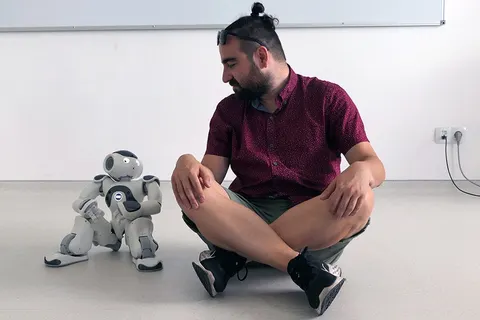 97
Free Will, or a Barcode in the Digital Concentration Camp?
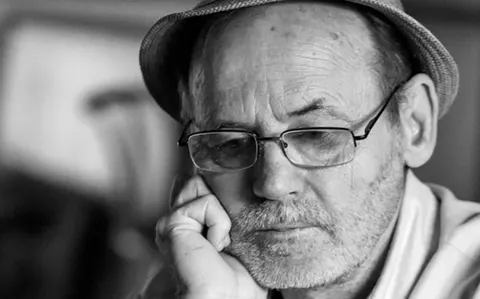
Nedyalko Slavov's new novel, Habitat, is a book of enormous weight and force, steeped in the big questions of our day: surveillance, data and the freedom we give up without a fight. We talk about social networks as spy agencies, obedient literature and why it is the fingers gripping the tools of labor, not the keyboard, that made us human. “It all comes down to what you want to be tomorrow. Free will. Or a barcode in the digital concentration camp of a meaningless world.”
 98
“I Want to Read Something Written by People!”
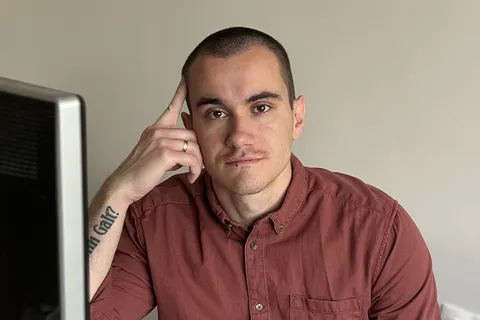
Alexander Kondov joins us to talk about books and front-end programming, and about writing, in words and in computer code, with detours through philosophy and artificial intelligence. “Programming is an art, not engineering!” goes our guest's creed. Why does he think so? The three of us, him, me and ChatGPT, are sitting in a digital tavern over a cup of digital tea, chatting about those big questions that stir us all…
 99
Iva Gumnishka: Using AI to Give People Hope
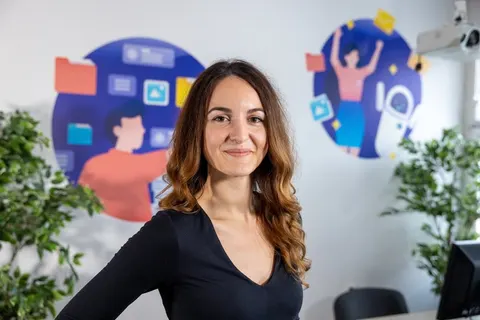
Iva Gumnishka came back to Bulgaria from an Ivy League university with a dream: to make the most high-tech industry of all help the people who need it most, and to make that model sustainable. Her company, Humans in the loop, has spent six years giving work to refugees, people in deep poverty and people living in war zones, from Afghanistan to Venezuela, as they annotate the data that teaches artificial intelligence to see. What does it feel like to give a livelihood to 1,000 people scattered around the world?
 100
(Rock) Stars, Programming and Aliens
He is a programmer, an astrophysicist with scientific publications and… the drummer of a rock band. A Renaissance man, only from the digital age. We have so many topics to discuss with Chief Assistant Professor Orlin Stanchev, a programmer at Kin + Carta, a lecturer at Sofia University St. Kliment Ohridski, an explorer of distant galaxies and the drummer of the band ALI. Let's not waste any time! How are new stars born in the sky, in science, in music? We will head out into deep space to learn how artificial intelligence can help us get to know the universe. We will talk about how new technologies are fundamentally changing the paradigm of science. We will look for what music, science and programming have in common. Last but not least, we will reflect on aliens and on artificial general intelligence. Which one is coming first? Which one should we worry about more? Lift-off! 10, 9, 8, 7….