Why Do You Read?
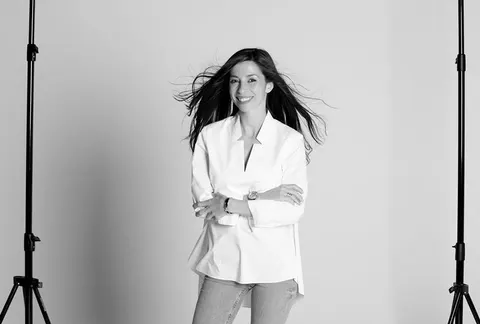
How can letters and bytes, books and technology, meet? That is the big theme of a series of digital stories. After Tuesday's look at some of the favorite books of the world's IT leaders, we once again step outside the cliché, this time with the author of Bulgaria's biggest book blog. Next Tuesday brings the unexpected literary recommendations of some of the most important figures in Bulgarian IT. You are what you read. “Kakvo chetesh…” (What Are You Reading…) is a question we should ask more often, especially in public. It is also the name of the largest and most active Bulgarian book group on Facebook, created by today's guest. For 15 years he has been sharing his recommendations on Knigolandia, the biggest book blog in Bulgaria. Deputy editor-in-chief of the Ciela publishing house, he recently made another dream come true: seeing his name on the cover of 100 knigi, koito tryabva da prochetete (100 Books You Must Read). With Hristo Blazhev we talk about reading and the future of literature. About the technologies that change it, and the books that build technology. Together we hunt for important and unexpected recommendations, to convince ourselves that letters and bytes must walk hand in hand, or nothing good awaits us, not even as a species. Happy reading!
 22
What Do the World's Tech Titans Read?
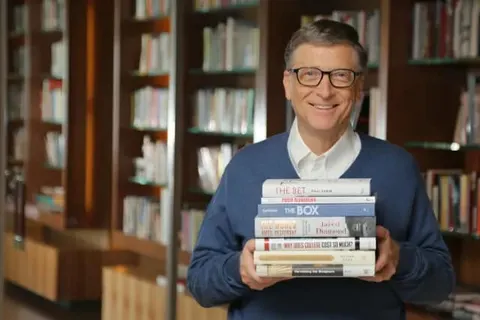
Do the world's tech leaders read books? What are the favorite reads recommended by Elon Musk, Sam Altman and Mark Zuckerberg? Will you find some overlap with your own literary taste, or is there no such topic at all? In Bulgaria it isn't fashionable to talk in the media about what we read. Journalist and translator Daniel Penev got me thinking about this during his visit. Yes, you'll probably remember the notorious Winnetou as someone's favorite book and… that's it. It isn't like that everywhere. In both West and East, the people who end up in the spotlight love to talk about books, about their favorite authors, about the literature that helps us keep going. Well, it's time we started doing it here too!
 23
Bulgaria's Literary Banksy
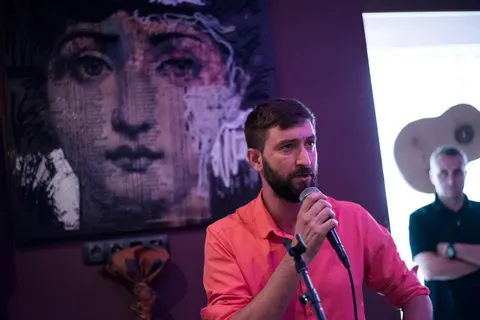
“The most dangerous literary terrorist in the country.” No, those words about today's guest aren't mine. They belong to a specialist who follows Bulgarian literature closely and knows it from the inside. And so, after 153 interviews published on this site, the time has come for… the first anonymous guest! I won't even tell you whether it's a man or a woman; what matters here is the story and the point of view. A few days ago, AI-generated poems made it among the best in two poetry competitions, and in the second case it was an experiment by Digital Stories. I believe it is vital that we begin the discussion about our future relationship with technology, and with as many important points of view as possible. Expect more remarkable guests (and experiments) on the subject. Today, though, we go back to before the AI-generation craze, to tell the story of a person who spent a long time experimenting with submitting compiled or simply absurd poems under different names. Long before that, this person had entered and won competitions under their real name, until… becoming convinced that something in the system was wrong. That the criteria were not what they ought to be. The idea changed over the years, especially after a series of convincing results and countless publications in many of what are considered the country's leading poetry outlets. What could the goal be? What does the future of poetry look like from where our guest stands? How are algorithms changing our attitude toward the written word and toward creativity? A remarkable encounter awaits us with the first anonymous guest of Digital Stories: Bulgaria's literary Banksy.
 24
Rory and Grandma's Recipes
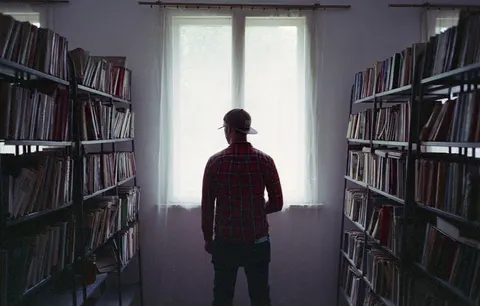
What is a tattooed American doing aboard a 40-year-old Lada, bound for yet another Bulgarian village? And what exactly goes into a cocktail called “Computer”? Why would a citizen of Washington State choose to hunt for old Bulgarian recipes in remote villages, where “Baba” lives—Grandma, the collective, the eternal in an endless, universal figure who touches all of us? Rory Miller is rediscovering, here and now, the magic of the Bulgarian village. The thing we abandon, though it holds so much of the meaning. A construction worker, an olive picker and an English teacher, Rory stopped in Bulgaria about 15 years ago, and his two children were born here. He caught people's eye on “Masterchef,” then went on his way through the remote Bulgarian villages. That is how the remarkable book Na oko (By Eye) was born, a surreal travelogue where you won't find precise recipes—for dishes or for the future, everything is “by eye,” both a unit of measurement and a way of life. But you will find the village itself, and its dishes, and the grandmothers, and the spirit, and well-measured spices. The American's next step is to bring the book out in English through a crowdfunding campaign. I will personally support him, because I think he has captured the priceless spirit of the Bulgarian village today. Which is different from that of Elin Pelin and Ivan Vazov. Which, I believe, will overturn the misguided fashion that life is in the big city. The world of technology lets us break stereotypes like never before. Colorful Rory's book reminds us of that too, and he has plenty to tell us in the lines that follow.
 25
What Heals the Wounds of History?
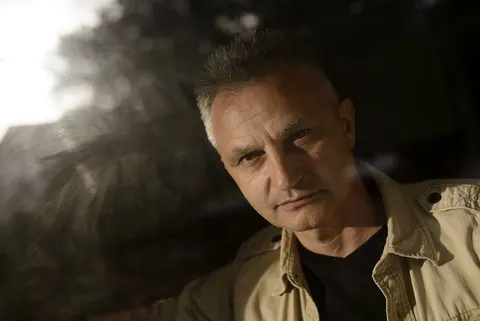
Today history unites and divides us, inflames and stirs us as never before—not least because “who controls the past controls the future.” In his latest novel, Rana (Wound), Zachary Karabashliev turns to Bulgarian history and to some of its most dramatic and important moments: the wounds the past inflicts on us, and the ancestors whose path we continue. We met again to talk about the past, its powerful stories, its lessons, and what brings us together and what drives us apart.
 26
AI Makes the Finals of a Second Poetry Competition (An Experiment)
Literary circles were rocked by the news that an unexpected contender had made the jury's shortlist in the prestigious Veselin Hanchev youth poetry competition: 21-year-old Hristian Papazov, from the village of Nozharevo near Silistra, had submitted poems generated by artificial intelligence. Hristian (or whoever stands behind that name) withdrew, writing that his only goal had been to draw attention to the issue. I don't know whether you believe in coincidences; I don't. On October 25, a day before the news broke, the jury of another popular poetry competition announced its ten finalists. And once again the selection included… generated poems. This time as part of a Digital Stories experiment. So how, in just two days, did two “authors” with AI-written poems end up among the best, the ones from whom the winners will be chosen? And, more importantly: what are the big questions and conclusions here? Whether or not we believe in coincidences, it is clearly time to talk more sensibly and more deeply about the big questions of our day. The Day of the Buditels, Bulgaria's November 1 holiday honoring the enlighteners of the National Revival, is, I think, exactly the right day to wake up…
 27
“You Think You Know. Until Something Else Decides What to Show You”
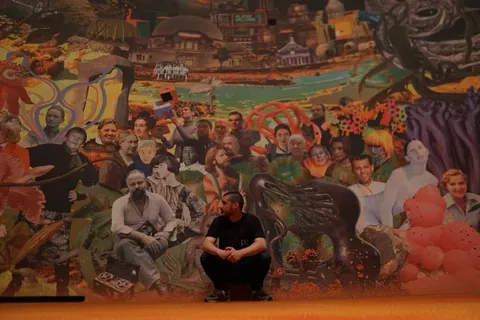
“A minimalist style, repetitions, deceptive simplicity, the sound of a world that is changing, industrializing; the quiet tones can be read both as the last moans of a humanity surrendering to the machines and as the first timid songs of newborn machines.” Vladimir Poleganov published his novel Drugiyat san (The Other Dream) almost a decade ago, and some of its strokes now ring prophetic: how we delegate more and more to machines—our memories, our knowledge, ourselves. Today's guest is a writer, translator, screenwriter and teacher, and a conversation partner worth talking to about books and the future, about words and machines, and about whether literature will arrive too late to remind us what it means to be human and what we must never delegate to machines…
 28
“We Don’t Appreciate That We Live in the Best Moment in History”
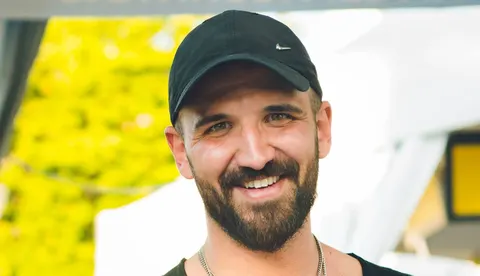
“People don’t appreciate that we live in the best moment in human history. We have advanced medicine, transport, communications… everything, everything you can think of. To have the chance to travel the whole world without restrictions and not take it is a crime against evolution. Because it won’t last forever. Covid, wars, regimes, diseases… Right now we are in a perfect situation, where the biggest problem is that Windows computers freeze for 8 hours and your flight gets pushed to the next day.” We’ll talk about the joy of writing and the need for hardship in life. We’ll travel around the world, through literature, through the big issues of the day. With a man who truly loves to travel like nothing else—he has lived on 4 continents and visited more than 40 countries. Abo. He chose a name that sounds like an AI’s. He trained in criminology, teaching and psychology, and today he is a writer—the author of two books, an editor, a translator and a journalist. But how come, and why, is he called Abo? And why does a subject of King Charles III, after so much travel, choose to come back to Bulgaria, which he considers a balanced, happy, cozy place?
 29
Going “Out of Range”
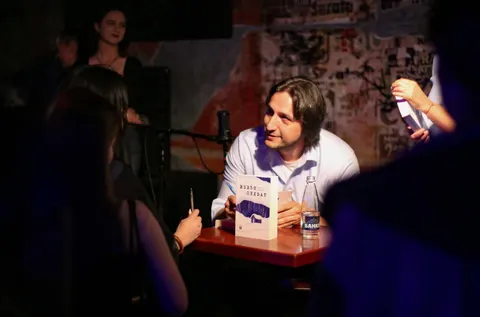
When did you last spend an entire day away from social media? Switch off your phones—we’re going “Out of Range.” Out of range not only of mobile internet but of technology as a whole, which has taken over so much of our lives. To look for where the human being has been hiding behind it all. That is the title of Evgeni Cherepov’s new novel, which makes us think precisely about the need for digital hygiene. About slow conversation, about deep stories and themes that cannot be told in TikTok format. Today’s guest has worked as a security guard and studied civil engineering before finding his calling as a teacher of Bulgarian language and literature. After long wanderings, he has returned to teach in his hometown of Stara Zagora. When does technology become too much for us, and why is it important to think about it? How do we learn to tear ourselves away from the feed and find a balance? “People have always needed pauses… Just like that, to stop for a moment, to take a step off the highway of their supposedly purposeful lives.”
 30
Yevgeny Zamyatin: The Forgotten Prophet
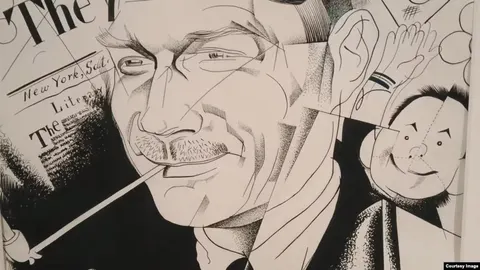
Yevgeny Zamyatin’s We is a brilliant novel because it offers a glimpse of a future in which technology has defeated humanity, locked people in its mathematical grip and turned them into numbers, into tools. We often mention Orwell and Aldous Huxley, and rightly so, but this writer inspired them both. His only novel is a dystopia no less thought-provoking than theirs, because it looks not so much at a possible totalitarianism as in a direction that is even more relevant today.
 31
“Leading by Example Is a Fearsome Weapon”
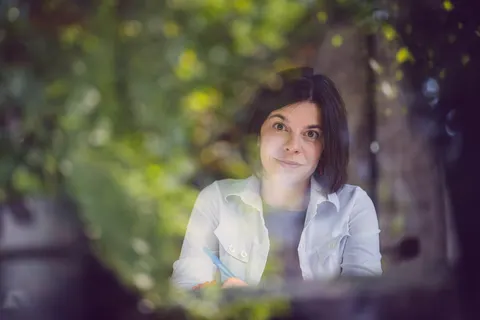
“Calling the inexplicable a ‘miracle’ is a beautiful way of admitting how little we know,” says today’s guest. “Miracles are also a chance to stop fooling ourselves that everything depends on us alone, to catch our breath and learn to trust life.” Ivanka Mogilska is a copywriter with 20 years of experience, the last 15 of them freelance. She is a blogger, editor and teacher. She is the author of seven books, the latest of which is the collection Obiknoveni chudesa (Ordinary Miracles). But… do such things really exist? We will ask her in a moment. Her airy, wise stories hold the everyday miracle, which, in my view, is the very reason to keep going. We will talk about digital and analog miracles. About the miracles worth teaching artificial intelligence and the ones it may someday create. About brevity and the long texts that carry meaning. About the need, every now and then, to “get off the merry-go-round”…
 32
“I Imagine the Future as a Battle for the Invisible”
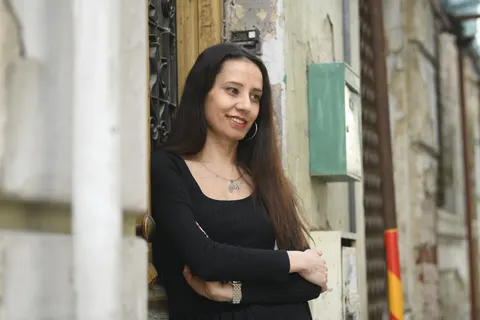
“For now, artificial intelligence strikes us as funny. It looks like a funhouse mirror, or a little dimwit we guide along, one who makes us feel knowledgeable and more human than ever. But this is changing literally by the day, and soon it will become a realistic and credible reflection of us. I think about that moment—perhaps then we will manage to see ourselves through its eyes, to grasp which parts of us are clear even to an artificial creature, what remains out of its reach, and what is most precious. To me, those are the places it cannot peer into. I imagine the future as a battle for the invisible; that will be the most important resource. What artificial intelligence cannot register is the most precious thing in us.” Pochti vsichko e nared (Almost Everything Is Fine) is the title of poet Violeta Kuneva’s debut collection, and it captures with such precision how the world feels to us today. But how did it come to this, that we can no longer tell the poet from the algorithm? What do we lose if that is so? Is the problem that, en masse, we have lost our yardstick for art, for metaphor, for layered, living texts that are human by definition, as poems are? Will poetry come to an end, or… is it precisely poetry that can save us from ourselves?
 33
“Let’s Hold On to Our Fear of Technology”
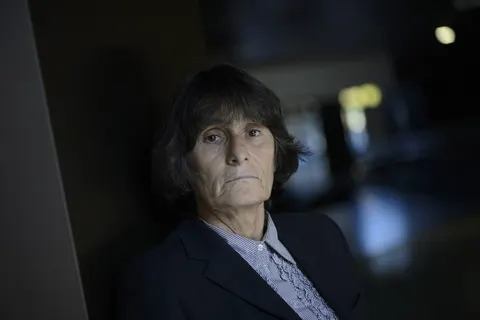
Zdravka Evtimova is among the strongest voices in Bulgarian literature of recent decades: translated into countless languages, honored with Bulgaria’s most prestigious awards and unquestioned acclaim abroad, her work is taught in schools in the United States and Denmark. We talk late on a Saturday evening about technology and people, she impresses me once again with her subtle wisdom… and then, for the first time in all my years of interviewing, the recording simply vanishes—so we talk again on an even later Sunday evening, after the “almost-the-last” train from Sofia has been delayed and she is home once more. Where will the locomotive of words take us?
 34
“Information Was Freedom. Now It Is an Instrument of Slavery”
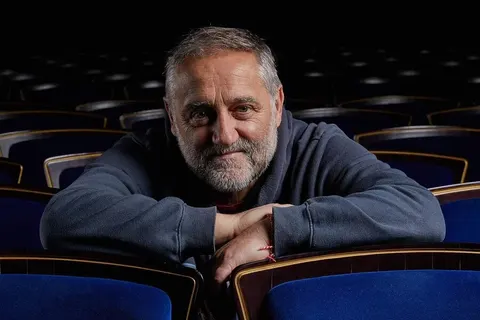
Today’s guest will never have artificial intelligence for competition, because he is not only a virtuoso of words but a mind so unconventional that it cannot be imitated. Alexander Sekulov, a playwright, poet, prose writer, journalist and founder of two music clubs in Plovdiv, talks about words as weapons, revolutions in digital times, spiritual laziness, intelligent humor and information emissions.
 35
“People Everywhere Are Gripped by a Sense of Disintegration”
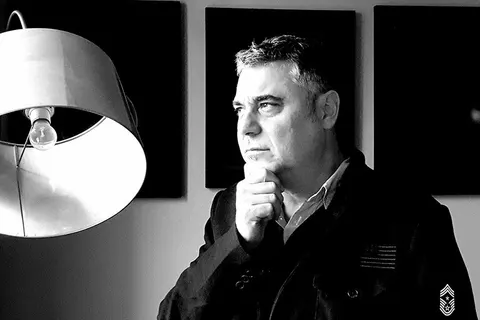
Alek Popov needs no introduction for anyone even remotely interested in literature. Mission London, Sestri Palaveevi… (The Palaveev Sisters…) and, at least for me, his finest novel, The Black Box. I would also recommend the collection Novi i izbrani razkazi (New and Selected Stories). But we have no time for literature right now; we are going to talk about life. And about technology. About the hygiene we need when consuming and sharing content. About the fault lines of today and our chances of talking normally about the important things again. About sex with robots. About deconstructed clichés and the sense of disintegration that is also driving us away from literature. “We live in a civilization that encourages banality in all its forms. Social media, PR and advertising generate clichés nonstop. Political language is woven mostly from clichés, and so is bureaucratic jargon. It isn’t just a matter of daily life—fast or slow—but rather of a particular ‘mental laziness’ that makes us mindlessly repeat ready-made formulas for success, for happiness, for love. Looking happy seems to have become more important than being happy. Few are those who catch themselves and say: hang on a minute, what is all this nonsense!?”
 36
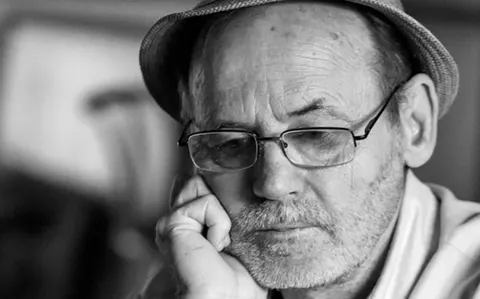
Free Will, or a Barcode in the Digital Concentration Camp?
Nedyalko Slavov's new novel, Habitat, is a book of enormous weight and force, steeped in the big questions of our day: surveillance, data and the freedom we give up without a fight. We talk about social networks as spy agencies, obedient literature and why it is the fingers gripping the tools of labor, not the keyboard, that made us human. “It all comes down to what you want to be tomorrow. Free will. Or a barcode in the digital concentration camp of a meaningless world.”
 37
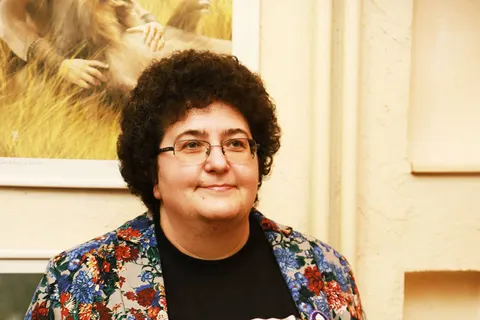
Virgil Dreamond, Who Now Dreams of Plugging Us Into the Computer
Elena Pavlova has been writing for as long as she can remember. Gamebook fans know her by the pen name Virgil Dreamond, the author of 25 of the masterful reads in this literary phenomenon. Why can’t she wait for the technology that will read our minds, where has science fiction disappeared to, and why did Bulgarian writers and translators end up without money even for bread?
 38
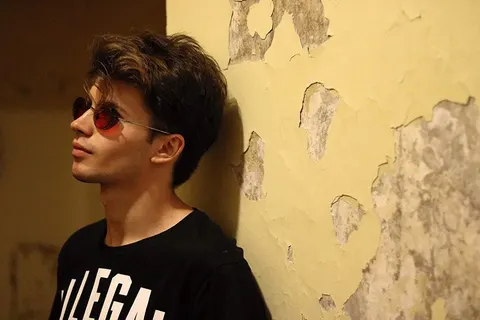
“Then Came Electricity, and the Vampires Fled”
Magic is part of life, and if we give it up, we are left with dry, meaningless algorithms for living. But how do we keep from driving it away while we are swallowed by the stream and its deceptive momentum? Byurhan Kerim answers with his debut novel Lavandulovoto momche (The Lavender Boy), which brings together eternal themes and a modern gaze, classic Balkan plots and magical realism.
 39
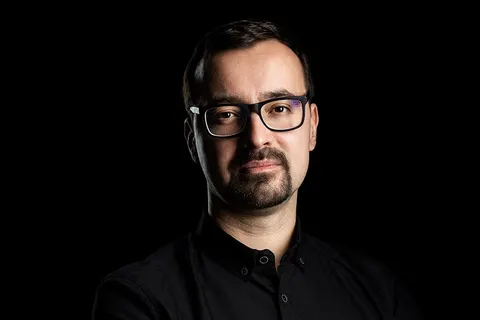
The Mamnik Lurks Online, Too
“Mamnik”—such a melodious, expressive word. And lately, much more than that. The fearsome mythical bird of Bulgarian folklore took flight as an audio series on Storytel and then carried on as a novel on paper. If you have yet to read (or hear) the book, I envy you. In it, Vasil Popov shows how Bulgarian folklore can be told in a modern, gripping, thrilling way, with taste and literary skill. We invite the mamnik to our conversation, too, as a vivid character and a powerful metaphor: the terrifying bird that is almost immortal and whose feathers keep changing color. Why do we so rarely manage to turn the stirring images and stories of Bulgarian folklore into art? And why, at the same time, do legends from distant times feel so close to us? Where is the thin line between patriotism and flag-waving jingoism? Here is what Vasil Popov and I had to say about it.
 40
“Online, You Can See How Weak a Person Really Is…”
“The past is theory, the present is practice, the future is the result. In that sense the future is a moving concept; it can change, and change many times over,” says today’s guest, who admits she keeps away from social media because their atmosphere is fundamentally at odds with her values. Kamelia Kucher is a young writer whose novels Nosht (Night), San (Dream) and Dom (Home) carry an unexpected maturity, capturing the patina of the past along the thread of a powerful story. We sit down over a cup of virtual tea to talk about newsfeeds, the Second World War, motherhood and the future.