“History Today Is a Sword Blunted by Abuse”
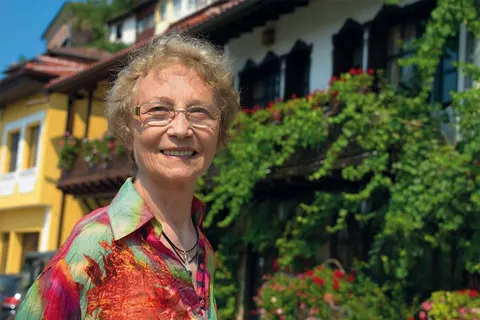
What is worth freeing ourselves from as a nation? Does unity still make strength? Novelist Neda Antonova, one of Bulgaria’s most widely read authors of historical fiction, talks about what we owe our greatest figures, what the Apostle Levski would do if he were born today, and the calmer, wiser view of history we lose while squabbling online.
 42
“Nothing Can Replace Reading!”
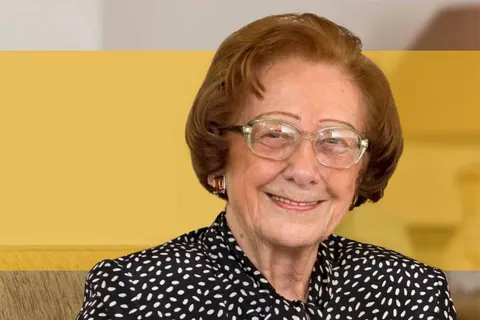
Leda Mileva was a symbolic figure of Bulgaria's 20th century, and this is one of her last interviews, in which I had the good fortune to be the one asking the questions. The daughter of Geo Milev, author of the famous “Little White Bunny,” she was a writer, translator, journalist, even a politician. How did she see the computer future? Would technology prove stronger than literature? And how did “Little White Bunny,” the piece its author liked least, become her trademark? Leda Mileva was born on February 5, 1920, and passed away on the same date exactly 93 years later.
 43
“Want a Miracle? Wish for It, and Be Ready to Bear It”
What do your Christmas and our Christmas have in common? This holiday goes far beyond the commercial, the feasting, the exhausting bustle. It is a state of mind, a meeting of past, present and future. It sounds impossible to gather the many vivid faces of the holiday in one place. Yet that is exactly what the recently published anthology Nashata Koleda (Our Christmas) does. In it, Zachary Karabashliev brings together stories by some of the most popular authors of different generations, genres and worldviews. “The anthology is like an apartment building on a cold, snowy December evening, here to remind us that miracles are possible,” the cover reads. This book is the reason we meet on the eve of the warmest of holidays, to reflect on the past and the future in a conversation we will, it turns out, continue in 78 years. About miracles, about the new beginning of the Nativity and the doors it opens. About the meaningful stories that have gathered us around the family table from prehistoric to digital times.
 44
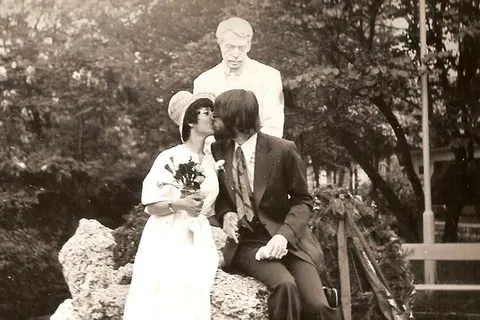
Christopher Buxton: All Is Love
His first memory is of boundless darkness; the morning greets him with the smell of roasting peppers. Before long he will fall in love with the country he has landed in, and then truly and forever with the woman of his life, and a magical story will be born between cultures and eras. He taught Petya Dubarova, was the first to translate many Bulgarian classics into English, and dared to take on even the maddeningly untranslatable novel Summit—and he still translates Bulgarian poetry, votes in our elections and gets worked up by our passions, because reason ends where true love begins…
 45
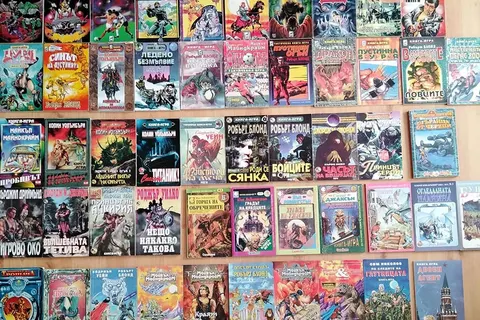
Gamebooks: The Phenomenon That Taught a Generation to Read
Gamebooks are a purely Bulgarian cultural phenomenon, and there is a lot to learn from them. They show how the wild early years of the “transition” had not only mutri, the thick-necked gangsters of the era, but also a peculiar, meaningful literature that woke a love of books in an entire generation. If this story is familiar to you, it is worth learning how it continues today: one of the beloved authors, a knight of the gamebook, is fighting to give the phenomenon a new life. If you have never heard of it… then it is time, because this is something rarely talked about, and it was one of a kind. We go back to tell the story of the phenomenon and its six great authors, then turn to what the beloved writers do today, and finally look ahead to the gamebooks that will soon return in full force.
 46
These Days Even Love Happens Fast. But Slow Love Is More Beautiful…
Where does magic hide today, will we ever lose the power of the word, and should artificial intelligence learn about us from books like The Brothers Karamazov? Nikolay Terziyski is a young writer who offers his own deep, contemporary take on eternal themes, a master of words with a magical eye whose style is linked to magical realism, and for good reason. Do we all have stars under our eyelids?…
 47
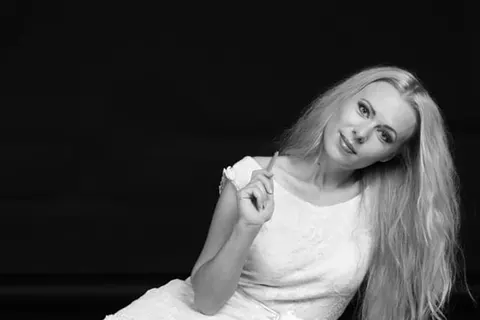
“The More Technologically Advanced We Are, the More Terrible the Mistakes We Forget”
Lyudmila Filipova is among the most widely read Bulgarian authors of recent years. Her novels span an enormous range of subjects, and she never stops seeking new literary challenges: the distant past of the people who lived in these lands, the challenges they face today, the great riddles life sets before us. After such a colorful palette of interests, it is time for her digital stories. We turn first to the past in order to look toward the future. And finally, most importantly, we dream of the moment when people will once again be stirred not by the news of the day, but by the stars…
 48
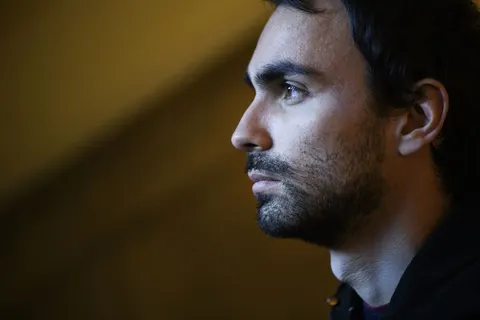
“Literature Can Still Save Us from the Future”
Nikolay Genov is a lecturer, a PhD in literary theory and a chief assistant professor at the Institute for Literature of the Bulgarian Academy of Sciences. A young man who loves books and dreams of lighting the flame of that love in more young people. Is the end of literature approaching, what does science fiction have to tell us today, and what should Mark Zuckerberg learn from the wise Stanisław Lem while building his notorious metaverse?
 49
“Let’s Wake Up from the Dream That We Are Someone’s Victims”
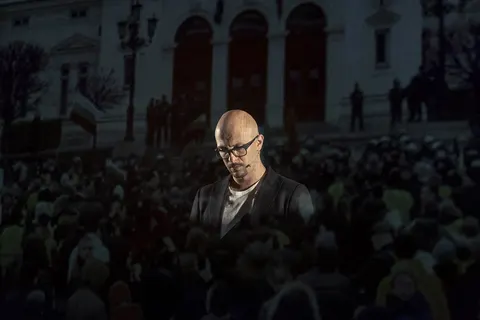
“How do we restore the value of words? By no longer hurling them at each other. Just because we click on different links doesn’t mean we can’t talk and listen to each other now and then.” Only we Bulgarians have May 24 and November 1: the day of the letters and the day of the people who turn them into a creative force. Ivan Landzhev is first and foremost a poet, though he heads the creative team at an advertising agency. He is one of the few who truly love words and, rarer still, words love him back. We talk about the awakeners and those who wake us, about words and deeds, about the awakeners, the wide-awake and the fools, about hope, and about the magic of language in the digital world and the meaning we will lose if we forget it.
 50
“We Are Simply Not Wise…”
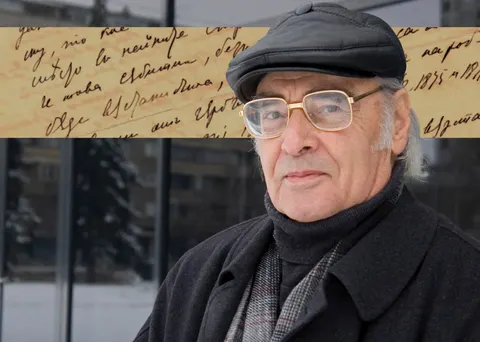
A fateful 13 years have passed since this interview with Anton Donchev, and his words sound even more urgent now. Today the writer passed away at the age of 92. “What will the world look like in a century? We know nothing—whether all this horror now unfolding won’t give rise to a new branch of science. Whether some microbe won’t pop up… The thing is, humanity today lacks the art of synthesis.” “People feel there is no justice. The great loss of these last 20 years is the confusion about the place of the spiritual and the material in the life of the individual and of society.”
 51
“The World Is Too Wonderful for Us to Finish Inventing It Virtually”
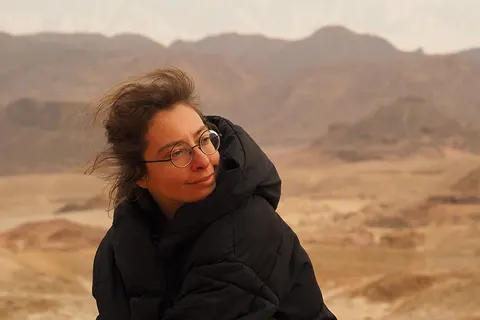
“People put up hearts, declare their love and shower each other with friendship very easily and very willingly. It couldn’t happen in such quantities in reality, because there it takes far more real effort.” “I think that when you cause someone pain, some of it sticks to you too. Online we’re robbed of that—and yes, I say ‘robbed’ on purpose. Feeling someone else’s pain is a sign that you’re alive.” Petya Kokudeva is a silver-tongued master of words who can tell a deep story in a handful of sentences. And, impossible as it sounds, she does it not only for adults but for children too. She is one of those people who never stop traveling—both creatively and physically. A writer with many awards for children’s books and travel writing, Petya is a citizen of the world who knows what to ask of it. We talk about the road—the one across the world, the one down the feed and the one toward ourselves. The road of each of us, and of all of us as a civilization, along the steep slopes of today, in the light and shadows of technology. What awaits us around the bend?
 52
The Flying Little Prince
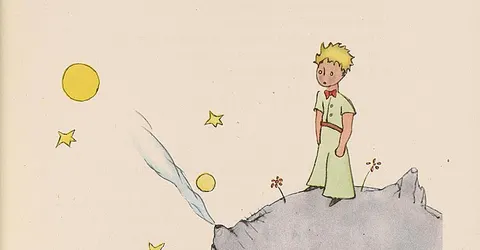
Can you briefly tell the story of a man who fit everything into 112 small pages? Messages that have stirred children and adults for 70 years now, and that lose none of their power no matter how the years pass, how technology advances, how the world changes. Messages written in wartime that are worth rereading right now, when war is once again frightening and crushing us…
 53
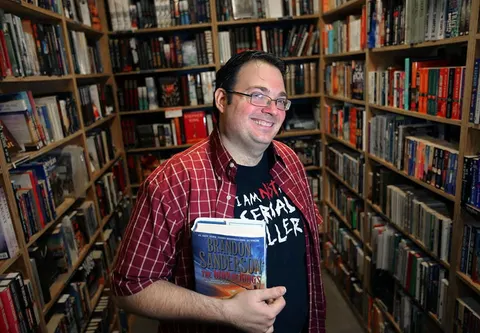
Brandon Sanderson: The Writer as a Startup
The most successful Kickstarter project in history turned out to be… four novels?! Brandon Sanderson set out to raise $1 million and got… $41 million! Then he gave part of it away to other literary projects. How did one writer set off such a financial tsunami? What is the secret behind one of the most popular fantasy authors of our time? And what does the magical story of a man who wrote tens of thousands of pages before publishers trusted him look like?
 54
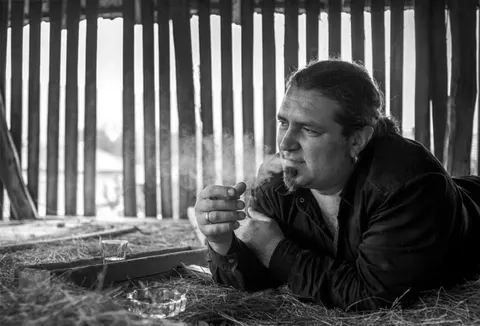
“Laugh, ’Cause the Universe Is Endless, but Life Ain’t”
This piece was the April Fools’ greeting from Digital Stories, an unconventional interview with a beloved, out-of-the-box writer, and today it reads very differently and is even more worth reading: Stoyan Nikolov (Torlaka) passed away just days ago, at only 42, leaving behind distinctive, meaningful books that will be read for a long time, and three boys who will grow up as brave and defiant as he was, and as his Northwest is. “Laugh, ’cause the universe is endless, but life ain’t. It’s just energy, changin’ from one form to another in this endless universe; long as you’re in this here shell of yours, enjoy it. After that, who knows.”
 55
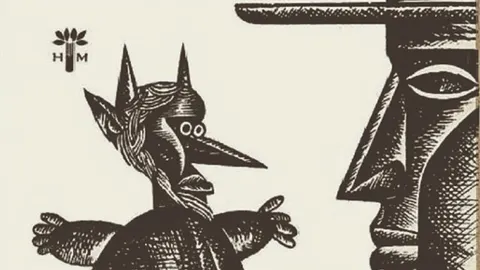
“My Future Reached Out Its Hand…”
The Cybernet was boundlessly amazed. Its three antennas stood up straight and bent into marks of wonder: “What is feeling?!” In 1969 the poet Dobri Zhotev told, in verse, of his meeting with the Cybernet, and today his reflections sound more than timely. The poet's story is as fascinating and instructive as his poems.
 56
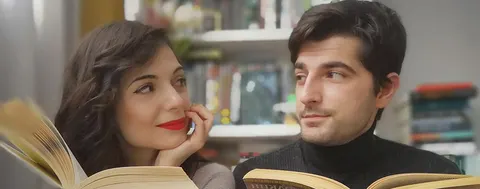
“As Long as There Are People, Books Will Be With Us”
With Books Under the Covers is a digital venture about love. Love of books, and love in general. Temz Arabadzhieva is the PR at the publishing house Ciela, and Anton Birov is editor-in-chief of Webcafé. Together they make a vlog about good old books in the digital world.
 57
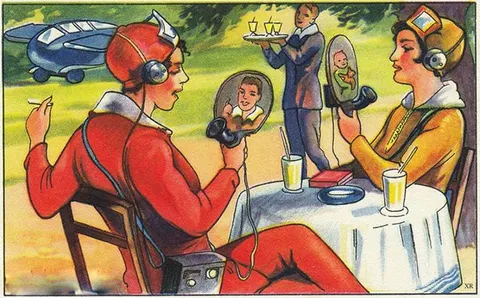
2022, Seen from Sixty Years Ago: What Did the Science Fiction Writers Get Right?
In the 1960s Isaac Asimov wrote a remarkable essay containing some astonishingly perceptive predictions. Around the same time, the first issue of the magazine Kosmos ran a similar piece collecting the ideas of Soviet science fiction writers on the subject. What did the writers get right, and where did their expectations fall flat?
 58
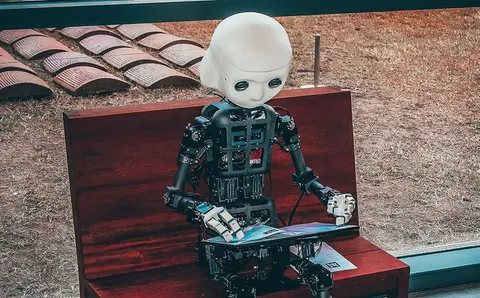
Robot Pavlovich Chekhov: Artificial Intelligence as a Writer
“There is nothing to writing. All you do is sit down at a typewriter and bleed,” said Hemingway. Can we teach artificial intelligence to create gripping literature, and how will the cultural world change if we do? Here are the most exciting projects and the arguments of the two extremes: that the robot writer will become reality, or that algorithms will never reach the human emotion of a text.
 59
Ivo Ivanov: “We Should Have Foreseen the Destructive Side of Technology…”
Until there is an artificial intelligence that can write moving prose, we will have to rely on Ivo Ivanov for the job. Like every sensitive and observant person today, he has his own many-colored view of the digital transformation. Are there things we cannot teach algorithms? What did the online age give us, what did it take away, and how do we stay human in it?
 60
Did the Mouse Eat the Book? Or Just the Newspaper…
“Will the mouse eat the book?” we asked at the beginning of the 21st century. Two decades later, we check whether that really happened. Did books lose the battle with the internet? Was there ever such a battle at all? And what happened to the print media in the meantime? We look for answers in the numbers from the database of Bulgaria’s National Statistical Institute.