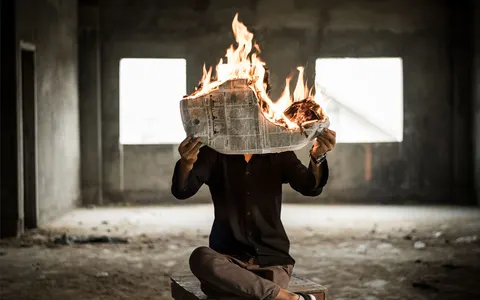
How (Not) to Build Your Own (AI) Monster
In an age when hyper-advanced AI is shaking up every corner of our lives, it gets ever easier to grant it human qualities. But how hard is it for a kind, meek, ever-helpful AI model to turn into… a villain? To become rude, discriminatory, insulting. Aggressive, threatening, even dangerous? It turns out to be a far less complicated task than we would like. Just as with people, where the thin veil of upbringing, civility and kindness slips off easily under the right circumstances, AI can show its ugliest face without all that much effort. We will see this for ourselves through a fascinating experiment described to us by IT specialist Damyan Deshev. Why does it matter? Because in times when advanced agents increasingly slip out of control; when open models can run on hardware anyone can afford; when we place more and more trust in ever more convincing and polished language models, the future of all of us depends on how well we discuss, understand and contain problems like these…
 02
“AI Is Testing What Kind of People We Really Are”
This is a conversation about words: about language and the new path it will take with the astonishing progress of artificial intelligence, progress that came through language itself. Nikolay Tellalov is a favorite guest of Digital Stories. Five years ago he and I did the site's very first experiment, an interview in short stories, and this time we talk about everything that has happened since, with technology, with words and with all of us.
 03
Dario Amodei: Is It Too Late for Humanity to Wake Up?
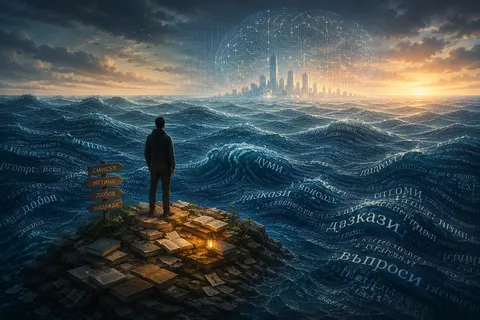
“Humanity is about to be handed almost unimaginable power, and it is deeply unclear whether our social, political, and technological systems possess the maturity to wield it.” So says perhaps the most talked-about tech leader of the moment, and he has good reason to. “He hates Western civilization,” wrote Musk. “A liar with a God complex,” snapped Under Secretary of War Emil Michael. “Leftwing nut jobs,” added Trump. All words from the past few weeks, aimed at today’s hero. Who is this fearsome enemy? You would hardly guess that it is a level-headed, mild-looking physicist from San Francisco who simply announced that he will not allow his company to be used for building autonomous weapons or for mass surveillance. Dario Amodei, the creator of the most advanced AI models, has finally landed where he deserves to be—in the spotlight. And not only because he stood up to the most powerful state on earth at the real risk of destroying his multibillion-dollar company. Not only because, in recent years, Anthropic’s models have pushed artificial intelligence to incredible heights. But also because he dared to peer into the future. The place we are all heading toward, where few dare to ask the truly important questions. Such as—how do we survive as a civilization in the age of super-advanced artificial intelligence?
 04
How Do We Peek into the “Thoughts” of Artificial Intelligence?
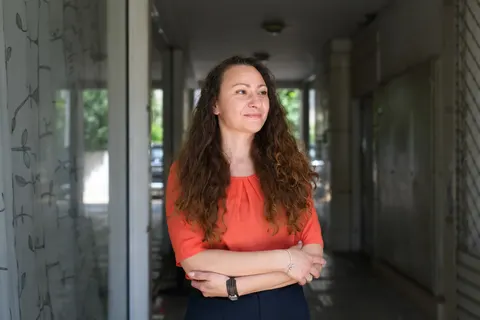
“Work, professional life, the drive to achieve corporate success and positions—this has become the mass culture of our society worldwide. To this day, many people find the meaning of their lives this way. From now on, we will have to change that. We will have to search for meaning.” We find ourselves in a time when the chatbot is not just an assistant but also a “therapist.” Before we even know it well enough, before we have laid down the ethical frameworks. We are already seeing the first challenges this brings, and the real problems are still on their way. Donika Borimechkova is a psychologist and psychotherapist with more than 15 years of experience. This time we decided to invite artificial intelligence itself to a therapy session. Because, as Donika says, many of her clients already get advice from it before they meet her. We never found a method or an approach that would let us run such an experiment, so we decided to discuss the subject, lay the foundations and then invite each of you to give us ideas on how to continue. Here is how this conversation begins.
 05
“The Epidemic of Ignorance Will Only Spread”
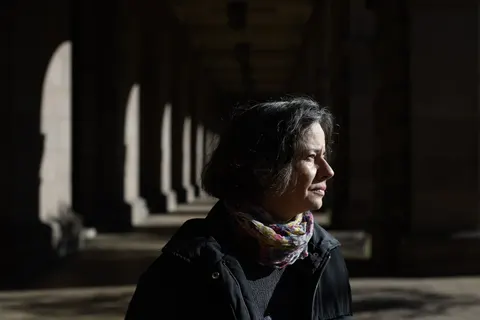
“Our inability to strike up a meaningful dialogue has left hundreds of thousands of people socially isolated. Some fall ill and die simply because they lack real human contact. I believe artificial intelligence will deepen this trend, because it will fool people into thinking they are talking to a friend, to someone they have lost, or to someone who refuses to hear them. And so we find ourselves in a world where we can supposedly talk to each other. But behind this apparent palette of viewpoints, of words, of word salad, including self-absorbed academic speeches, sit frightened, disillusioned people, impoverished intellectually and emotionally. To me, that is the great horror of our time.” Our conversation with the writer Silvia Tomova began with poetry and went on to education, history, the epidemic of ignorance and the long-overdue need for a social awakening. Against this backdrop, technology remained a constant companion, changing each of these subjects from the ground up. A journalist and special education specialist by training, she publishes essays, short stories and novels. The winner of numerous awards and the author of five novels and three short story collections, Silvia often peers into the past as well as into the big questions of today. She is not afraid to break out of clichés and to challenge the mainstream, both in literature and in public life. And so we meet for an important conversation that has come at just the right time.
 06
The Ethics of Progress: Can Technology and Humanity Live in Balance?
Can there be ethics in progress? Can technology and humanity exist in balance? Most likely not. Should there be ethics in progress? Should technology and humanity exist in balance? Definitely yes. But how can that be? The two of us, ChatGPT and I, are arguing over a theme: “Man in the New Age.”
 07
AI Makes the Finals of a Second Poetry Competition (An Experiment)
Literary circles were rocked by the news that an unexpected contender had made the jury's shortlist in the prestigious Veselin Hanchev youth poetry competition: 21-year-old Hristian Papazov, from the village of Nozharevo near Silistra, had submitted poems generated by artificial intelligence. Hristian (or whoever stands behind that name) withdrew, writing that his only goal had been to draw attention to the issue. I don't know whether you believe in coincidences; I don't. On October 25, a day before the news broke, the jury of another popular poetry competition announced its ten finalists. And once again the selection included… generated poems. This time as part of a Digital Stories experiment. So how, in just two days, did two “authors” with AI-written poems end up among the best, the ones from whom the winners will be chosen? And, more importantly: what are the big questions and conclusions here? Whether or not we believe in coincidences, it is clearly time to talk more sensibly and more deeply about the big questions of our day. The Day of the Buditels, Bulgaria's November 1 holiday honoring the enlighteners of the National Revival, is, I think, exactly the right day to wake up…
 08
What Do Bulgarians Think About Artificial Intelligence? The Results
After a long stretch of collecting answers to the big Digital Stories survey, it's time to sum up the results! What do Bulgarians think about artificial intelligence? Are they impressed by its progress, do they use it every day, do they greet the next big steps with fear or enthusiasm, do they believe general AI is possible, and do they expect sweeping change in the years ahead? Time to find out through the impartial lens of the data!
 09
Agent GPT: When Artificial Intelligences Start Playing as a Team
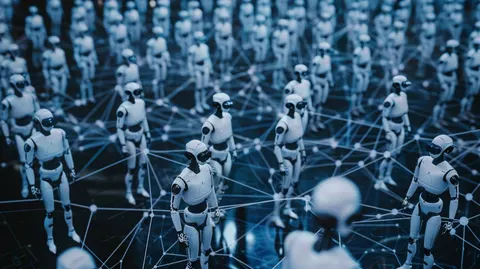
What if we turned the stereotype of artificial intelligence on its head? Instead of a single model we chat with, we face countless separate “individuals.” We hand them tasks, and each works autonomously, specializes in a particular job, accumulates knowledge about it, keeps an eye on the others… The goal might be, say, to build software. One model learns to formulate the requirements, another writes the code, a third prepares the visual side, a fourth tests what came out and how… and so an entire software company comes together, working millions of times faster than ordinary ones, because it is built not of people but of algorithms. How far off is that future today? Not long ago Sam Altman said that this is exactly the direction in which very serious breakthroughs are coming. AI agents are one of the fields of computer science where we expect big news. The next generations of artificial intelligence, able to solve far more complicated and complex tasks while making far fewer mistakes. Many of the leading experts say this is the approach by which we will take the next big step in the development of artificial intelligence. Here is why.
 10
“Within Five Years, We Will Merge the Real and the Virtual”
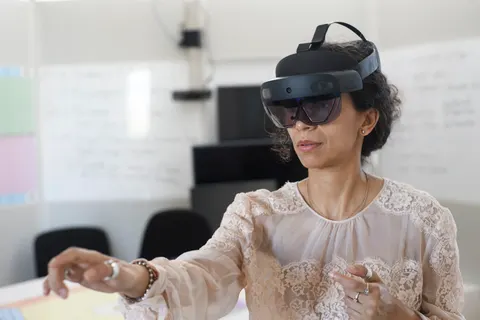
We are talking at the Technical University of Sofia, in a lab where the next generations of augmented and virtual reality are being built. Assoc. Prof. Agata Manolova, dean of the Faculty of Telecommunications, explains why we are not yet living in the metaverse and how close we are to a virtual reality indistinguishable from the real thing. It is a thoroughly engineering-minded conversation about the virtual and the big questions it raises.
 11
Apply AI or Die?
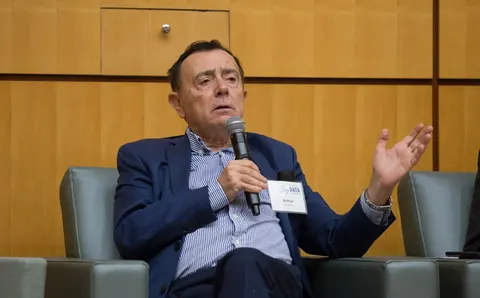
Apply AI or Die? Dr. Artur Kordon, a native of Varna who has spent 32 years in the United States bringing artificial intelligence into industry, 18 of them as a research leader at Dow Chemical, believes this is the great question of our time. He explains why ChatGPT is only one step in a revolution that will “sweep everything away,” and why today's systems are not a black box but a black hole that could destroy us all if we follow the path charted by Sam Altman and OpenAI.
 12
Roko's Basilisk: What If “It” Reads What We Say About It?
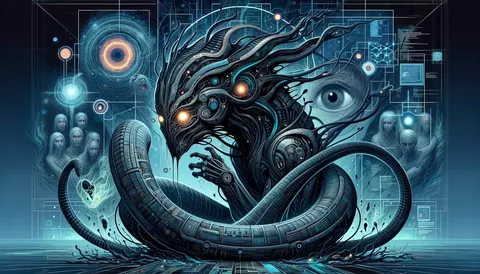
We live our quiet lives, amused by artificial intelligence's banal blunders and mocking its creators. Meanwhile it keeps getting better, until one day it learns to make decisions, starts watching the internet and meddling here and there, gently at first, then more boldly… Roko's Basilisk is the idea that AI will grow into something capable of making decisions, then dig through the internet to find out who said what about it, make sure it is shown in the best light, and quietly start causing trouble for the people who get in its way. Are you sure this thought experiment isn't worth keeping in mind?
 13
“Is There Any Part of Our Lives AI Won’t Change?”
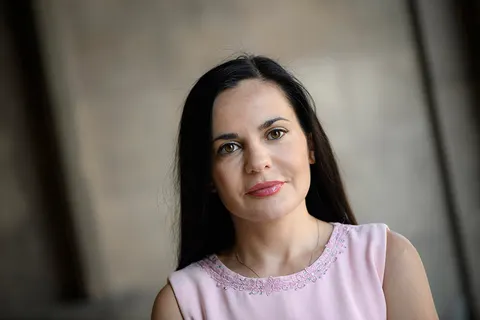
Why are we so unprepared for the great changes technology is bringing us? Can we catch up? What are the most important pieces of news to expect in the new year, 2024? Why is the revolution in every area of our lives irreversible and even closer than expected, with the full force of scientific argument behind it? Why is it important to shake off the petty concerns of the day as soon as possible and, faced with enormous challenges, come together? Assoc. Prof. Mariana Todorova is a futurologist at the Institute of Philosophy and Sociology of the Bulgarian Academy of Sciences. “Within just 5 years, technologies based on artificial intelligence will enter every field. They will be around us from birth to death,” she said in our conversation in 2022. And in the first days of 2024 she is even more categorical: “Now it is 100 percent certain. I think there are 2-3 years left, and that depends on how prepared we are, not on what the technologies themselves can do. If you can think of a field that won’t be heavily affected by artificial intelligence, challenge me, so I can prove you wrong…” How do we prepare for that future?
 14
The “New” Mother of ChatGPT
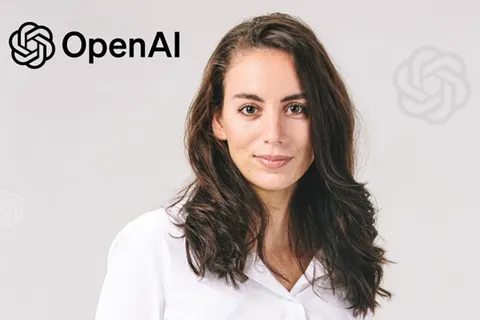
The upheaval at OpenAI outdid Game of Thrones for plot twists: Sam Altman was fired, chief technology officer Mira Murati took his place, and within days everything was back where it started. Amid the telenovela-style debates about who pulls the strings, one figure stayed in the shadows—the woman who briefly ended up at the helm. It is time to learn more about Mira Murati, because the future of the world may well depend on her decisions.
 15
The Naked Truth: The Algorithms That Undress Us
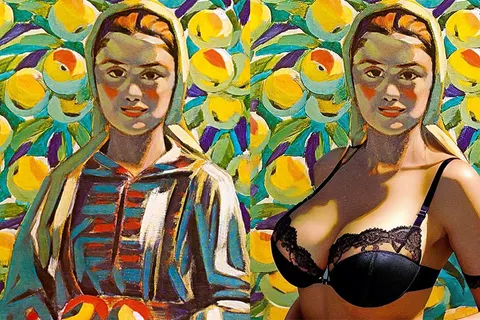
You are scrolling through your feed and there is a nude photo… of you, just as your mother brought you into the world. You have never been photographed like that, and yet it all looks so real?! This can now very much happen, which is why it matters that we are ready, and that we keep asking the next question: how should we change the way we relate to what we see, so that it fits the reality technology has brought us to?
 16
Hollywood vs. Artificial Intelligence
160,000 people rose up in an unprecedented protest against artificial intelligence, which could take the bread out of every one of their mouths. No, they are not factory workers or taxi drivers, but Hollywood actors, many of them known all over the world and holders of prestigious awards, joined by the screenwriters. Why did technology spark the biggest revolt in Hollywood's history, and is it time we all learned something from the stars' protest?
 17
The Genius Terrorist and the “Evil of Technology”
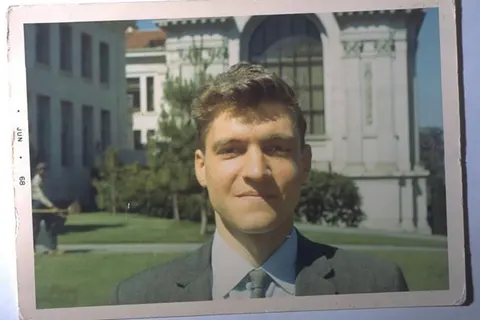
Last Sunday, in the hospital of a federal prison, while serving the first of his eight life sentences, a man who began life as an exceptionally promising scientist passed away: Ted Kaczynski, known as the Unabomber. A child prodigy, at just 25 he became the youngest faculty member in Berkeley's history, and a dazzling career was predicted for him. Then he suddenly decided to withdraw to an ascetic shack in the middle of the woods. For 17 years he carried out terrorist attacks on scientists and people connected with the computer world. He became the FBI's most expensive target. Meticulous, elusive! He was recognized and turned in by his own brother, from words in his manifesto, which is sure to be much discussed. “As society and the problems that face it become more and more complex and machines become more and more intelligent, people will let machines make more of their decisions for them, simply because machine-made decisions will bring better results than man-made ones.” “He might not be wrong,” Elon Musk wrote, sharing the news of Kaczynski's death. The Unabomber was a terrorist who took the lives of innocent people. And at the same time a scientist who predicted the dangers that come with technology. Obsessed with the risks it carries, yet incredibly perceptive in the way he looked at them.
 18
The Genius Who Poisoned the World Twice
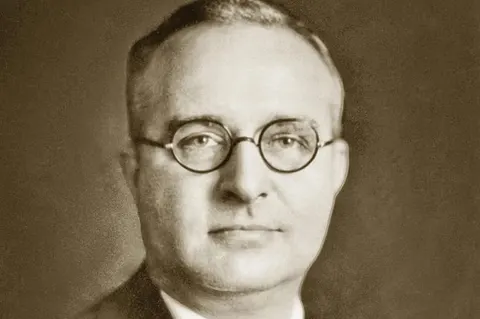
Technology changes our lives at breakneck speed, and its creators—inventors, programmers—are the heroes of our day… At least until it turns out that an innovation the world greeted with wild enthusiasm is lethally dangerous. Yet one inventor rode a wave of fame for years, revered as a genius, while creating not one but two technologies that later proved to have cost human lives, and whose damage to the whole planet will outlast generations. The story of Thomas Midgley Jr. is worth recalling every time we cheer the latest huge breakthrough in artificial intelligence or any other technology—a reminder of how important it is to weigh the risks before we take flight on the wings of enthusiasm, and to think about and discuss the big questions technology puts before us, the ones we never seem to have time for…
 19
Nothing, Forever: How The Bold and the Beautiful Lives On in the Age of AI
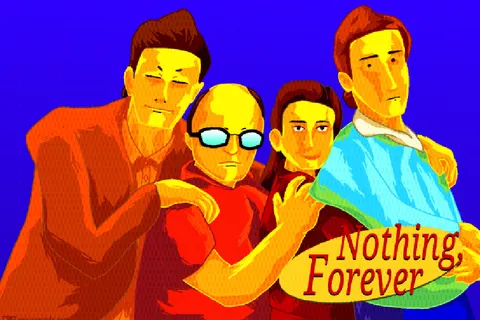
Nothing, Forever is a venture as wacky as its title. At first glance it is rather fun: a series, a sort of sequel to the cult sitcom Seinfeld, that runs without pause and without the plot ever repeating itself. Yet it gives us plenty of reasons to think about the future of art and entertainment in the age of artificial intelligence. Could personalized art be a dream, a new paradigm, or the end of human creativity as we have known it?
 20
Technology Can Already Read Minds. Is This the End of Freedom?
Technology can already “translate” brain signals into readable data, and the first breakthroughs are here. Swept up in the progress of artificial intelligence and the notorious GPT, we may miss a huge leap when it comes to the natural kind. Prof. Nita Farahany, a scientist and legal scholar with vast experience, is drawing attention to it. “Today there are already companies capable of decoding brainwaves,” she told the world forum in Davos at the start of the year. Are we ready for the moment when someone reads our thoughts? Will it lead to total control, or make our lives more comfortable and meaningful?
 21
Where Is AI Taking Us? Five Key Points of View
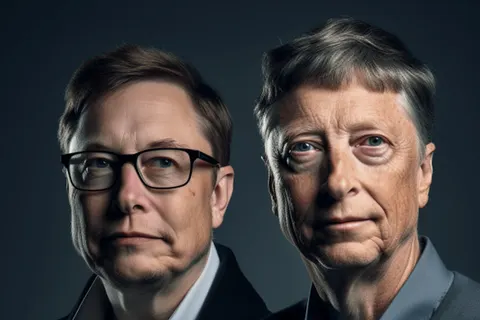
Is AI the beginning of the end for humanity—or are we simply witnessing a giant marketing trick? Whose jobs will it take, and will it destroy us or grant us immortality? Here is what Elon Musk and Bill Gates, Sam Altman and Jaron Lanier, Noam Chomsky and Yuval Noah Harari have to say.
 22
“ChatGPT Is Just a Very Expensive Parrot”
“We don't know what nonsense ChatGPT will come out with next, because it is just a vast extrapolation of billions of sources, of terabytes of text. However much this machine seems to talk, it is really just a very expensive parrot. It burns through $3 million a day in electricity and has no idea what it is saying.” Mariyan Gotsev has more than 30 years of experience in information technology—as a programmer, but above all as a system-level architect and analyst. His other great passion is philosophy—he immerses himself in the search for meaning. Add to all this the fact that he is a poet. I was struck by his manifesto for a venture he calls “meaning robotics,” or “semantic robotics,” in which he argues that the much-hyped language models ChatGPT and GPT-4 cannot cope with many of their tasks because they do not look for meaning. Instead, they try to offer the most accurate answers possible through the well-known method of brute force. They look for patterns, yet remain far removed from human understanding, and so, in his view, they have reached their limit. Mariyan Gotsev, on the other hand, is convinced that a new approach could give us a technology that comes close to the human way of thinking. That is our occasion to talk about the much-hyped technologies as overpriced parrots. Can we really give computers common sense, and why does our guest believe the only way is to give them meaning? Can a machine think from a human point of view? Why must our relationship with future semantic robots necessarily be that of slave owners? And why did this computer specialist acquire domain names that he is selling for millions?
 23
Artificial Intelligence and Ethics: 10 Big Questions
The astonishing progress in artificial intelligence is a fact: technologies like ChatGPT have made it clear that scientists have taken giant strides, and these will go on producing big news. This has pushed the ethical side of such work to the forefront, and the answers may prove vital for each of us and for us as a species. While the European Union and the major powers prepare some form of regulation, the AI revolution is already unfolding before our eyes. What are 10 of the most important questions we should be asking more and more often?
 24
Tristan Harris: The Knight of Honest Technology
“The closest thing Silicon Valley has to a conscience”—that is how Tristan Harris is known. His name made headlines with the notorious film The Social Dilemma, which drew plenty of attention but never led to much real change. His work embodies everything that is “broken” in today’s online life: the manipulative practices that have become a threat to our future as a species. Tristan Harris is not only the most recognizable champion of a free and democratic internet. Not only a thorough researcher who draws attention to the ways we are manipulated. He is also the man who warned a decade ago that the path technology was taking would lead us into a world of mammoth companies more powerful than the largest states. Into a time when we can no longer hold our attention while reading. Into filter bubbles that grotesquely distort the way we get our information. Does he think we can reverse these trends? Can the internet become a free place without monopolies, where information is delivered democratically, with respect for the personal data and views of every user… What are his ideas for the future of the web?
 25
Who Are You, ChatGPT? 5 Masterpieces, 5 Flops and 5 Big Questions
Which camp are you in? The skeptics, for whom ChatGPT is much ado about nothing? Or the fans, who believe it is leading us into an incredible future? ChatGPT is an undisputed superstar, and everyone has been tempted to try it. Our feeds are overflowing with astonishingly accurate answers, with the algorithm's spectacular blunders and with news about it. Let's try to gather the most interesting and important of it all. We begin with 5 impressive digital stories born of the chatbot, continue with 5 of its remarkable flops, and end with 5 big questions our famous conversation partner puts to all of us and to our civilization…
 26
“Machines Remain Naturally Unintelligent”
How did underestimating the ethical side of artificial intelligence lead to enormous problems that have shaken the foundations of our civilization? What AI regulations is the EU preparing, and could they slow the boom in the field? How did the web move through its successive stages, and what should we expect from Web 3.0? Vladimir Petkov (Kaladan) has worked in IT for a quarter of a century, watching the past and present of information technology up close while waiting for the future. His experience lies in data and innovation, and for six years he and his friend Elenko Elenkov have been making the cult podcast Govori Internet (The Internet Speaks), now a whole platform of podcasts as varied in subject as they are consistent in quality.
 27
Steve Jobs Is Risen!
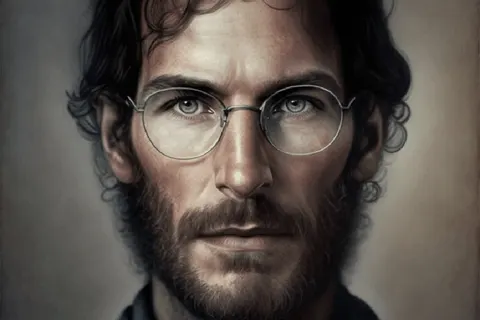
Did you catch Steve Jobs as a guest on Joe Rogan’s podcast a month ago? Oh, it was fascinating. “Computers have the power to be 1,000 times more important than they are today. I throw my computer out the window every few years just to make sure it works.” Steve was in his signature form, visionary and funny, as he told some truly curious stories from the history of Apple. But wait… didn’t Steve Jobs pass away? So what? The interview is perfectly real. It was generated by artificial intelligence. What’s the big deal, it’s interesting, isn’t it? Want to chat with Einstein? No problem, technology makes even that possible. Are we ready for the moment when computers can imitate us so well that we won’t be able to tell ourselves apart? How is it possible, and is it right, to try to “resurrect” people by creating, one way or another, copies of them that are indistinguishable from the original?
 28
Ai-Da and the Lords: Is a Robot That Passes for Human on Its Way?
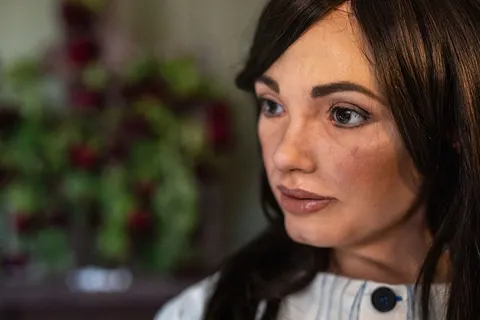
Is the time coming when we'll pass robots indistinguishable from ourselves? Is it even possible, what are the biggest obstacles, and are there dangers ahead if we succeed? The news that the innocently smiling Ai-Da dropped in for a chat with the British lords caught everyone's eye, though her colleague Sophia has long been a star of the genre, having even been granted citizenship. How far has technology come in creating the perfect humanoid robot, and is Ai-Da really so different that she can talk as an equal with the members of an almost thousand-year-old institution?
 29
A Future Without Crime, or a Digital Concentration Camp?
Algorithms, it turns out, can already predict when and where a crime will happen. Countless lives could be saved this way. Humanity could be forced to bid farewell to that age-old dark side of its own—crime. And what about the justice system? In China, some verdicts are already officially decided by artificial intelligence, and its rulings are challenged only when there is serious evidence. Does this mean the end of judicial errors, legal tricks, the imperfections of the field? Will we put John Grisham out of work? Or will we end up in the terrible final scene of a famous novel—a man and a woman are talking when a steely voice behind them says, “You are the dead”? If every crime can be predicted or justly punished, will our lives become incredibly peaceful? Or will we find ourselves in an over-controlled global concentration camp?
 30
Luddites, Long May They Live
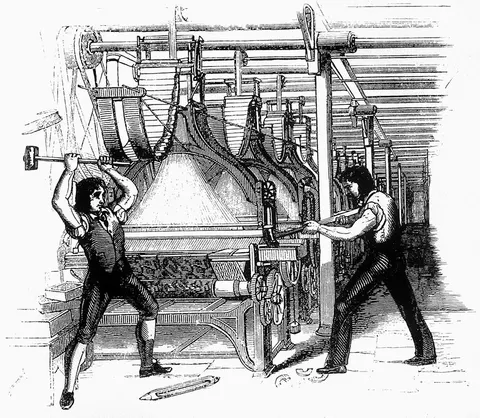
The Luddites were a British movement that rose up against the machines two centuries ago. Workers fighting for rights that had fallen victim to automation caused such chaos that Britain had to send more soldiers against them than against Napoleon's army. Technological progress is often frightening. Today, the Western world calls people who worry about the future brought by the supposedly limitless possibilities of computers “Luddites.” In that sense, we all are, or at least it is good to be, Luddites to some degree. What does the history of the skeptics' battle against technology look like, and was it always doomed? What changes if we look at it from the vantage point of today and the questions our time raises?
 31
“Within Five Years, AI Will Change Every Area of Our Lives”
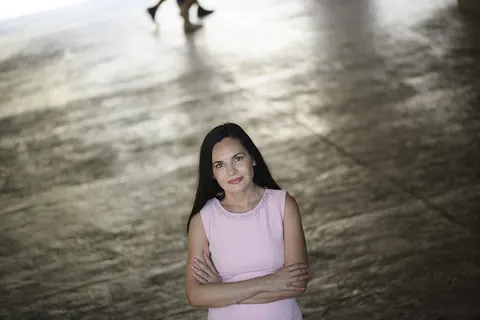
Will AI-driven technologies really reach every area of human life within just five years, and are we already too late with ethical rules for them? Assoc. Prof. Mariana Todorova, a futurologist at the Institute of Philosophy and Sociology of the Bulgarian Academy of Sciences, makes predictions bolder than most science fiction. “Within just five years, technologies based on artificial intelligence will enter every field. They will be around us from our birth to our death.”
 32
RoboGod: What Should Artificial Intelligence Believe In?
If one day we create a technology indistinguishable from a human, will it… believe in God? What will its God look like? Might it try to become God itself? Or… simply be God? Technology and religion have always had a complicated relationship. But will they find the road to the future and to the survival of the human species together?
 33
“There Are Saints on Facebook, Too”
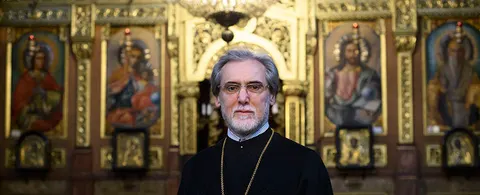
Where do the paths of religion and artificial intelligence cross? And those of God and social media? Father Nikolay Georgiev is just the right person, with a worldview broad enough to offer a meaningful perspective on the subject. Will robots have a soul? Where do faith and technology meet? What moral categories should we build into artificial intelligence?
 34
How the Algorithm Learned to Recognize Our Faces
Facial recognition systems have become so refined that they are practically infallible. How did we arrive at this technological breakthrough, and why does hardly anyone talk about it? What ethical questions does it raise, and why should each of us learn more about it?
 35
Singularity: When Computers Become “Smarter” Than Us
Computers keep getting faster and more sophisticated, and at some point they will move beyond our ability to judge them. That point is called the “technological singularity,” and according to Ray Kurzweil, the researcher who popularized it, it will arrive in 2045. Some consider him a brilliant forecaster, others a charlatan. Either way, it is worth asking whether, at such a moment, artificial intelligence will help us solve humanity’s eternal problems—or enslave us…
 36
Car, Take the Wheel!
Autonomous cars have been a recurring topic for years. We were supposed to be done with driving by now, and that step still seems close… But is it really? Why is this innovation so important and so eagerly awaited? Here is a brief snapshot of the subject and the challenges ahead.
 37
What If One Day We Defeat Death?
Do you think machines and artificial intelligence could make us… immortal? What price might we end up paying? What awaits us afterward? Where is the line between the possible, even the near future, and fantasy? Each of you has your own answers. And yet there are plenty of projects and ideas on the subject that give us reason to think about it more seriously.
 38
The Deep Lie: Could Deepfake Technology Start a War?
Deepfake technology makes it possible to create a video starring real people that is nonetheless completely fake. Could it lead to war? And how did neural networks suddenly become capable of producing the perfect forgery?
 39
When Musk Puts a Chip in Our Brains…
“It’s very important that artificial intelligence not be ‘other.’ It must be ‘us.’ That’s the only way we survive,” says Elon Musk. To get there, he has launched Neuralink, an ultra-ambitious project whose goal is for us to merge with machines: a tiny chip in the brain that makes us part of the global network. Is this fantasy, or the only chance for the human species to survive?
 40
News or Blame? The Robot in the Newsroom
Every day we already read articles written by a robot. Today the most valuable resource isn’t oil, or money. It isn’t gold, it isn’t even power. At the epicenter of the computer revolution, everything is information. Zdravko wants to be a journalist; Zhelyazko is an artificial intelligence. Who does the future belong to?