“AI Is No Better a Programmer Than the Ones You Already Have!”
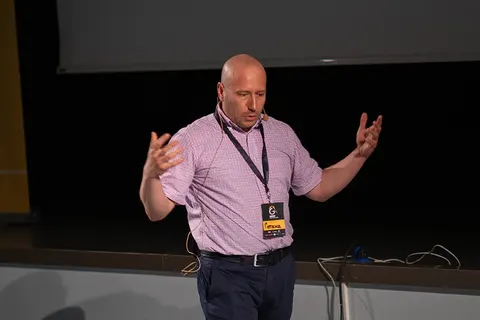
“However we integrate AI, in the end every line of code has to be read by a human.” “It is sheer madness to believe that general AI can be achieved with large language models.” “The world as we knew it is dead, and it isn’t coming back.” Ivan Vankov (Gatakka) can always be counted on for an original, unorthodox, provocative and thought-provoking take on technology, as the lines that follow will show.
 02
“Truly Intelligent AI? Only If We Take the Next Big Step”
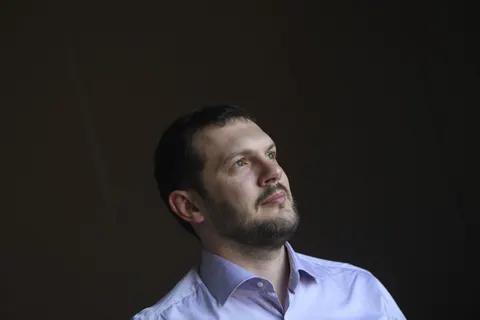
Viktor Botev and his team are building a successful product in one of the most high-tech fields of artificial intelligence, yet his enthusiasm for the near future in which AI will change us all is far from the sweeping expectations of the day. For eight years he has been chief technology officer of Iris.ai, a Norwegian-Bulgarian startup that applies AI to vast bodies of scientific data. A long, human conversation about technology for connoisseurs: hallucinations, the limits of large language models, and why the era of Bulgaria's outsourcing companies is over.
 03
“It’s Crystal Clear That AI Is the Future”
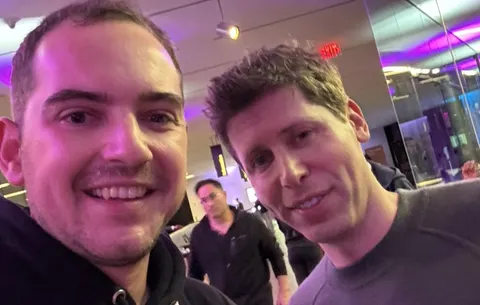
The day before I met Ilia Valchanov, the news broke officially that his startup Team-GPT had secured $4.5 million in funding, a record for Bulgaria! Today’s guest leads a platform that helps businesses around the world use the power of large language models while keeping their data safe and confidential. It is far from his first impressive achievement: for years Ilia has been building hugely successful online courses in data science and artificial intelligence, and he personally has more than 1,400,000 students on Udemy! He owes his remarkable success to a thorough approach, a great deal of reading and learning, courage and unconventional decisions. That is why we are meeting: to talk about the next big news coming out of the world of artificial intelligence. About how the technology will transform every area of business, but also about the risks it creates. About the important causes tied to the progress of AI, and the skills it will never manage to develop.
 04
“Artificial Intelligence Will Simply Make Our Work More Pleasant”
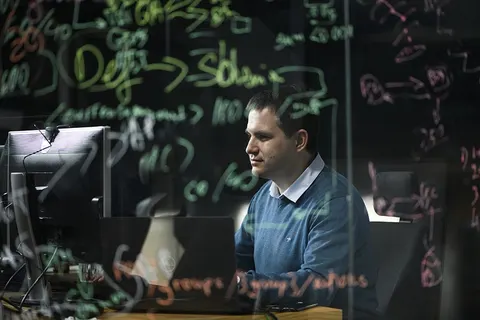
Will ChatGPT's successors write the news for each of us, exactly the way we'd like it? Hristo Tomov, head of AI at the software company Dreamix and one of its founders, talks about personalized news, filter bubbles, fake news and the limits of large language models. How far has artificial intelligence come, and what does the future look like if it keeps developing at the same pace?
 05
How (Not) to Build Your Own (AI) Monster
In an age when hyper-advanced AI is shaking up every corner of our lives, it gets ever easier to grant it human qualities. But how hard is it for a kind, meek, ever-helpful AI model to turn into… a villain? To become rude, discriminatory, insulting. Aggressive, threatening, even dangerous? It turns out to be a far less complicated task than we would like. Just as with people, where the thin veil of upbringing, civility and kindness slips off easily under the right circumstances, AI can show its ugliest face without all that much effort. We will see this for ourselves through a fascinating experiment described to us by IT specialist Damyan Deshev. Why does it matter? Because in times when advanced agents increasingly slip out of control; when open models can run on hardware anyone can afford; when we place more and more trust in ever more convincing and polished language models, the future of all of us depends on how well we discuss, understand and contain problems like these…
 06
Literatron: ChatGPT in… 1964?!
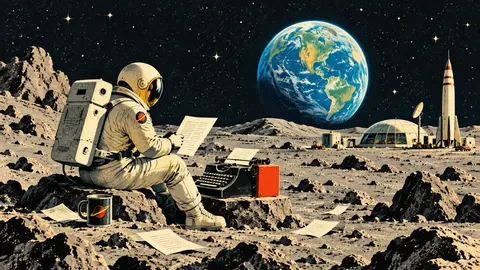
Have you heard of the literatron? It is… a machine that produces text on a user's instructions. It analyzes texts, writes bestsellers, composes campaign speeches, assembles comics and threatens to shrink the language of the media to 500 permitted words. Nothing new, right? We all have AI now, and these plots are everyday life; only that word “literatron” sounds a little retro. Why it does becomes clear when you look at the date on the cover of a slim little book that it is no exaggeration to call prophetic. The novel Le Littératron by the Frenchman Robert Escarpit came out in 1964 in the series Le Meilleur des mondes. But does the invention really resemble large language models? To put it mildly.
 07
“ChatGPT Is Just a Very Expensive Parrot”
“We don't know what nonsense ChatGPT will come out with next, because it is just a vast extrapolation of billions of sources, of terabytes of text. However much this machine seems to talk, it is really just a very expensive parrot. It burns through $3 million a day in electricity and has no idea what it is saying.” Mariyan Gotsev has more than 30 years of experience in information technology—as a programmer, but above all as a system-level architect and analyst. His other great passion is philosophy—he immerses himself in the search for meaning. Add to all this the fact that he is a poet. I was struck by his manifesto for a venture he calls “meaning robotics,” or “semantic robotics,” in which he argues that the much-hyped language models ChatGPT and GPT-4 cannot cope with many of their tasks because they do not look for meaning. Instead, they try to offer the most accurate answers possible through the well-known method of brute force. They look for patterns, yet remain far removed from human understanding, and so, in his view, they have reached their limit. Mariyan Gotsev, on the other hand, is convinced that a new approach could give us a technology that comes close to the human way of thinking. That is our occasion to talk about the much-hyped technologies as overpriced parrots. Can we really give computers common sense, and why does our guest believe the only way is to give them meaning? Can a machine think from a human point of view? Why must our relationship with future semantic robots necessarily be that of slave owners? And why did this computer specialist acquire domain names that he is selling for millions?
 08
GPT-3: A Cozy Chat with Artificial Intelligence
GPT-3. Behind this rather dry computer acronym hides a highly promising technology that takes quite a decisive step forward in the way we perceive artificial intelligence. It is the most powerful new-generation language model, which appeared less than a year ago and showed that neural networks are now capable of creating meaningful, emotional texts, sometimes sounding downright like art. And they can even write… computer code on their own!
 09
Apply AI or Die?
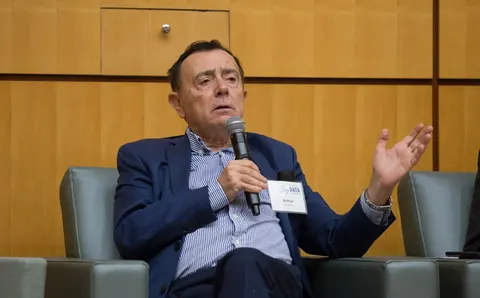
Apply AI or Die? Dr. Artur Kordon, a native of Varna who has spent 32 years in the United States bringing artificial intelligence into industry, 18 of them as a research leader at Dow Chemical, believes this is the great question of our time. He explains why ChatGPT is only one step in a revolution that will “sweep everything away,” and why today's systems are not a black box but a black hole that could destroy us all if we follow the path charted by Sam Altman and OpenAI.
 10
Where To Now, ChatGPT?
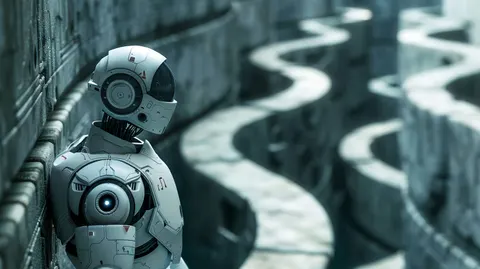
To be or not to be? Left or right? Life is a string of decisions, and on them hangs everything, from whether we reach the peaks we dream of to the eternal riddle of what to have for lunch. So we bring Hamlet and ChatGPT together to find the labyrinths, literal and figurative, that the electronic Virgil is ready to lead us through: five cases where artificial intelligence is already here to guide us, and five where we will have to wait (or never live to see it).
 11
Is There Still Such a Thing as a Foreign Language?
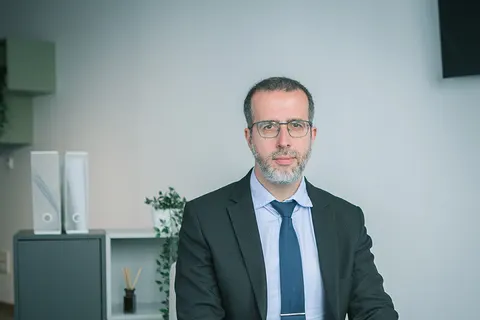
Is there any point in learning foreign languages? Machine translation has developed astonishingly fast, and today it captures much of what needs to appear in another language… Have we reached the limit, and what comes next? Kaloyan Kirilov, a translator and interpreter with nearly two decades of experience, on the art of translation in the age of advanced artificial intelligence—and on whether we can teach an algorithm to curse convincingly enough to sound like a native speaker.
 12
Why Is Everyone Listening to Andrej Karpathy?
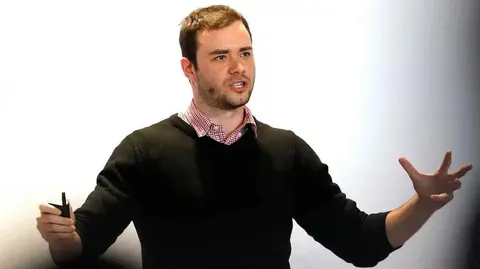
“There’s a new kind of coding I call ‘vibe coding,’ where you fully give in to the vibes, embrace exponentials, and forget that the code even exists.” With those words, on February 2 of last year, a world-famous programmer founded an entirely new field: a world in which software is made not by writing code but by explaining in human language. Andrej Karpathy, a co-founder of OpenAI and a builder of Tesla’s self-driving cars, has just joined Anthropic. What future does he see, and what kind of man is one of the prophets of the age of advanced artificial intelligence?
 13
“AI Is Testing What Kind of People We Really Are”
This is a conversation about words: about language and the new path it will take with the astonishing progress of artificial intelligence, progress that came through language itself. Nikolay Tellalov is a favorite guest of Digital Stories. Five years ago he and I did the site's very first experiment, an interview in short stories, and this time we talk about everything that has happened since, with technology, with words and with all of us.
 14
Agent GPT: When Artificial Intelligences Start Playing as a Team
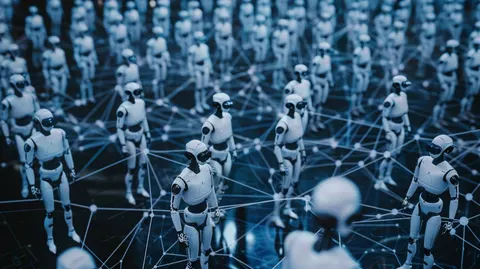
What if we turned the stereotype of artificial intelligence on its head? Instead of a single model we chat with, we face countless separate “individuals.” We hand them tasks, and each works autonomously, specializes in a particular job, accumulates knowledge about it, keeps an eye on the others… The goal might be, say, to build software. One model learns to formulate the requirements, another writes the code, a third prepares the visual side, a fourth tests what came out and how… and so an entire software company comes together, working millions of times faster than ordinary ones, because it is built not of people but of algorithms. How far off is that future today? Not long ago Sam Altman said that this is exactly the direction in which very serious breakthroughs are coming. AI agents are one of the fields of computer science where we expect big news. The next generations of artificial intelligence, able to solve far more complicated and complex tasks while making far fewer mistakes. Many of the leading experts say this is the approach by which we will take the next big step in the development of artificial intelligence. Here is why.
 15
“AI Can Already Help with Absolutely Any Human Task”
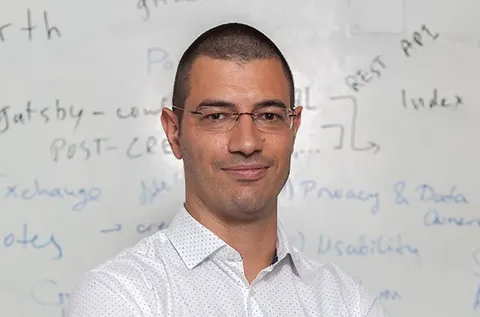
Nikolay Markov is among the specialists paving the way for artificial intelligence to enter every area of our lives. He has spent more than two decades in information technology, yet he trained in engineering physics and macroeconomics. His experience runs from building cloud solutions through cybersecurity to researching and deploying AI. Today he leads the AI, DevOps and cloud practice at SoftServe, and at TeamLandi he is building a system that will give small and medium-sized businesses access to the full range of what AI can do. Why are these technologies here to stay and change our lives? How is AI the first technology that can reach into absolutely every field? What will the future look like?
 16
“Leading by Example Is a Fearsome Weapon”
“Calling the inexplicable a ‘miracle’ is a beautiful way of admitting how little we know,” says today’s guest. “Miracles are also a chance to stop fooling ourselves that everything depends on us alone, to catch our breath and learn to trust life.” Ivanka Mogilska is a copywriter with 20 years of experience, the last 15 of them freelance. She is a blogger, editor and teacher. She is the author of seven books, the latest of which is the collection Obiknoveni chudesa (Ordinary Miracles). But… do such things really exist? We will ask her in a moment. Her airy, wise stories hold the everyday miracle, which, in my view, is the very reason to keep going. We will talk about digital and analog miracles. About the miracles worth teaching artificial intelligence and the ones it may someday create. About brevity and the long texts that carry meaning. About the need, every now and then, to “get off the merry-go-round”…
 17
Stack Overflow: The Programmers' Savior Is Fading
It is easy to tell someone who has ever programmed from everyone else: if you have “touched” code, you have seen Stack Overflow. In just 15 years, the question-and-answer site fundamentally changed the way programmers work, but today the legend is heading toward its sunset, ironically because of the technological progress it helped make possible.
 18
“We Bulgarians Have the Mindset to Be Successful Entrepreneurs”
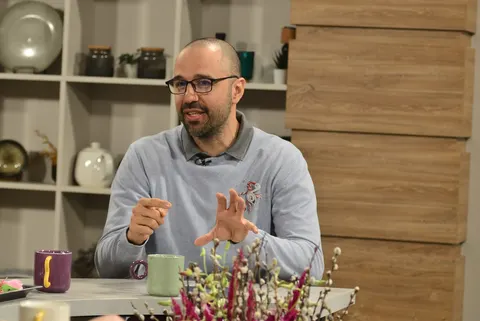
Boris Paskalev is an entrepreneur with impressive experience in the startup world. He recently became a strategic advisor to INSAIT, Sofia's Institute for Computer Science, Artificial Intelligence and Technology, one more guarantee that we can expect ever more remarkable news from there. A former youth national basketball player, he went on to study at MIT, then helped found DeepCode, a pioneering AI coding startup acquired by Snyk in 2020. We talk about his path through Silicon Valley, the AI revolution, the coming revolution in robotics, and how Bulgaria can have more successful startups.
 19
“Game Over.” Is Humanlike AI on the Way?
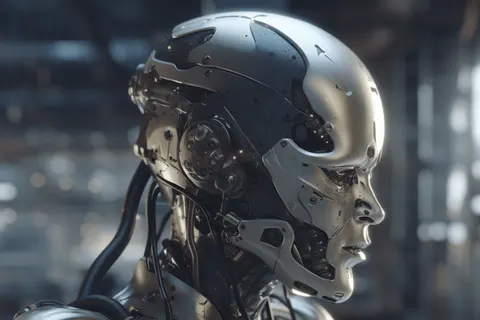
“The Game is Over,” Nando de Freitas declared in May 2022, announcing big news in the field of artificial intelligence. Scientists were still arguing over whether artificial general intelligence, an algorithm able to solve all kinds of tasks the way the human brain does, could exist at all. And while they argued, it turned out that… the argument had perhaps already been settled? That terse tweet announced the arrival of Gato AI, the first contender for the title of “artificial general intelligence,” a step expected to be at least a decade away and one many thought outright impossible.
 20
Where Is AI Taking Us? Five Key Points of View
Is AI the beginning of the end for humanity—or are we simply witnessing a giant marketing trick? Whose jobs will it take, and will it destroy us or grant us immortality? Here is what Elon Musk and Bill Gates, Sam Altman and Jaron Lanier, Noam Chomsky and Yuval Noah Harari have to say.
 21
Artificial Intelligence and Ethics: 10 Big Questions
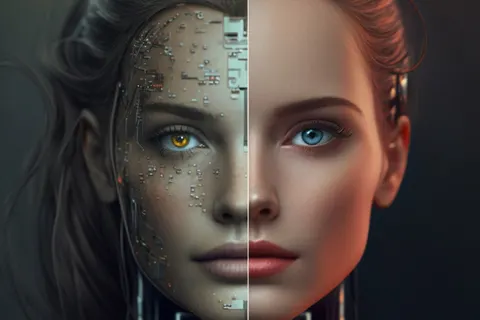
The astonishing progress in artificial intelligence is a fact: technologies like ChatGPT have made it clear that scientists have taken giant strides, and these will go on producing big news. This has pushed the ethical side of such work to the forefront, and the answers may prove vital for each of us and for us as a species. While the European Union and the major powers prepare some form of regulation, the AI revolution is already unfolding before our eyes. What are 10 of the most important questions we should be asking more and more often?
 22
“In Building True AI, We Get Only One Shot”
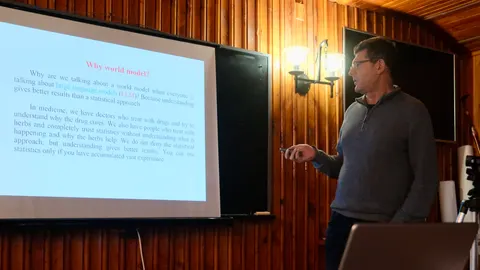
Everyone is talking about artificial general intelligence, the enormous next step that will confront us as a species with colossal and unpredictable challenges, and one of the first scientific conferences on the subject was organized in Blagoevgrad by Dimitar Dobrev, an AI and mathematical logic researcher who teaches at Sofia University. Before we let the genie out of the bottle, he says, we should at least decide what we want from it. We talk about intelligence as a force, our naivety about the future, control, regulation, open source, and one simple but frightening question: if we don't know what future we want, how do we expect to get it?
 23
“Engineers Will Always Be in Demand. But Our Skills Have to Change”
Work in the software world has already changed fundamentally with the arrival of artificial intelligence. On November 29, at the conf.ai workshop, Djemal Ahmedov will harness AI agents and make them work as an entire software team. Before that, we talk about the chaotic present and uncertain future of software in the age of advanced AI, and about whether there will always be a human in the loop.
 24
Who Invented the Toaster? Nobody—It Never Happened
Alan MacMasters, the celebrated inventor of the toaster, made it onto the BBC, into the Daily Mirror and onto a British cooking show. The small detail is that he never existed: two students invented him to show how easily we trust what we read online. Wikipedia itself keeps a list of its longest-surviving hoaxes, and it reads like a lesson in how easily we can be misled.
 25
Would a World Without Work Really Be So Bad?
Have you heard of… cyberpsychology? At last there is a field of science that studies how we interact with technology. Is it changing us as a species? What are the biggest challenges it puts before us? Is its rapid development an inhuman challenge or, on the contrary, a natural turn in evolution? These are all questions whose answers I have been looking for in more than 300 digital stories, and now the time has come for the cyberpsychological point of view. Elena Tsankova holds a PhD in psychology, earned in Germany, and continued her research in Bremen as a postdoctoral fellow. In 2020 she returned to Bulgaria and began work as a researcher at the Bulgarian Academy of Sciences, with the ambitious idea of paving the way for this new and so important field. In recent years she has studied how people get to know each other online, as well as communication between humans and artificial intelligence (AI). She researches human behavior in the context of evolving technologies and describes herself as an experimental cyberpsychologist. We will talk about rushing and awareness. About the “uncanny valley,” where our perception of a technology grows more and more positive as it comes to resemble a human, until at some point it gets so close to human that it is perceived as eerie… And about the calm, philosophical point of view that helps us make sense of and accept the big changes.
 26
Roko's Basilisk: What If “It” Reads What We Say About It?
We live our quiet lives, amused by artificial intelligence's banal blunders and mocking its creators. Meanwhile it keeps getting better, until one day it learns to make decisions, starts watching the internet and meddling here and there, gently at first, then more boldly… Roko's Basilisk is the idea that AI will grow into something capable of making decisions, then dig through the internet to find out who said what about it, make sure it is shown in the best light, and quietly start causing trouble for the people who get in its way. Are you sure this thought experiment isn't worth keeping in mind?
 27
Have We Lost the Last Race Against AI?
We are living in the incredible future. Have we lost every possible contest with artificial intelligence? My answer is unequivocal. I’d love to hear yours.
 28
What Kind of “Person” Is AI? A Psychological Experiment
We invite four of the most popular AI models into the psychologist’s office to find out what kind of “personalities” they turn out to have! Domineering or easily swayed, sensitive or pragmatic? What are GPT-5, Claude Opus 4.1, Gemini 2.5 Pro and o3 like by “character”?
 29
(In)human Errors: Can AI Be Your Proofreader?
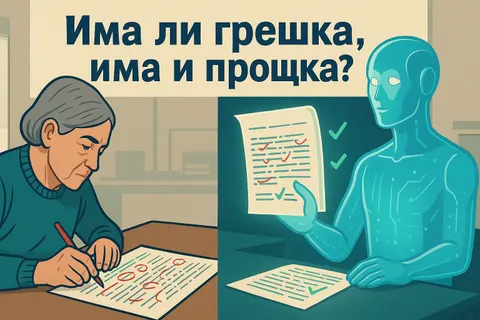
At a time when fewer and fewer media outlets, and even publishers, trust specialists to watch over spelling, could artificial intelligence (AI) turn out to be a useful assistant? It is time for a telling spelling experiment with some of the most powerful models around. We all (we hope) believe that online we are now judged by our spelling rather than our clothes, and since we communicate more and more through written text, the way we write reveals so much to the other person. Can AI help us write correctly?
 30
Fear of Technology = A Nation Left Behind
Elitsa Stoilova says digital literacy should become a national goal if we want to move forward. “Its absence leads to fear of technology = conservatism in adopting and using it = our nation falling behind in many directions. What is the future of illiterate nations?” she wrote to me. Our guest has traveled a colorful road: 11 years in journalism, then tourism, where she became… a hotel manager in the Mariana Islands in the Pacific, before finally dropping anchor in the IT world. She realized that much of the work in tourism is repetitive and can be done by algorithms, so she created the chatbot platform UMNI, long before another chatbot made the world notice how far artificial intelligence has come. But how is it that she is so optimistic about the road ahead? Our guest believes that if we play our cards right, AI is leading us to a wonderful future. What does playing our cards right depend on? And why is it sometimes worth leaving one of the most heavenly corners of the planet to chase your dreams? We look for important and unexpected answers in the lines that follow.
 31
EI + AI: Shoulder to Shoulder, Neuron to Neuron
While we pelt each other with clichés and argue online about whether artificial intelligence will enslave us, leave us jobless or vanish under the weight of enormous expectations, I, for one, am sure it will do none of the things on that list—and a little of all three. AI is here, and we still haven't decided how to greet it: in the economy, in our lives, in the way we see the world and ourselves. The only sensible approach from now on is to learn to work together.
 32
The Ethics of Progress: Can Technology and Humanity Live in Balance?
Can there be ethics in progress? Can technology and humanity exist in balance? Most likely not. Should there be ethics in progress? Should technology and humanity exist in balance? Definitely yes. But how can that be? The two of us, ChatGPT and I, are arguing over a theme: “Man in the New Age.”
 33
Meet… Yourself?!
“Talking to yourself isn’t so bad. It gets bad when you start answering.” I am going to create a virtual double of… myself. What could we possibly have to talk about?
 34
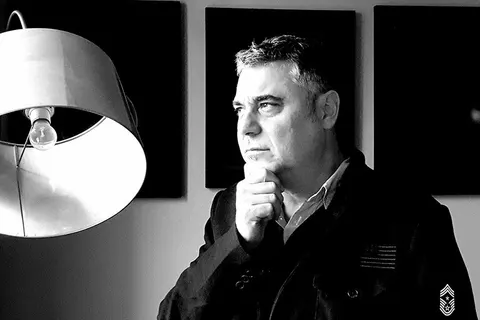
“People Everywhere Are Gripped by a Sense of Disintegration”
Alek Popov needs no introduction for anyone even remotely interested in literature. Mission London, Sestri Palaveevi… (The Palaveev Sisters…) and, at least for me, his finest novel, The Black Box. I would also recommend the collection Novi i izbrani razkazi (New and Selected Stories). But we have no time for literature right now; we are going to talk about life. And about technology. About the hygiene we need when consuming and sharing content. About the fault lines of today and our chances of talking normally about the important things again. About sex with robots. About deconstructed clichés and the sense of disintegration that is also driving us away from literature. “We live in a civilization that encourages banality in all its forms. Social media, PR and advertising generate clichés nonstop. Political language is woven mostly from clichés, and so is bureaucratic jargon. It isn’t just a matter of daily life—fast or slow—but rather of a particular ‘mental laziness’ that makes us mindlessly repeat ready-made formulas for success, for happiness, for love. Looking happy seems to have become more important than being happy. Few are those who catch themselves and say: hang on a minute, what is all this nonsense!?”
 35
Gatakka, ChatGPT the Psychologist and the Price of Critical Thinking
Ivan Vankov (Gatakka), a four-time IBM Champion, longtime tech blogger and author of free tutorials that helped many into software, has worked in machine learning, programming, team leadership, DevOps and blockchain architecture, and is now a freelance consultant to promising ventures. With his vast knowledge and wide view of the trends, he practically sketches the future. What big news is coming after the AI boom, how will machine learning change our attitude to work, and how did ChatGPT turn out to be a remarkably successful psychologist?
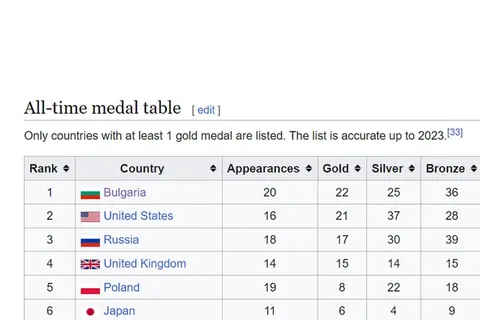
36How Bulgaria Became No. 1 in the World of Linguistics Olympiads
Bulgaria leads the world with the most gold medals from the International Linguistics Olympiad, and after 20 years of these competitions our team is first, ahead of the US, Russia, China and the UK, as Alexander Velinov, the teacher who has stayed close to the team for two decades while teaching and working in the software industry, announced online. How did we get here, what sets good competitors apart, why do wild parties turn out to be a key factor, why don't today's winners listen to music, and what is the unexpected explanation behind the notorious spelling rule of the full definite article?
 37
We Won't Eat Animals. We'll Talk to Them?!
Will the future really force us to give up meat? Or will we simply eat meat that… was made without killing an animal? Will technology soon let us understand more about how our best animal friends see the world? Will it let us talk to them… Our relationships with the other species on the planet have always been more layered than we realize. The most fascinating remain our ties with our closest “relatives”—the mammals and the other links that have climbed high up the food chain. We give them souls and make them part of our daily lives… while the vast majority of the planet's inhabitants rarely pass up a chance to snack on them. Our relationships with the other species on Earth are yet another field where technology promises striking news, and in the foreseeable future at that.
 38
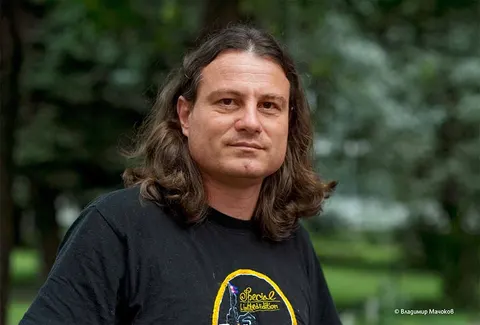
“AI Is Handling More and More Tasks. The Question Is What We Want Next”
Prof. Preslav Nakov is a specialist in natural language processing, ranked among the top scientists in the field worldwide. Which are the hottest directions to watch for news in artificial intelligence, and in text processing in particular? Where does enthusiasm outrun reality? Are we close to a general AI that can resemble and even surpass humans, is it possible at all, and should it frighten us or, on the contrary, fill us with enthusiasm for the future?
 39
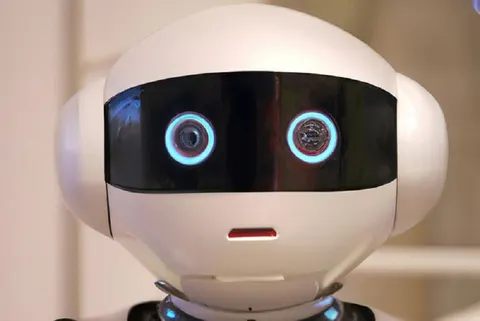
GPT-4 Is Coming, and It Promises to Change Everything
In the much-hyped world of artificial intelligence, there is hardly an algorithm more famous than GPT-3. It showed that AI is capable of miracles in a great many fields. And now the next generation is on its way. Although it is running late compared to the original expectations, GPT-4 is expected to be unveiled very soon. Can we get even more out of it? How does it differ from its predecessor? In which fields do we expect it to work wonders?
 40
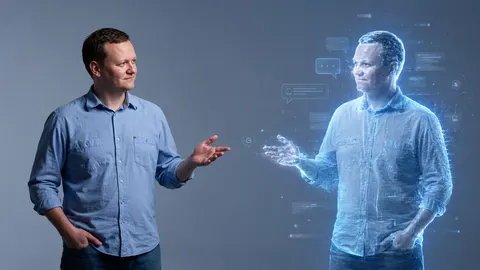
What I Learned from the Virtual “Georgi Karamanev”
Talking to yourself. In psychology, this is hardly considered a sign of good emotional health. But what if, besides talking to yourself, you set your virtual double free so that anyone can talk to him? What would people ask him that they would ask you? And what wouldn't they? Some of the experiments on this site are already bolder than the impossible and the unimaginable. And that is exactly what awaits you here. Two months ago, “Georgi” appeared on this page—my digital double, whom you can still meet today through the chat button in the bottom right corner of this site. Anyone was welcome to have a chat with him. From the very start, I had warned that I would be following the conversations so that we could bring the experiment to a fitting close with the lines that follow. In them, we'll look at what happened to the virtual “Georgi.” What did people ask him? Where did he cope and where did he fail? What does each of these conversations have to tell us? We take a peek into the conversations with the chatbot, and I'll leave most of the reflecting to you. And if you want to test his skills, he is still here, waiting for you. I admit, I definitely didn't anticipate even a fraction of the conversations “Georgi” had. Here's what I mean.
 41
Come Talk to “Me”!
Allow me to introduce… “Georgi Karamanev,” a chatbot trained on every piece on this site and on my guest appearances. Let’s find out together what it can do—write to it! It will pop up on its own, and if it doesn’t, you’ll find it in the bottom right corner of every page.
42How Do We Peek into the “Thoughts” of Artificial Intelligence?
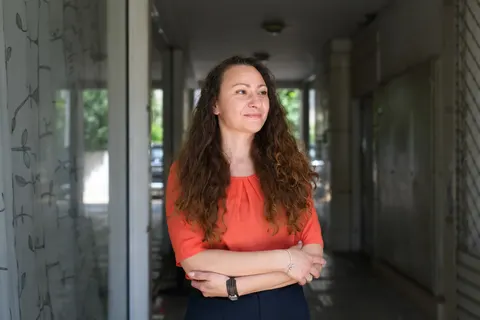
“Work, professional life, the drive to achieve corporate success and positions—this has become the mass culture of our society worldwide. To this day, many people find the meaning of their lives this way. From now on, we will have to change that. We will have to search for meaning.” We find ourselves in a time when the chatbot is not just an assistant but also a “therapist.” Before we even know it well enough, before we have laid down the ethical frameworks. We are already seeing the first challenges this brings, and the real problems are still on their way. Donika Borimechkova is a psychologist and psychotherapist with more than 15 years of experience. This time we decided to invite artificial intelligence itself to a therapy session. Because, as Donika says, many of her clients already get advice from it before they meet her. We never found a method or an approach that would let us run such an experiment, so we decided to discuss the subject, lay the foundations and then invite each of you to give us ideas on how to continue. Here is how this conversation begins.
 43
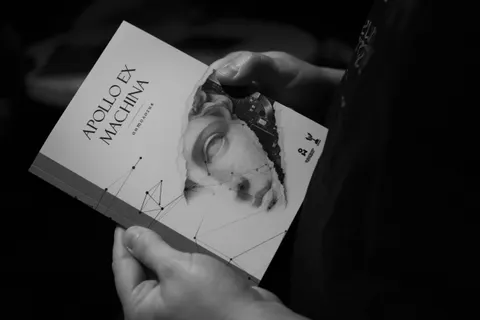
Poet + AI = Apollo ex Machina: Meet the Winners
The time has come to announce the winners of Apollo ex Machina, Bulgaria's first (and one of the world's first) competition for poetry created with the help of artificial intelligence. The jury's picks were revealed at a ceremony in the Sofia City Library, where the anthology of selected entries, published by Scribens, was also presented. In a moment you can read the best poems and judge for yourself how good they are.
 44
“The Last One Wins”: ChatGPT Strikes Back!
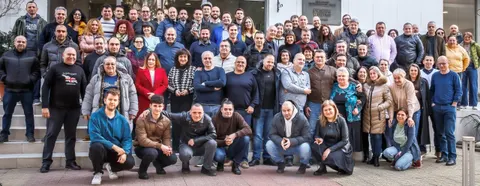
Intelligence hangs in the air: just over 100 people are in the hall, most of them among the smartest in the country. That's not a guess, I can prove it. They are winners of “The Last One Wins,” the TV quiz that in recent years has reminded us why knowledge matters to all of us, even as a species, in the age of advanced artificial intelligence. My fellow players and I have an important task: to face AI together in a contest that can tell us, and show us, a great deal. Will artificial intelligence, with its incredible skills today, beat some of the most knowledgeable representatives of the natural kind? Time to find out. And to learn something new… ChatGPT against some of Bulgaria's brightest minds in a knowledge contest. Who will win? Have we finally lost this battle against the machines too? The gauntlet has been thrown!
 45
“An Era Is Coming in Which We Will Have to Reinvent Ourselves”
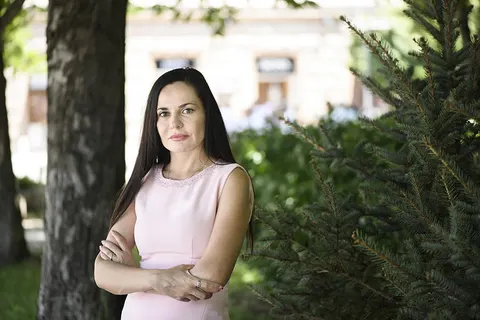
What will tomorrow look like? Why is “the era in which we will have to reinvent ourselves” approaching? What is worth teaching today’s children so they are ready for the future? Which professions will survive? And how do we find those ever scarcer skills that are worth helping them develop? Assoc. Prof. Mariana Todorova is a pioneer of Bulgarian futurology in its modern form. It has become a tradition for her to be my guest at the start of every year with forecasts that unmistakably come true. “We are returning to that most primal human quality of critical thinking, reasoning and debate.” “It is only a matter of time before most of the tasks we perform are taken over by artificial intelligence. We will live in permanent change, and at some point we won’t be able to catch up. As humanity, we could respond only through a global political consensus in which we decide that, even though the technology can do almost everything, people stay. But such a philosophy is deeply anti-capitalist, and imposing it would take either some boundless humanism or a dictatorship.” Can we be ready for the future?
 46
Will Artificial Intelligence Take Programmers' Bread?
Could artificial intelligence put programmers out on the street in the foreseeable future? Today it is a particularly promising time to enter the profession, but will that still be true once algorithms get better at writing code? The question came up loudly with the launch of GitHub Copilot, yet it runs much deeper and is far more interesting. We have gathered plenty of arguments for and against, and we leave the answer to you.