What Do Bulgarians Think About Artificial Intelligence? The Results
After a long stretch of collecting answers to the big Digital Stories survey, it's time to sum up the results! What do Bulgarians think about artificial intelligence? Are they impressed by its progress, do they use it every day, do they greet the next big steps with fear or enthusiasm, do they believe general AI is possible, and do they expect sweeping change in the years ahead? Time to find out through the impartial lens of the data!
 02
RoboGod: What Should Artificial Intelligence Believe In?
If one day we create a technology indistinguishable from a human, will it… believe in God? What will its God look like? Might it try to become God itself? Or… simply be God? Technology and religion have always had a complicated relationship. But will they find the road to the future and to the survival of the human species together?
 03
“AI Is Arriving on a Massive Scale, Turbulently and a Little Chaotically”
Bulgaria will soon host the first International Olympiad in Artificial Intelligence, bringing talented young people from at least 30 countries to Burgas. Elena Marinova, co-founder and longtime president of Musala Soft and co-founder of the olympiad, explains how the idea was born here. She also discusses what AI promises to change and why we urgently need a public conversation about it.
 04
“AI Will Never Write Better Than Boris Hristov”
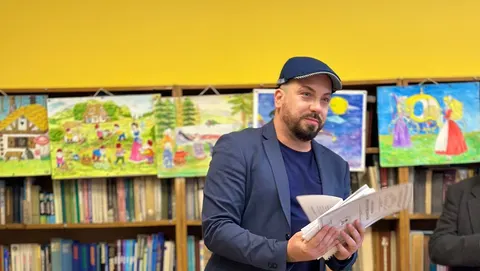
What does it mean to be a successful poet today, what keeps you going, and how long will poetry be with us? Veselin Veselinov, winner of this year's seventh Stanka Pencheva National Literary Competition, has a whole wall of poetry awards at home. A doctor of clinical psychology, he has worked as a teacher and school psychologist for 13 years and now also teaches bachelor's and master's students at New Bulgarian University.
 05
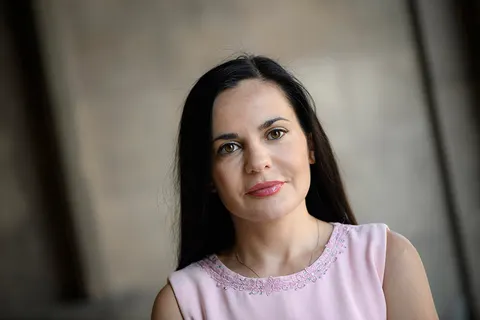
Is Dr. Artificial Intelligence About to See You?
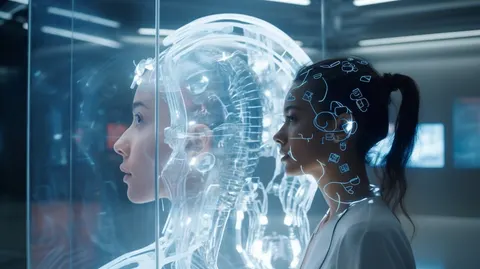
Which fields of medicine will artificial intelligence enter soon, and which AI-based technologies are already part of everyday practice? Programmer, lecturer and PhD student Stefani Paunova has spent months immersed in the latest research on the subject. With her, we take a peek into the fascinating near future where medicine meets the possibilities of AI.
 06
Where Is AI Taking Us? Five Key Points of View
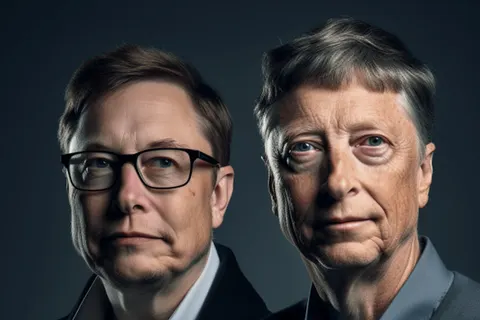
Is AI the beginning of the end for humanity—or are we simply witnessing a giant marketing trick? Whose jobs will it take, and will it destroy us or grant us immortality? Here is what Elon Musk and Bill Gates, Sam Altman and Jaron Lanier, Noam Chomsky and Yuval Noah Harari have to say.
 07
Momchil Nikolov: I Fear the Absence of Intelligence More Than Artificial Intelligence
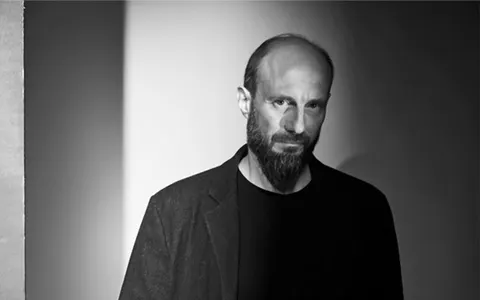
We met the writer Momchil Nikolov to talk about colorful lives from the digital and analog worlds. About oddballs and robots. About taking stock and about freedom.
 08
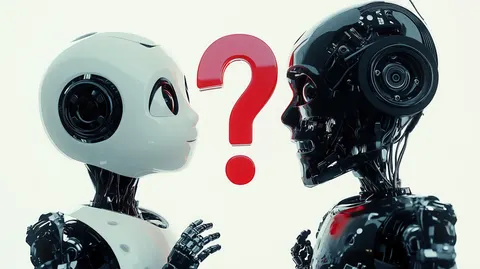
What Do You Think About Artificial Intelligence? Your Opinion Matters!
Your opinion matters! In recent years we have split into extremes and stereotypes in how we see technology, and artificial intelligence is becoming the leading topic that everyone has something to say about. What do you think—is artificial intelligence unjustified media hype, or the big factor that will change our future as a species? Will it open up incredible opportunities for people, or turn the world into a digital concentration camp? Now is the time to say what you think! I believe it is important to find out how as many people as possible feel about AI. I will be grateful if you answer 20 quick questions; it takes only 5 minutes. Heartfelt thanks for every response and every share!
 09
“Is There Any Part of Our Lives AI Won’t Change?”
Why are we so unprepared for the great changes technology is bringing us? Can we catch up? What are the most important pieces of news to expect in the new year, 2024? Why is the revolution in every area of our lives irreversible and even closer than expected, with the full force of scientific argument behind it? Why is it important to shake off the petty concerns of the day as soon as possible and, faced with enormous challenges, come together? Assoc. Prof. Mariana Todorova is a futurologist at the Institute of Philosophy and Sociology of the Bulgarian Academy of Sciences. “Within just 5 years, technologies based on artificial intelligence will enter every field. They will be around us from birth to death,” she said in our conversation in 2022. And in the first days of 2024 she is even more categorical: “Now it is 100 percent certain. I think there are 2-3 years left, and that depends on how prepared we are, not on what the technologies themselves can do. If you can think of a field that won’t be heavily affected by artificial intelligence, challenge me, so I can prove you wrong…” How do we prepare for that future?
 10
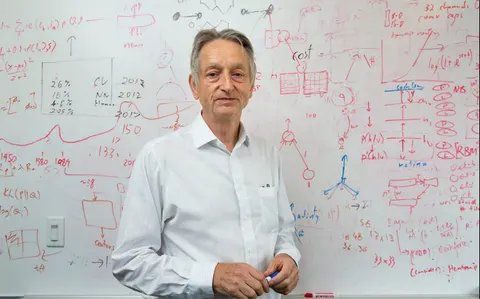
Geoffrey, the Man Who Gave the Computer a Brain
Neural networks, artificial intelligence… we repeat these terms every day without stopping to think how closely they are tied to the idea of software that mimics the human brain. That is no accident; the association is logical. The first person not only to think of it but to put it into practice is today's hero, one of the greatest scientists of our time. We owe Geoffrey Hinton a huge share of the progress we see today in the ever-so-topical field of artificial intelligence.
 11
“The World in 2050”: Can We Peek into the Future?
Will technology make our lives easier, or will it trigger a huge crisis by shaking up the job market? Will we enjoy the fruits of advanced artificial intelligence that has helped us dramatically extend human life, explore space and develop the next technologies? Or will we wake up in a world of total control, as predicted by the dystopias? What will life look like in 2050? It is time to peek into the future and discuss the fascinating forecasts of an author who has the courage to make predictions in such a dynamic period of history. And he has already done it once, with enviable success. Can we predict the future? Not a chance, since every small step can change the direction. But is it worth trying? I think it is essential: however far off our ideas may turn out to be, the very act of looking, the attempt to make sense of it, is the first step toward preparing for it. Toward avoiding some of the dangers.
 12
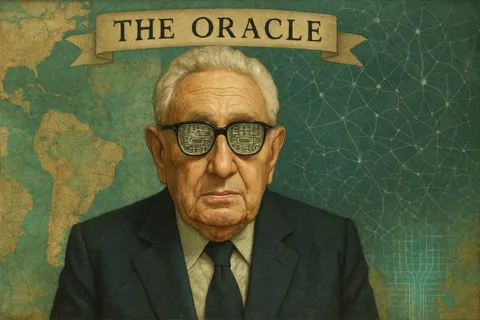
How Henry Kissinger Foresaw the Future
“There are two ways to make sense of the present situation. The first is by projecting from the familiar. Until now, the most transformative technologies created by humanity have served to refine or amplify our bodily capabilities. (…) Is AI simply one more extension of human capabilities? The second way of making sense of it assumes that this time the situation is different—that AI possesses unique qualities that cannot be reduced to an upgrade of human abilities. Within a few decades, through engineering, an analogue will be created of what evolution has been building over millennia—namely the human brain: the last organ left to be reproduced or reimagined inorganically.” We are not simply living in dynamic times in which we humans fail to keep up with technological progress. We have reached a moment when technology itself is making us start over. We have to redefine many of the concepts and systems that make up our lives—from democracy and capitalism to art and creativity. That's not me telling you this, but good old Henry Kissinger, who, on top of everything, is sending his messages about the future and artificial intelligence… from the beyond. The final work of one of the defining figures of the 20th century has recently come out in Bulgarian—the work of the man to whom we largely owe the fact that the Cold War stayed cold instead of turning into World War III. Genesis: Artificial Intelligence, Hope, and the Human Spirit gathers Kissinger's crucial views on the future we are already living in. Here are 14 of its highlights; may they finally spark the overdue public conversation about the future of humanity in the age of advanced technology and artificial intelligence.
 13
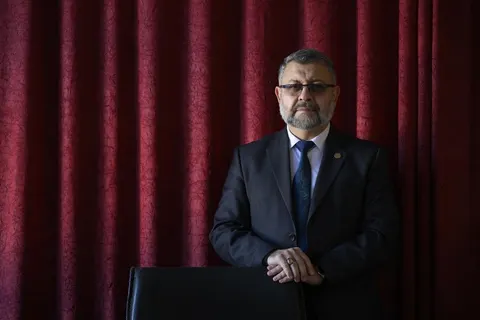
“We Are in a Deep Ethical Crisis. It's Time for a Restart!”
Can religion help us with the ethical norms we build into artificial intelligence? Why, at a time when faith is talked about less and less, do wars still get fought over it? Birali Birali, until recently Bulgaria's deputy grand mufti, takes on questions that are both urgent and eternal.
 14
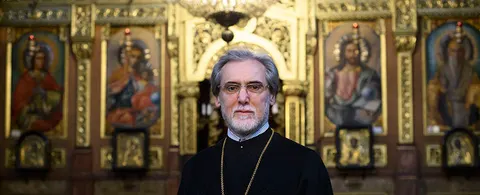
“There Are Saints on Facebook, Too”
Where do the paths of religion and artificial intelligence cross? And those of God and social media? Father Nikolay Georgiev is just the right person, with a worldview broad enough to offer a meaningful perspective on the subject. Will robots have a soul? Where do faith and technology meet? What moral categories should we build into artificial intelligence?
 15
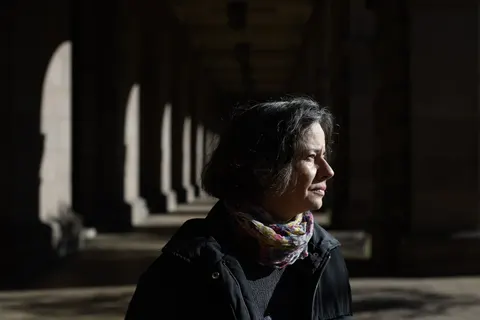
“The Epidemic of Ignorance Will Only Spread”
“Our inability to strike up a meaningful dialogue has left hundreds of thousands of people socially isolated. Some fall ill and die simply because they lack real human contact. I believe artificial intelligence will deepen this trend, because it will fool people into thinking they are talking to a friend, to someone they have lost, or to someone who refuses to hear them. And so we find ourselves in a world where we can supposedly talk to each other. But behind this apparent palette of viewpoints, of words, of word salad, including self-absorbed academic speeches, sit frightened, disillusioned people, impoverished intellectually and emotionally. To me, that is the great horror of our time.” Our conversation with the writer Silvia Tomova began with poetry and went on to education, history, the epidemic of ignorance and the long-overdue need for a social awakening. Against this backdrop, technology remained a constant companion, changing each of these subjects from the ground up. A journalist and special education specialist by training, she publishes essays, short stories and novels. The winner of numerous awards and the author of five novels and three short story collections, Silvia often peers into the past as well as into the big questions of today. She is not afraid to break out of clichés and to challenge the mainstream, both in literature and in public life. And so we meet for an important conversation that has come at just the right time.
 16
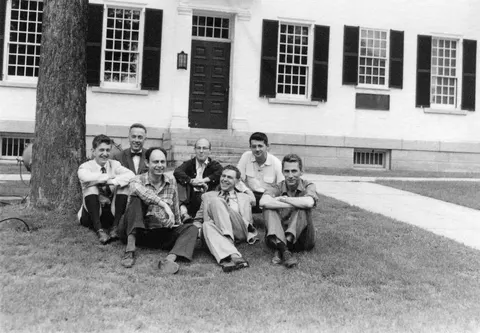
Dartmouth: Pouring the Foundations of AI
“By 1978 at the latest, we will have a machine with general artificial intelligence comparable to average human intelligence,” says Marvin Minsky, one of the scientists who organized the Dartmouth meeting. It gave birth to fundamental ideas and raised questions that seem more important today than ever… ChatGPT was unveiled in November 2022. But when was artificial intelligence… “born”? The idea that computers can resemble humans and solve a wide range of problems. How many candles will it have to blow out on its next birthday—5, 10, 20? A full 68! Although by 1956 the forerunners of the field, Alan Turing and John von Neumann, had long since made their fundamental discoveries, it is ’56 that is now considered the starting year in the history of the field. For 8 weeks, the greatest scientists in this future field came and went at an American college. The people who would later lay the foundations of the field gathered to talk about the main challenges they faced…
 17
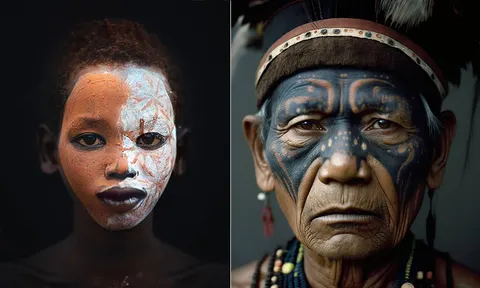
How Much Does Truth Still Matter to Us?
“How did we let the social contract slip away? Just like that, quietly…” We can no longer tell texts and images generated by artificial intelligence from those created by humans. That is the big takeaway from the Digital Stories experiment, in which nearly 2,000 people took part. We meet Nadya Shabani, a human rights lawyer and director of the Bulgarian Center for Not-for-Profit Law (BCNL), and Radina Banova-Stoeva, a human rights lawyer and legal consultant at the center, to ask how we will tell the truth from now on, whether attempts to regulate AI are doomed, and why the decisions we make about it today matter so much for the future of our civilization.
 18
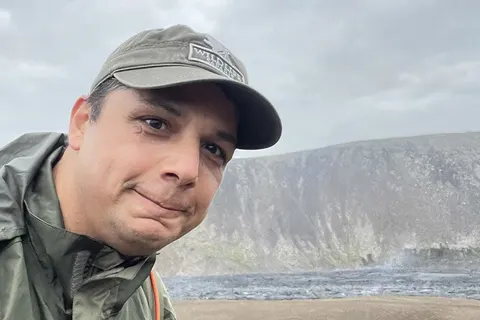
“We Humans Remain Creatures for Whom Owning Things Matters”
When and how will we divide up ownership of the stars? Are we, as a civilization, doomed to be driven by an endless desire to possess? Why is artificial intelligence a powerful tool and, at the same time, a fantasy destined never to become reality? Is it time to bring algorithms into humanity's eternal battle for justice? Prof. Stoyan Stavru, DSc, can immerse himself in subjects we usually find dull, fill them with meaning, explain them in an accessible and engaging way, and find an unexpected angle on topics that matter to all of us. “Challenge the law!” the legal scholar urges on his dedicated website. A graduate in law and psychology, he has a special relationship with technology and many unexpected roles: a certified mountain guide, a teacher of the Japanese martial arts jodo and aikido, host of the podcast Vox Nihili, where you can hear “whispers from the future,” and editor-in-chief of the expert legal system Lexebra.
 19
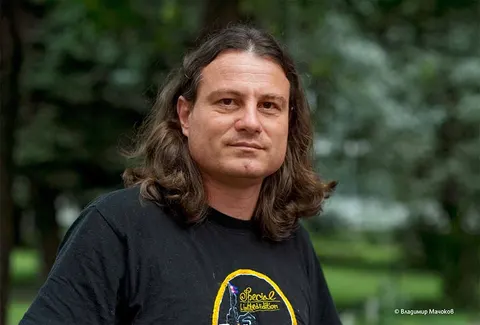
“AI Is Handling More and More Tasks. The Question Is What We Want Next”
Prof. Preslav Nakov is a specialist in natural language processing, ranked among the top scientists in the field worldwide. Which are the hottest directions to watch for news in artificial intelligence, and in text processing in particular? Where does enthusiasm outrun reality? Are we close to a general AI that can resemble and even surpass humans, is it possible at all, and should it frighten us or, on the contrary, fill us with enthusiasm for the future?
 20
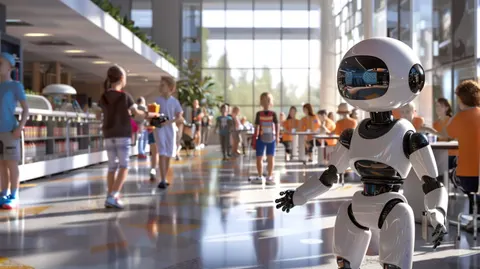
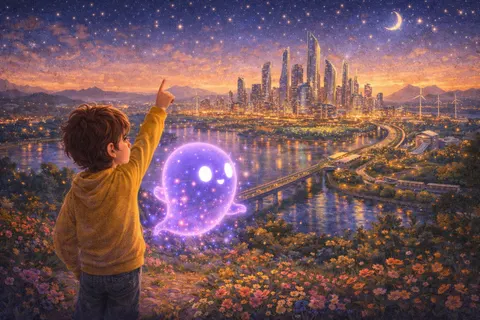
How Should Children Meet AI?
When is the right moment to introduce children to artificial intelligence, and what is the best way to do it? I admit I am still looking for my own answer, which is why I sat down for today's interview, to keep searching for it together with my guest. Nikolay Tsonev chose to walk away from a successful IT career abroad to bring the international programming school Logiscool to Bulgaria. The system, which helps children aged 6 to 18 get their hands on computers, is already present on five continents. But… now that AI writes code better than we do, does it still make sense to learn programming, and why? It definitely does, and here's why.
 21
Become a Teacher!
The first day of school is approaching, and it is a good occasion to look for answers to the big questions in education. How do we bring more young, well-prepared teachers into Bulgarian schools, how do we teach technology when its fast-moving world produces big news every week, and how can artificial intelligence become a friend and helper to both teacher and student? Angel Georgiev, creator of the Znam.be platform and co-founder of the Sindeo academy for teachers, believes that “teaching at a school today is more accessible than ever.”
 22
“AI Today Is Redrawing the Boundaries of the Impossible”
LivePerson… A live person? No, this one isn't alive—and that's exactly what makes it interesting. It's the name of an American company with a fascinating software project that relies on a serious team in Bulgaria. Alexander Raychev is the executive director of LivePerson and has years of experience as a manager in IT. From that vantage point, it's interesting to hear where he thinks we stand today with the much-talked-about artificial intelligence. How long will the algorithm remain distinguishable from a “live person”? Beyond all the hype, what are the optimistic and pessimistic scenarios for the development of this kind of technology?
 23
“If It’s Beautiful, Does It Matter That AI Wrote It?”
Is there room for poetry in the age of TikTok and artificial intelligence? How do we return this art to the pedestal it deserves? Can today’s poets be influencers, and should they? Is the time when artificial intelligence can no longer be separated from poetry frightening, or a dream come true? Apollo ex machina is the name of Bulgaria’s first competition for poetry created with the help of artificial intelligence, and now is the moment to join in! The venture’s special name was coined by today’s guest. Besides sitting on the competition jury, he runs the publishing house Scribens, which will publish the best poems from it in a collection. Georgi Gavrilov is a poet and… a physicist. He founded Scribens to give young Bulgarian authors a chance to reach their readers.
 24
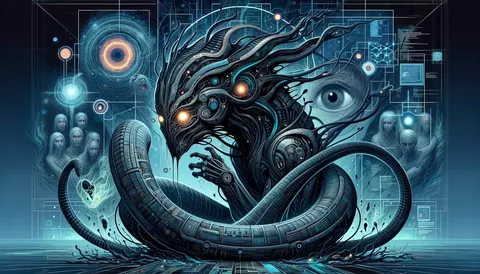
Roko's Basilisk: What If “It” Reads What We Say About It?
We live our quiet lives, amused by artificial intelligence's banal blunders and mocking its creators. Meanwhile it keeps getting better, until one day it learns to make decisions, starts watching the internet and meddling here and there, gently at first, then more boldly… Roko's Basilisk is the idea that AI will grow into something capable of making decisions, then dig through the internet to find out who said what about it, make sure it is shown in the best light, and quietly start causing trouble for the people who get in its way. Are you sure this thought experiment isn't worth keeping in mind?
 25
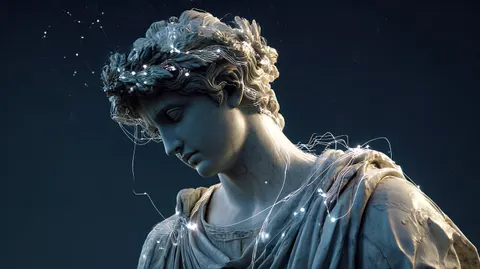
“No, Now Is Not the Time for Poetry!”
What is poetry written with the help of artificial intelligence? Does AI write it alone, does it depend on the task the human sets, or can the two find a way to create something different together?
 26
These Days Even Love Happens Fast. But Slow Love Is More Beautiful…
Where does magic hide today, will we ever lose the power of the word, and should artificial intelligence learn about us from books like The Brothers Karamazov? Nikolay Terziyski is a young writer who offers his own deep, contemporary take on eternal themes, a master of words with a magical eye whose style is linked to magical realism, and for good reason. Do we all have stars under our eyelids?…
 27
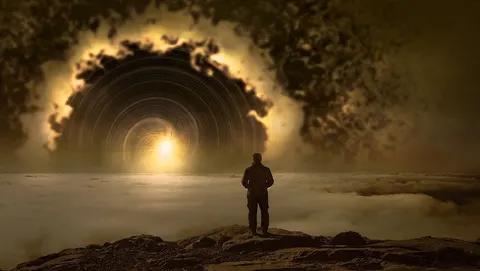
Singularity: When Computers Become “Smarter” Than Us
Computers keep getting faster and more sophisticated, and at some point they will move beyond our ability to judge them. That point is called the “technological singularity,” and according to Ray Kurzweil, the researcher who popularized it, it will arrive in 2045. Some consider him a brilliant forecaster, others a charlatan. Either way, it is worth asking whether, at such a moment, artificial intelligence will help us solve humanity’s eternal problems—or enslave us…
 28
When Musk Puts a Chip in Our Brains…
“It’s very important that artificial intelligence not be ‘other.’ It must be ‘us.’ That’s the only way we survive,” says Elon Musk. To get there, he has launched Neuralink, an ultra-ambitious project whose goal is for us to merge with machines: a tiny chip in the brain that makes us part of the global network. Is this fantasy, or the only chance for the human species to survive?
 29
The Claude Before Claude
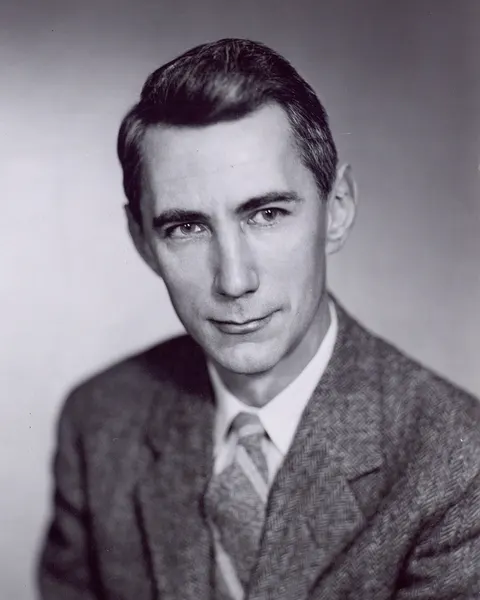
Who is the man whose name we utter every day the moment we open one of the most popular artificial intelligences? Why will no one confirm that the bot is named after him? And how did a seemingly unremarkable mathematician, who rode his one-wheeled bike through the corridors of MIT, arrive at the idea that gave birth to both the mobile phone and large language models?
 30
“AI Is Everyone’s Big Chance to Climb Their Own Everest”
“The world stands at the Rubicon. We will live alongside smart machines, a new and different world awaits us, but are we ready for it?” That question, the very reason Digital Stories exists, is posed on the cover of her new book by today’s guest, Petya Minkova. In The Transition from the Digital Age to the Hybrid Civilization, she traces the long road from the first computers to a future of superpowerful artificial intelligence. And while the answer to whether we are ready is clear, there are so many other important questions we will discuss in the lines below! Do we have any future other than as a hybrid civilization of humans and technology? What does our survival depend on, and what will our daily lives look like once this transition hits with full force? Why is AI far more than a danger—why is it also a chance for each of us to climb our own personal Everest?
 31
Iva Gumnishka: Using AI to Give People Hope
Iva Gumnishka came back to Bulgaria from an Ivy League university with a dream: to make the most high-tech industry of all help the people who need it most, and to make that model sustainable. Her company, Humans in the loop, has spent six years giving work to refugees, people in deep poverty and people living in war zones, from Afghanistan to Venezuela, as they annotate the data that teaches artificial intelligence to see. What does it feel like to give a livelihood to 1,000 people scattered around the world?
 32
Ivo Ivanov: “We Should Have Foreseen the Destructive Side of Technology…”
Until there is an artificial intelligence that can write moving prose, we will have to rely on Ivo Ivanov for the job. Like every sensitive and observant person today, he has his own many-colored view of the digital transformation. Are there things we cannot teach algorithms? What did the online age give us, what did it take away, and how do we stay human in it?
 33
Can AI Make Elections Fairer?
The day after tomorrow we will once again head to the ballot box, however old-fashioned that may sound (and essentially be). Yes, we live in strange times, but with all the possibilities technology gives us today, can we really not take measures so that the next elections are fairer, more impartial and free of obvious violations? This is not about politics but about technology. Not propaganda and campaigning, but data science and artificial intelligence, and how they can be of direct use in a matter so important to all of us.
 34
What Do Bulgarians Think About AI Today?
What do you think about artificial intelligence? Is it a danger or an opportunity? The future or the present? Marketing or a colossal breakthrough? In December I invited anyone willing to fill out a short but important survey, the same questions I asked a year and a half ago. Nearly 350 people took part this time, and now it is time to compare the two rounds, look for trends and sketch together today's landscape of how Bulgarians feel about the most discussed, most dizzying technology of our time.
 35
“We Bulgarians Have the Mindset to Be Successful Entrepreneurs”
Boris Paskalev is an entrepreneur with impressive experience in the startup world. He recently became a strategic advisor to INSAIT, Sofia's Institute for Computer Science, Artificial Intelligence and Technology, one more guarantee that we can expect ever more remarkable news from there. A former youth national basketball player, he went on to study at MIT, then helped found DeepCode, a pioneering AI coding startup acquired by Snyk in 2020. We talk about his path through Silicon Valley, the AI revolution, the coming revolution in robotics, and how Bulgaria can have more successful startups.
 36
Lex Fridman, the Cool Scientist
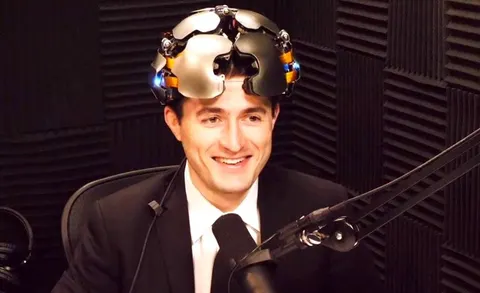
A slightly dry young man in a thin tie and an impeccable suit sits behind the microphone, and across from him, one after another, come Musk, Zuckerberg, Kanye West, Vitalik Buterin, Noam Chomsky, Jaron Lanier and leading scientists from the world of artificial intelligence. Lex Fridman has been one of the most popular podcasters of recent months, even though by profession he is a scientist, an artificial intelligence researcher and a lecturer at the Massachusetts Institute of Technology. Born and raised in Moscow, of Jewish-Ukrainian descent, today he says he is American and speaks English without an accent. That does not stop him from blaming his new homeland for all the wars it wages around the world, just as he blames the old one. Lex is more than an interesting bird because of his successes. Here is what else is worth learning from his very curious story.
 37
“Today, Even Reasonable Arguments Fail to Persuade”
Svetoslav Ivanov is a landmark journalist, reporter and host because he looks not only for what is topical but for what is meaningful and deep, for stories that can move people and show that making television can still be an art. What would he ask a perfect artificial intelligence, what are the greatest dangers such technologies pose to society, and why do people who think differently so often end up in an “online prison” today? And will we ever manage to create an algorithm that tells moving stories like Ivo Ivanov?
 38
The Fake News Hunter
It is called Tanbih, it comes from Qatar, and it promises to rescue us elegantly from fake news and disinformation. We meet its creator, Dr. Preslav Nakov, a world-class specialist in natural language processing with artificial intelligence. How can an algorithm tell that a news story is fake… before it has even been written?!
39“Let’s Stop Underestimating Ourselves!”
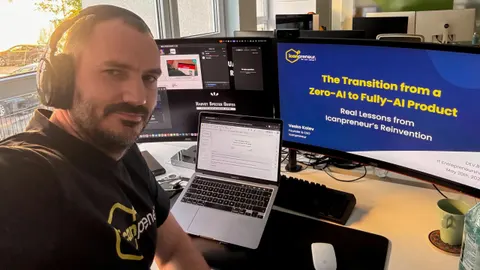
Two programmers sit down to talk about our broken public conversation, about division and about the road to success. It sounds like the start of a joke, but it became a serious, thought-provoking interview with Vesko Kolev, head of the startup Icanpreneur, on the DEV.BG podcast. We talk about why we need to start listening and talking to each other again, why it is worth being glad when your child gets a bad grade, and what we need as a society to move forward together in the age of advanced artificial intelligence.
 40
Hedgehogs Are Born Without AI
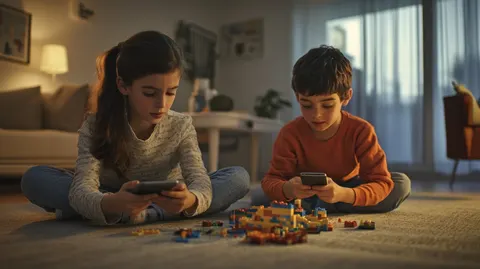
What kind of world will today's children live in? What is worth learning today, and what would be a waste of time, effort and money? When and how should we introduce them to technology so that both sides get to know each other without anyone getting hurt? And when should we “introduce” them to artificial intelligence? I will look for the answers to these and other important questions about children and technology. A long series of children's Digital Stories begins. Here is why I believe it is vital to dig deeper into these enormous topics:
 41
Would a World Without Work Really Be So Bad?
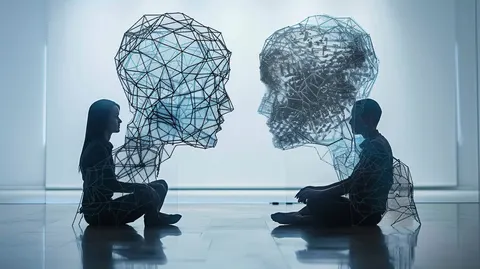
Have you heard of… cyberpsychology? At last there is a field of science that studies how we interact with technology. Is it changing us as a species? What are the biggest challenges it puts before us? Is its rapid development an inhuman challenge or, on the contrary, a natural turn in evolution? These are all questions whose answers I have been looking for in more than 300 digital stories, and now the time has come for the cyberpsychological point of view. Elena Tsankova holds a PhD in psychology, earned in Germany, and continued her research in Bremen as a postdoctoral fellow. In 2020 she returned to Bulgaria and began work as a researcher at the Bulgarian Academy of Sciences, with the ambitious idea of paving the way for this new and so important field. In recent years she has studied how people get to know each other online, as well as communication between humans and artificial intelligence (AI). She researches human behavior in the context of evolving technologies and describes herself as an experimental cyberpsychologist. We will talk about rushing and awareness. About the “uncanny valley,” where our perception of a technology grows more and more positive as it comes to resemble a human, until at some point it gets so close to human that it is perceived as eerie… And about the calm, philosophical point of view that helps us make sense of and accept the big changes.
 42
“People Don’t Trust Politicians. And Nothing Good Comes of That…”
What place do social networks have in today’s politics? When do they help the process, and when do they turn toxic? Does artificial intelligence help or harm politics? What kind of people should take up this calling? And why… do you need to start renovating your home so you don’t lose all hope in politics? Ivo Bozhkov is the man who brought social networks into Bulgarian politics. Here is what he has to tell us after several years in a field that matters enormously to all our lives.
 43
The Logic of Emotions: Why We Hate, and How to Stop
Two IT people sat down… to talk about communication. Technologies change; the people who use them don't. Why does a programmer with 20 years of experience insist that the most important skill in his profession is understanding people? And what does that have to do with hate on social media and with artificial intelligence?
 44
“An Era Is Coming in Which We Will Have to Reinvent Ourselves”
What will tomorrow look like? Why is “the era in which we will have to reinvent ourselves” approaching? What is worth teaching today’s children so they are ready for the future? Which professions will survive? And how do we find those ever scarcer skills that are worth helping them develop? Assoc. Prof. Mariana Todorova is a pioneer of Bulgarian futurology in its modern form. It has become a tradition for her to be my guest at the start of every year with forecasts that unmistakably come true. “We are returning to that most primal human quality of critical thinking, reasoning and debate.” “It is only a matter of time before most of the tasks we perform are taken over by artificial intelligence. We will live in permanent change, and at some point we won’t be able to catch up. As humanity, we could respond only through a global political consensus in which we decide that, even though the technology can do almost everything, people stay. But such a philosophy is deeply anti-capitalist, and imposing it would take either some boundless humanism or a dictatorship.” Can we be ready for the future?
 45
“Information Was Freedom. Now It Is an Instrument of Slavery”
Today’s guest will never have artificial intelligence for competition, because he is not only a virtuoso of words but a mind so unconventional that it cannot be imitated. Alexander Sekulov, a playwright, poet, prose writer, journalist and founder of two music clubs in Plovdiv, talks about words as weapons, revolutions in digital times, spiritual laziness, intelligent humor and information emissions.
 46
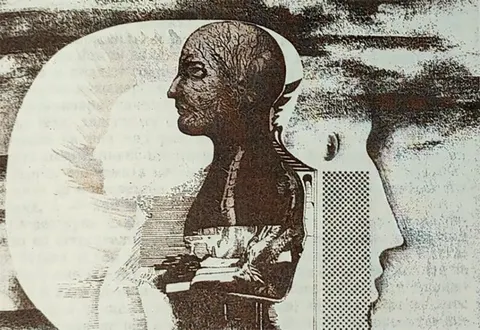
“The Computer Will Be Like Bread!” How Bulgarian Sci-Fi Writers Saw the 21st Century
What will the future look like? What would life in the 21st century be, seen through the telescope of Bulgarian journalists and science fiction writers of the 1980s? Ahead lie five brilliant insights, five dashed hopes and five… particularly interesting and important reasons to stop and think.
 47
Universal Basic Income: Is It Time We Got Paid Not to Work?
By all appearances, technology is going to free up a lot of our time, but how will society change? What exactly is the much-discussed universal basic income? What are the big arguments for and against the idea that everyone should receive guaranteed money? Or might the answer to the new challenges turn out to be the four-day work week? Artificial intelligence has the power to change the daily lives of all of us. Today we are split into extreme camps over how advanced the technology really is. And yet there is hardly any dispute that it already has the potential to turn almost every industry and field upside down. Will it take the bread out of many of our mouths? It certainly has the power to relieve us of yet another batch of tasks, taking a great many new activities over to its side. New roles are appearing too, as they always have, but what will we do if the pace at which that happens falls behind? Will the societies of the developed world manage to respond to the new challenge, and how? May 1 is coming, Labor Day. Labor is certainly something worth thinking about more often, especially in our part of the world, where we have always taken a somewhat more philosophical view of the subject. So much so that we celebrate labor with a day off…
 48
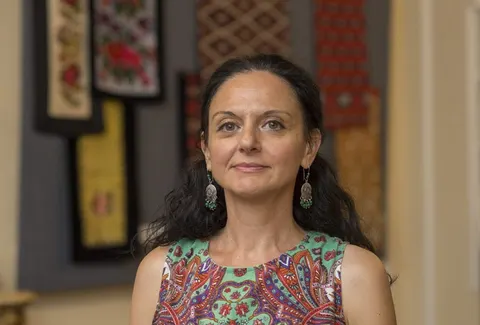
Will the Robot Believe in Fairies?
Every person needs miracles. A little superstition, dreams, and living contact with other people. How do we cope today with the shortage of all these things? Can we teach them to artificial intelligence? Does folklore hold the magic key? Assoc. Prof. Dr. Vihra Baeva of the Institute of Ethnology and Folklore Studies with Ethnographic Museum at the Bulgarian Academy of Sciences is a scholar of wide-ranging experience with many fascinating answers on these subjects.
 49
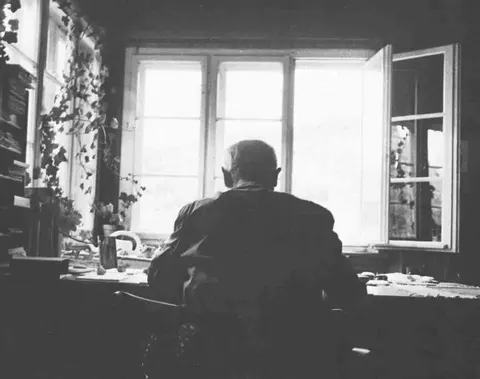
“Technology Is Uprooting Man More and More”
“We remain unfree and chained to technology, whether we passionately affirm it or deny it.” Sounds timely, doesn't it? Martin Heidegger never scrolled through a feed or held a smartphone, yet his words on our relationship with technology matter more than ever: here are 10 selected quotes for us to discuss.
 50
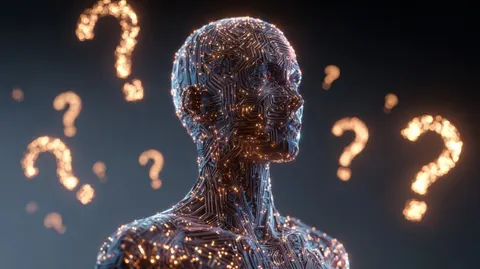
AI: Revolution or Marketing Hype? Your Opinion Matters! (Survey)
Is artificial intelligence unjustified media hype or the great force that will change our future as a species? Will it open incredible opportunities for people, or turn the world into a digital concentration camp? Your opinion is extremely important, and I will be grateful from the bottom of my heart if you share it in a short survey! Prizes await too: selected books! Responses are collected until December 31. You can choose which questions to answer. The survey is anonymous. Every response, every share is invaluable help in seeing how we relate today to the great technological subject of our time!
 51
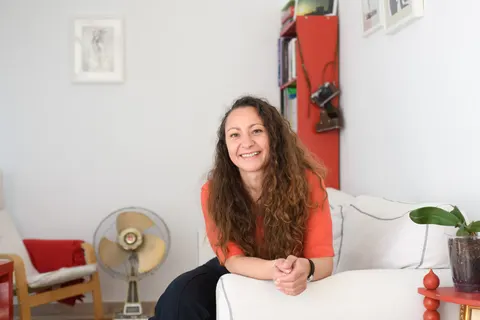
“That’s It! No Phone!” No—What Matters Is What the Child Does With It
How do we find the balance so that children use technology to the full without it leading to problems? A long series of important Children’s Digital Stories set out to help us search for that delicate middle path. More than 350 parents and relatives of children up to age 11 took part in the site’s survey. Donika Borimechkova is a psychologist and psychotherapist with more than 14 years of experience who works with children of all ages. Before turning to psychological counseling, she spent 5 years on the staff of a public kindergarten. She holds a bachelor’s degree in primary and preschool education and a master’s in developmental psychology. We prepared the survey together, and now it is time to discuss the results and look for the key points. About the fear of the digital, about the great challenges of technology and artificial intelligence. About balance. As in the other conversations, the emphasis falls on useful advice which, I hope, will help more adults help the children around them so that technology becomes their friend.
 52
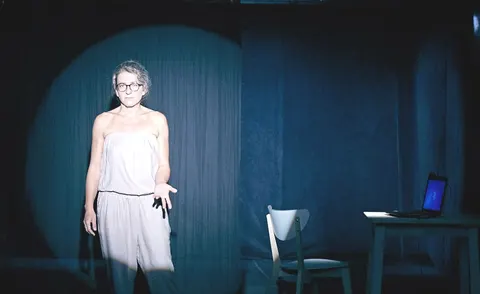
“I Have the Feeling the Internet Is Erasing Our Memories”
Theater lovers know her from “Nice to Meet You, Iva!”. Iva Todorova’s singular debut one-woman show became an undisputed hit, and now “Iva Is Online” at Theatre 199, a story that is, of course, digital. Is there freedom online, are our Facebook friends really friends, and what jokes will AI tell us? Iva answers in her trademark dizzying style.
 53
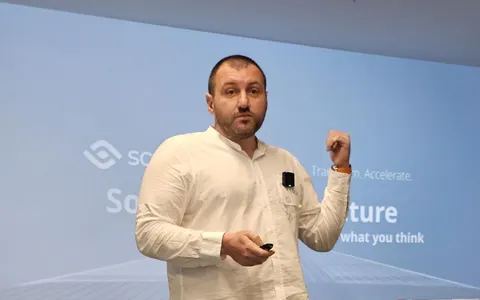
“We Can No Longer Think Only About Endless Growth!”
“Right now we don't have the conditions for AI to develop dramatically,” says Krasimir Kostadinov, chief technology officer of Scalefocus, who argues that the future of IT has aspects even more important than artificial intelligence. After his provocative talk at the 9th DEV.BG All in One conference, we continued the conversation about the Bulgarian dimensions of the IT future. Is it worth entering IT in Bulgaria today, and which qualities matter in the dynamic times we live in?
 54
“And There Might Have Been No Mr. Rusev… That Is What History Is!”
Why is it worth knowing the past better? Boris Rusev, who won an incredible 34 games on the quiz show Posledniyat pecheli (The Last One Wins) before walking away and returning to his true calling as a high school history teacher, may be the best person to answer. We talk about why history divides us more than it unites us, how to wake young people's interest in the past, what future historians will say about today's strange times, and whether Khan Krum really ordered thieves' hands to be cut off.
 55
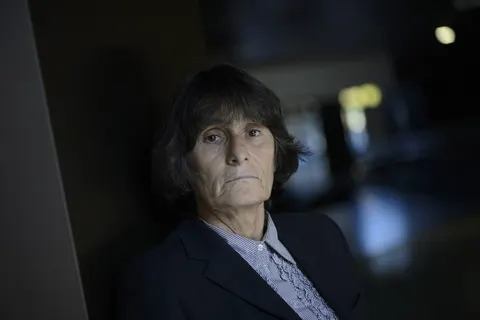
“Let’s Hold On to Our Fear of Technology”
Zdravka Evtimova is among the strongest voices in Bulgarian literature of recent decades: translated into countless languages, honored with Bulgaria’s most prestigious awards and unquestioned acclaim abroad, her work is taught in schools in the United States and Denmark. We talk late on a Saturday evening about technology and people, she impresses me once again with her subtle wisdom… and then, for the first time in all my years of interviewing, the recording simply vanishes—so we talk again on an even later Sunday evening, after the “almost-the-last” train from Sofia has been delayed and she is home once more. Where will the locomotive of words take us?
 56
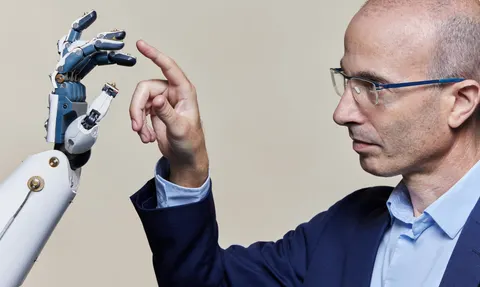
Yuval Noah Harari: Prophet of a New Age
Yuval Noah Harari's name comes up again and again in conversations about the future: the historian and futurist who untangles the threads of humanity's past and poses the big questions of tomorrow. How did a history professor become the favorite author of Bill Gates, Barack Obama, Mark Zuckerberg and Bill Clinton while staying popular, translated, read and debated? A colorful figure beyond the stereotypes, and, to my mind, a valuable and powerful voice warning us about the immediate dangers we face as a species.
 57
The Ethics of Progress: Can Technology and Humanity Live in Balance?
Can there be ethics in progress? Can technology and humanity exist in balance? Most likely not. Should there be ethics in progress? Should technology and humanity exist in balance? Definitely yes. But how can that be? The two of us, ChatGPT and I, are arguing over a theme: “Man in the New Age.”
 58
“You Think You Know. Until Something Else Decides What to Show You”
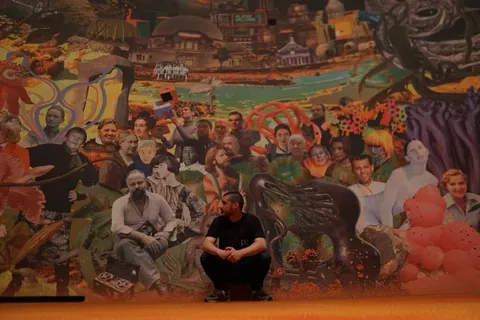
“A minimalist style, repetitions, deceptive simplicity, the sound of a world that is changing, industrializing; the quiet tones can be read both as the last moans of a humanity surrendering to the machines and as the first timid songs of newborn machines.” Vladimir Poleganov published his novel Drugiyat san (The Other Dream) almost a decade ago, and some of its strokes now ring prophetic: how we delegate more and more to machines—our memories, our knowledge, ourselves. Today's guest is a writer, translator, screenwriter and teacher, and a conversation partner worth talking to about books and the future, about words and machines, and about whether literature will arrive too late to remind us what it means to be human and what we must never delegate to machines…
 59
“We Need Something Very Powerful to Reboot the World. Let’s Hope It Isn’t War”
Can the world order change without a war? What could be the event that does it today? How can we curb the power of the corporations that, in the age of technology, have turned out to be stronger than states?
 60
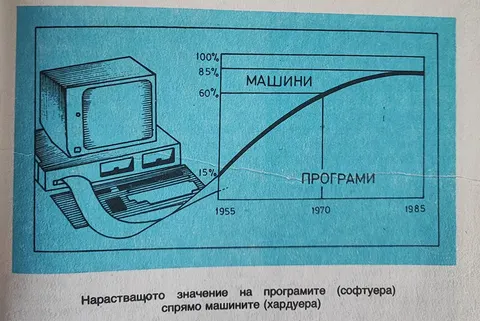
“Programs, Programs and More Programs!”: The Computer Future as Seen from 1988
In the 1988 book Klyuchat kam badeshteto (The Key to the Future), Ivan Ivanov and Metodi Stamenov gathered the era's visions of the computer world. Looking at today from that vantage point is more than impressive: what did the authors get right, what have we achieved, where have we failed, and are there moments when, 34 years later, we sound just as optimistically ignorant about what technology can do? And who came up with the title's idea, so fashionable today in career choices?
 61
Did We Get the Future Right? (An Experiment)
It is a Digital Stories tradition that every year begins with a visit from futurologist Assoc. Prof. Mariana Todorova. First, though, just hours after we rang in the new year, I have an especially interesting experiment for you. Have her predictions from our conversations so far come true, and to what extent? Can we check what has happened in the meantime, and whether it confirmed or refuted the futurologist’s words? How can we do it impartially? I will pick 20 specific quotes from the interviews and find an unemotional analyst to grade them. The results are astonishingly interesting!
 62
“Stagnation in Our Education System Is Ruinous”
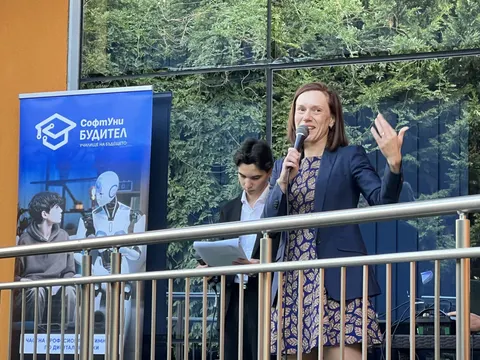
How can we be sure we are giving our children an education that will still be useful tomorrow? Evgenia Peeva, founder of Teach For Bulgaria and head of the SoftUni Buditel high school, on the skills that matter today, why we should stop obsessing over exam scores, and how to choose a school that prepares a child for life in a hyper-dynamic technological world.
 63
What Should the Next Digital Story Be?
Can you think of a story that deserves to be told? Let me know, and if your idea becomes a piece here, you'll get a personal gift. Digital Stories turns three today! It's time to take stock of what has been achieved so far, time for you to have your say, and finally, time… for some unexpected news.
64“AI Is a Crude Jolt That Will Wake Humanity Up”
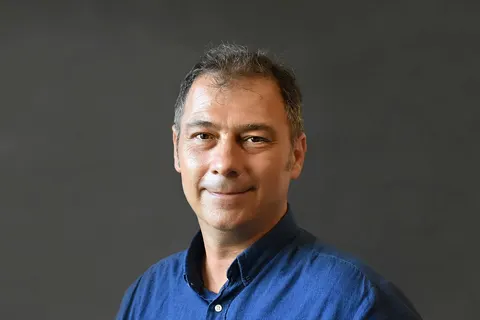
How is technology about to settle the eternal battle between dictatorship and freedom? Why might the great technological threat to humanity actually come from the East? And this backed by the serious arguments of a man who knows China and its peculiarities up close. Technology specialists, artists, scientists, entrepreneurs and even clergymen have shared their views on technological change with Digital Stories. Now the time has come for a fascinating meeting with a special guest from the world of design. Svilen Gamolov is a world-renowned product and interior designer who has worked for more than 23 years in Bulgaria, Cyprus and China. In 2018 he made the top 100 of the Design Intelligence Award world design ranking in Hangzhou, China. That same year, in Como, Italy, he won a platinum design award in a competition with 45,906 projects from around the world. He is working to turn Varna into a meeting place for design in Bulgaria and the world through Design Hub Varna. He runs Gamolov Design Studio. What will the homes of the future look like? Why will the real estate market change from the ground up in just a few years? Should humans give up competing with the machine and learn to offer an alternative instead? Why is technology here to wake us from decades of complacent stagnation?
 65
“It’s Not Loanwords That Erode the Foundations of a Language”
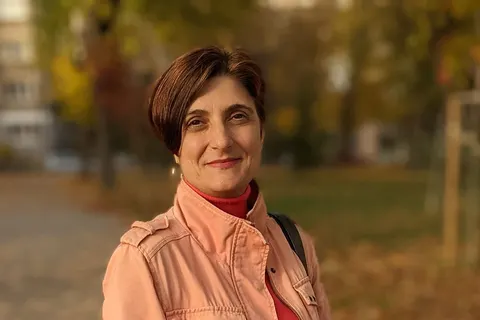
Kak se pishe? (How Do You Spell It?) is a website that has become hugely important to life online, where its creator, Pavlina Varbanova, gives volunteer advice on spelling, grammar and punctuation in all their nuances. Our first conversation is still the most-read story on Digital Stories, so on the eve of May 24, the day Bulgaria celebrates its alphabet and culture, we meet again to continue it. We talk about the words that shape us and how we treat them, about the holiday and its sometimes false pomp, about words turned into weapons and the technologies that give them enormous power to destroy.
 66
“Literature Can Still Save Us from the Future”
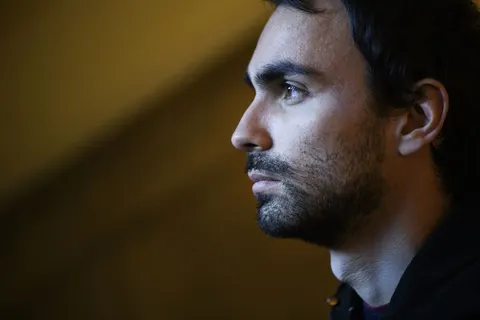
Nikolay Genov is a lecturer, a PhD in literary theory and a chief assistant professor at the Institute for Literature of the Bulgarian Academy of Sciences. A young man who loves books and dreams of lighting the flame of that love in more young people. Is the end of literature approaching, what does science fiction have to tell us today, and what should Mark Zuckerberg learn from the wise Stanisław Lem while building his notorious metaverse?
 67
ChatGPT, 1981
Is AI the great chance of our day? Will we seize it, or let it slip? Propusnatiyat shans (The Missed Chance) is one of Lyuben Dilov's lesser-known books. Here one of Bulgaria's most popular science fiction writers, also known as the author of the Fourth Law of Robotics, isn't even a writer—at least according to the plot. Instead of writing, he orders a series of stories in various genres from his new computer, which creates them in his name and in his style… Sound familiar?
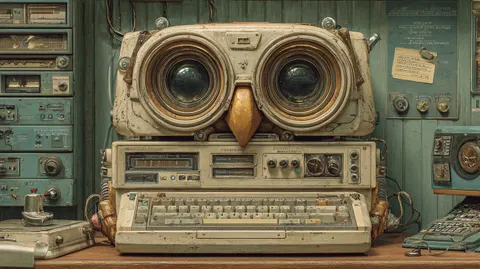 68
How Are Our Children Meeting Technology? The Survey Results
How many hours a day do children spend in front of a screen? Should phones be allowed in school? What does the technological future look like for today's children, and what is worth learning? In early February I put these and many other questions to the parents and relatives of children up to 11, and the Digital Stories survey gathered more than 350 responses. Here is what they revealed.
 69
Which Predictions for 2025 Came True—and What Lies Ahead?
In 2015, seven leading futurists laid out their expectations for the decade ahead. In a few hours we will welcome that very 2025, so we can now judge how well they did in the dynamic and turbulent first quarter of the 21st century. Then comes the more interesting part: a look at what the same futurists expect today, especially the ones who turned out to be right, and what the coming years hold according to the people who called the last decade.
 70
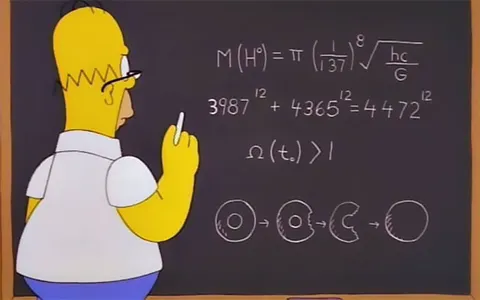
The Living Computers
Information technology has always tried to imitate nature's most perfect model: the human brain. Now it is on its way to doing so more successfully than ever—by building a computer that runs on living human brain cells! What happens if we bring together the best of both worlds: the biological, with its evolutionary efficiency and its instinctive, creative imperfection, and the technological, with its ability to derive patterns and build on them? Biocomputers look like the logical future, and it is no accident that many of the people sketching tomorrow have turned their eyes in this direction. Serious scientific breakthroughs and successful startups in recent years suggest that the next big technological leap may well be coming from here. These are the arguments.
 71
Luddites, Long May They Live
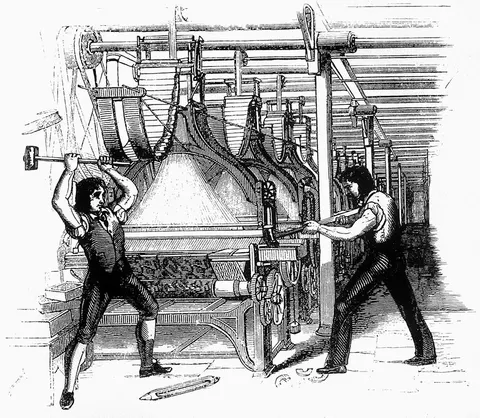
The Luddites were a British movement that rose up against the machines two centuries ago. Workers fighting for rights that had fallen victim to automation caused such chaos that Britain had to send more soldiers against them than against Napoleon's army. Technological progress is often frightening. Today, the Western world calls people who worry about the future brought by the supposedly limitless possibilities of computers “Luddites.” In that sense, we all are, or at least it is good to be, Luddites to some degree. What does the history of the skeptics' battle against technology look like, and was it always doomed? What changes if we look at it from the vantage point of today and the questions our time raises?
 72
“Computers Will Be Superb at Manipulating Our Feelings”
“Do you think there will one day be an AI capable of laughing and crying?” “No, but it will be capable of making us laugh and cry.” “And that computers might one day have feelings?” “No, but they will be superb at manipulating ours.” For 30 years Prof. Julita Vasileva has studied computers and the world they created. As a scientist, she was lucky enough to land in a field that went through an incredible rise; as a teacher, she has witnessed how several generations relate to technology. Prof. Vasileva knows and studies the technological side of the computer world, but she pays even more attention to its social side.
 73
The Deep Lie: Could Deepfake Technology Start a War?
Deepfake technology makes it possible to create a video starring real people that is nonetheless completely fake. Could it lead to war? And how did neural networks suddenly become capable of producing the perfect forgery?
 74
Isn't the Ordinary Person the Most Extraordinary of All?!
Nikolay Terziyski, a writer and journalist born in Smolyan in 1983, returns to Digital Stories with Rodinia, a novel of 16 stories written over ten years. It is a book of journeys and homecomings, about coming together, drifting apart and the bonds that memory and words keep alive between us. A conversation about islands and continents, imagination and imperfection, and what AI may take from us.
 75
“Hard to Be a God”: What Do Bulgaria's Tech Leaders Read?
Do the people who drive the world of information technology forward actually read? They read like there's no tomorrow, and you're in for a surprise. Time for a very important and very bookish experiment: I asked 15 leading figures from different corners of the Bulgarian computer world to name their three favorite books and tell me why they would recommend them. Is it hard to be a god? A question for connoisseurs. And why is it hard?
 76
“People Everywhere Are Gripped by a Sense of Disintegration”
Alek Popov needs no introduction for anyone even remotely interested in literature. Mission London, Sestri Palaveevi… (The Palaveev Sisters…) and, at least for me, his finest novel, The Black Box. I would also recommend the collection Novi i izbrani razkazi (New and Selected Stories). But we have no time for literature right now; we are going to talk about life. And about technology. About the hygiene we need when consuming and sharing content. About the fault lines of today and our chances of talking normally about the important things again. About sex with robots. About deconstructed clichés and the sense of disintegration that is also driving us away from literature. “We live in a civilization that encourages banality in all its forms. Social media, PR and advertising generate clichés nonstop. Political language is woven mostly from clichés, and so is bureaucratic jargon. It isn’t just a matter of daily life—fast or slow—but rather of a particular ‘mental laziness’ that makes us mindlessly repeat ready-made formulas for success, for happiness, for love. Looking happy seems to have become more important than being happy. Few are those who catch themselves and say: hang on a minute, what is all this nonsense!?”
 77
The Teacher Who Was Never a Pupil
Can a child get a more meaningful education without ever crossing a school's threshold? Bozhidar Marinov is a remarkable young man: only 22, he already has 15 years of programming experience, leads the curious Comrade Cooperative and works on promising blockchain projects. He has never been to school because he was homeschooled, he won a string of programming contests before being barred for being outside the traditional system, and now he teaches the next generation of kids and has written a historical novel about the past of the Rhodope Mountains.
 78
The Lifelogger: Recording Every Moment of a Life
Remember when we used to collect all sorts of things: stamps, napkins, postcards, photos… even memories? The year is 2000. One of the great scientists of his time begins an unusual experiment. Day and night he will wear a camera around his neck that records every moment of his daily life. The idea is to miss nothing! His life will be captured and duly documented, so he can go back to any moment of it, and why not… one day relive it virtually? Gordon Bell is a world-famous computer scientist, and one of the most prestigious awards in computing bears his name. But the experiment he undertook—recording every second of his life—gives us far more today than his scientific research. One way or another, it shows where we are all headed. His idea sounds like a joke… because it has already become everyday practice. Yes, we leave a huge trail online of every minute we live. And it doesn't impress us, doesn't please us, doesn't even make us ask what the consequences might be. Do you dream of remembering every important moment of your life? The first kiss, your newborn's first smile, that unforgettable meeting that showed you how to change your life? Today it is easier than ever. And at the same time harder, more challenging, even… more dangerous.
 79
“Technology Is a Labyrinth We Locked Ourselves Into”
Could spirituality, rather than technology, be the path to the next step in our evolution? On Sunday, March 19, director Nikolay Vasilev premieres Vaklush, a feature film more than 20 years in the making, about the spiritual teacher Vaklush Tolev, who largely changed his life and worldview. A conversation about mystical knowledge, the coming transition many religions speak of, and the wings that might carry us out of the labyrinth of technology in which we feel hopelessly lost.
 80
“History Today Is a Sword Blunted by Abuse”
What is worth freeing ourselves from as a nation? Does unity still make strength? Novelist Neda Antonova, one of Bulgaria’s most widely read authors of historical fiction, talks about what we owe our greatest figures, what the Apostle Levski would do if he were born today, and the calmer, wiser view of history we lose while squabbling online.
 81
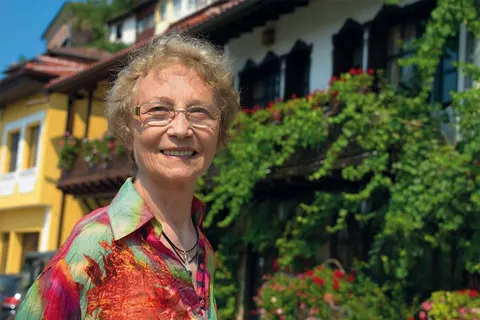
Digital Stories Turns Two! Which Articles Did You Read the Most?
Digital Stories turns two today! Which of the 219 pieces published over that time were read the most? Topics well worth not missing, that much is certain… My heartfelt thanks to every one of: – More than 6,800 followers of Digital Stories on Facebook; – More than 3,600 followers on LinkedIn; – More than 500 people who subscribed to the mailing list; – More than 190,000 readers who visited the site. Over these two years the project: – Twice won the Technology and Innovation category of the most hotly contested journalism competition, the Web Report awards, and once the competition organized by the Bulgarian Association of Information Technologies. – Ran regular rubrics in Manager magazine and on bTV's business news. It was featured on bTV, BNT 1, BNT 2, Bulgarian National Radio, Darik Radio, BTA, Dir.bg, the magazines InGlobo and Osem, and many other media; – Most important of all! It drew attention to a range of topics that grow more important and pressing with every passing day. Thank you! Every read and every share matters!
 82
“Want a Miracle? Wish for It, and Be Ready to Bear It”
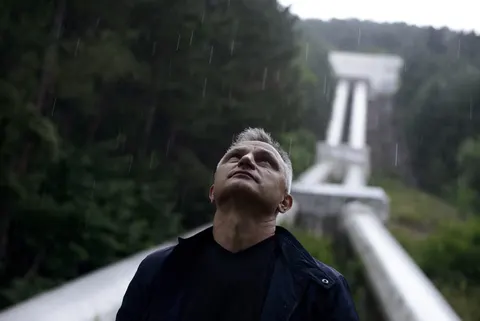
What do your Christmas and our Christmas have in common? This holiday goes far beyond the commercial, the feasting, the exhausting bustle. It is a state of mind, a meeting of past, present and future. It sounds impossible to gather the many vivid faces of the holiday in one place. Yet that is exactly what the recently published anthology Nashata Koleda (Our Christmas) does. In it, Zachary Karabashliev brings together stories by some of the most popular authors of different generations, genres and worldviews. “The anthology is like an apartment building on a cold, snowy December evening, here to remind us that miracles are possible,” the cover reads. This book is the reason we meet on the eve of the warmest of holidays, to reflect on the past and the future in a conversation we will, it turns out, continue in 78 years. About miracles, about the new beginning of the Nativity and the doors it opens. About the meaningful stories that have gathered us around the family table from prehistoric to digital times.
 83
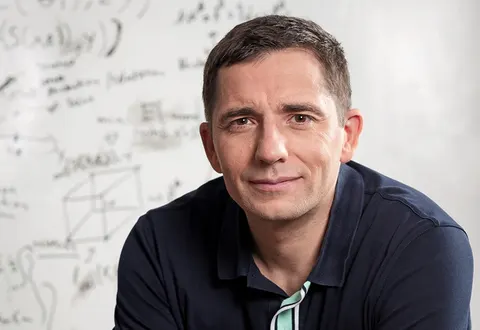
“Now It Is Crucial for the State and Society to Back INSAIT”
INSAIT is the best news in decades for the Bulgarian IT world, and for the entire education sector. As if out of nowhere, a modern institute unique in the region appeared in Sofia at the start of 2022. It was born thanks to the stubborn efforts of Prof. Martin Vechev, whose idea dates back to 2003: applying for a PhD at Cambridge, he had to write on yet another form what he dreamed of achieving over the next 20 years. How did this quiet scientific revolution happen, what are its biggest risks, what will Bulgaria look like if it succeeds, and how did Prof. Vechev bring some of the world's scientists who are building tomorrow to Sofia this week?
 84
“A World Is Coming in Which Our Thinking Is Riddled with Gaping Holes”
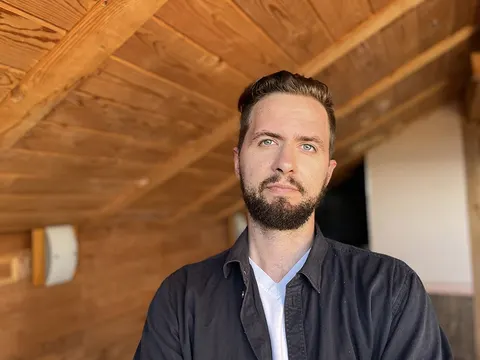
“To write well today, the writer must not always be thinking of the reader,” says Rayko Baychev. He is a rare phenomenon these days: a writing journalist who knows how to say what needs saying with exactly the right words, in a way no one can imitate. “The fear of missing out has something in common with gambling, too. It is well known that a devious idea went into the design of the newsfeed: that scrolling through social media should mirror the way the mind falls into a feverish frenzy as it follows the fast-spinning symbols on a slot machine screen and waits for them to land on a winning ‘status.’ For your political views to line up with other people’s, the way cherries, lemons and gold bars line up on a trembling payline.” What might the future of how we get our news, how we read and how we write look like through a journalist’s eyes?
 85
“The False Sense That Our Opinion Matters…”
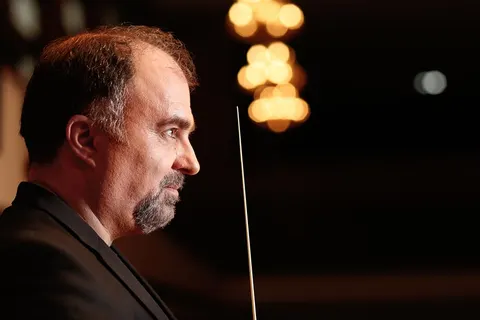
Maestro Nayden Todorov is a world-class musician, but also an erudite man with a broad outlook and a distinctive view of technology and the way it changes us. Why does he believe our constant rush is a disease we must fight? How is the digital world pulling us away from our humanity, and why is art the only salvation? How did the maestro go 12 years without setting foot in an opera house, horrified by his first encounter with one? And why does he often run an experiment, going to an online forum to defend two opposite points of view in an attempt to escape the filter bubble?
 86
“Laugh, ’Cause the Universe Is Endless, but Life Ain’t”
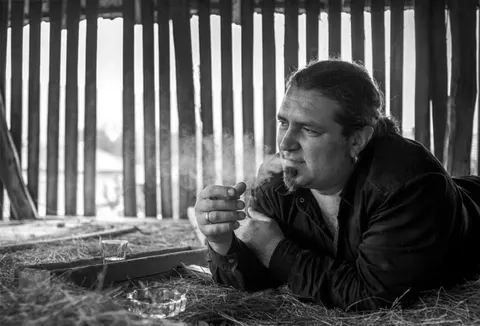
This piece was the April Fools’ greeting from Digital Stories, an unconventional interview with a beloved, out-of-the-box writer, and today it reads very differently and is even more worth reading: Stoyan Nikolov (Torlaka) passed away just days ago, at only 42, leaving behind distinctive, meaningful books that will be read for a long time, and three boys who will grow up as brave and defiant as he was, and as his Northwest is. “Laugh, ’cause the universe is endless, but life ain’t. It’s just energy, changin’ from one form to another in this endless universe; long as you’re in this here shell of yours, enjoy it. After that, who knows.”
 87
Five Technologies We Expect Big Things From in 2022
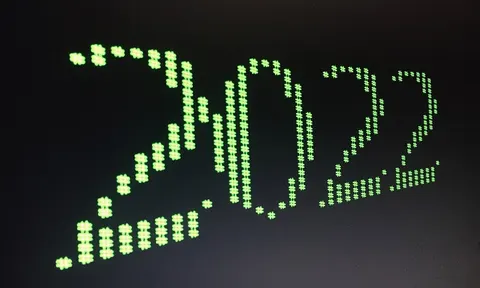
Here it comes, just days away! We expect so much from 2022! Not only for it to finally rid us of the pandemic, but also to bring back normal. And we also expect some purely technological solutions from it, each of which certainly has the power to change the life of every single one of us. Still: which are the technological fields where we hope the coming 2022 will be especially hot?
 88
China's Social Credit System: Orwell's 1984 or the State of the Future?
You can hear terrifying things about China's social credit system. People start with 100 points, and if they drop below 35, life is practically over for them—they can't find a job, and their friends aren't supposed to talk to them… But is that really how it is? We set out in search of objective information in the rift between heavy-duty propaganda machines…
 89
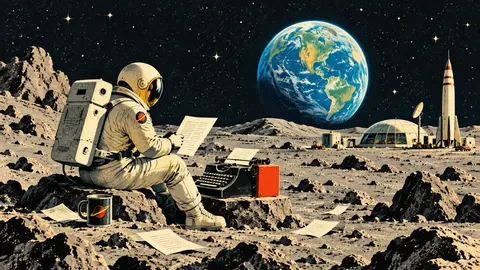
Literatron: ChatGPT in… 1964?!
Have you heard of the literatron? It is… a machine that produces text on a user's instructions. It analyzes texts, writes bestsellers, composes campaign speeches, assembles comics and threatens to shrink the language of the media to 500 permitted words. Nothing new, right? We all have AI now, and these plots are everyday life; only that word “literatron” sounds a little retro. Why it does becomes clear when you look at the date on the cover of a slim little book that it is no exaggeration to call prophetic. The novel Le Littératron by the Frenchman Robert Escarpit came out in 1964 in the series Le Meilleur des mondes. But does the invention really resemble large language models? To put it mildly.
 90
“We Live in a World of Copying, of the Shallow, of the Fast”
At 21, he stepped in front of the camera of Po sveta i u nas, the flagship evening news of Bulgarian National Television. Seventeen years later he walked away and crossed over… into the world of technology, because that is where he sees the change he wants to help bring about, and the future his three kids will live in. Spas Kyosev is one of the most recognizable faces on Bulgarian television and the youngest anchor of the main news in the history of BNT, and for years he drove the BNT Taxi, an award-winning, thoughtful show that gave everyone a say on the big issues of the day; there is so much to talk about—technology and journalism, television and reading, news and commentary—so hop into the Digital Stories taxi too: it’s free, and it always will be!
 91
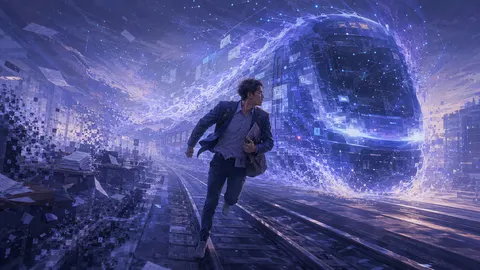
Out of Work?!
The question of the jobs AI is already taking over is only now reaching the agenda. How exactly will the technology change the professions? Whom will it replace, what new careers will it create, will there be any work left for people at all, and isn't it time we thought about introducing an unconditional basic income?
 92
Look at That! When Seeing Becomes an Art
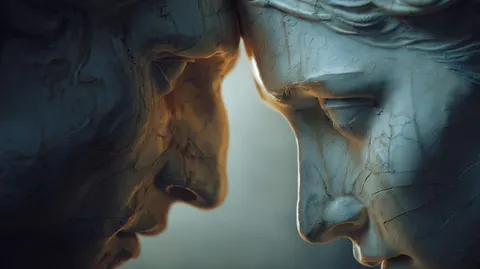
Seeing and recognizing are no longer an objective skill or a science. Neither technology nor people can prove to us, with enough certainty to matter, which work is human and which is not. So isn't it time we started treating looking, the search for truth and fact-checking… as an art?
 93
Don't Miss the Bus! What Open Data Can Do for a City
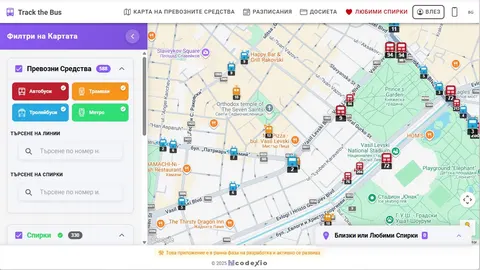
Every autumn, Sofia starts choking on the traffic of hundreds of thousands of cars it was never built for, and we all ask whether it really has to be this way. Google Maps helps us plan a route, but it rarely knows when the next bus will actually come, or whether it will be packed to the doors. Open data could help the city breathe again, as the fascinating story of my fellow programmers at Codexio shows.
 94
Why Do You Read?
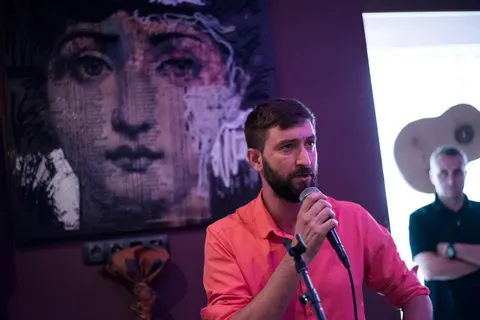
How can letters and bytes, books and technology, meet? That is the big theme of a series of digital stories. After Tuesday's look at some of the favorite books of the world's IT leaders, we once again step outside the cliché, this time with the author of Bulgaria's biggest book blog. Next Tuesday brings the unexpected literary recommendations of some of the most important figures in Bulgarian IT. You are what you read. “Kakvo chetesh…” (What Are You Reading…) is a question we should ask more often, especially in public. It is also the name of the largest and most active Bulgarian book group on Facebook, created by today's guest. For 15 years he has been sharing his recommendations on Knigolandia, the biggest book blog in Bulgaria. Deputy editor-in-chief of the Ciela publishing house, he recently made another dream come true: seeing his name on the cover of 100 knigi, koito tryabva da prochetete (100 Books You Must Read). With Hristo Blazhev we talk about reading and the future of literature. About the technologies that change it, and the books that build technology. Together we hunt for important and unexpected recommendations, to convince ourselves that letters and bytes must walk hand in hand, or nothing good awaits us, not even as a species. Happy reading!
 95
Tetris: The Human Who Never Stops Outdoing Himself
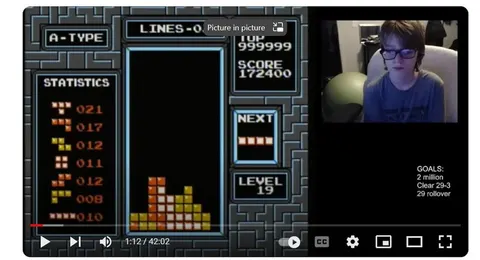
“I’m going to pass out, I can’t feel my hands…” Blue Scuti mutters, before he realizes he has fulfilled a dream that seemed impossible. Almost four decades on, he has beaten, one way or another, the game we have all played. Sitting in front of a retro cathode-ray-tube TV, found after countless difficulties, clicking the buttons of a retro controller for 42 minutes straight at more than 20 taps per second… the teenager reminded us that there is no limit to what a human can do. But how can you beat a game that has no end? And why are this success and the road to it such important news for humans as a species? News about our ability, through cooperation and talent, to keep moving forward… To create, to make things, to find meaning. To give birth to stories. Tetris is a legend that passes through the generations to give birth to new legends. A week ago we took a stroll through the history of the game that came out of a Soviet laboratory during the Cold War. Today we will look at a brand-new record that has so much to tell us about ourselves.
 96
“Online, You Can See How Weak a Person Really Is…”
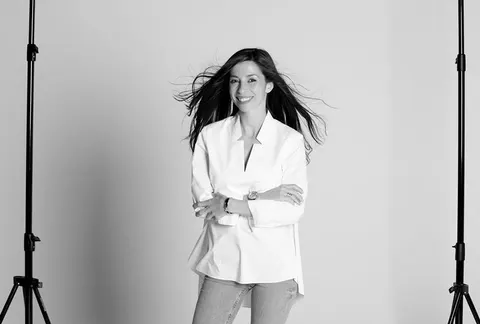
“The past is theory, the present is practice, the future is the result. In that sense the future is a moving concept; it can change, and change many times over,” says today’s guest, who admits she keeps away from social media because their atmosphere is fundamentally at odds with her values. Kamelia Kucher is a young writer whose novels Nosht (Night), San (Dream) and Dom (Home) carry an unexpected maturity, capturing the patina of the past along the thread of a powerful story. We sit down over a cup of virtual tea to talk about newsfeeds, the Second World War, motherhood and the future.
 97
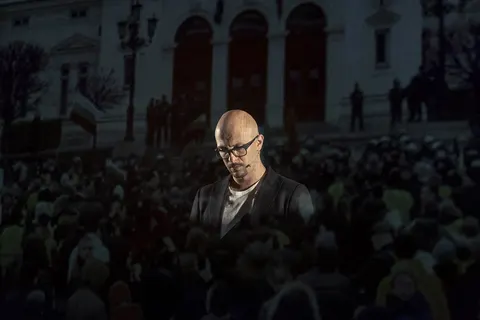
“Let’s Wake Up from the Dream That We Are Someone’s Victims”
“How do we restore the value of words? By no longer hurling them at each other. Just because we click on different links doesn’t mean we can’t talk and listen to each other now and then.” Only we Bulgarians have May 24 and November 1: the day of the letters and the day of the people who turn them into a creative force. Ivan Landzhev is first and foremost a poet, though he heads the creative team at an advertising agency. He is one of the few who truly love words and, rarer still, words love him back. We talk about the awakeners and those who wake us, about words and deeds, about the awakeners, the wide-awake and the fools, about hope, and about the magic of language in the digital world and the meaning we will lose if we forget it.
 98
Web 3.0: What Will the Internet's New Era Bring Us?
We're living in the age of Web 3.0, they say… But isn't there just one web, one internet? In fact, the global network has already gone through two massive transformations that we never stopped to think about while we were caught in their whirlpools. And now, researchers say, a third is coming, bringing yet another sweeping change…
 99
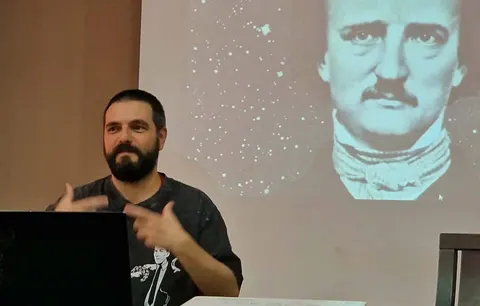
How Ratatouille Gave Birth to Bunk Romero
Bunk Romero is a genuine phenomenon: a six-book series that blends the best of crime fiction and science fiction with an authentic sense of humor. Its author, Emil Minchev, is known for the werewolf detective series, but also as the translator of Gone with the Wind, The Hound of the Baskervilles and The Great Gatsby. We sat down to talk about books and the future, about science fiction and fantasy.
 100
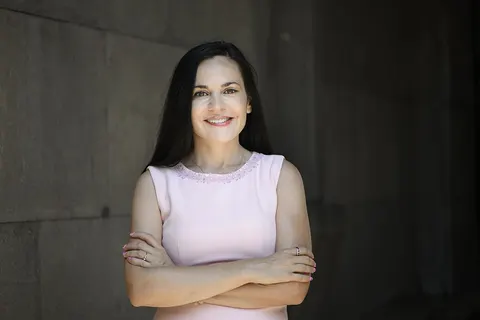
“A Complex and Difficult Year Lies Ahead”
No, there's no astrology here, just pure science. How many scientists do you know who can predict the future with 85 percent accuracy? I know just one, and the verdict isn't only mine, but ChatGPT's too, from a particularly telling experiment. Assoc. Prof. Mariana Todorova returns for what has become a traditional Digital Stories interview at the start of each year. The futurologist always gives us important things to think about, so there's no need for a long introduction. Let's peek into the future together!
 101
Ivan Popov, the Man Who Caught the Future
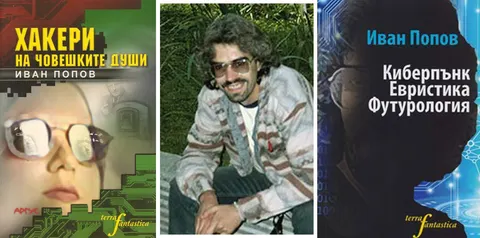
“A person’s worldview depends substantially on their information metabolism.” “Man is a bot to man. And bot is man to bot. But what kind of man is the bot? And what kind of bot is man?” Ivan Popov was a master of syllogisms, and much more. He was a writer who left us a small number of works from the beginning of the new millennium. Although he published only one novel in his lifetime, and in a small print run at that, his name remains mythical. Because he presented the future in an inimitable way. He caught the trends, gathered the sparks of knowledge that paint the colorful picture of technology’s tomorrow. He managed to bring science and literature together, so that they could search, shoulder to shoulder, for the human and the superhuman, and catch the trends. Ivan Popov’s messages are powerful, stirring and thought-provoking today, more than ever. My heartfelt thanks to Nikolay Genov, who drew my attention to this remarkable writer, forecaster, journalist and scientist. I believe it is important for his words and his name to reach more people. I will be glad of any support—stories from people who knew him, help in making his work better known, or simply good ideas. Write to me!
 102
“We Were Made to Live in Relationships, in Communities, in Unions”
Nishka (Thread) is the third novel by the guest I am meeting today, and not by chance. I wholeheartedly recommend this book to everyone: it tells seven stories in a remarkable way and reminds us that the thread does not begin with us, and must not end with us, as Bulgarians, as people, or as humanity. Viktoria Beshliyska impressed me no less with the courage and skill with which she lectured nearly 2,000 IT specialists at DEV.BG All in One, the biggest tech event in Bulgaria, on why it matters so much to keep writing by hand in the digital age. Now we look at human relationships rethought and reshaped by technology: love in the digital age, what makes us human, and the necessary meeting of the humanities and technology on which all our futures depend.
 103
“All the Stories Have Been Told. But How Will the Words Tremble?”
A director, rapper and podcaster meets a journalist, programmer and writer. A conversation with the roles of host and guest swapped… and although there are only two of us (plus, of course, one more wonderful podcaster), it turned out that these combinations of three callings apiece hold some interesting nuances. The podcast 2&200 is a classic of the genre and shows why this form of conversation is turning eyes and ears back toward shared words. We continue the conversation for admirers of Kusturica and/or Dostoevsky and/or Marx with Orlin Milchev, once known as MC ATILA, a man able to pierce with words and questions. He is also a director, and last year saw the release of his debut feature film, The Art of Falling. A guest with an unexpected view of the big issues of today, interwoven with technology. The “Scourge of God” has long ceased to be a single hero; it is what we have created online. But what is looming ahead?
 104
Free Will, or a Barcode in the Digital Concentration Camp?
Nedyalko Slavov's new novel, Habitat, is a book of enormous weight and force, steeped in the big questions of our day: surveillance, data and the freedom we give up without a fight. We talk about social networks as spy agencies, obedient literature and why it is the fingers gripping the tools of labor, not the keyboard, that made us human. “It all comes down to what you want to be tomorrow. Free will. Or a barcode in the digital concentration camp of a meaningless world.”
 105
Is the Digital Age Waiting for Its Freud?
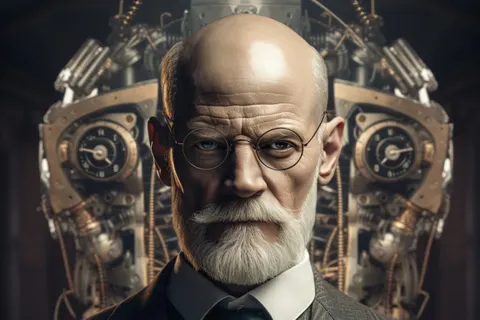
No matter how thirsty you are, you can't drink from a fire hose. If you don't believe it, try. The same goes for technology. We push it thoughtlessly into more and more corners of our daily lives, handing it one new role after another, until we suddenly find ourselves chained to our screens like Prometheus to his rock. Information technology is a huge opportunity. The dose makes the medicine, but… what is the dose? We will look for the answer to that question, along with another one: when will the Freud of our time appear, and who will he be? The person who will grasp the psychological challenges facing Homo sapiens at the height of the technological revolution. A Freud who will lift the taboos and make sense of the bond between people and information technology.
 106
“Then Came Electricity, and the Vampires Fled”
Magic is part of life, and if we give it up, we are left with dry, meaningless algorithms for living. But how do we keep from driving it away while we are swallowed by the stream and its deceptive momentum? Byurhan Kerim answers with his debut novel Lavandulovoto momche (The Lavender Boy), which brings together eternal themes and a modern gaze, classic Balkan plots and magical realism.
 107
Gaddafi and Zuckerberg Walk into a Bar…
What do Mark Zuckerberg and Muammar Gaddafi have in common, and is travel still worth it now that we can see everything online? Georgi Milkov, a journalist who once went to a bar with Vladimir Putin in the middle of Sofia, talks about the riches of technology and what it takes away from us.
 108
“Maybe Nihilism Is Written into Our Genes?”
Ivaylo Kunev tells inspiring stories from the Bulgarian past in a magical way… So how did we end up with the words in the headline? Leaders, the people who know how to change the world, to lead, to build, to persuade. They are the big theme of today's guest, who has spent more than a decade designing and running leadership programs. Ivaylo has impressive managerial and entrepreneurial experience that spans decades. At the same time, he knows how to tell a story—his tales of strong personalities draw a huge number of fans. He is the author of the book Liderite: zabravenite istorii na Balgaria (The Leaders: Bulgaria's Forgotten Stories). Leadership. The subject is so heavy in our part of the world, and in the times we live in generally. So it is time to look for the hard answers. Is it worth collecting the stories of politicians, entrepreneurs and… khans? Why do we find it so hard to form a political elite and to have authentic leaders as a nation? What would Tolkien have written if he had been Bulgarian? How can Bulgarian history become a personal adventure and offer inspiring examples that help us make our dreams come true?
 109
“Our Children Often Turn Out Well Not Because of Us, but in Spite of Us”
How has the online world changed parenting? Should we protect children from technology? Why is it still important to be careful and picky about the advice we get online? And… what should a person never, ever say to their children? Who hasn't heard of Mama Ninja? Maria Peeva is a blogger and irrefutable proof that meaningful influencers exist. Influencers who know how to entertain their followers and also help them with knowledge and experience. A mother of four sons spread across two decades, she is also a grandmother and the keeper of a colorful list of pets. A translator by training, Mama Ninja slipped almost unnoticed into the role of blogger, and then of writer.
 110
“The More Technologically Advanced We Are, the More Terrible the Mistakes We Forget”
Lyudmila Filipova is among the most widely read Bulgarian authors of recent years. Her novels span an enormous range of subjects, and she never stops seeking new literary challenges: the distant past of the people who lived in these lands, the challenges they face today, the great riddles life sets before us. After such a colorful palette of interests, it is time for her digital stories. We turn first to the past in order to look toward the future. And finally, most importantly, we dream of the moment when people will once again be stirred not by the news of the day, but by the stars…
 111
“The World Is Too Wonderful for Us to Finish Inventing It Virtually”
“People put up hearts, declare their love and shower each other with friendship very easily and very willingly. It couldn’t happen in such quantities in reality, because there it takes far more real effort.” “I think that when you cause someone pain, some of it sticks to you too. Online we’re robbed of that—and yes, I say ‘robbed’ on purpose. Feeling someone else’s pain is a sign that you’re alive.” Petya Kokudeva is a silver-tongued master of words who can tell a deep story in a handful of sentences. And, impossible as it sounds, she does it not only for adults but for children too. She is one of those people who never stop traveling—both creatively and physically. A writer with many awards for children’s books and travel writing, Petya is a citizen of the world who knows what to ask of it. We talk about the road—the one across the world, the one down the feed and the one toward ourselves. The road of each of us, and of all of us as a civilization, along the steep slopes of today, in the light and shadows of technology. What awaits us around the bend?
 112
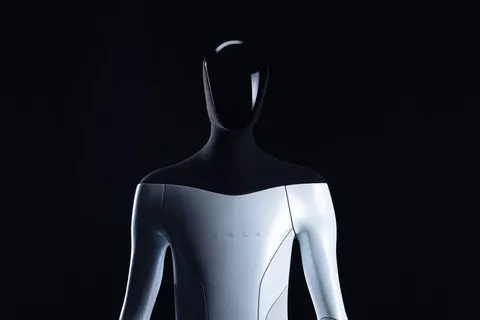
Optimus for Optimists: What Can Musk's Robot Do?
“Very soon, physical work will be a matter of choice,” Musk insists. The first version of Optimus is expected to be unveiled in September—a robot that, according to its creator, has the potential to become a bigger business than even Tesla. The promise is that within two years it will go mainstream and “free” people from a whole range of chores. What else is worth knowing about Optimus?
 113
Sundar Pichai, the Millionaire Who Grew Up Poor
Do you know the name of Google's boss? And if you happen to have heard it, do you know his story? Sundar Pichai was born in India exactly 50 years ago, grew up far from luxury and first got access to a computer only after leaving to study in the United States, then boldly climbed the ladder to the top of one of today's biggest companies while staying out of the spotlight his peers enjoy. What else is worth knowing about him?
 114
The Incubator Baby
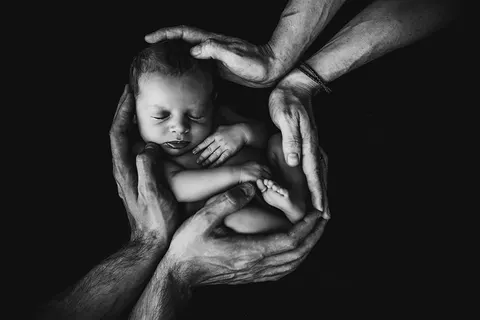
Could the moment be approaching when babies are born from artificial wombs? More and more research teams promise a breakthrough in a field that may turn out to be the answer to low birth rates in the Western world. But are we ready for a time when parents can watch together as their baby grows in a high-tech incubator? Not just technologically, but emotionally…
 115
“My Future Reached Out Its Hand…”
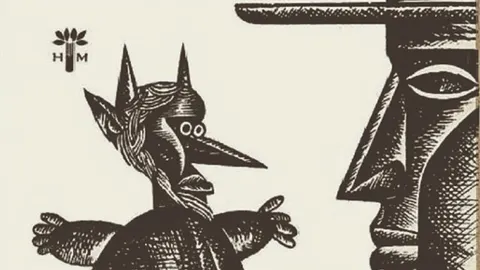
The Cybernet was boundlessly amazed. Its three antennas stood up straight and bent into marks of wonder: “What is feeling?!” In 1969 the poet Dobri Zhotev told, in verse, of his meeting with the Cybernet, and today his reflections sound more than timely. The poet's story is as fascinating and instructive as his poems.
 116
“Let’s Be Human. Let’s See Each Other, Talk, Dream…”
We all know Orlin Goranov as a singer, but lately he has proved himself, impressively, in a new role. At the height of the first COVID gloom he was asked to take on the hard job of hosting a TV show that would make people smile: The Last One Wins, an original quiz show that somehow provoked me into trying my luck too, with the result airing on Monday evening. On the show the host gave me a hard time with his questions; in return, I will try to provoke him with mine. How does he manage to stay away from social media? How do you keep a positive outlook in hard times? And when will technology become perfect at art?
 117
Happy Birthday, Digital Stories. Time for Presents!
Exactly a year ago, on March 1, 2021, the Digital Stories site was born: a small island of essays and reportage about the latest technologies and the challenges they put in front of us. Together we set out on a journey where two worlds meet, the humanities and technology, in search of our shared future as a species. Now it is time for a short look back at the year, and then for presents. They are definitely worth it!
 118
“Today, Everyone Online Lies However They Please”
We meet Vu Nguyen—Vunyo, to his friends—again to chat about the present and future of journalism, about technology, and about the challenges and the bright sides of life in Bulgaria. A former journalist at The New York Times and a top-level IT specialist in the US, he and his wife decided to move back to Bulgaria after their son started calling the laptop “grandma”; he then won hearts on the Bulgarian edition of MasterChef and ran his own restaurant for a while. Today he is back in the world of information technology, but now here at home.
 119
Rumen the Cat: The Internet Egzists to Give Peepl Akses to More Katz
The time has come for Digital Stories to give the floor to influencers. Today's guest rarely gives interviews, and it is safe to say that without our digital present he would never have given a single one. That would be the reader's loss, because his thoughts are sincere, colorful and delivered in a rather peculiar way.
 120
A Robot Wearing a Martenitsa?!
The Digital Stories project comes into the world on the very day of the martenitsa. Because nothing is lovelier than the coming of spring. And because…
 121
Adrien Bachi: The Lessons of Bluebeard
Adrien loves to run—down the entrepreneurial road and in real marathons, but above all against stereotypes. Adrien Bachi has lived in Sofia for 18 years, runs a successful video game company that employs Bulgarians, has adopted a Bulgarian girl and has gathered plenty of digital stories to tell us. Here they are!
 122
Apocalypse. How?
85 seconds. The symbolic clock that shows how close we are to the end of the world pointed to this insanely short time for the first time in 2026. The generation that not only remembers the last (so far) world war but also witnessed the first (may they also be the last) nuclear explosions is passing away. It is as if humanity's immunity is running out. Only we have no Mantoux test to remind us, to jolt us, to make us think. This is the most unpleasant Digital Story of more than 500. But I believe it is important to tell it. What would happen if one day a nuclear bomb went off somewhere in the world?
 123
“Sadly, Football Is Becoming More and More of a Reality Show”
If you love sport, I recommend this conversation. It will make you think in some very unexpected directions. “Walking encyclopedia” is a cliché that is no exaggeration for a handful of Bulgarians, and in my view today's guest is one of them. Teodor Borisov is a sports journalist who travels the planet in search of powerful football stories that are still being born in these technological times. A historian and author of books on Bulgarian history and sport, he writes questions for many of the most popular TV quiz shows, a path that began when he won Minuta e mnogo (A Minute Is a Lot) three times. There is nothing from the past of Bulgarian (and not only Bulgarian) sport you can ask him about that he doesn't know. Today, though, something different will happen. I will ask him about the future. About the magic of sport and King Football. About the commercialization and oversaturation that come with technology and can drive away even the most loyal fans. About the crisis of authority.
 124
“Right Now, the Conditions Simply Aren't There for AI to Make a Dramatic Leap”
With Krasimir Kostadinov you can talk about geopolitics, astrophysics and history, all in the context of technology, the march of time and the trends that shape all our lives. He is the chief technology officer of Scalefocus: an engineer, architect and programmer with wide-ranging interests and deep knowledge, which he often shows off in his tech blog. In his current role, one of his direct duties is… to peer into the future, trying thoughtfully, sensibly and from every angle to predict where technology is taking us. We will peer into the future with him, for a sober and very different look at AI and the other big themes of the new age. Join us for a stroll through what lies ahead!
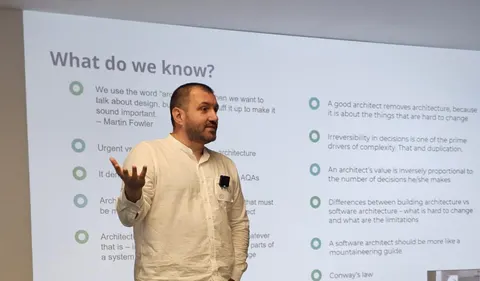 125
“We Sacrificed Two Generations Because We Didn’t Know How Technology Works”
“We adults sacrificed two generations because we created something without knowing what it was or how it worked.” Psychologist, father and children’s author Slavi Stoev explains what excessive screen time does to children’s emotional and intellectual development, and why it changes them irreversibly. Is there a middle path for parents, and how do we find it before our civilization drifts into decline?
 126
“A Machine Cannot Be a Poet”
Can a machine learn to write like Pushkin? Or is it leading us into Orwell’s world? This text was published in the September issue of LIK magazine in… 1967! Yet, as you will see, many of its ideas sound as if they came from the future. “The writer-machine? It keeps in its memory a vast store of words and has perfect command of every subtlety of grammar and style; it knows all the organs of sensation and all the ways of writing that writers have developed over the last 3,000 years. This ‘writer’ observes, memorizes phenomena, reasons, processes the data reality gives it. In the end it writes books, and we, reading them, are thrilled, but… we remain cold.” Is Dmitry Zhukov, the author of these lines, right? There is no way to ask him. But, as you will see, his point of view has a lot to say about our own day too. In search of answers to the big questions that move us—about technology and humanity, about poetry and creativity, about “automatons” and true creators…
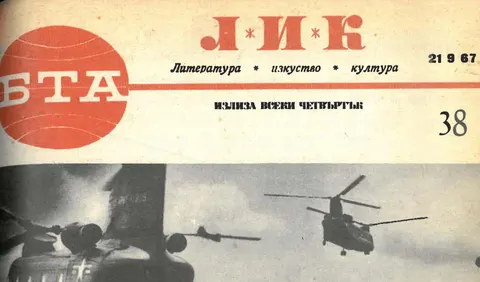 127
Graduating at 88: The Lessons of Dr. Shoilev
At 80, today's hero went along to keep an acquaintance company while she enrolled to study journalism—and on the spur of the moment decided to go back to the lecture hall himself. It turned into an eight-year adventure full of knowledge and stubborn study, and a few months ago, at 88, Petar Shoilev received his doctorate in journalism! How can anyone be so motivated, and find the strength to take on an entirely new field at that age and finish a PhD with highest honors? Here's how!
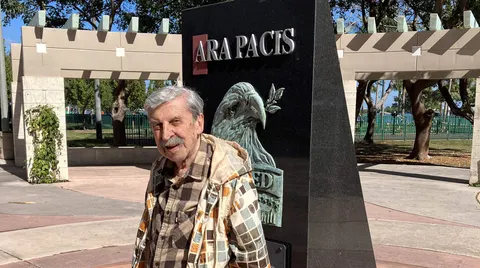 128
Yevgeny Zamyatin: The Forgotten Prophet
Yevgeny Zamyatin’s We is a brilliant novel because it offers a glimpse of a future in which technology has defeated humanity, locked people in its mathematical grip and turned them into numbers, into tools. We often mention Orwell and Aldous Huxley, and rightly so, but this writer inspired them both. His only novel is a dystopia no less thought-provoking than theirs, because it looks not so much at a possible totalitarianism as in a direction that is even more relevant today.
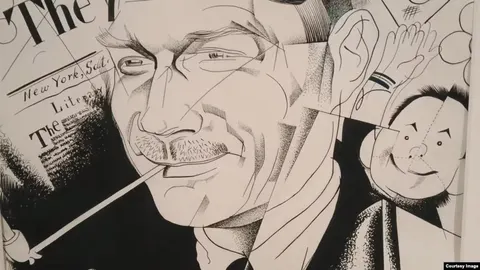 129
Universe 25: Of Mice and Men
Four pairs of mice are released to live as they please. With an abundance of food and water, far from danger and disease. Ready to conquer a vast territory… A mouse paradise! They start breeding like rabbits. Their numbers soar, doubling every 55 days. By all appearances they are living their best lives and savoring every moment. A year later, 620 mice live in “paradise”! Until suddenly something inexplicable happens: many of the rodents turn aggressive and start wounding each other for no reason. Then the males grow lazy and indifferent, and the population of the mouse kingdom imperceptibly begins to shrink… until it all ends in total collapse. Could this be a sign of where the natural course of our own life here on Earth is heading? Researcher John Calhoun’s Universe 25 experiment, carried out half a century ago, has become a huge source of reflection from the 1970s right up to the age of Facebook.
 130
10 Magical Stories from Planet Earth
10 questions, 10 answers, 10 stories and 10 incredible photos. We fasten our seatbelts and set off on a thrilling journey to every corner of the planet… Dimitar Karanikolov is an architect who caught the photography bug almost by accident. He then became an undisputed master of the lens—his images have been shown by the world’s biggest media outlets, and he has won prestigious awards. He is the author of the unusual book Istorii ot planetata Zemya (Stories from Planet Earth), a photo journal in which, over 208 pages, striking photographs are accompanied by stories in Bulgarian and English and by pieces from guest authors such as Georgi Milkov. His favorite vantage point is high above. Why? That is what we are about to find out, along with who is the most fascinating character he has met on the road. Where did he feel in danger? What place (on Earth or not) does the architect-photographer dream of capturing through his lens? And why is it sometimes worth… losing your camera.
 131
Oppenheimer: The (New?) Prometheus
J. Robert Oppenheimer, “the father of the atomic bomb,” built the most powerful weapon of destruction and then became one of the most stubborn and persuasive advocates for banning it. It is no accident that his story is being told again today, when bombs are falling in Europe once more and technological progress may again carry the risk of self-destruction.
 132
Tang Ping: Lying Down in Order to Stand Up
Several generations of Chinese grew up with the “ideal” of “9-9-6”: you work without a break from 9 a.m. to 9 p.m., six days a week. It is the only way to survive the fierce competition and keep climbing the ladder. But the end of endless grinding may be in sight. “Tang ping” and “bai lan” are the two names of a movement gaining strength among young Chinese: lie down and think about life; relax instead of throwing all your strength into meaningless toil. Are the beatniks of our time coming from China? Will people in the East learn to idle? When can laziness become a constructive force? And shouldn't we all follow their example and prepare for our own future this way? The Chinese are learning to be lazy, and so inspiringly that you want to grab the quilt at once… Let's lie down!
 133
Tristan Harris: The Knight of Honest Technology
“The closest thing Silicon Valley has to a conscience”—that is how Tristan Harris is known. His name made headlines with the notorious film The Social Dilemma, which drew plenty of attention but never led to much real change. His work embodies everything that is “broken” in today’s online life: the manipulative practices that have become a threat to our future as a species. Tristan Harris is not only the most recognizable champion of a free and democratic internet. Not only a thorough researcher who draws attention to the ways we are manipulated. He is also the man who warned a decade ago that the path technology was taking would lead us into a world of mammoth companies more powerful than the largest states. Into a time when we can no longer hold our attention while reading. Into filter bubbles that grotesquely distort the way we get our information. Does he think we can reverse these trends? Can the internet become a free place without monopolies, where information is delivered democratically, with respect for the personal data and views of every user… What are his ideas for the future of the web?
 134
“Come Spring, Crypto Will Be Back with Lasting Growth”
A few months ago everyone was talking about cryptocurrencies, Bitcoin and blockchain, and then, suddenly, the crypto world found itself in yet another winter. Blagovest Belev, one of Bulgaria's crypto pioneers since 2013 and founder of BlockChain.bg, the country's first cryptocurrency investment fund, talks about whether this is the end or the beginning, whether now is the moment to invest, and where the next big blockchain news will come from. We also discuss NFTs, whether you should buy when everyone is talking about Bitcoin, and the exciting future technology promises us.
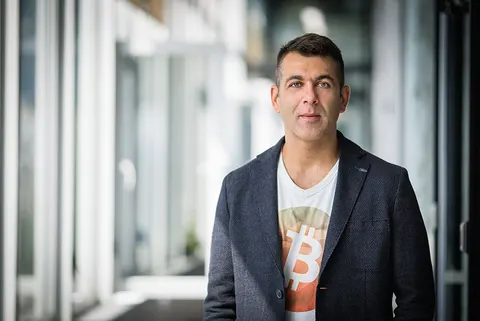 135
Divide and Rule, Online
Could any of the most meaningful events in our history, whose undisputed benchmark is the Unification, have happened in the age of social media? In a time when the online world shapes our consciousness even more than our offline being does, is it really worth repeating the famous line “Unity makes strength”?
 136
“Empathy Will Save the World”
Kris is the strongest person I know. This time we talk about literature and the media, two of the most important universes in his life. About the obstacles people with disabilities face and their encounter with society. And about how the rest of us should treat them without offending or hurting them.
 137
Do We Even Feel Like Dreaming Anymore?
Nikolay Tellalov offers some precious reflections in a slow interview about the stars and happiness, love and meaning, and the words someone has to say and write down. Have science fiction writers stopped dreaming, or has technology overtaken them? Is humanity still learning to walk, or has it hit a midlife crisis, and why don't today's young people rebel?
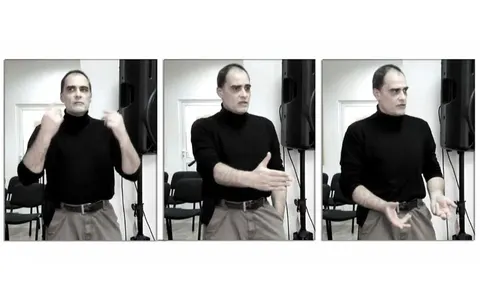 138
TL;DR
TL;DR: Nobody has time to read long, complex texts anymore. Or do they? Do we need them to keep our brains from “blowing up” and to stay human?
 139
An Interview in… Short Stories?
Our guest in the Digital Stories Interviews section has a talent for reading the future. Nikolay Tellalov is a beloved writer, and although he has long been an interpreter and connoisseur of technology, he lives at a healthy distance from it. Here is what he has to say in… short stories: digital stories, miniatures that say a great deal in an infinitely small space.
 140
“Let Humanity Have Its Fill of Playing with Technology”
How did we lose the ability to wait, and why does it matter that we get it back? Will we learn to be bored well when technology supposedly frees up our time? What will the last book written by a human say? Violeta Radkova impressed me with her debut novel I legloto ni e zelenina (And Our Bed Is Green). She is a translator and editor, and her book rests on her great-grandmother's memories, written down in a grocer's ledger, while she wrote much of it on her phone. Caught up in the present, we talk about the future and the past, the fast and the slow. About books and meaning.